
Short version:
These are just hilarious little lemony cucumbers. You won’t get an amazing amount of food from these but they’re fun to grow, especially for little people.
These are also called, mouse melons, Mexican sour cucumber, with a botanical name of melothria scabra, but they are still a member of the Cucurbitaceae family like squash, cucumbers, melons and loofahs.
Growing
Sow a seed or two in single pots indoors in April/May.
You get very delicate thin vines. Because they are so thin you can get away with a couple growing together.
Plant out when all danger of frost has passed in the sunniest spot possible.
You do need to provide something for them to climb up. They grab on with these little tendrils that wind tightly round anything they can including its own vine and others nearby.

Seeds sown in a pot noodle pot. When planted out the base of the pot was cut out and the whole thing was sunk into a hole. 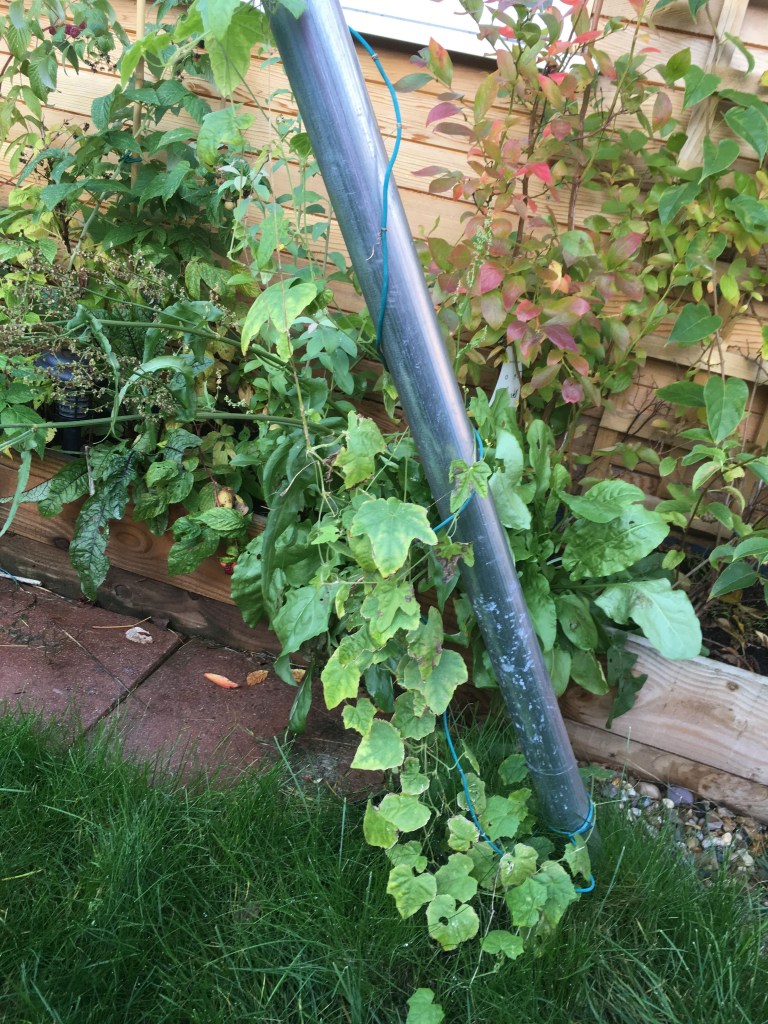
You can see it still has a small footprint months later as it grows up a swing leg.
You’ll see tiny yellow flowers of the male or female persuasion but I’ve never had a problem with the pollination of these, unlike the full sized squashes (which sometimes need hand pollinating). They produce an abundance of male and female flowers simultaneously so there is always plenty of opportunity for insects to do their thing.
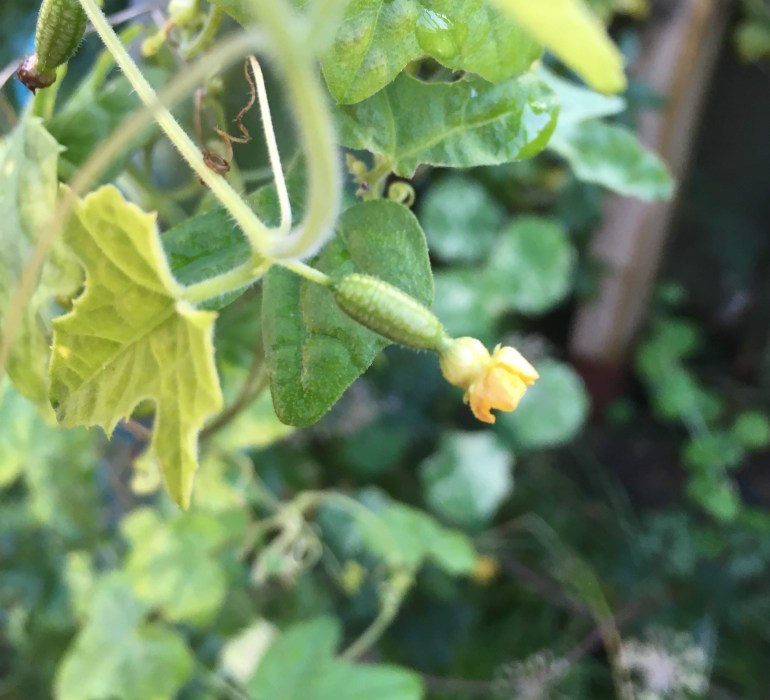
female 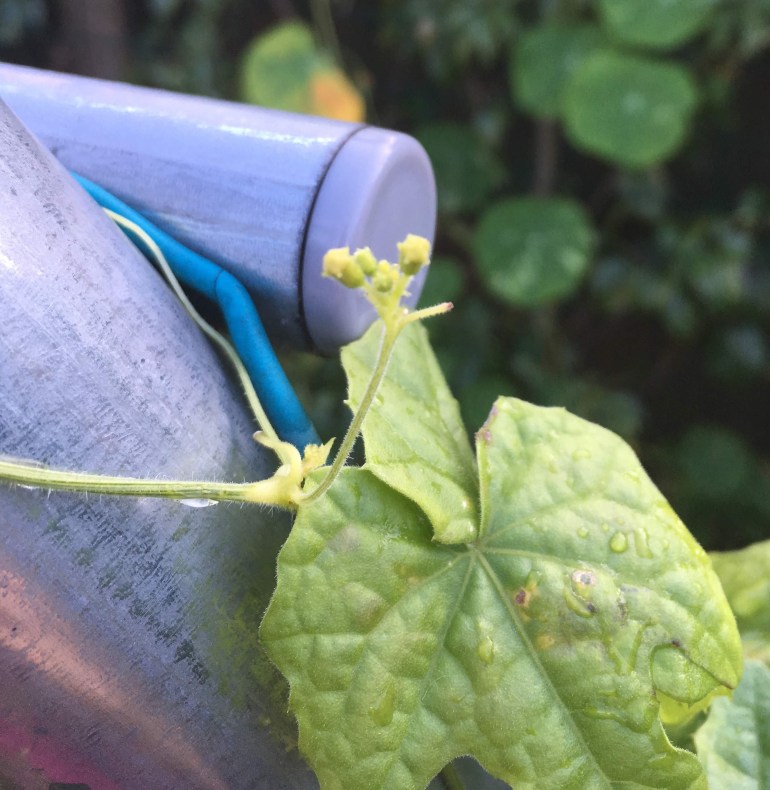
male 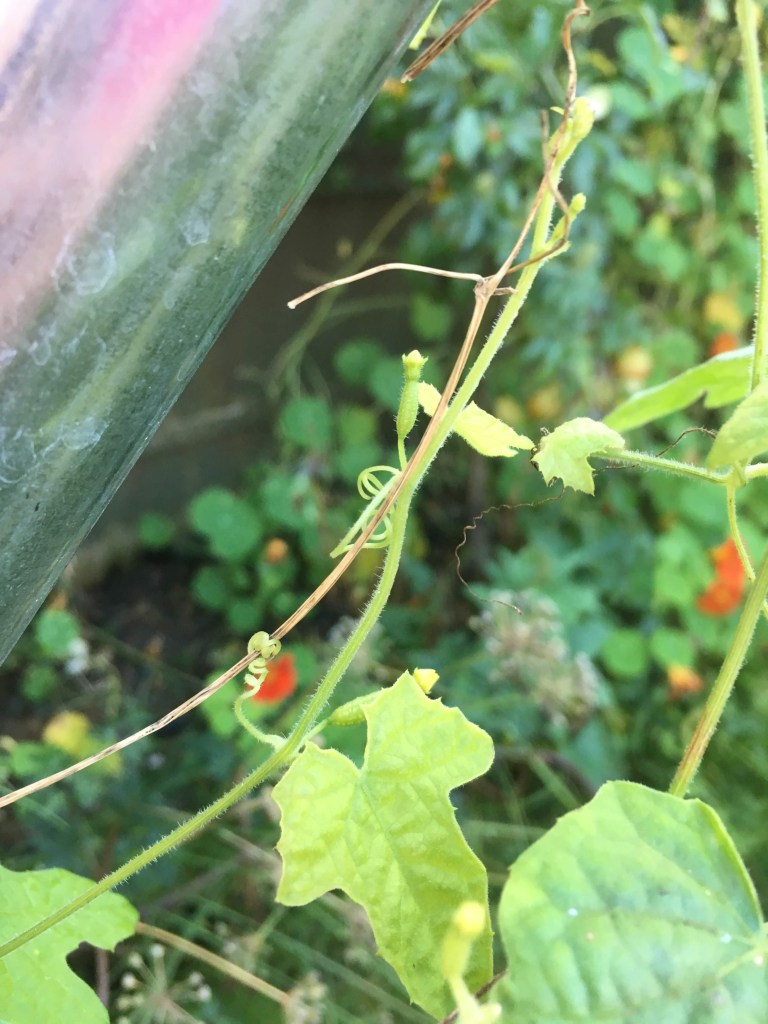
the tendrils will even curl around a dead twig
Eating
Harvesting can start in July/August.

This is about as big as they’re going to grow. 
Despite their watermelon like exterior, the inside looks much like a cucumber

They taste like lemony cucumbers. They’re great for little hands to pick and eat straight off the vine (though be aware it might be a choking hazard for anyone who still needs their grapes cutting in half). When we’ve grown enough to survive little one’s garden grazing, we’ve put them in salads, in Pimms, they go really well in gin and tonic and they’re a great snack box item when on the go.
I don’t think the plants did particularly well this year. It wasn’t as sunny this summer as last year and though these spots get the best sun in the garden, the soil here isn’t that fertile and they are competing with the grass. Also, my small child has a ‘provide a wide berth’ approach to her swinging so I can’t be too precious about any plants grown up the legs. I’m afraid I have no self control. I can’t stop myself from growing food up any available structure.
Seed saving
Often with cucurbits you need to worry about varieties cross pollinating as all the squashes in the family cucurbita pepo (pumpkins, courgettes, spaghetti squash, acorn, hubbard, patty pan) can pollinate each other. I haven’t seen any varieties of the cucamelon so it may just be one type in the species. This means that the flowers will always be pollinated by similar genetic material so I suspect that the seeds will grow plants similar to the parents. I’ve seen evidence of this when they have self-seeded in the past and the plants that have grown have produced cucamelons the same as their parent plants. They have only self-seeded 2 out of the 5 years that I’ve grown them so that’s not a reliable method of propagation. This I think I’ll try and save some seeds and I’ll let you know how successful they might be next year.
Pests
In the 5 years that I’ve grown them they only seem to be bothered by shield bugs – southern green shield bugs particularly. These little buggers stick their proboscis into the flesh of the cucamelon, which results in tiny bumps on the melon surface. They don’t destroy the fruit, so I’m usually satisfied to just flick them off when I see them.
Grown for giggles
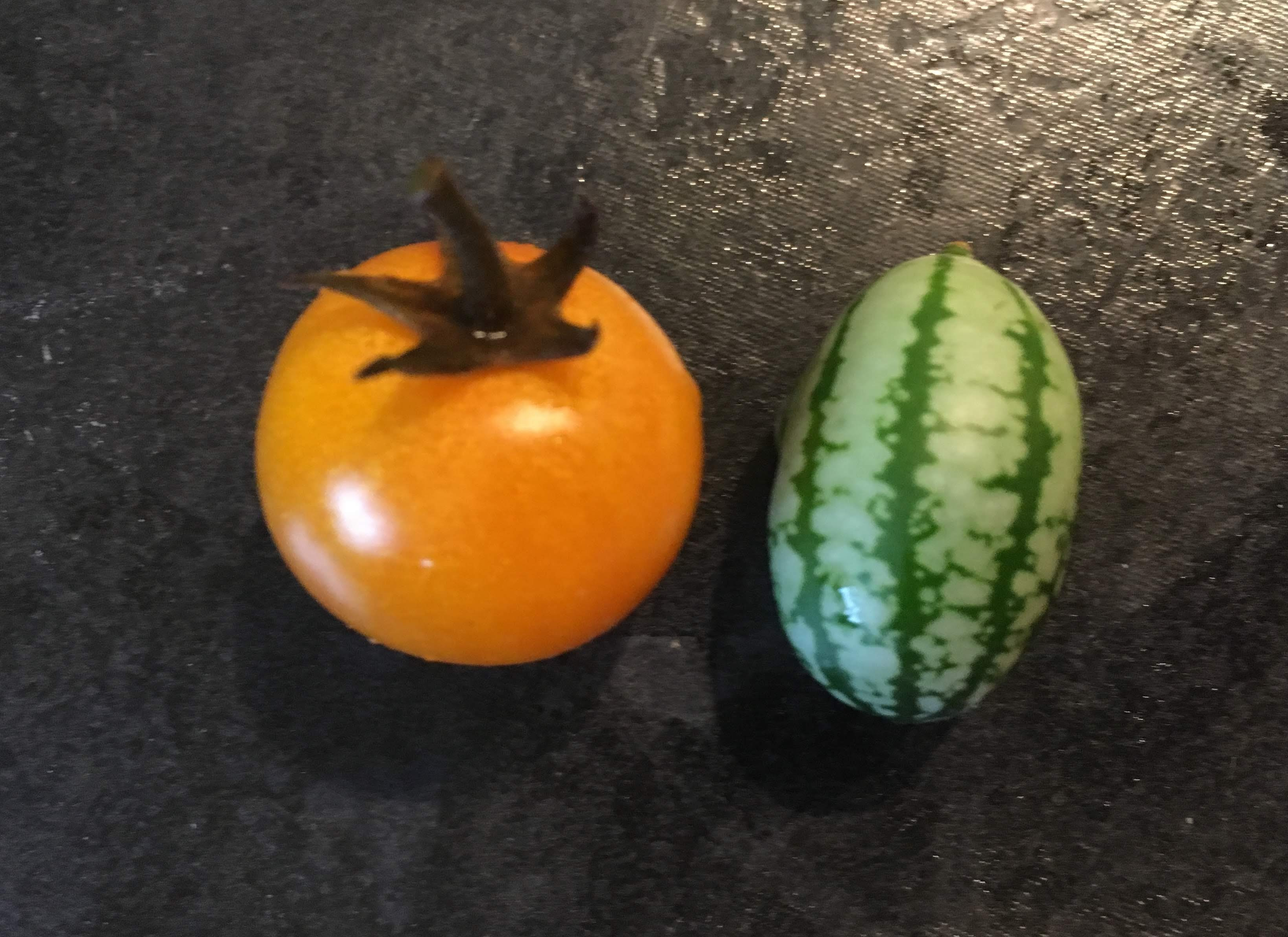
This doesn’t fit the profile of my usual plants. It’s not perennial, it’s not a trigger happy self seeder, you don’t get a huge crop per plant and they taste fine but it’s not a taste bud revelation. I do love them though because they’re fun, I haven’t seen them sold in shops and the plants are so thin and wirey there’s always somewhere to squeeze in a plant or two. They take up so little space in the ground but grow up nice and tall. They just make a nice little snack in the garden, salad filler and are a bit of a mind bender for those who assume it’s a watermelon when posted in photos with cherry tomatoes.

 Not a Horticulturist
Hi, I grow cucamelons aka mousemelons as add-ons to my tomatoes. They are so danity, that they do not impinge on the tomatoes, which provide all the scrambling space the cucamelons need. As add-on they’re fun, I wouldn’t donate a whole containers to them themselves.
They grow nodules/tubers which can be stored over winter, like dhalias it said. Be quick though, mine were destroyed by an early frost and gone before the plant itself had died.
LikeLiked by 1 person
Thank you. That’s brilliant information. I have a couple of plants going at the school garden (only a couple even though about 30 plants germinated because the slugs and snails have been relentless this year). It’ll be fascinating to see if we can regrow the ones we’ve got next year and how resilient they are to pests in comparison.
LikeLike
LikeLike
Today I dug up my cucamelons. Two weaker plants had no tubers, two strong plants did have tubers. (I couldn’t figure out how to leave a photo.) One plant had one big tuber, shaped like a slim sweet potatoe but coloured / skin like a parsnip. The other had two smaller tubers. I potted them up in loose soil and hope to save them over winter in the garden shed.
I read to wait till the first frosts, but when I did last year’s, the tubers were already frost damaged. Frankly, I don’t see why I should.
LikeLiked by 1 person
Thank you so much for this message. I’d forgotten to dig them up. I have 4 plants at school that I can dig up and put in their greenhouse. I’m so very excited!!!!
LikeLike
Attached a photo of my tubers.I hope you have some, too. My weaker plants did not grow any tubers, not even litt
LikeLiked by 1 person
I dug the school plants out last week (nothing survived in my own garden this year) and was absolutely gobsmacked by the tubers. Most were these tiddly pretzel thick things but one had a tuber the size of a walnut. Sadly that one broke as I was lifting it. They’re in a couple of pots of compost in the school greenhouse. I’m so excited to see what will happen next year. Thank you again for the wonderful advice.
LikeLike