
Short version:
The winter is a great time to plant perennial cheaper ‘bare root’ fruit trees. Planting 2 of each type of fruit can help increase yields. With the new hardier and more disease resistant varieties out there, we are no longer restricted to the usual apple, pear, cherry and plum trees that the generations before us were. There are now figs, grapes, peaches and mulberries that can be grown outdoors. For the adventurous there are also kiwi, passion fruit and certain types of guavas. Also don’t forget the berry bushes, like blueberry and raspberry, which also come much cheaper as bare root.
When the trees are dormant, they are sold more cheaply as bare root. This means that storing and transport is cheaper so winter is a great time to populate the garden with fruit trees. Fruit trees are perennial. You can plant them once and keep harvesting off them during their lifespan. Keep in mind though, that they can take several years to begin bearing fruit. These are for the long game.
Most fruit trees suitable for the garden starts with a dwarfing root stock. This is basically the lower half of the tree – the roots and the trunk. This rootstock determines the eventual height of the tree, which will be somewhere between 1m to 4m depending on how dwarfing the rootstock is. The rootstock may also provide better disease resistance, hardiness or sturdiness.

Another reason for a rootstock is that you can’t grow a fruit variety from seed. For example, all Granny Smith apple trees are clones of the original Granny Smith. Basically, someone somewhere discovered or bred this variety with a taste they like. They then named it (and probably patented it too). From then onwards if you want to have a tree that grows apples that taste like Granny Smiths you get a branch from a Granny Smith and graft it onto your rootstock. It probably won’t be the original tree but a clone of the original, which is basically the same thing. You can read more about why seeds don’t always produce plants that are the same variety as the parents in ‘Pollination, fertilisation and variation’
And…. Another fab thing about grafting is that you get fruit sooner as you are not growing from seed. And… wouldn’t you know there’s even more to love. One of the great things about grafting fruit trees is that you can get a single tree with more than one variety on it.

This fab apple tree round the corner from us has 2 different varieties of apple growing on it. Even the leaves are a slightly different shade. There are plenty of very green/yellow apples on the right, but if you look carefully, you can see the red/yellow ones on the left.
I absolutely love my fruit trees. I have an apple, a pear and a cherry tree. Each one of these have 5 varieties grafted onto them. Yup! That’s not a typo. Each tree has 5 varieties. This may not turn out to be such a great thing in the long run, but I love the novelty of it. I was amazed to find these trees, and then even more amazed to find that they have survived and have grown well. Even more important than the novelty of more than one variety on a fruit tree, is that with fruit, a pollination partner is important. Some trees won’t pollinate themselves. This also includes 2 different trees of the same variety as they will be clones. You’ll have some varieties (self-sterile) that won’t grow any fruit if there isn’t another tree of the same species but of different variety nearby. I.e. it has to be the same type (apple with apple, pear with pear) of fruit, but cannot be the same variety. There is then an added complication of apple trees that open their flowers at different times. This means that there are specific pollination partners within pollination groups. There are some varieties that are self fertile (they can pollinate themselves), but these will bear more fruit when there is a pollination partner.
Apples and pears don’t tend to have problems, especially in high population, suburban areas, as often there are other people in the local area with an apple or pear. If you do find a tree with a couple of varieties grafted onto the same trunk, they are often pollination partners.
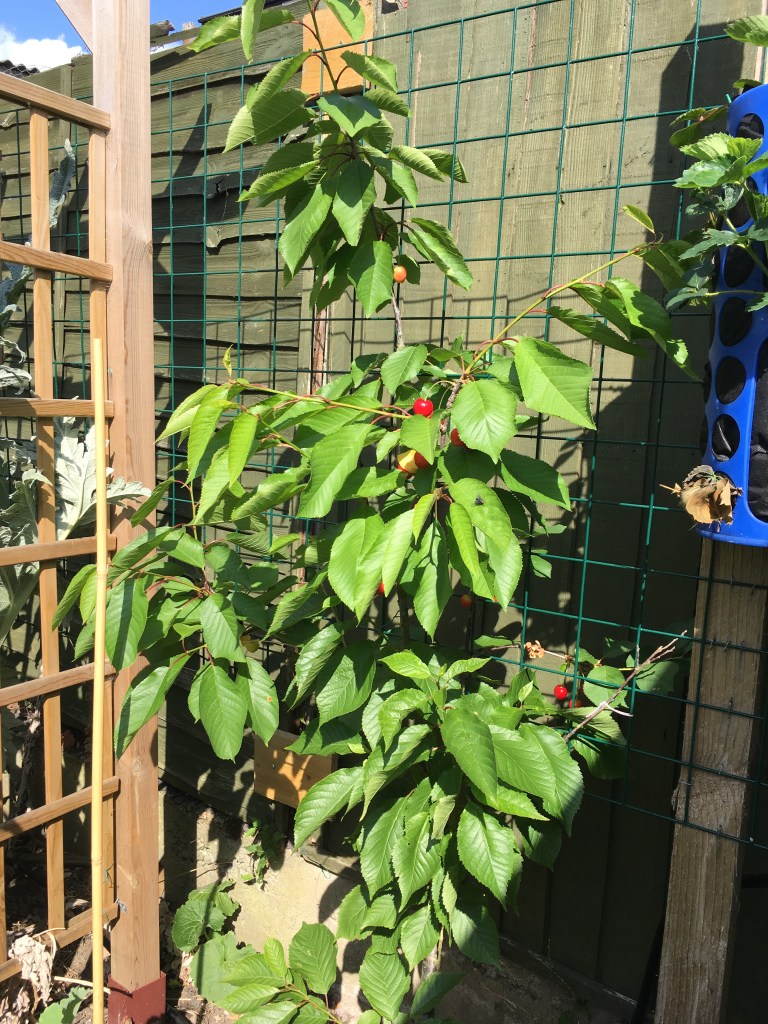
Cherry tree. You can only see 2 varieties here. 
Apple tree. You can see 4 varieties. 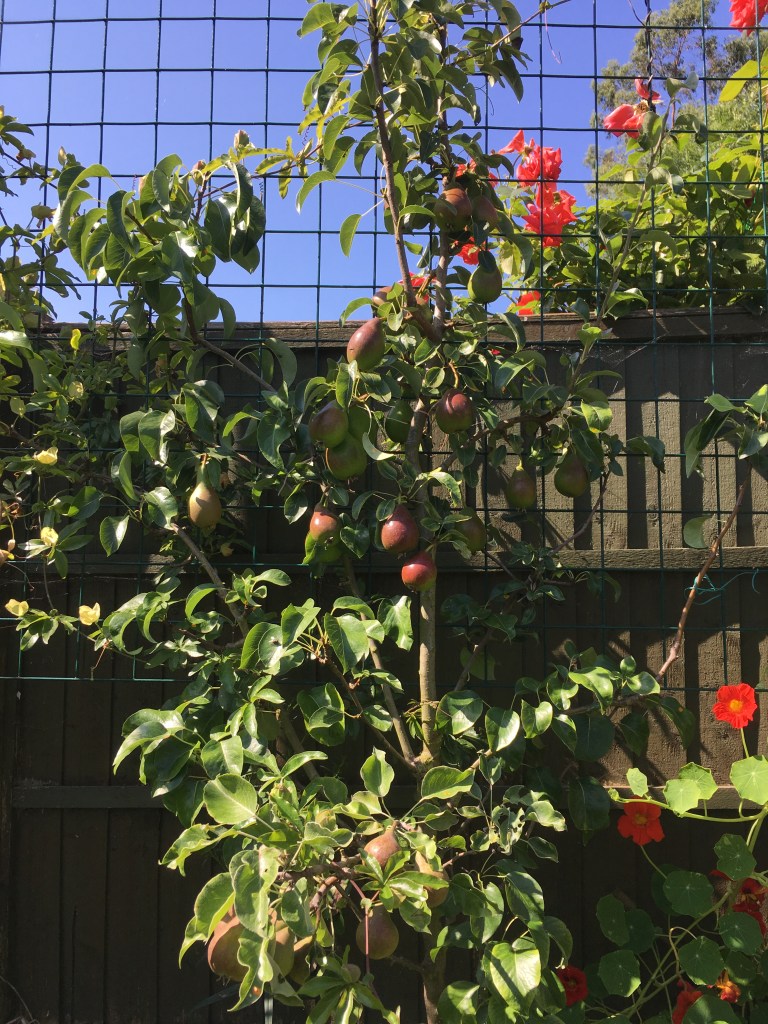
Pear. There are 3 varieties visible.
I didn’t buy these as bare root though. I was doing up the garden in the early summer and was far too impatient. The first summer in the garden there was no fruit as expected as they had only been in there about 2 months or so. The second year (only really 14/15months) the apple had a couple of fruit that dropped before they were ripe, the pear produced 2 varieties and the cherry produced 3 varieties. The following year we managed to get 4 varieties of apple, 2 varieties of pear (though weirdly, it was 2 different varieties to the previous year) and 3 varieties of cherry (I’m not sure if it was the same 3 varieties as the previous year). With different varieties you need to be careful to ensure via pruning that one variety doesn’t become too dominant. Another drawback of the many varieties on one tree is that if a tree dies, then you are losing all of your different varieties.
This is where I bought these trees:
https://www.gardeningexpress.co.uk/multi-variety-fruit-tree-apple-5-varieties-on-one-tree
https://www.gardeningexpress.co.uk/multi-variety-fruit-tree-pear-5-varieties-on-one-tree
https://www.gardeningexpress.co.uk/multi-variety-fruit-tree-cherry-5-varieties-on-one-tree
Because it is unusual to have that many varieties on one tree there are more limited options for buying. These are pot grown and according to the website, no other nurseries do that many varieties so your only choice is the pot grown. These ones are also on very dwarfing rootstock and so the trees are only expected to grow to 6-8ft.
If you’d rather not have the expense of pot grown, you can still get a bare rooted twin tree. Here is a website, but I’ve not bought any fruit trees from here. These ones here are on less dwarfing rootstock:
https://www.marshalls-seeds.co.uk/twin-fruit-trees-cid292.html
The biggest problem with city gardens and fruit trees is the lack of space. You can do things like fan train, espalier or just tie and prune to ensure that your tree doesn’t take up too much of your garden. You can use a tree to make a living fence or screen.
The following photos were taken on a visit to The Lost Gardens of Heligan:
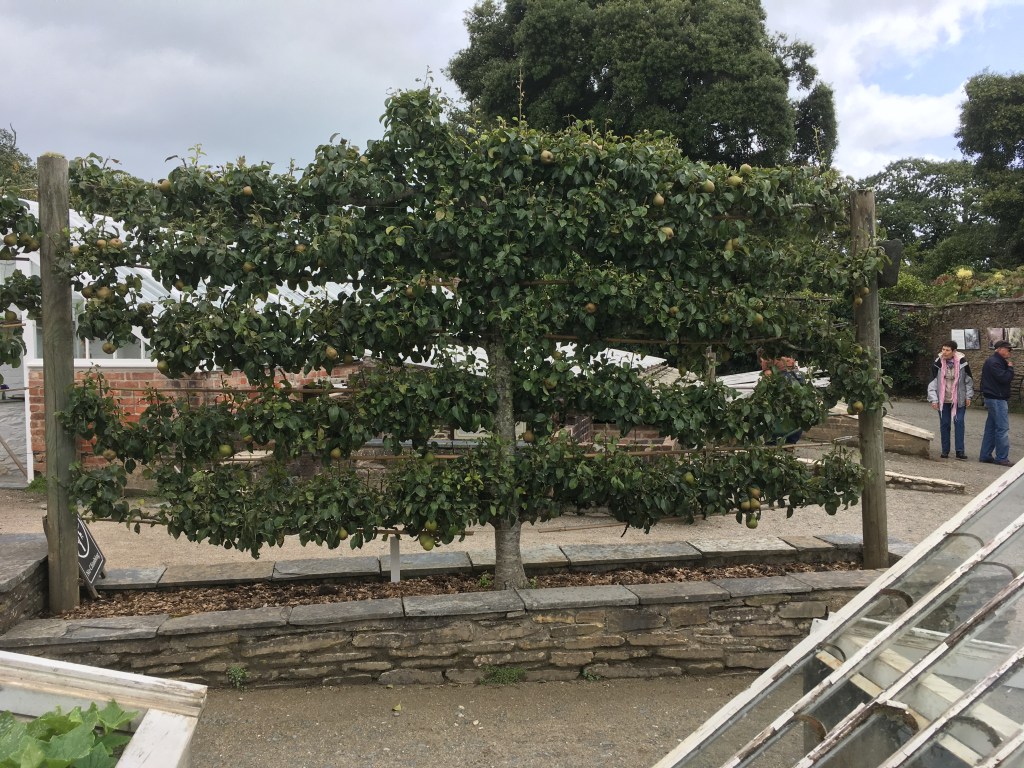
This espalier pear forms an effective screen. It also allows for better air circulation and the branches don’t shade each other. 
This is a fan trained plum tree. It takes up less volume and the wall reflects and retains heat. 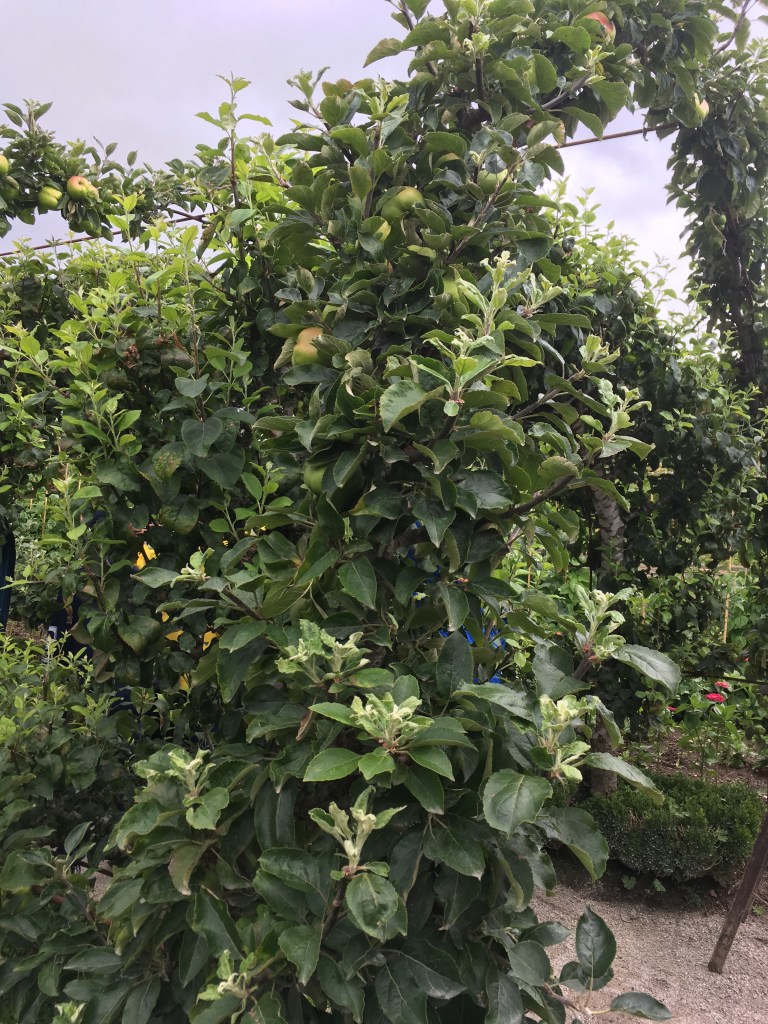
Apples are trained over an arch… 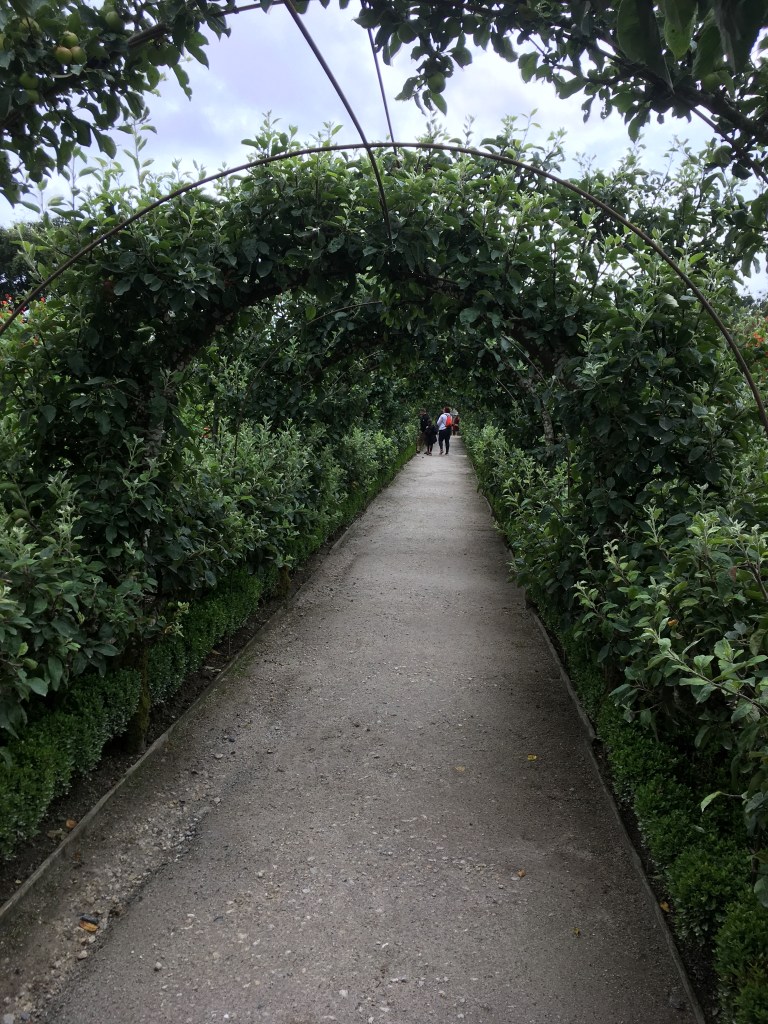
… then many arches form this gorgeous tunnel.
Unfortunately we don’t have space for a tunnel like this. Instead we have:

Seedless dessert grapes being trained over a pergola to provide shade over this bench. 
This is how the pear (left) and apple (right) trees began. 
The pear tree is now taller. It couldn’t be espalier or fan trained due to the 5 different varieties. Instead it gets tied to this frame. It still allows sun to reach it and stops the tree from invading the neighbour’s side. It also stops the branches from extending too far into our own garden.
In addition to the common English garden varieties, there are now more options. There are more hardy and disease resistant varieties that can now be grown. It is not necessary to have a green house as there are hardy varieties of things like figs, grapes, kiwis, passionfruit, and mulberries that grow in our garden. We don’t have a peach or medlar tree but I have heard that these are possible too. When you select a tree make sure you check details on how they taste, pollination partners, how hardy it is and if that variety is known to fruit in your climate. It’s a long list but there’s no point growing a fruit tree that survives the winter if the fruit doesn’t ripen in your climes, or if the fruit does ripen but tastes pants. Slightly less important, but still worth considering, is what is the final height of the tree and also how long it takes before it begins to produce fruit.
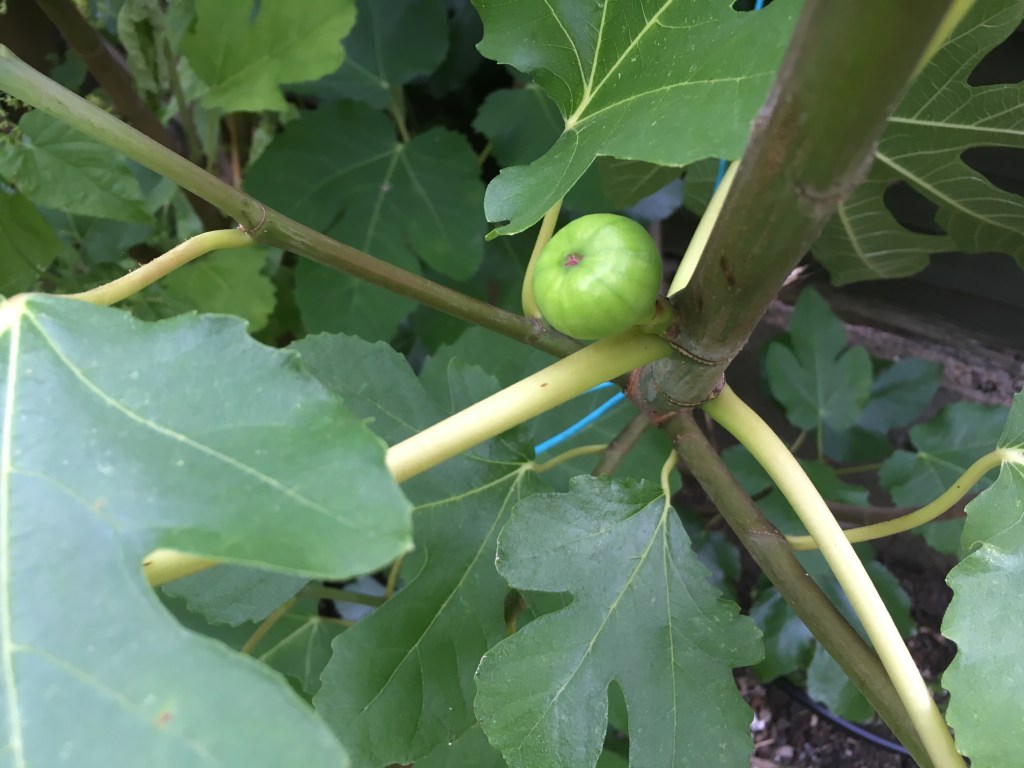
Our fig had 2 ripe fruit in the first year, nothing at all the second and 6 figs that didn’t ripen this year. 
In addition to the grapes on the pergola, these are invaders from next door. They grow well but taste rubbish. 
This is all we’ve had from our kiwi so far. It’s a baby kiwi that you eat whole, skin and all. 
The passion fruit is the cerulean blue variety with these orange fruit and gorgeous flowers 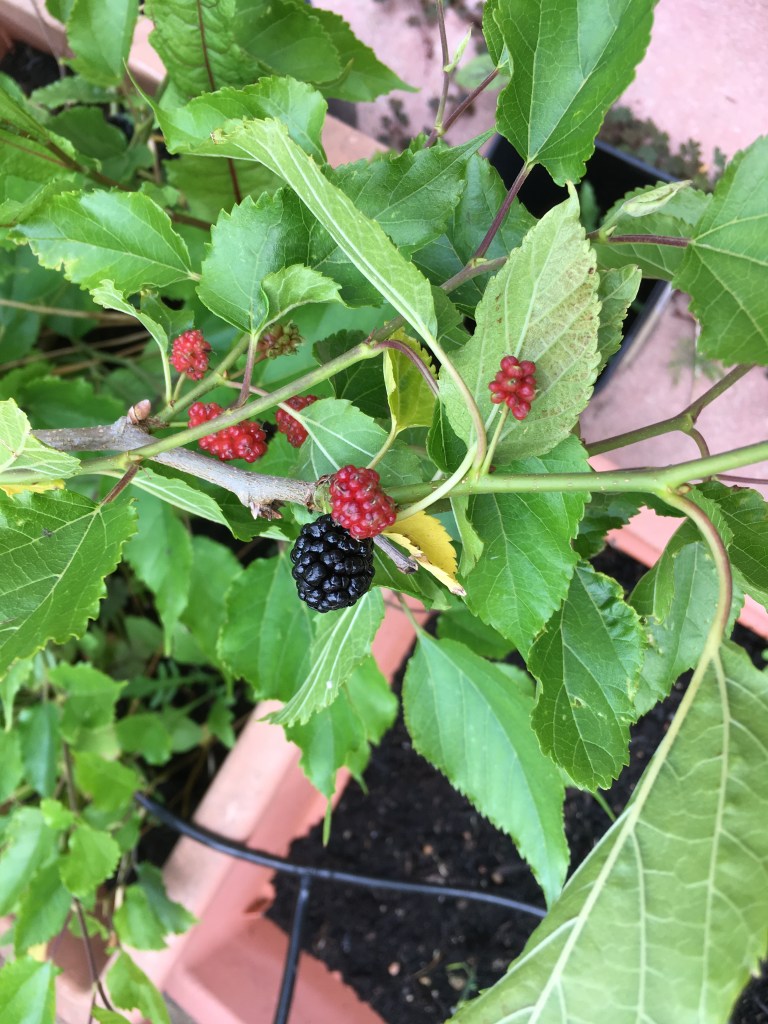
We have 2 dwarf mulberry that started fruiting in the second year. 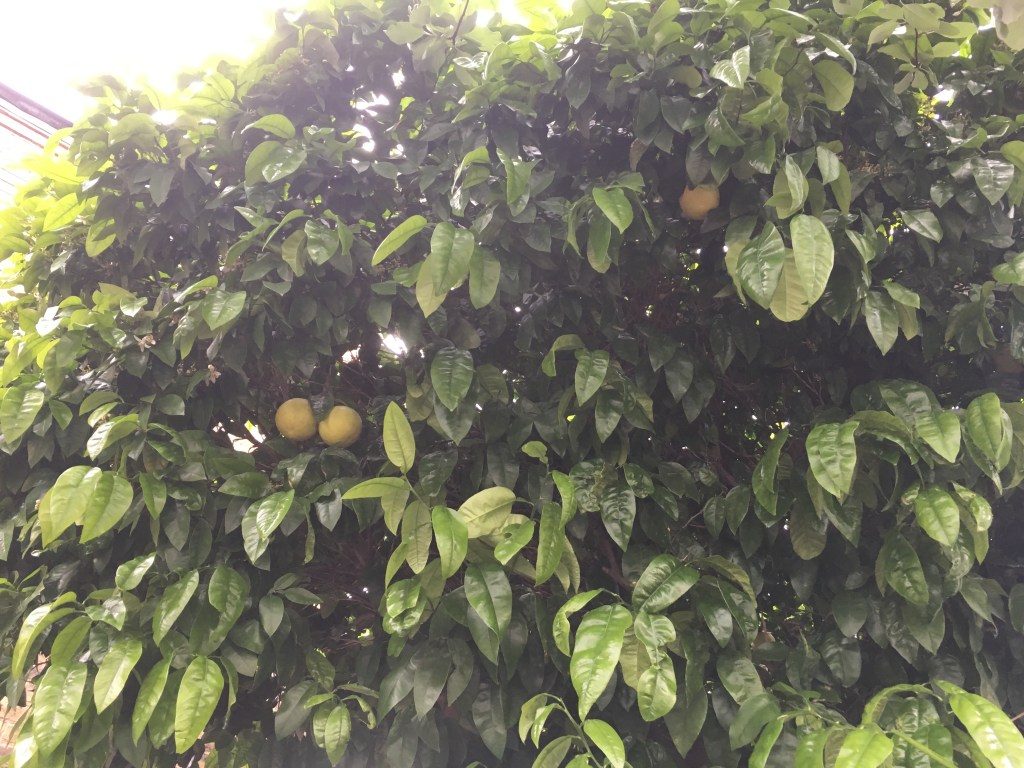
This isn’t ours but I love this tree that grows down the road -a grapefruit of some sort.
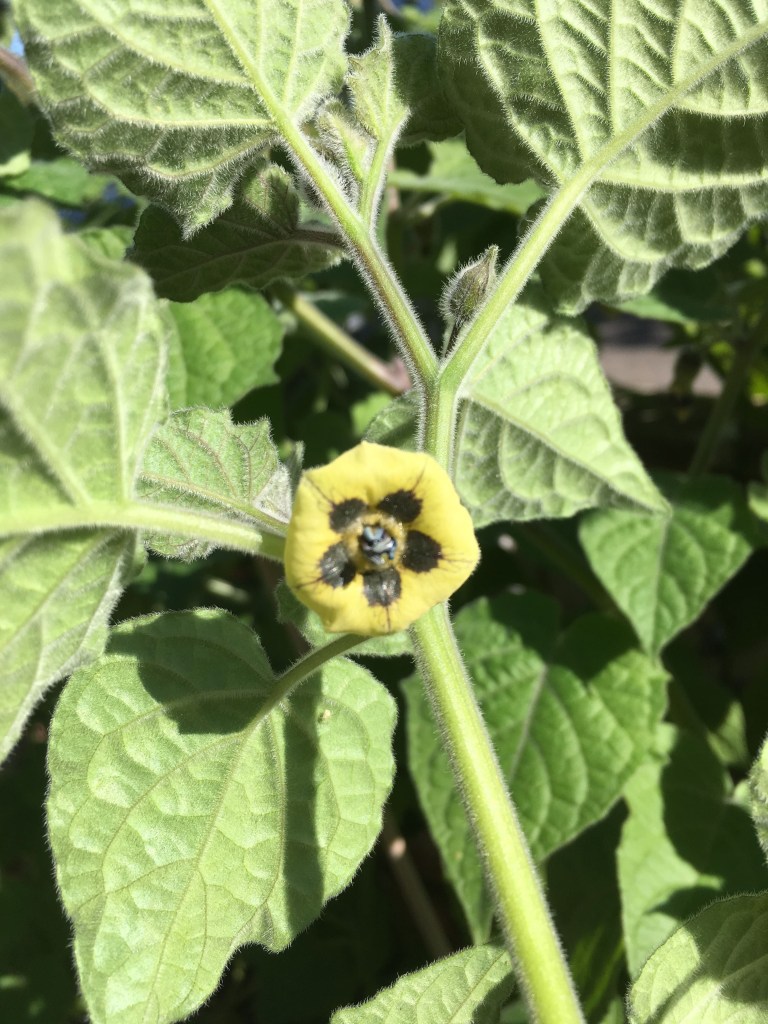
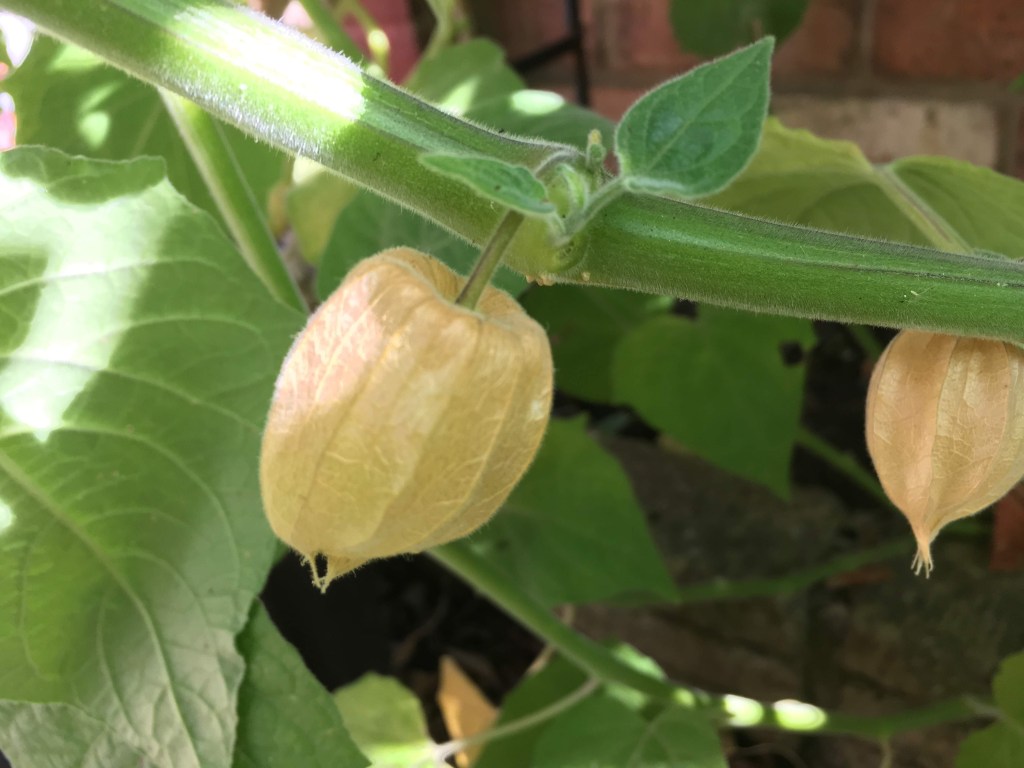
There are also plenty of berry bushes that do brilliantly in the UK. Our blueberries, raspberries, Chilean guava, blackberries, gooseberries and physallis seem to thrive. I’ve also seen goji berries at my parents and blackcurrants in some random nearby garden doing brilliantly.
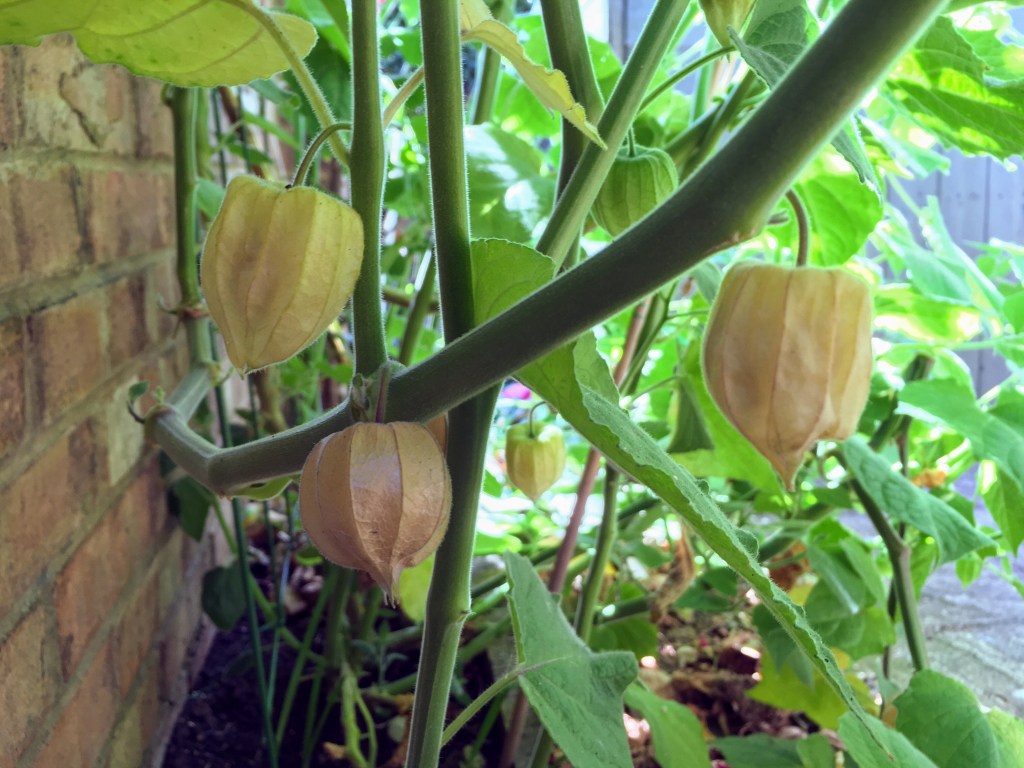
Just about ready to pick physallis, growing in a semi shady spot. 
The very fragrant Chilean guava flowers. 
Almost ripe Chilean guava in a sunny spot. 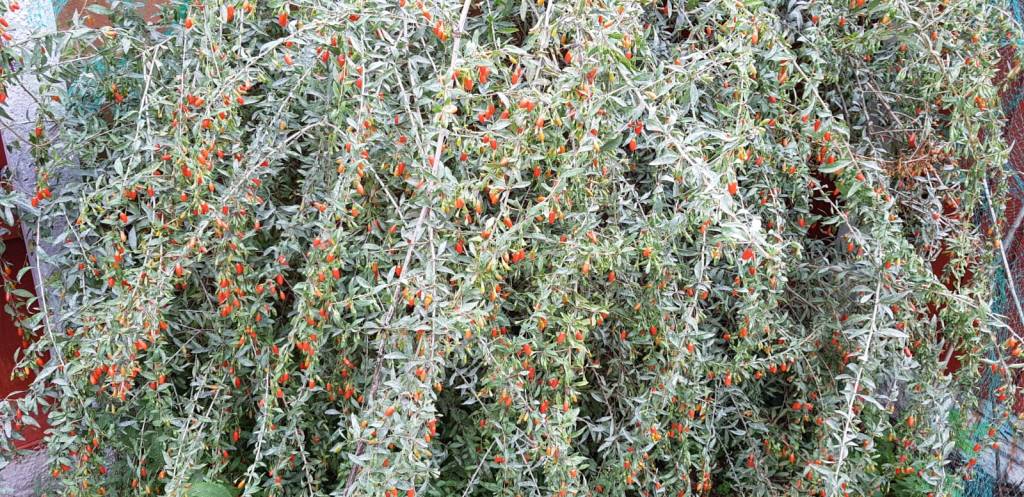
My parents’ absolutely heaving goji berry bush in Lancashire. It’s a sunny spot, but it’s definitely colder 200miles up north.






 Not a Horticulturist