
Short version:
The invasive southern green shield bugs are not benign like the native green shield bug (England). Let them live to the peril of your berries, fruits and beans. This one species comes in many guises. I can only apologise for the blurry photos, especially the microscope lens ones.
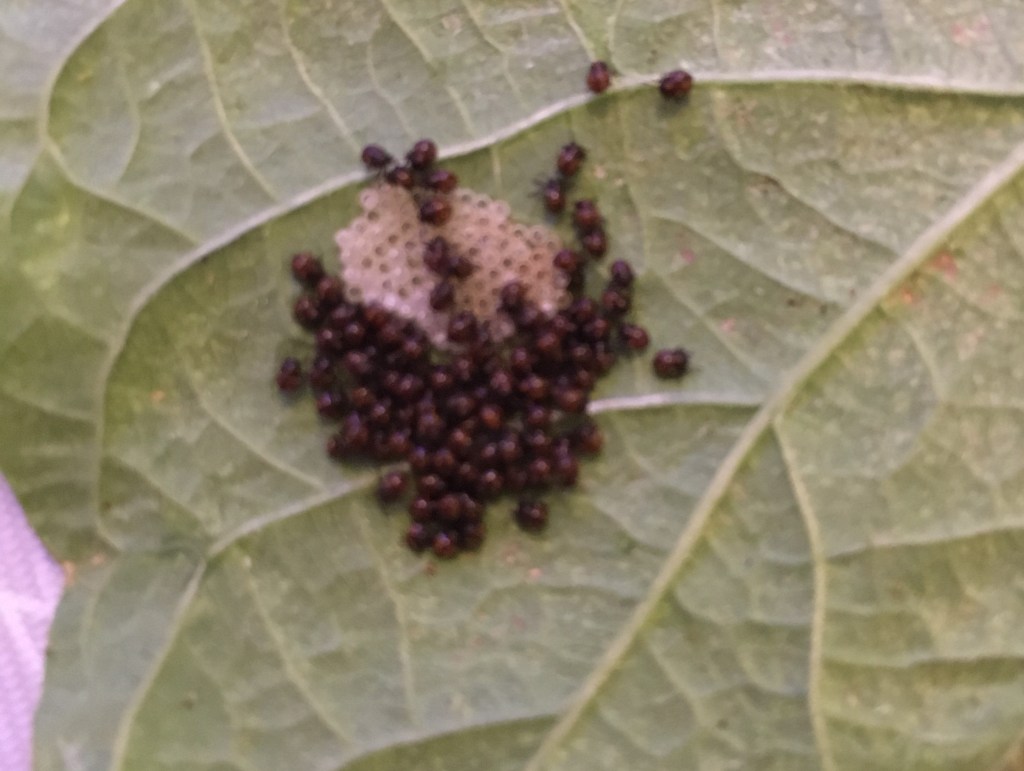
I found these newly hatched bugs whilst harvesting beans. What do they look like? Beetles? Ladybirds? Leave them be I may hear some of you say. Don’t you want a gazillion tiny ladybirds that will become voracious eaters of pests?
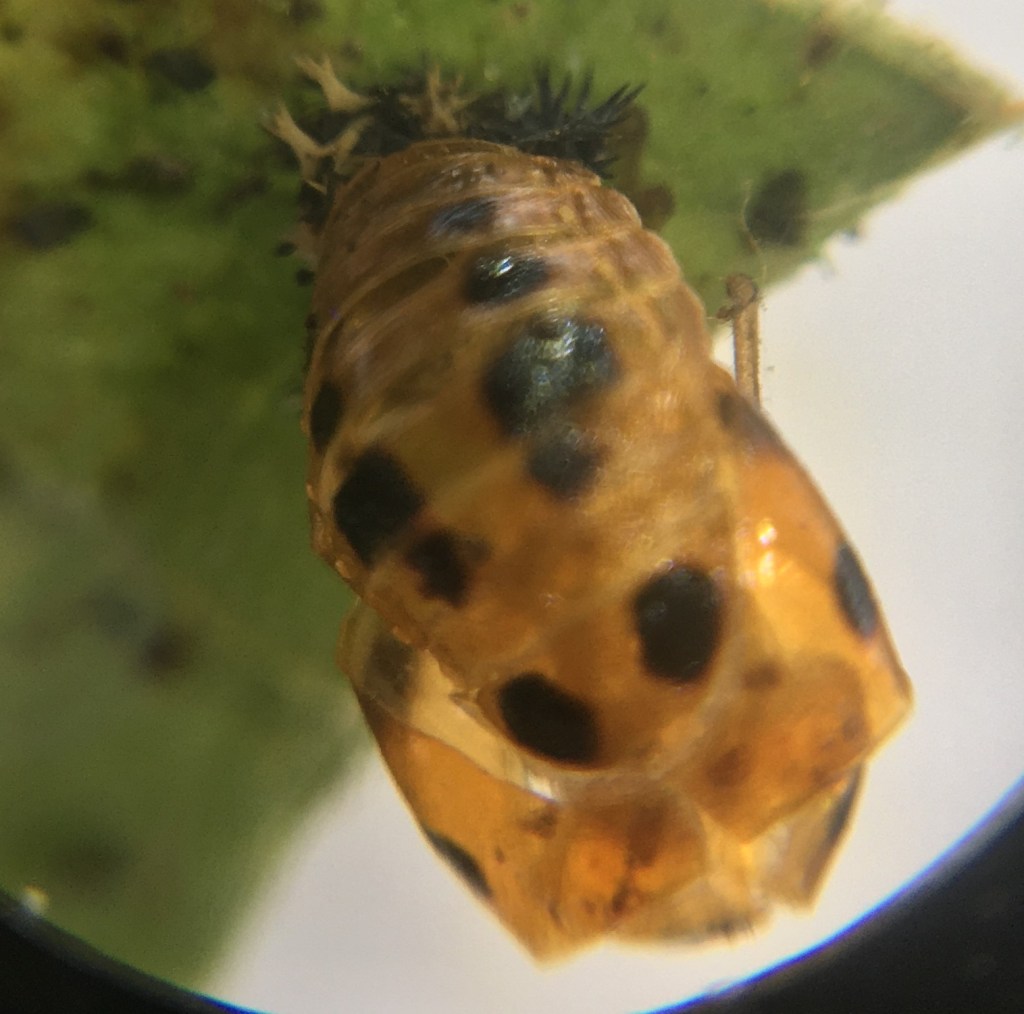
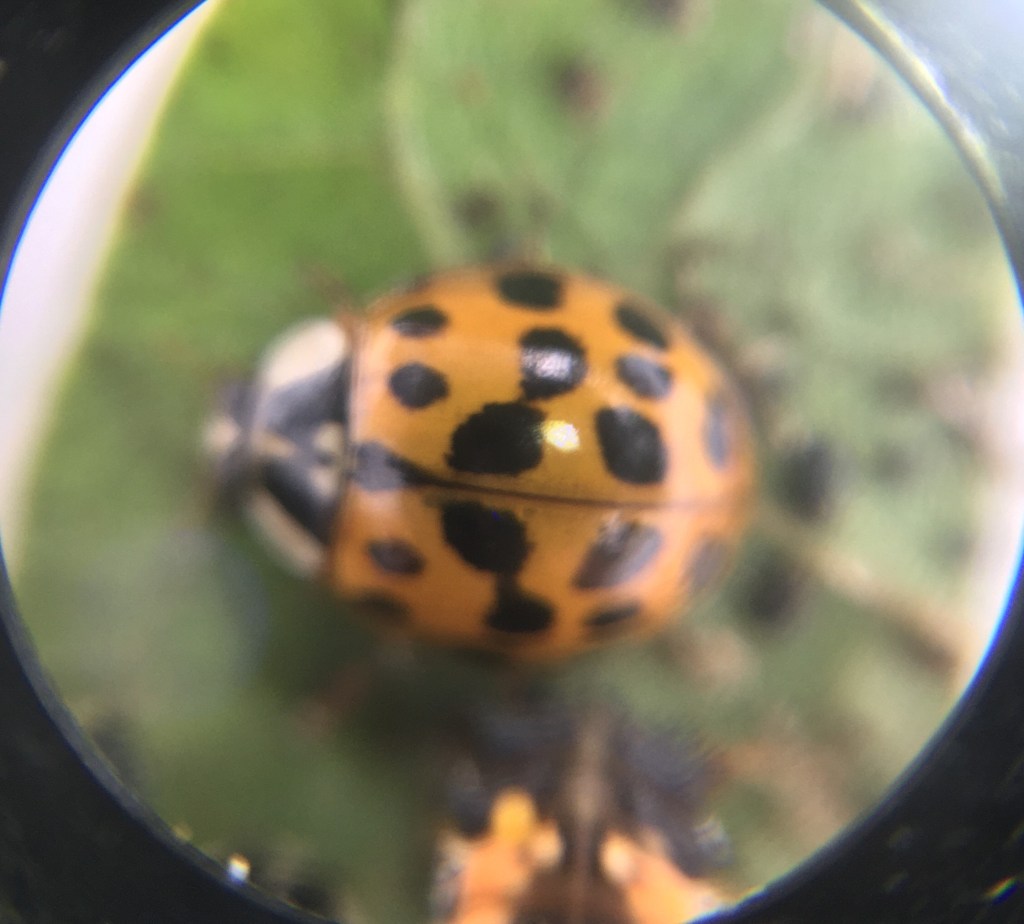
No… well yes… I do want that. But no. These are not ladybirds. These are Southern green shield bugs, also known as stink bugs. I know they’re definitely NOT ladybirds. I know because ladybirds start off as alien looking nymphs (click here for last week’s post). In fact when I wrote last week’s post I had put some eggs into the bug jar so I could confirm that they were ladybirds. They hatched and this is what they looked like below. Mini ladybird nymphs.

ladybird eggs under the microscope 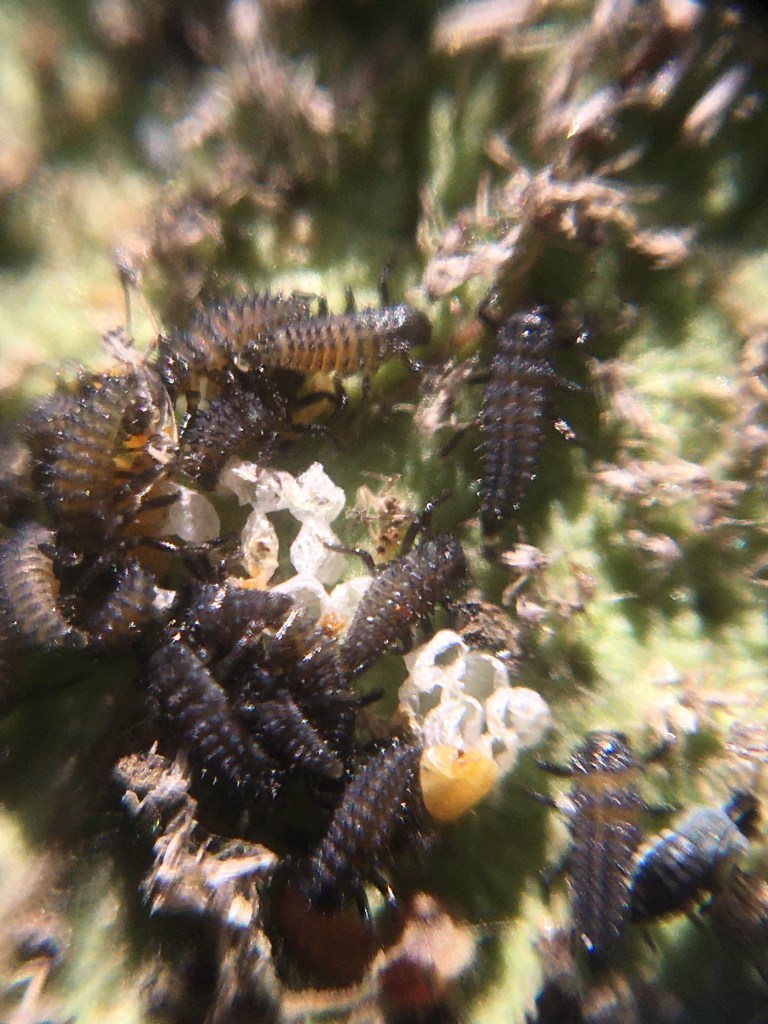
Newly hatched 
a tiny ladybird nymph
This is an interesting bug for it’s young alone. After hatching it goes through quite a few stages, known as instars before it becomes the recognisable green shield shaped bug. If you hadn’t seen them before, you wouldn’t be the only one to think that the different instars were different bugs. Now the common green shield bug (palomena prasina) adult looks very similar to the southern green shield bug (nezara viridula) except it has a darker patch at the back of the body. I’ve not seen any of them in the garden so I have no photos, but if I did, I would not mind as the common green shield bug isn’t a berry pirate. The southern one though…
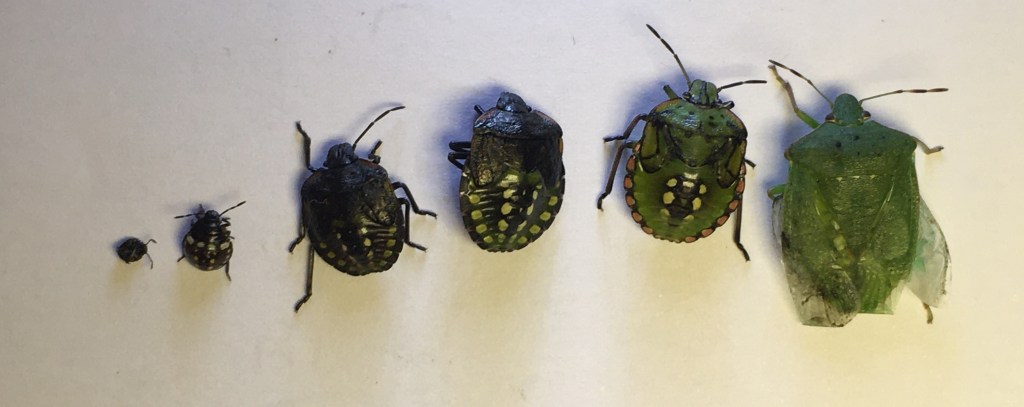
These are all the same bug!
This monster only arrived on our shores fairly recently (reportedly 2003). It is thought they hitched a lift on food produce from Africa. The southern green shield bug does a lot of damage. I first came across them about 6 years ago. My cucamelons had funny little bumps on them and it was only when I saw the shield bugs swarming over them (if a dozen constitutes a swarm) and put 2 and 2 together. I hadn’t really minded them in the last 2 years in this new garden, until they treated my blackberries like juice boxes and damaged hundreds of berries. I wouldn’t mind so much if they ate the whole berry. When half of the drupelets have gone this weird white colour, the berry just isn’t appealing. The individual drupelets then go on to die anyway. So, when the berry isn’t ripe and this damage is done, by the time the berry is ripe, the damaged drupelets are just disgusting. They have needle like stylets which they use for piercing. You can see the entry wound on the individual druplets.

spotted this 
discovered this 
found these guys 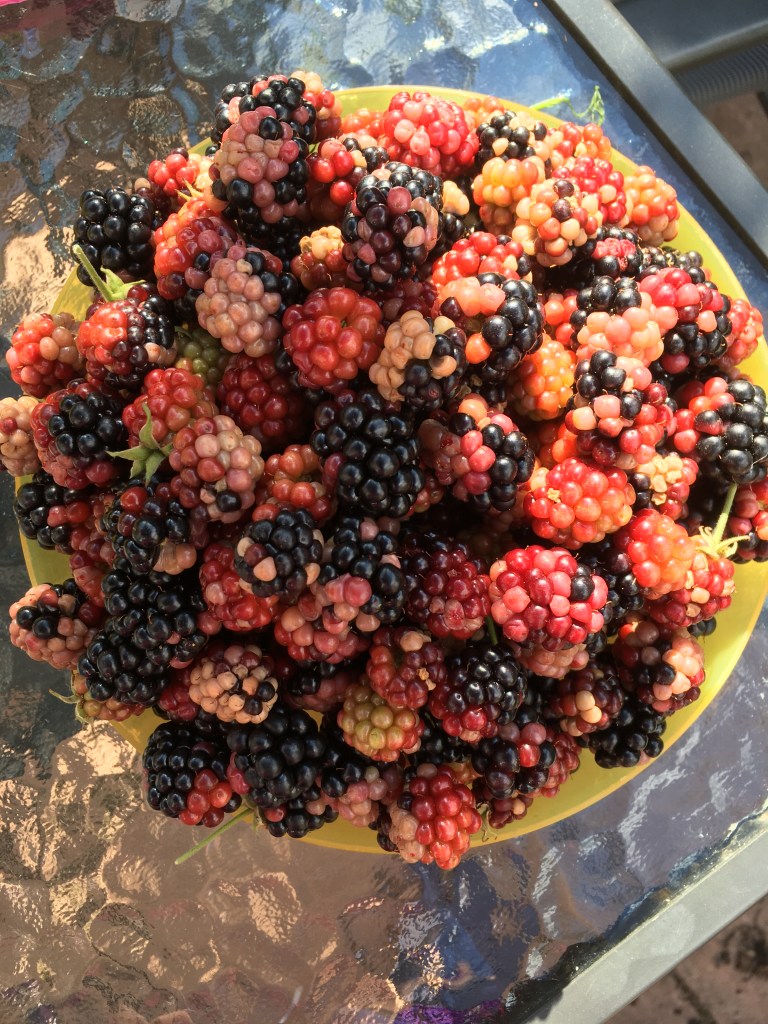
This is the damage done in 2 days. 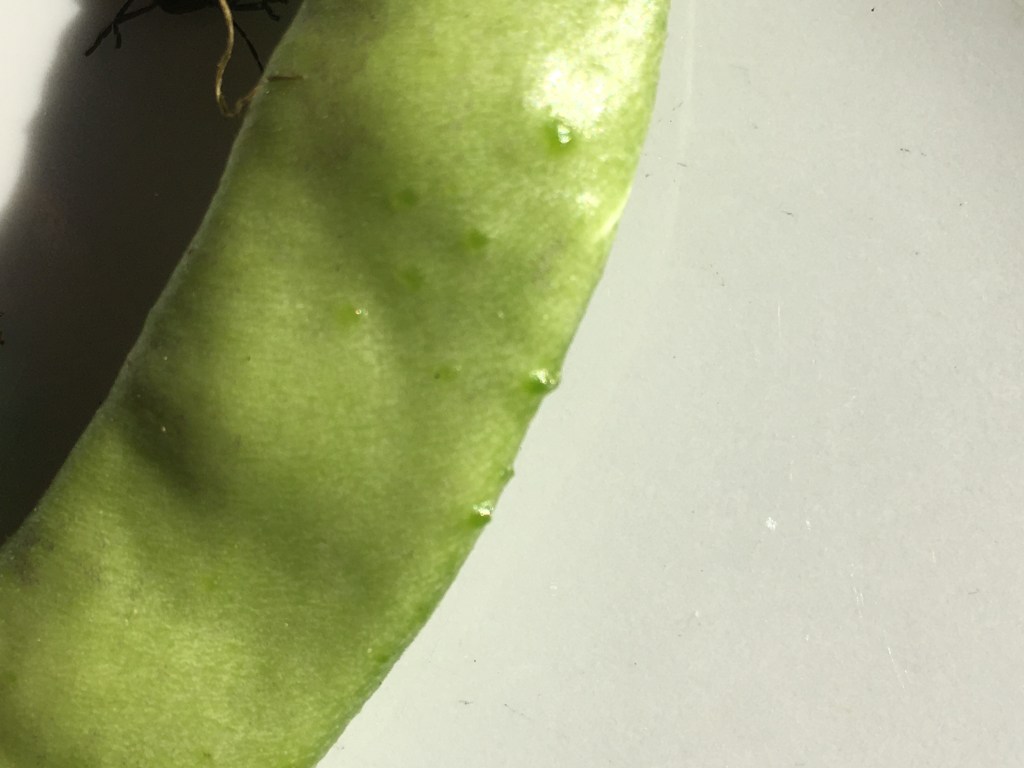
mild bumpy bean damage
I had harvested many of the blackberries 2 days before and everything looked lovely. In only 2 days they had done this. I knew it was them as, again, I saw them crawling over the berries. After a good old hunt and collect of the berry pirates there was considerably less damage.
They seem to favour berries, beans and tomatoes in our garden. Their eating can cause little bumpy scars on beans and cucamelons, which I don’t mind too much to be honest. Unfortunately when they feed heavily there can be distortion of the beans.
From looking at the young you wouldn’t have thought that they were green shield bugs. This is how they change over time. Just as an FYI they are a giant pain in the butt to kill. I tried to take photos of them alive, but boy do they move fast. I tried to drown them in an old jam jar. I thought they had died and lined them up to take photos. 20 minutes later though they were wandering around… Every…. Single…. One of them! These are hard little devils. I’m afraid my camera is only my iphone, I’m no photographer and my subjects were very reluctant so the photos are not great quality. The young come in stages called instars. I’m not sure how accurate my identification is, but this is a rough estimate of the nymphal stages:

newly hatched 1st instar 
2nd instar 
3rd instar 
4th instar 
5th instar 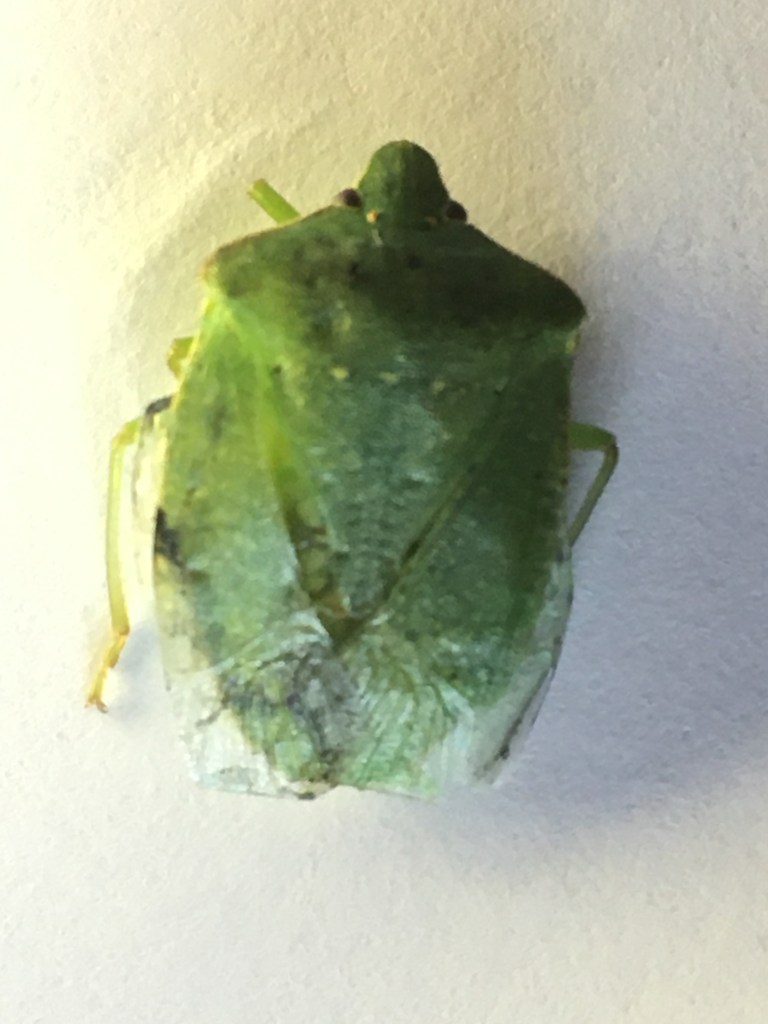
adult
They apparently stay on the egg cases for 48 hours, which is probably why I was lucky enough to spot them and capture a batch before they wreaked havoc. They moult between each stage and as far as I can tell only the adult has wings. The one from the above photo had a damaged wing so they never folded away properly.
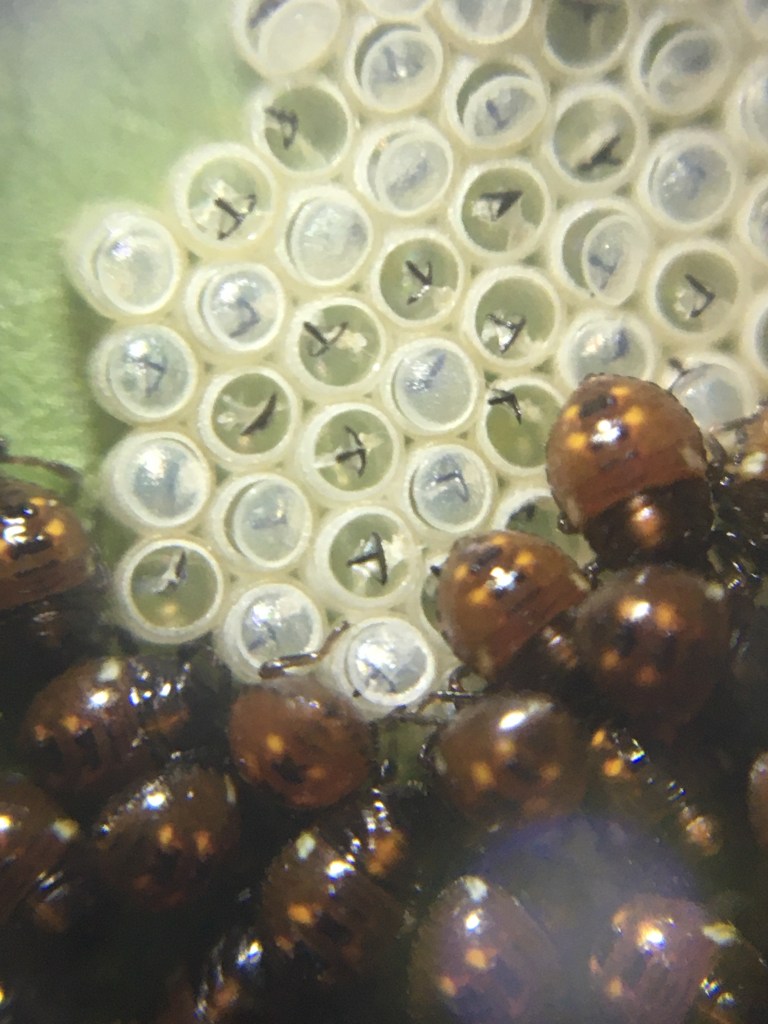
the egg cases 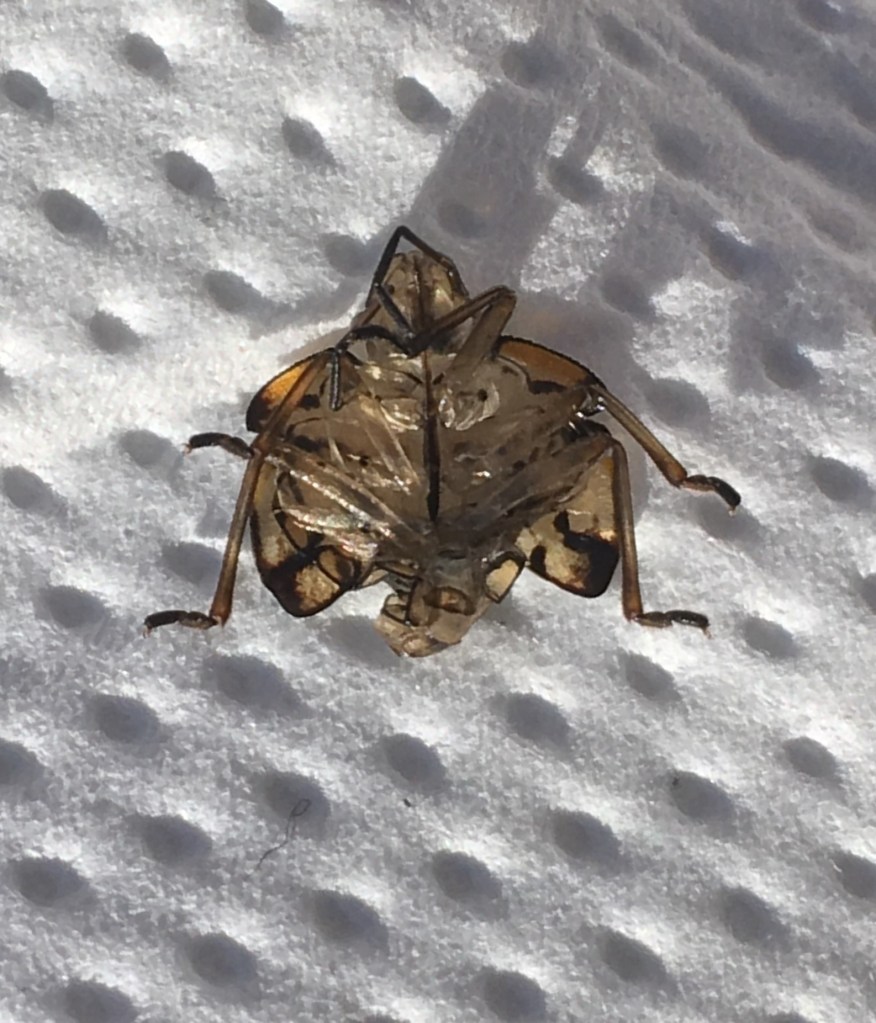
shell from 5th to adult 
4th instar under the microscope 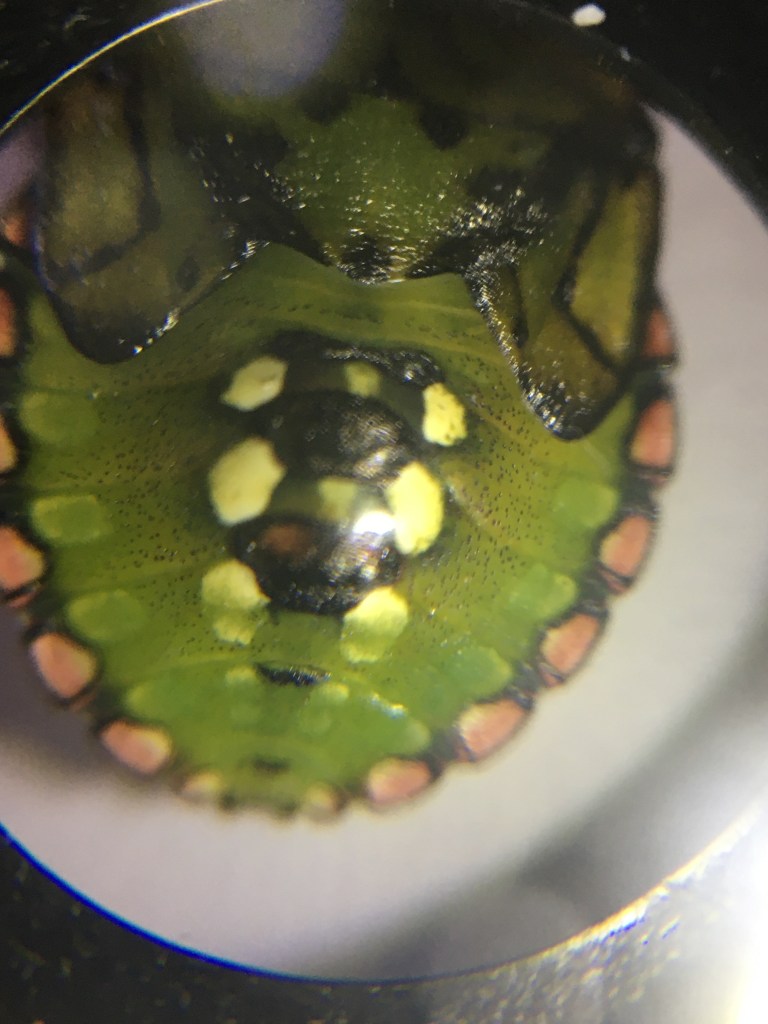
5th instar back under microscope 
5th instar belly under microscope
As I tried to take a photo of what I thought was a dead shield bug, it started to wiggle and then climbed into my microscope lens. They really are resilient little blighters!




 Not a Horticulturist