Pick them, eat them, press them and bathe in them. It’s safer to do all these things with edible flowers to avoid poisoning or dermatitis. Beware of even the ubiquitous daffodils!
Pick them
The harder thing is stopping my 3 year old from picking them. We’ve made it a blanket rule that she can’t pick flowers beyond our garden without checking with me first. This is both out of common courtesy and for safety. Please be warned that there are many common flowers that are poisonous or have noxious chemicals. Bluebells, snowdrops, hyacinths, crocus and daffodils are flowers often seen in gardens, but they all contain toxins. When we first moved into our house my little one took a shine to the daffodils. I didn’t think anything of letting her pick and play with them – like I did as a child in my own parents’ garden. She developed a rash where she had rubbed it on her skin. After a bit of research I found that daffodils have calcium oxalate crystals in their sap which irritate the skin – something well known to daffodil pickers and florists. We grow all flowers that are safe to touch. The next challenge was to teach her which of the flowers would turn into fruit and was therefore off limits.
We pretty much
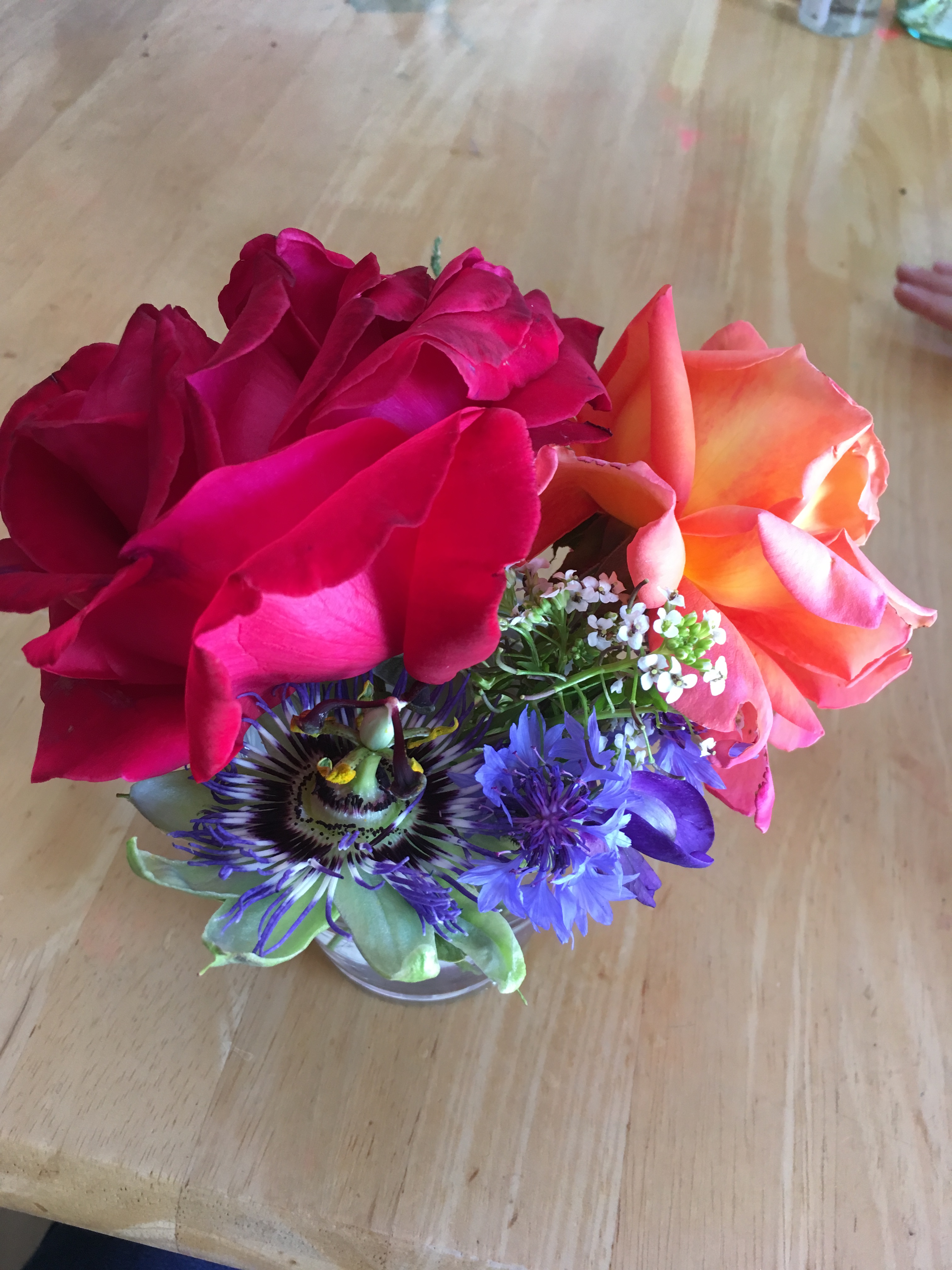
continually have a glass on the kitchen table that has the kid’s latest
pickings. It’s good for her to get to know the local flora and she likes the
colours and smells and textures. She has also learnt to exercise caution as
even edible flowers, like borage and roses, can have defence mechanisms like
little prickles and thorns.
Eat them!
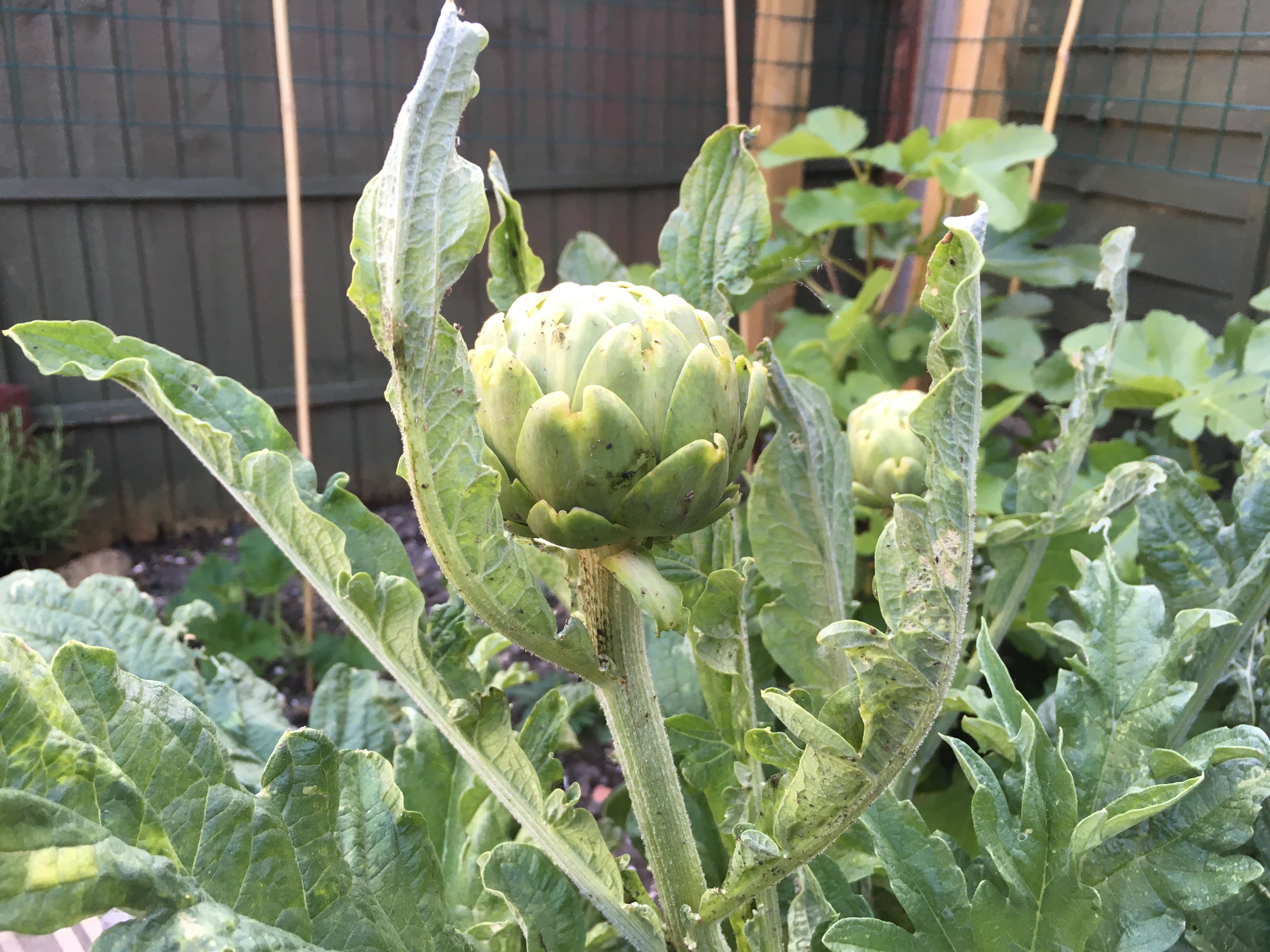
Artichokes
Borage – taste a bit like cucumber raw
Nasturtiums are quite spicy
Winter purslane eating is very much encouraged
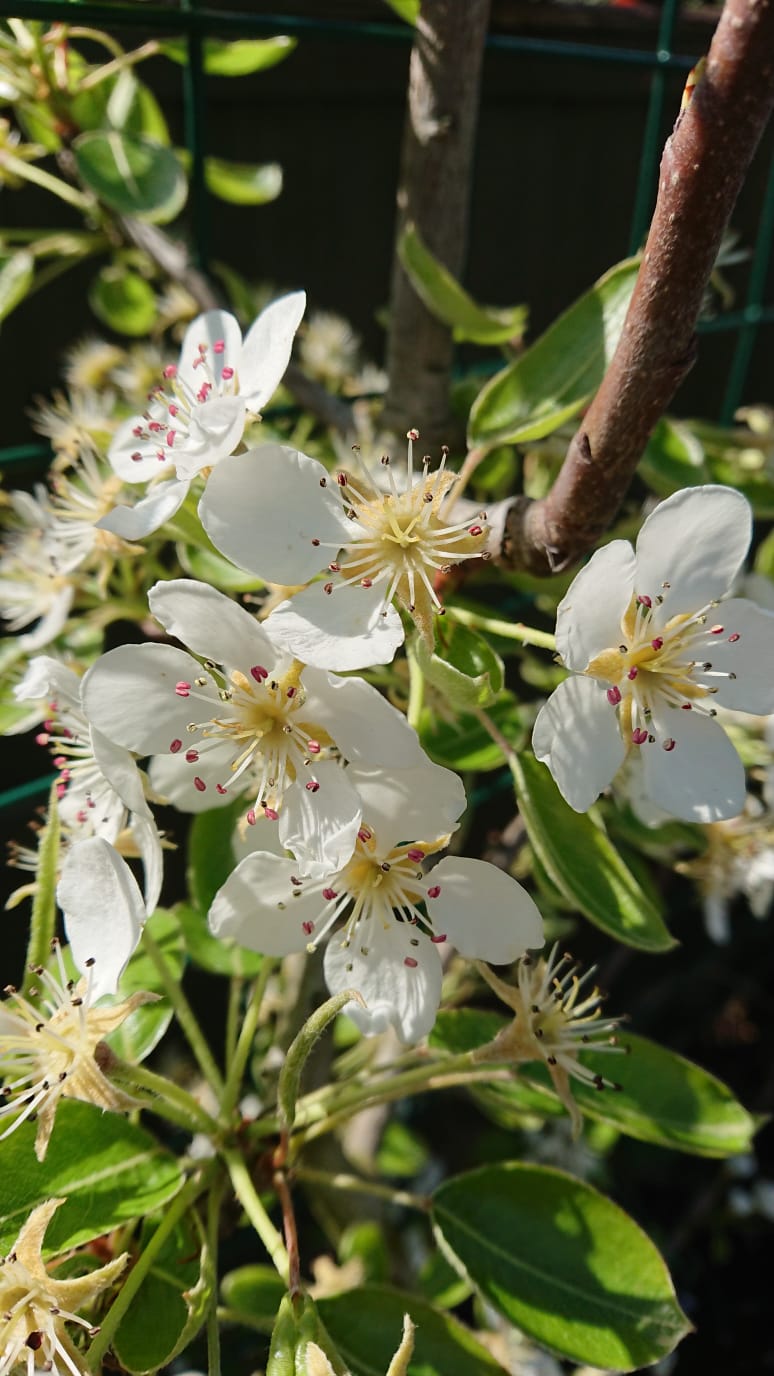
Apple flowers are off limits
It took a while to ensure that she only picks the safe things to graze on. Whilst we grow mostly edibles (we have grown sweet peas on the roof out of her reach and we also grow star jasmine – both for the fragrance) it’s worth nothing that edibles like tomatoes and potatoes have poisonous leaves, passiflora caerulea does have edible fruit, but the leaves, flowers and unripe fruit are poisonous, and asparagus has poisonous berries.
She loves the flowers from borage, winter purslane, mint, dill and basil, though to be honest these last 2 barely make it to flower as she also loves eating the leaves. With nasturtiums she will pinch off the nectar containing cone to suck. She’s not keen on the cornflowers, calendula, watercress, coriander or brassica flowers when they grow. She loves the artichokes and chard flowers when cooked. This is the first year that we’re trying to grow violets, red clover, daisies, chamomile and bellflower in the lawn. I’ll have to let you know how they fare and how tasty they are (or aren’t).
In addition to education on what is edible, it’s important that they learn that flowers may sometimes be covered in pesticides so they cannot go around eating flowers outside your own home environment.
It sounds like the risk isn’t worth it but any adult who forages had to start learning it at some point. I believe it’s important for our kids (and everyone) to make the connection between what they eat and how it’s produced. With our little one sometimes she eats enough borage and winter purslane flowers (and leaves) that I don’t have to worry about her vegetable intake.
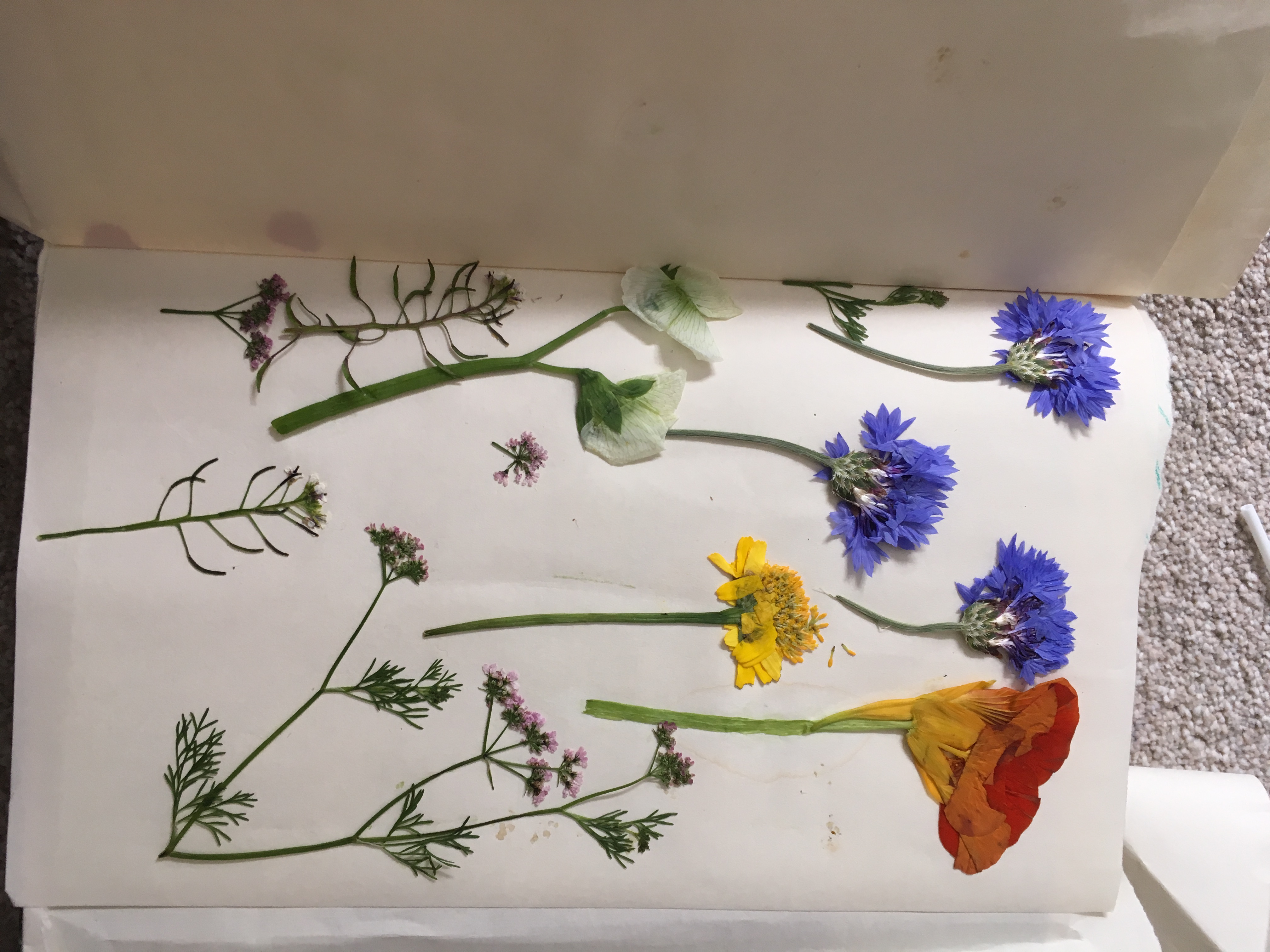
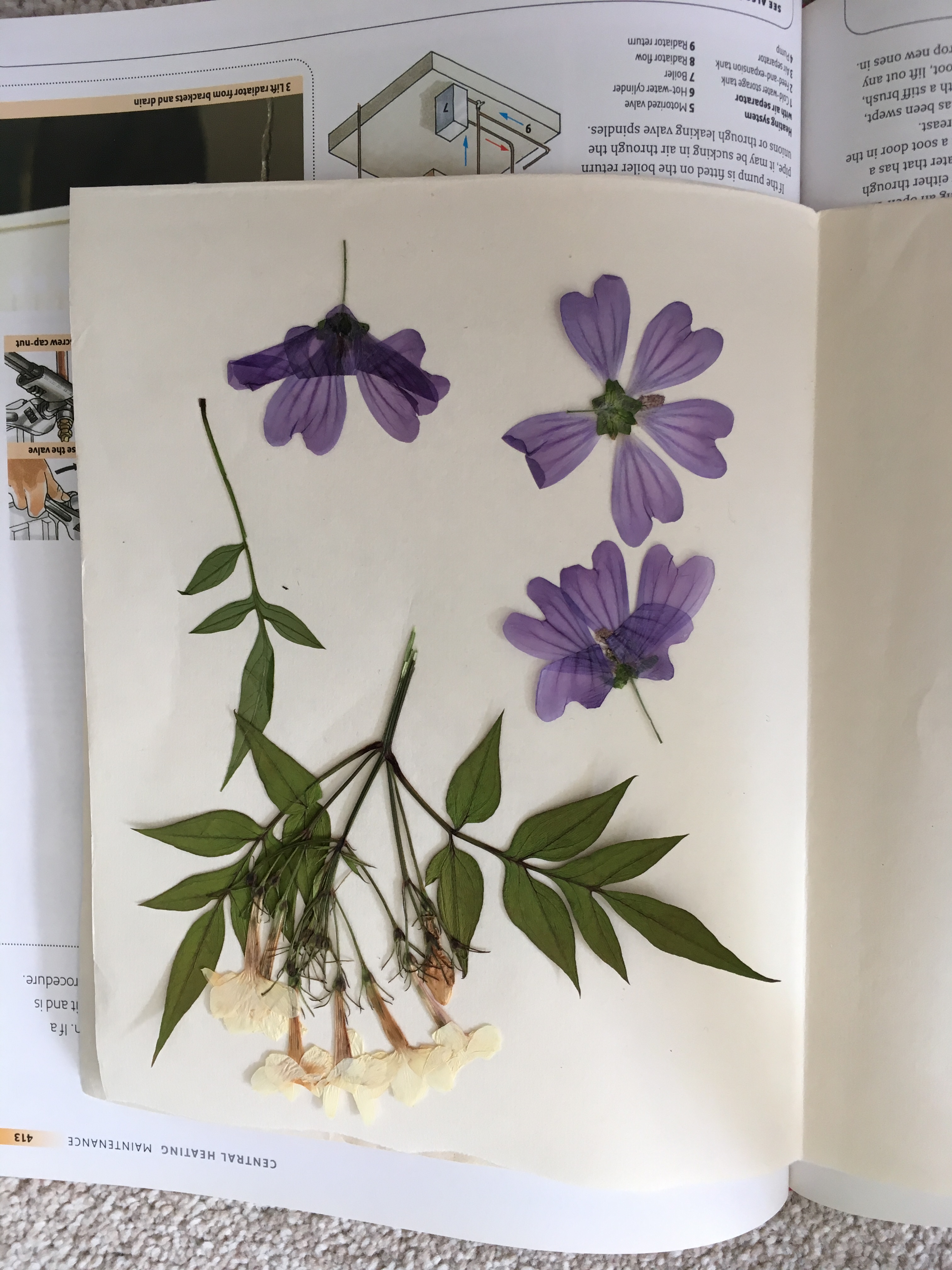
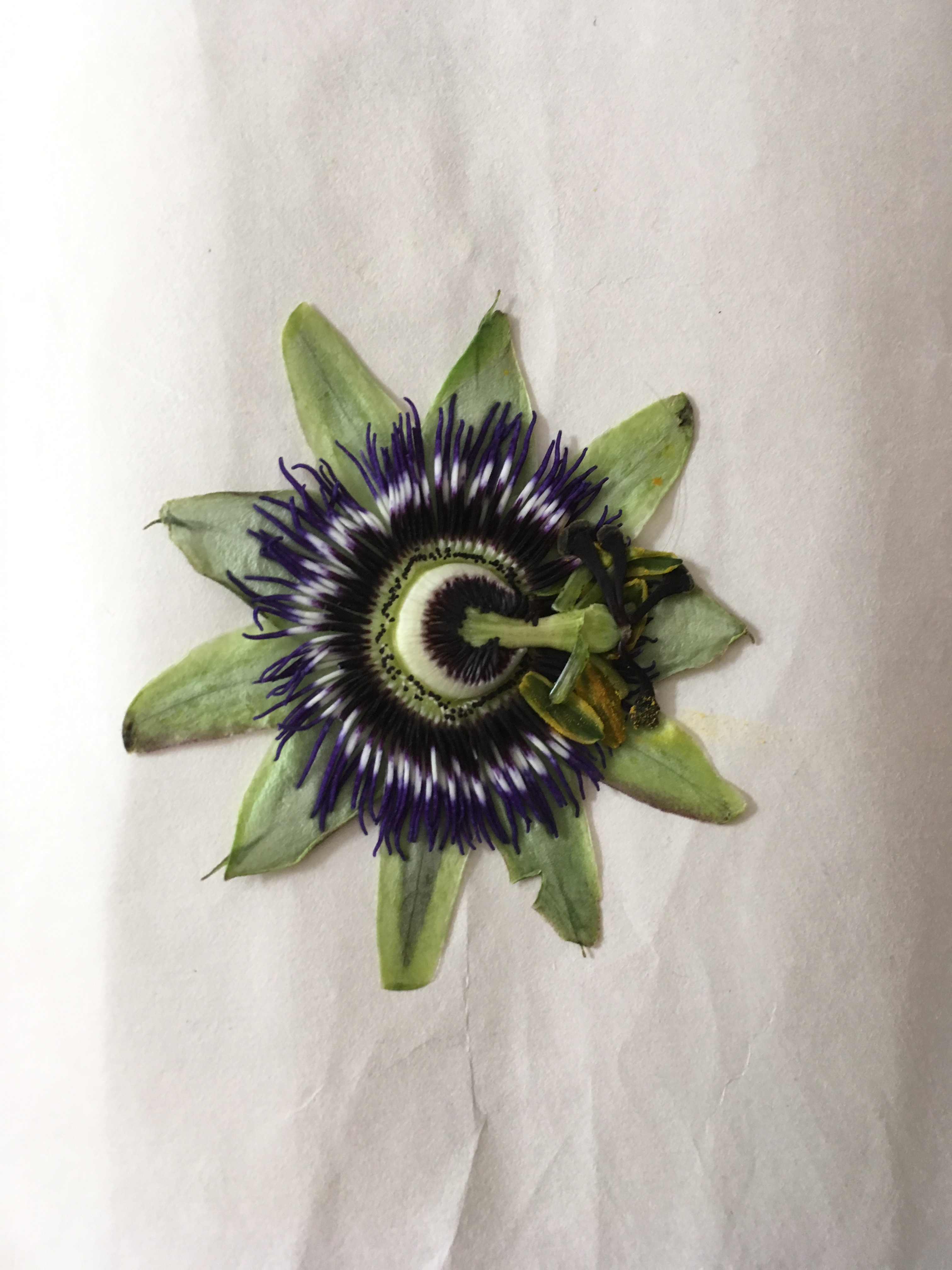
Press them
This was something we did as kids. Life is very different these days. Our kids are initiated into technology so early. I won’t lie (please don’t judge me), my one was already tapping away on my phone by her 3rd birthday. So, it’s nice to do activities with her that I did during my own childhood. You just need to arrange them between pieces of paper (something that is a little absorbent is best), enclose that in a heavy book, stack more books on top and leave for about 2 weeks.
Place some absorbent paper in the pages of a heavy book
Lay your flowers down
Add a weight. A small child is less reliable than a stack of other heavy books
After a week or so they look like this…
…or this
Fleshy flowers like passion flower will need about 2 weeks minimum.
Little one loves to make cards
This was for my birthday.
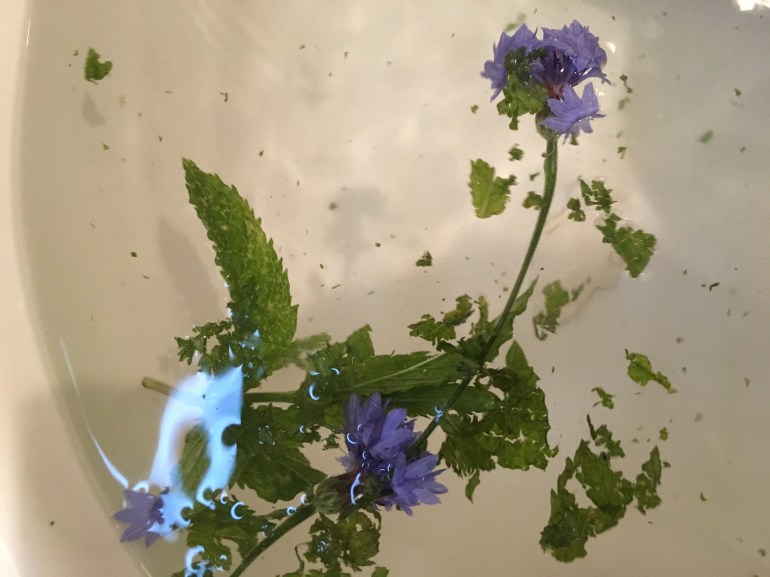
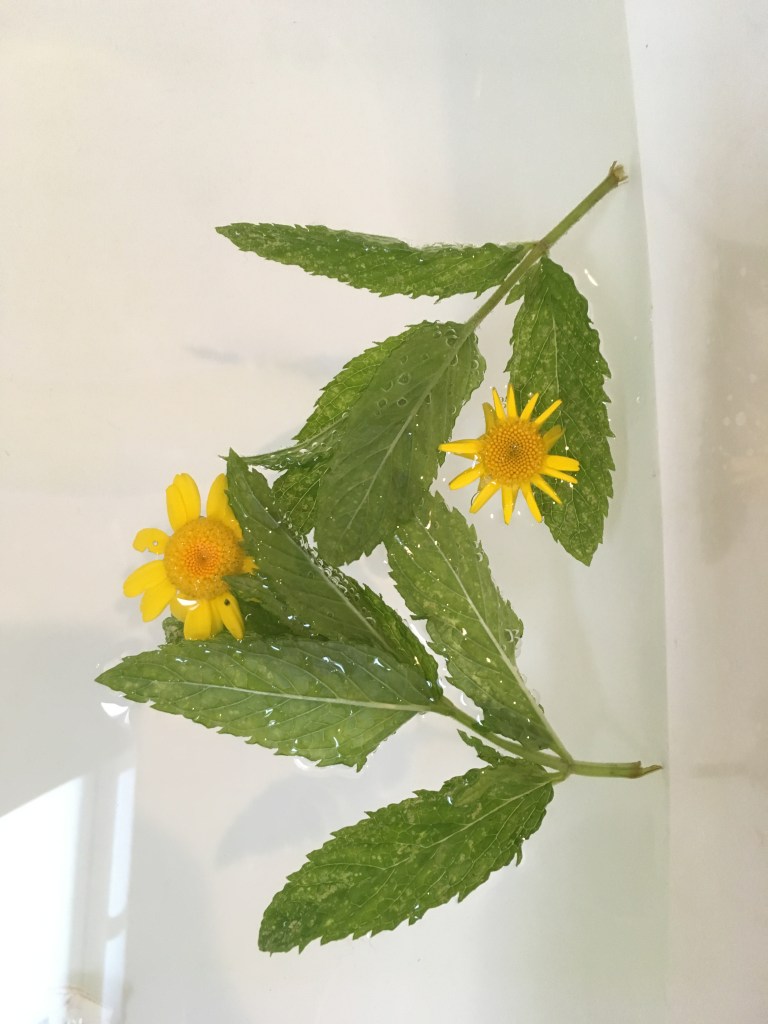
Bathe in them
My little one has eczema that stems from allergies. This means a bath every night in plain old water with a soap substitute but sometimes to make it interesting we’ll throw in something from the garden. There are plenty of things that look and/or smell good. Here’s where you must do a bit of research and exercise caution (see details about daffodils above). Generally, we follow the rule, if you can eat it, you can probably bathe in it and don’t go overboard. If unsure put a bloom or two in for the first bath. Excess may cause issues (like a bath with half of my mint patch would certainly cause eye irritation, if not skin irritation) and besides I’d like to keep some of my flowers in the garden.
Cornflowers and mint
calendula and mint
rose and rosemary
lavender with a couple of drops of food colouring.
A strainer like this…
… will keep your pipes from getting clogged
Bee Happy
So as a last thing, it’s quite nice for our little one to get to know about bees, how amazing they are and how much we rely on them for pollination. She’s learnt not to harm them or be scared of them and she’s rather fond of them.
bumble bee visiting our lavender
don’t worry… not actually a hornet… it’s a hornet mimic hoverfly which is another pollinator
Short version: Grow perennial kales and collards for an easy life. In addition grow annual kales for eating through winter. Eat all bits of any brassicas that aren’t too fibrous. Daubenton’s kale is amazing – unless of course you dislike the taste of brassicas. If that’s the case then maybe this post isn’t for you, unless you can be convinced that home grown tastes better than shop bought.
Brassicas and St Bernards
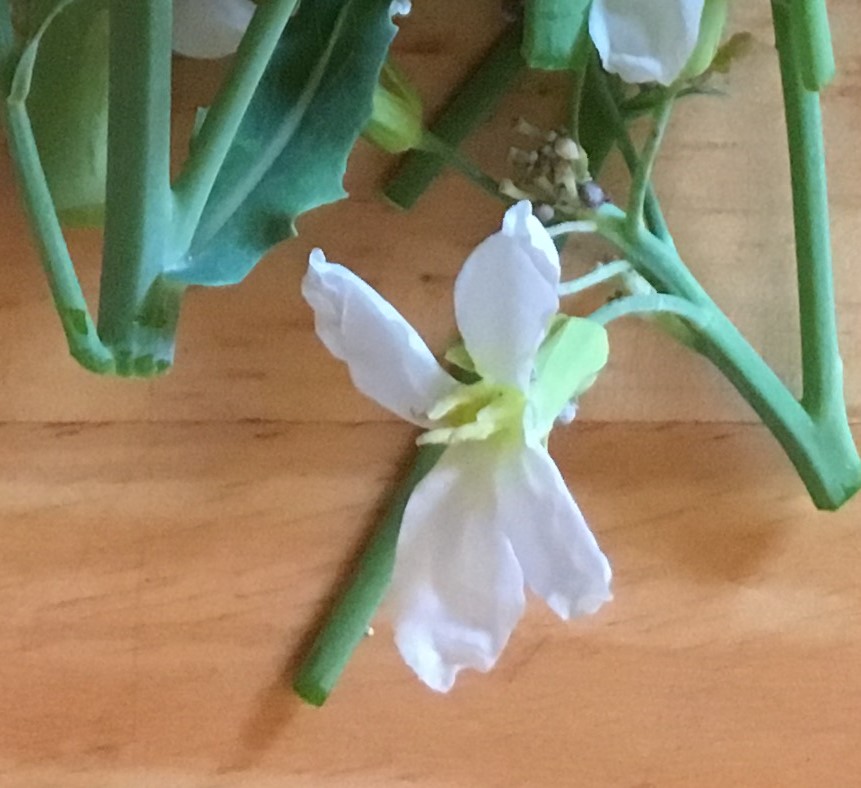
So kales and collards are brassicas. These also include cabbages, broccoli, cauliflower, Brussel sprouts, the odd-looking kohl rabi and the Chinese sounding kai lan. You may find it surprising that they all belong to the same species, all with 4 petals in their flowers. If you remember your GCSE Biology you will know that that ‘same species’ means they can pollinate each other. It’s like dogs. All dogs are the same species despite how very different looking the breeds are. A chihuahua and a St Bernard could mate to produce puppies but I couldn’t begin to imagine what traits the offspring would have.
Brassicas, like dogs have diversified through human intervention. People have chosen traits that they like and through cultivation (or breeding in the case of dogs) have selectively grown (bred) a variety (breed) that has the desired characteristics. Some brassicas are grown for their flower buds, like cauliflower and broccoli. Some are grown for the succulent stems like, kai lan.
Given that they are all the same species and all parts of the plant (except the roots) are edible, I’d like to encourage you to try the bits of brassicas that you may not usually eat. It’s good for your bank account and it’s good for the environment. Obviously there are some bits that are not worth eating. You’ll not be surprised to hear that walking stick collard stems are really very tough. Feel free to try broccoli leaves or the flowers of any the brassicas. This year we have begun roasting the cauliflower leaves (shop bought I’m afraid) that we used to throw away. We literally pull the leaves off, wash, chop into 1-2cm width sections, toss in oil and a pinch of salt and roast on 190oC (fan) for 20mins. You can even roast them with the cauliflower florets and stem cut into around inch sized pieces. We find them tastier than the florets but tougher on the teeth.
To Grow or Not to Grow?
Being all the same species, it does mean that they generally do well in the same conditions. They are decently shade tolerant and are good for winter growing. They also favour alkaline soil. Now which of the brassicas are the easiest to grow?
Cabbages
The books all go on about cabbages and Brussel sprouts. I always see the seeds in the shops but I don’t know a single person who grows them. I attempted to grow cabbages, once about 11 years ago. They took an awfully long time. I patiently waited the suggested time, cut off my shot putt sized head, removed the lacey looking caterpillar eaten leaves, removed the leaves with little holes in, removed some more leaves, cut the now closer to tennis ball sized cabbage in half to find some more little worm like things. I was still determined to eat what I could salvage. The other 3 cabbages that I had managed to grow did not fare much better, but at least I was mentally prepared. I have not planted cabbages since. A red cabbage grew of its own accord last year but it didn’t even make it to my kitchen as it was so infested.
Brussel sprouts
My last pathetic plant of last year’s crop that by March still had no buds. At all.
I’ve grown about 20 Brussel sprouts plants in the course of 3 years. No matter how long I wait, I only get pathetic pea to marble sized buds. The buds eventually start to open instead of getting any bigger. Out of all the plants, in the whole time, I may have had about 5 respectable sized sprouts.
I could do the research and learn how to grow cabbages and sprouts successfully (maybe), but I just don’t see the point. They take forever to grow, they have a fairly large footprint, if they’re tasty they get eaten by something else first, you have to practise good crop rotation and they have to be planted every year. They also haven’t tasted any better than shop bought cabbages or sprouts.
Kales and Collards
Here begins the brassica love. So – about a year and a half ago I was looking for perennials to make life easier, something to keep the garden green over winter and something to cover the hungry gap. In my hunt I found kales and collards.
The Annuals
Clockwise starting top left: Red Russian, Pentland Brig and Cavelo Nero in a large pot by our front gate. These are about 3 months old and are crammed into the space. I’m hoping the Cavelo Nero will grow nice and tall and leave more space at the bottom for the others. I’ll eat whatever is growing the most into submission to allow space.
There is a plethora of annual (or biannual really) kales and collards seeds available in shops and online. Some of them are quite beautiful and come in pinks, whites, purples and greens. I, therefore, don’t understand why anyone grows ornamental cabbages.
Kales are fab! You sow the seeds. If you need to thin the plants, you eat the spare seedlings. Once you think the leaves are big enough and the plant has enough to spare – you start taking the leaves. The plant continues to grow, and you continue to harvest over a long period. You avoid a glut that needs storing and one of my favourite things about harvesting kale is that you are providing maintenance as you do so. Let me explain.
If you’re waiting for a plant to mature before you harvest, like cabbage, you don’t really pay much attention to it. If you’re regularly picking from a plant, as you look for leaves to harvest you may see slugs, snails or caterpillars that need picking off. If a leaf is badly infested with aphids and you don’t want to eat it, you can remove it and bin it. If you have a leaf with a few unwelcome guests, you can harvest it and give it a good wash before cooking. The pests are now going down the plug hole and are no longer in your garden.
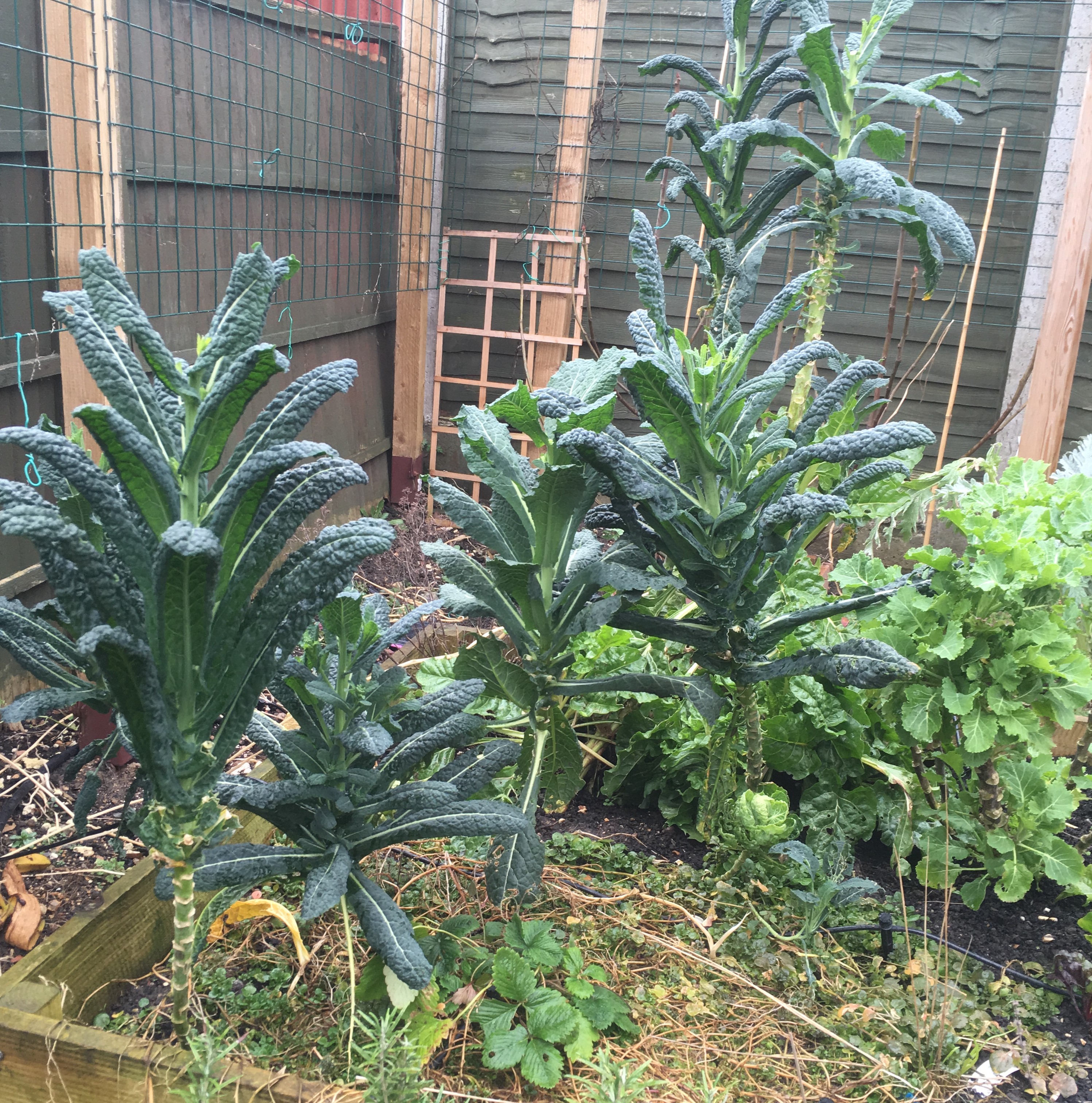
Growth then slows down with colder weather, but there is still enough growth to feed you over winter. Kales and collards are hardy and after a frost they are sweeter. Then as the weather warms up the plant will attempt to flower to make seeds. When this happens to Cavelo Nero it is a bonus. The plant will send out masses of tasty tender flower shoots. These need to be cut off because once kales ‘goes to seed’ they die. However, if you keep cutting back the flower shoots more (albeit thinner ones) will grow to replace the ones you cut off. You do eventually give up as the flower shoots becomes so thin that you can’t see the point in trying to cook them.
It’s hard to see but in this photo the brightest green parts are the flower shoots just beginning here in March. They form at the base of the leaves and have their own mini leaves. They kept us in tender greens till the end of April.
There is a large number of varieties, but these are ones that
I have grown and would recommend.
Cavelo Nero leaves makes great kale chips or shredded in dishes. These were planted late summer and this is end of Jan. By end of March see the photo above.
Pentland brig has a slight tang that reminds me of pak choi. It has a sweet kale flavour but can have a hint of bitterness in the aftertaste.
Teddie Tree Collard, top left, is not particularly tender but it is sweet and tastes slightly nutty and buttery. Red Russian, bottom right, is more buttery/creamy but has the slight bitter after taste. All bitterness disappears after a cold spell.
If anyone has any favourite kales that they would like to recommend or know of any kales that have yummy flower shoots like Cavelo Nero, please do post in the comments.
The Perennials
The perennial kales and collards are harder to get hold of. There are no seeds. The reason why these are perennial is that they don’t flower or make seeds for a few years. Even if a plant does flower and seed (and then, of course, die), because of the ease of cross pollination you couldn’t be sure that the offspring would be perennial. This means that you must get a cutting. This was something that I found quite difficult. These websites either have them or have a waiting list:
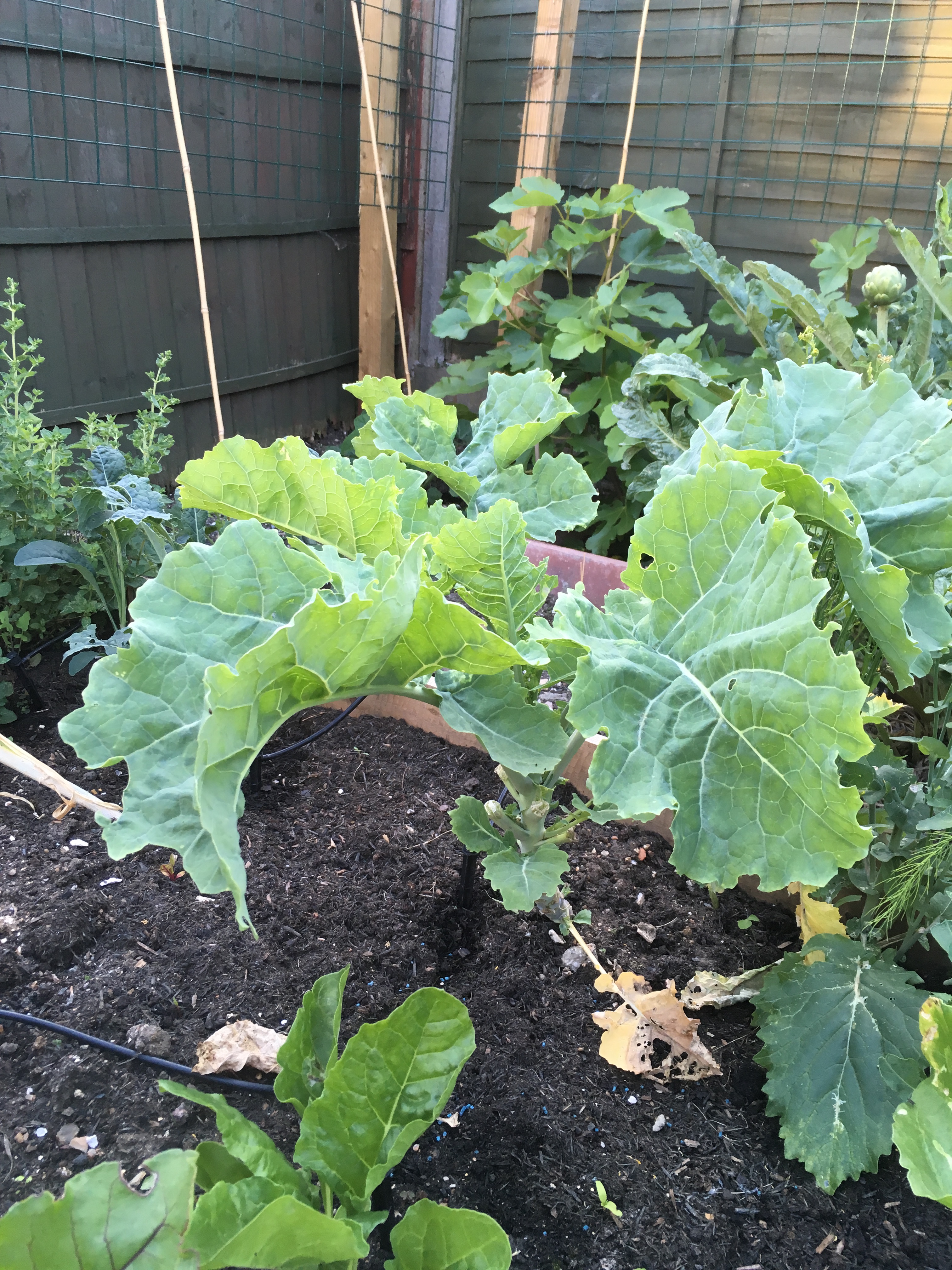
Non-variegated at 5 months from receiving the cutting
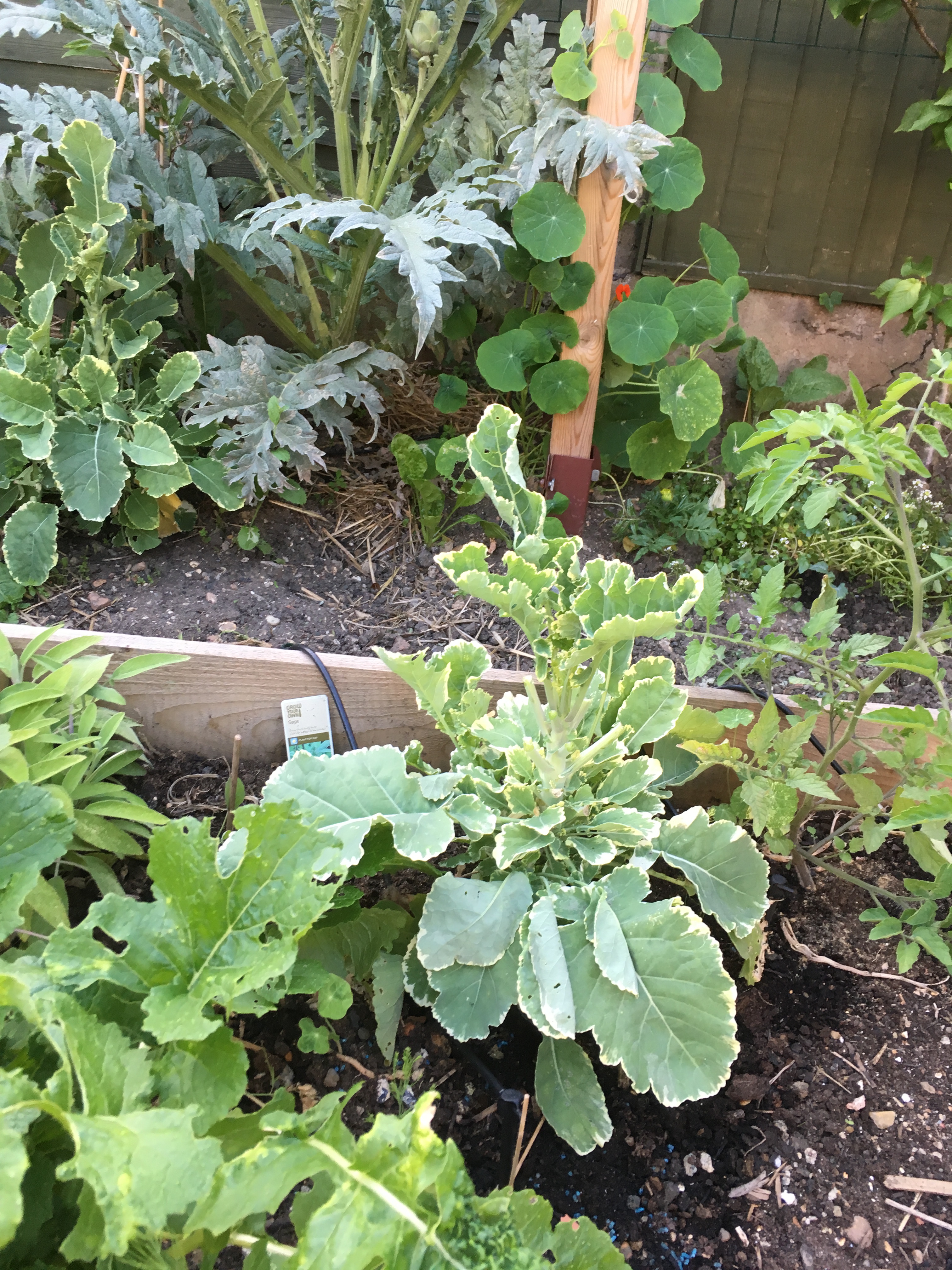
Variegated at 5 months. The cuttings came not long before Christmas so they weren’t going to grow much in the cold months.
I ended up getting my Daubenton’s kale from ebay. I bought 2 variegated and 2 non-variegated. The variegated does better in my garden and the cuttings root more easily. If you’ve looked at the websites, you may be shocked at the prices. I was too. Now that I’ve been growing mine for a year and a half I think the pricing is fair. The plants are still quite rare. They’re not something you’ll be likely to see in your local gardening centre. Apparently, they used to be more common but commercial cultivators in the past shunned perennial brassicas in favour of annuals that they could sell seed for year after year.
If they’re hard to get and expensive surely they’re not
worth it, right? Well:
We get year-round abundance.
They’re expected to continue to do so for years.
They fed us through winter and the hungry gap.
Even now in June it is growing vigorously and with asparagus season over and our sugar snaps just starting, the Daubentons provide our family of 3 with a vegetable side dish every other day.
We’ve gotten plenty of new plants from the original 3. Some have been kept and grown and some given to friends. It’s not just a desire to get everyone growing it, it’s also like insurance. If I manage to kill all mine off hopefully there’ll be someone I could beg a cutting from.
They are mostly left alone by pests.
Most importantly, they taste yummy. I’ve had no bitterness at any point of the year. My very fussy 3 year old absolutely loves it just simply fried in oil with a bit of salt. She won’t eat shop bought curly kale.
The smaller leaves are tender. The large ones are tougher but still tasty.
5 months
A year. 2 feet tall.
A year and a half. 4 feet tall and has been eaten all winter
That’s a lot to ask of a plant that cost you about a tenner.
Maybe it’s because cuttings are small. Most people wouldn’t think twice about
paying £10 for an apple tree.
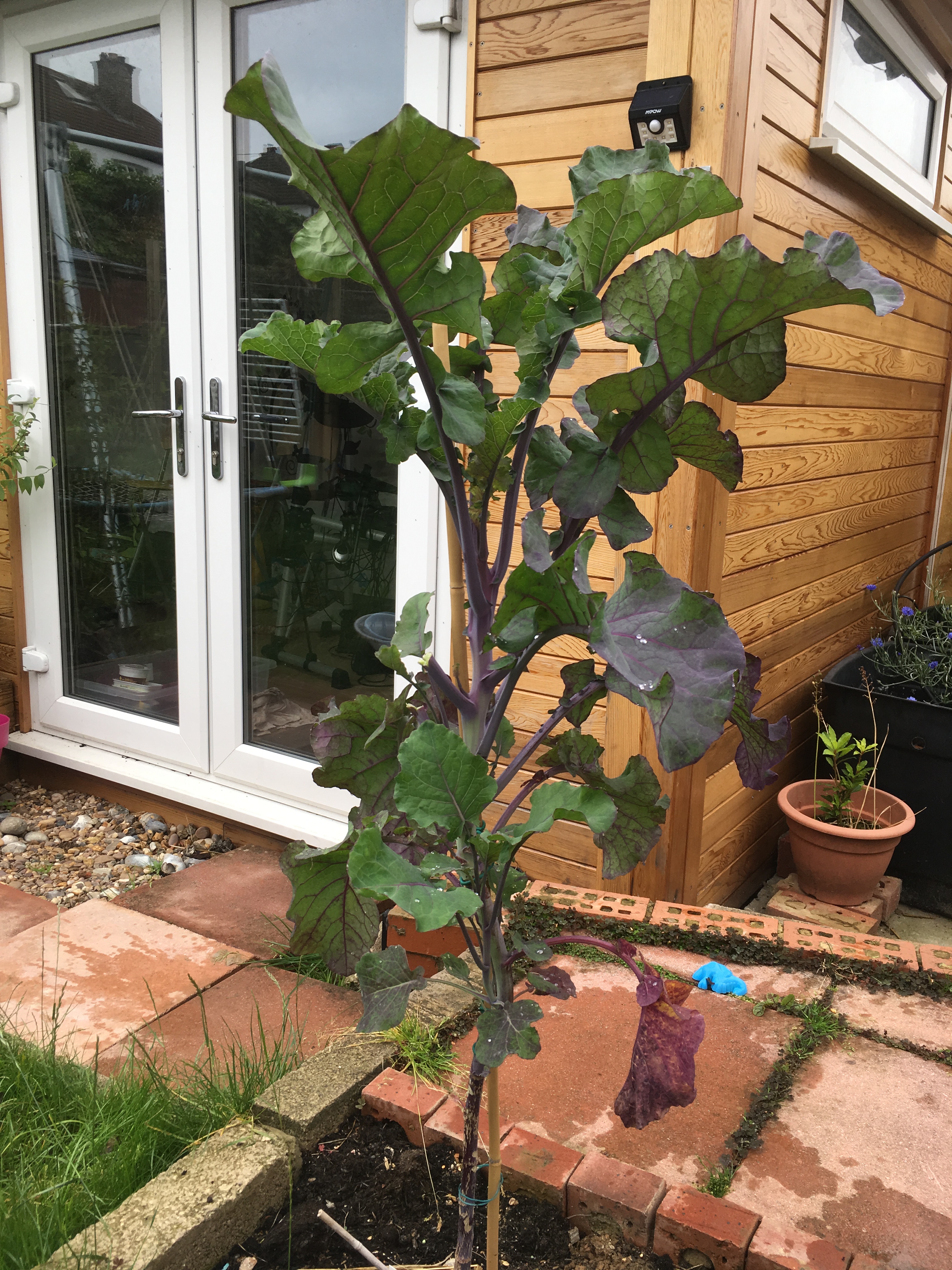
Purple Tree Collard
6 months old and 3 feet tall.
It wasn’t till December last year that I finally managed to
get hold of a purple tree collard (from The Backyard Larder). I have much less
to say about it because I’ve only had it 7 months. Still, I’ve eaten from it three
times so far and its taste is similar to the daubentons but is slightly nuttier
and sweeter. It also requires a bit more chewing. My 3 year old has yet to
touch it.
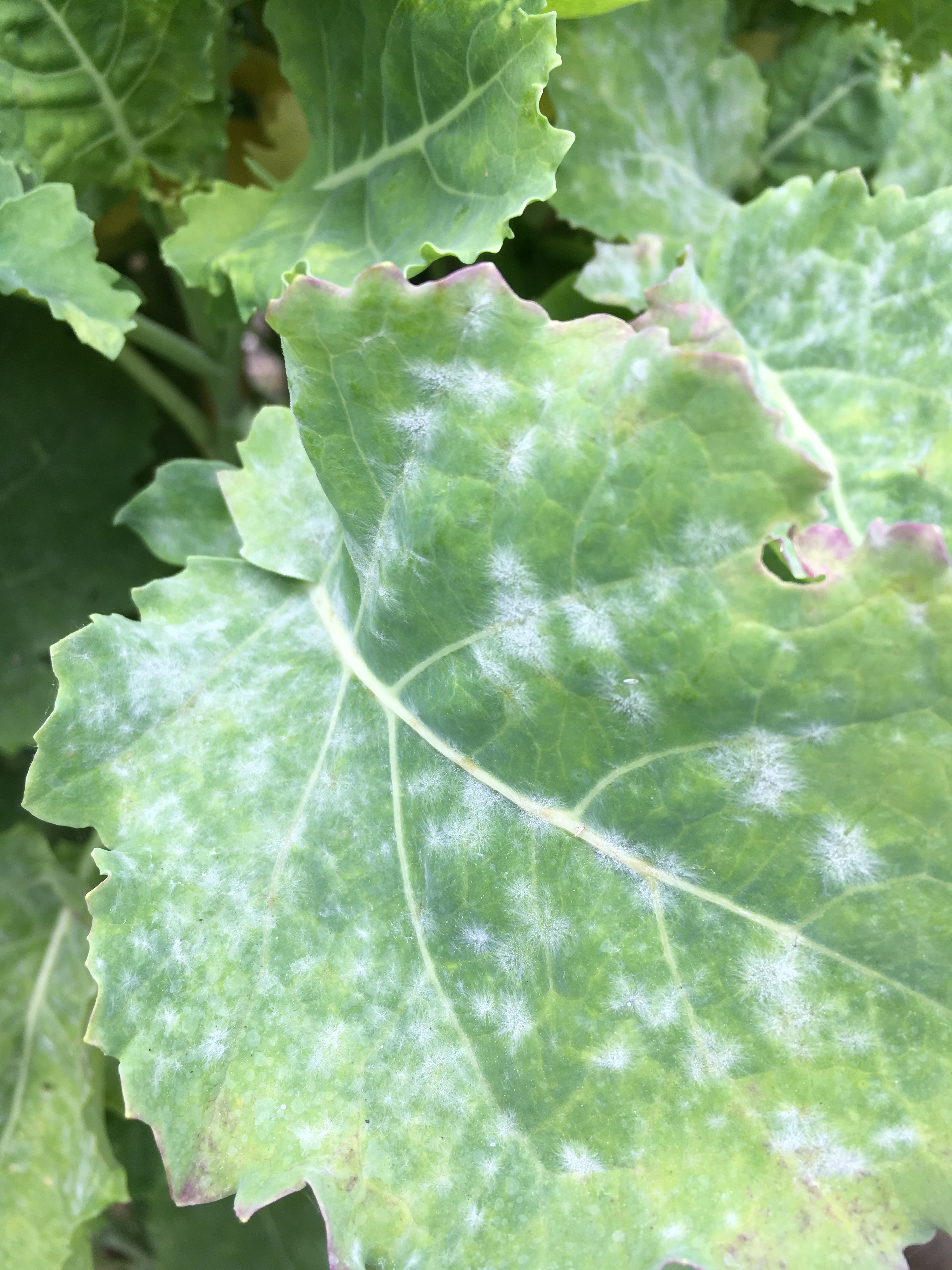
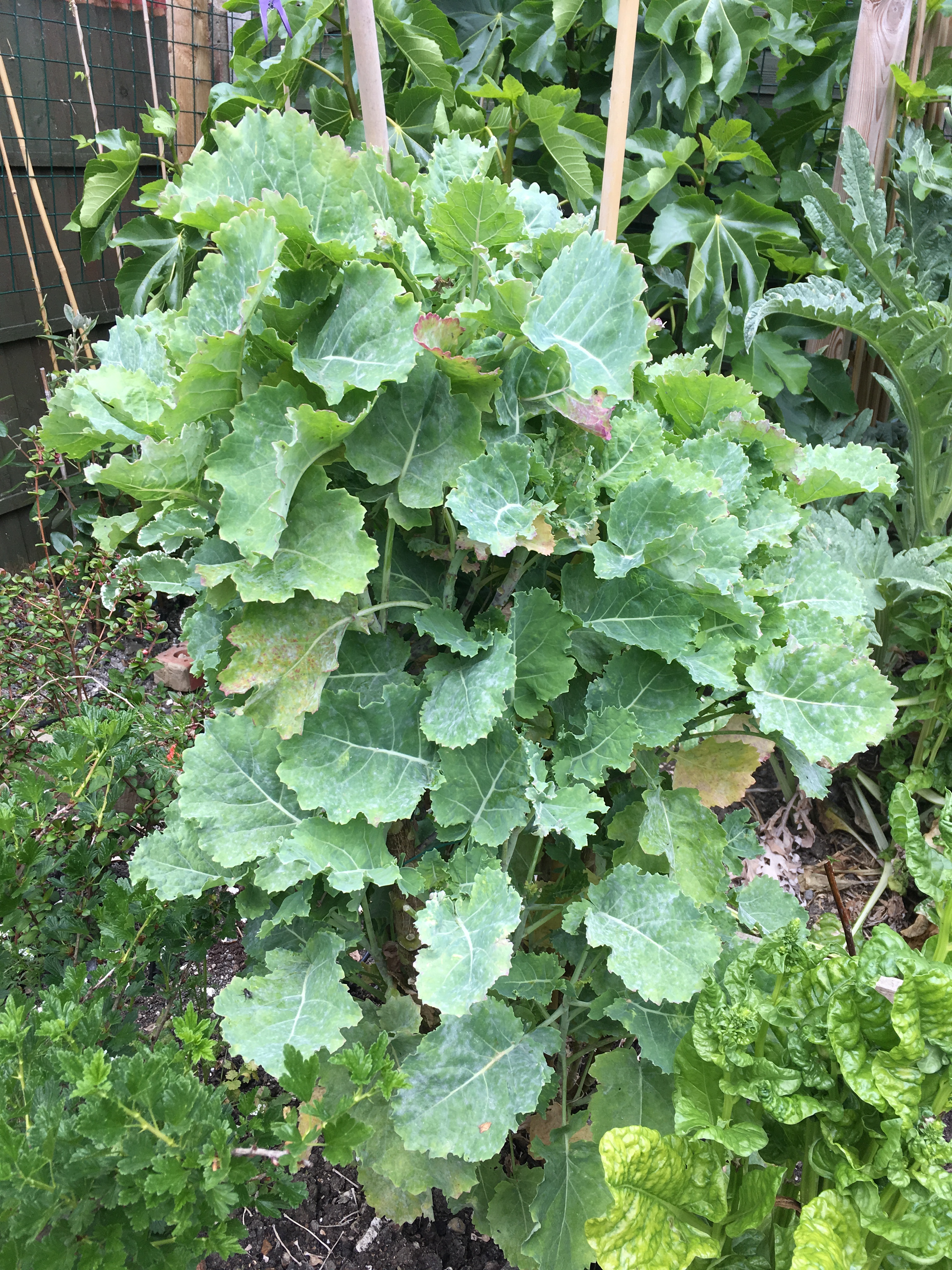
All my kales and collards, perennial or otherwise have few problems with pests beyond the occasional hole. The only thing that has been an issue has been powdery mildew. If it happens removal all the affected leaves and spray with a mix of a litre of water, a few drops of soap dish, a few drops of vegetable oil and half a teaspoon of bicarbonate soda. If caught late then it’s the same thing but you’ll be removing almost all the leaves. Whenever I have done this the plant has always sprung back after a month or so. It only happens in the hotter months when the plant is stressed from lack of water. The spores are spread by disturbance during rainfall and are specific to brassicas. So they won’t infect plants of other species and plants of other species with their own powdery mildew won’t infect your brassicas.
Because of this powdery mildew…
…this was turned into…
… this very scraggly thing.
Two weeks later it doesn’t look so bad.
Other Brassicas
Last year I tried kohl rabi for the first time. I neglected them and past harvest time they had holes munched into the leaves and swollen stem. I luckily tried to recover what I could. I’m so glad I did, as they were very sweet, tender, almost juicy and slightly nutty. It was better than any that I had bought from a shop before.
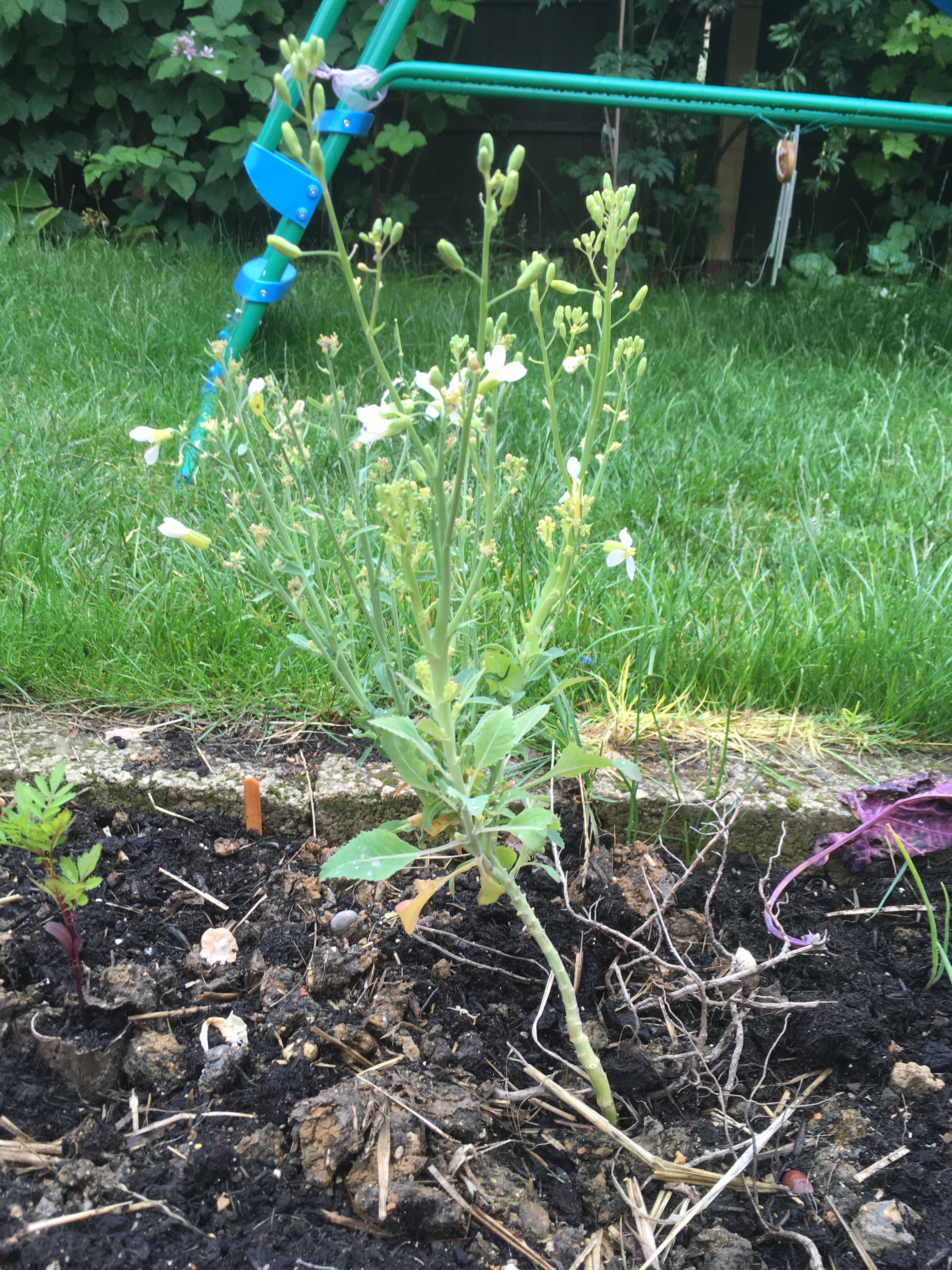
The nine star broccoli is apparently a perennial cauliflower, despite its name. I wouldn’t know as mine is pathetic. I’ve removed the flowers in the hope that it will then divert its energy to plant growth. Time will tell. I’ll let you know if it works. This is 6 months old and a pitiful 8 inches. It does not look anything like cauliflower.
Kai Lan (Chinese broccoli) is apparently perennial but I’d
never know as every time I’ve tried (and I’m Chinese … so I’ve really tried)
pretty much everything is devoured by something that isn’t me. I think the
slugs and snails gang up with the caterpillars for these.
So, in conclusion brassicas are good vegetables to grow for eating through winter, are shade tolerant and do well in alkaline soil. Out of the brassicas the collards and kales are less affected by pests. The younger leaves are tender but the older leaves less so. Harvesting can happen over a lengthy period. For the easiest option perennial kales and collards are edible all year round, including the hungry gap and requires none of the faff of yearly sowing, thinning, planting out and crop rotation. In small spaces a perennial kale is the most efficient use of space and time for growing food.
I cannot recommend Daubenton’s kale enough. I think it may be our family’s favourite green. It’s not easy to get hold of but I think it’s well worth the effort.
In the interest of experimentation I need to try another perennial kale. I have my sights set on Taunton Deane and I WILL find a space in the garden…. Er… somehow.



















 Not a Horticulturist