Grow things from the pound shop

Short version: When the cost is a pound, it is cheap and easy to try out new edibles or flowers. The seeds are about the same as seeds bought elsewhere. The plants are small and require patience but there is a huge variety available:

  • Raspberry, blueberry, gooseberry, blackcurrant, blackberry bare root plants
  • Vegetable, herb and flower multipack seeds (usually with 3-6 varieties per pack)
  • Asparagus crowns
  • Onion, garlic and shallot sets
  • Flower bulbs
  • Bare root cuttings of flowers like climbing roses, oleanders and buddleia

I occasionally find myself unable to walk past pound shops without popping in to see what they have. This time of year, it is simply irresistible. They often have fun plants and seeds. Due to the price, I expect the plants to die and the seeds to fail, but I have often been pleasantly surprised. If you have plenty of patience and very little budget, then it’s a great way to populate a garden. The small price tag feels like a small risk. Usually whenever I buy a plant for my edible garden, I spend forever checking the variety for taste, disease resistance and growing conditions. I carefully plan what is going to happen. This goes out of the window in the pound shop. I do at least google the variety on my phone to check that they’re a variety worth growing. As long as you steel yourself for some disappointment and are willing to invest some time in exchange to keep the budget small you’ll be happy. These are the gems that I’ve found in the pound shop:

Asparagus

I found asparagus crowns (year old roots) in a pound shop in Balham (which is no longer there) in 2010. I think the variety is/was Gijnlim. Before then I had never grown asparagus. I followed the instructions to plant and leave for a year and in the second year we were rewarded with a couple of stalks of the tastiest asparagus I’d ever eaten. Shop bought asparagus cannot compare to home grown, as the flavour deteriorates quickly after harvesting. I suspect that had I not come across these in the pound shop I still wouldn’t have experienced growing asparagus. You can’t harvest for a couple of years and even then, you won’t get huge harvests for a couple of years more. So, I think I would have been too impatient to consider asparagus if it wasn’t for this impulse buy. I grew them in a very large pot and then it then moved home with us… twice. Now I’ve sworn never to move again those asparagus plants are happily in raised beds. They’ve been joined by a few more carefully chosen plants. The only problem with the crowns from the pound shop is that they turned out to be female plants. I’ve read that female plants are less productive because they waste energy that should go towards growing yummy shoots into reproduction. I guess I could always pick the asparagus berries and try starting new plants.
Peas and Beans

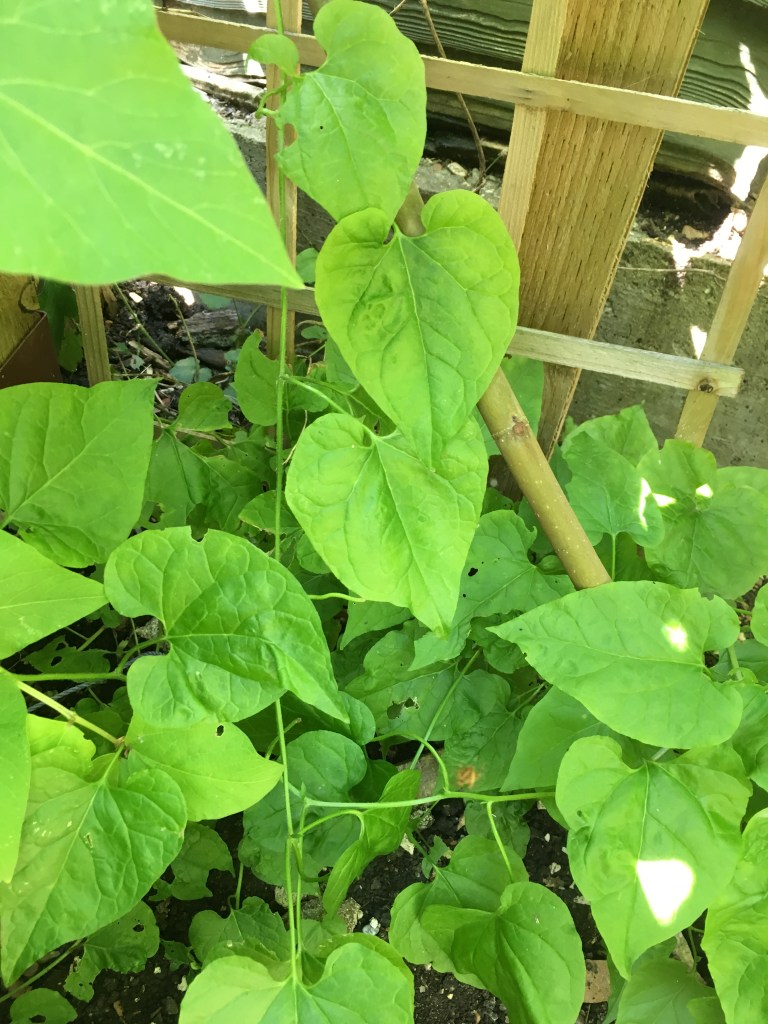
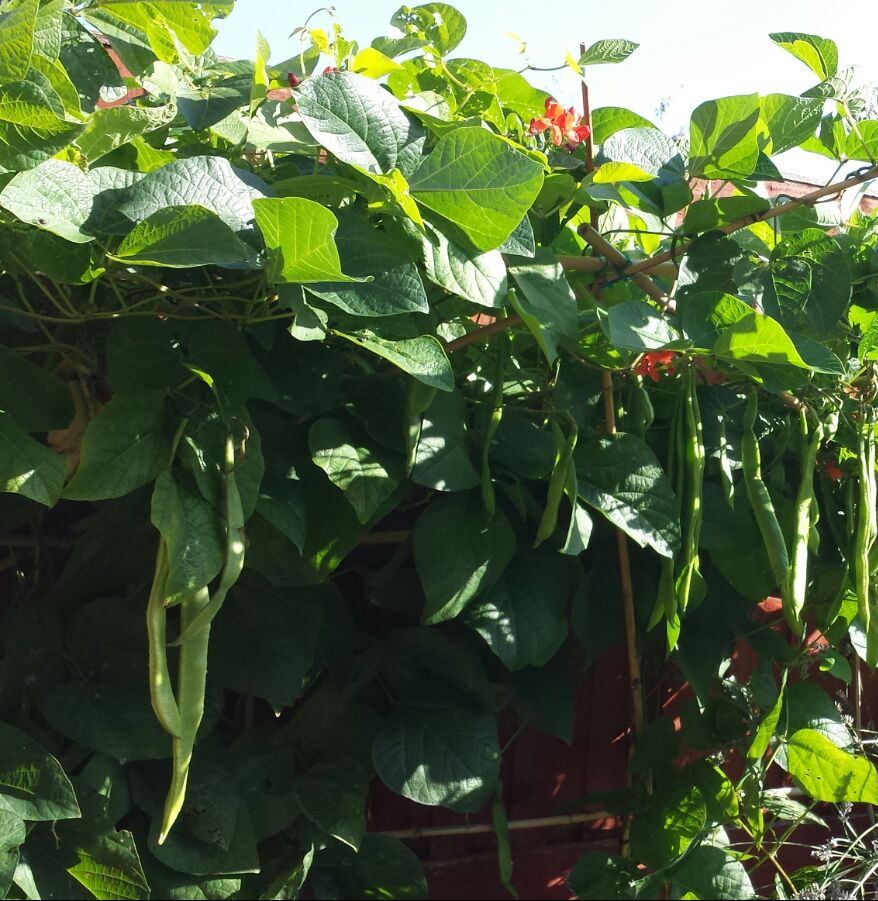
At the same time (in 2010), I also bought a packet of seeds containing 2 varieties of peas and one variety of runner beans. Basically, it cost around 33p per variety. The runner beans turned out to be amazing. I had never come across runner beans in my childhood. No one I knew grew them and I had never eaten them in any situation. I was amazed by the huge purple seeds with black spots. I was surprised how well it did in part shade. This is where my love of vertical growing began. To be able to get such large volume of food over a long period of time in such a small footprint makes this one a winner.

The peas were OK, but we mostly ate them as pea shoots in stir fries. Again, loved the height of these. Now I always plant something climbing behind shorter veggies.
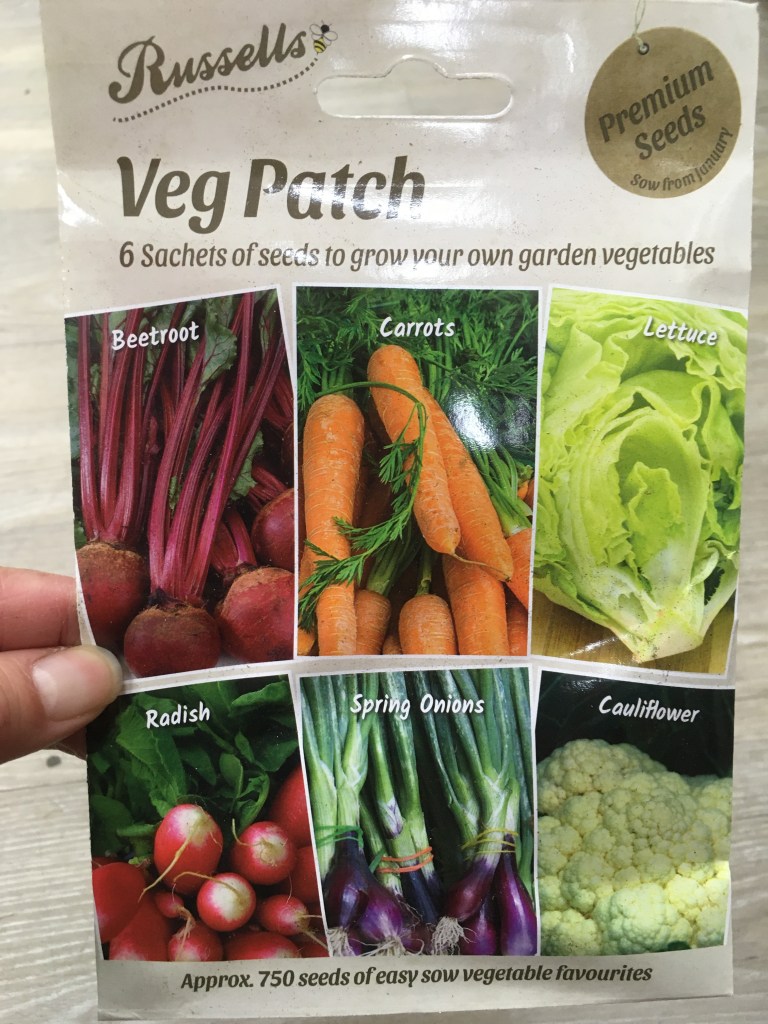
Vegetable seed multipacks

For anyone who is new to edible gardening, multipack seeds like these from the pound shop are a nice budget way to try a few things. I used seeds from a pound shop multipack to try beetroot, oregano, basil, aubergines, lettuce and radishes (which I now grow for the yummy greens).  There have been other things like herb multipacks. One pack I bought and grew in (I think, as it was a long time ago) 2010 was some sort of Italian selection that included aubergines, tomatoes, oregano and basil. The oregano packet I finished off in 2017 when I was filling our current garden. It has happily self-seeded since. Almost all the seeds have grown successfully.

Blackcurrant plant

This was bought in 2011 as a tiny little thing, about 6 inches of wooden stalk that had some new shoots on it. It took a couple of years to take off, but only made it through one house move. Probably because I tried really hard to neglect it to death. It still took about 2 years to kill it. I realised that I didn’t like blackcurrants. I thought they tasted chicken-y – in a really yucky way. The leaves smelt nice though. I have since learnt that you can’t eat blackcurrants straight off the bush. A year too late I discovered soaking blackcurrants in vodka. A jam jar (yay for repurposing) with a cup of blackcurrants, 3 tablespoons of sugar and topped up with vodka and left for 3 months gives an amazingly, syrupy liqueur with tasty blackcurrants that make great dessert toppers (not for the 4 year old though). I bought a replacement plant this week and I hope to be making merry on them again soon.
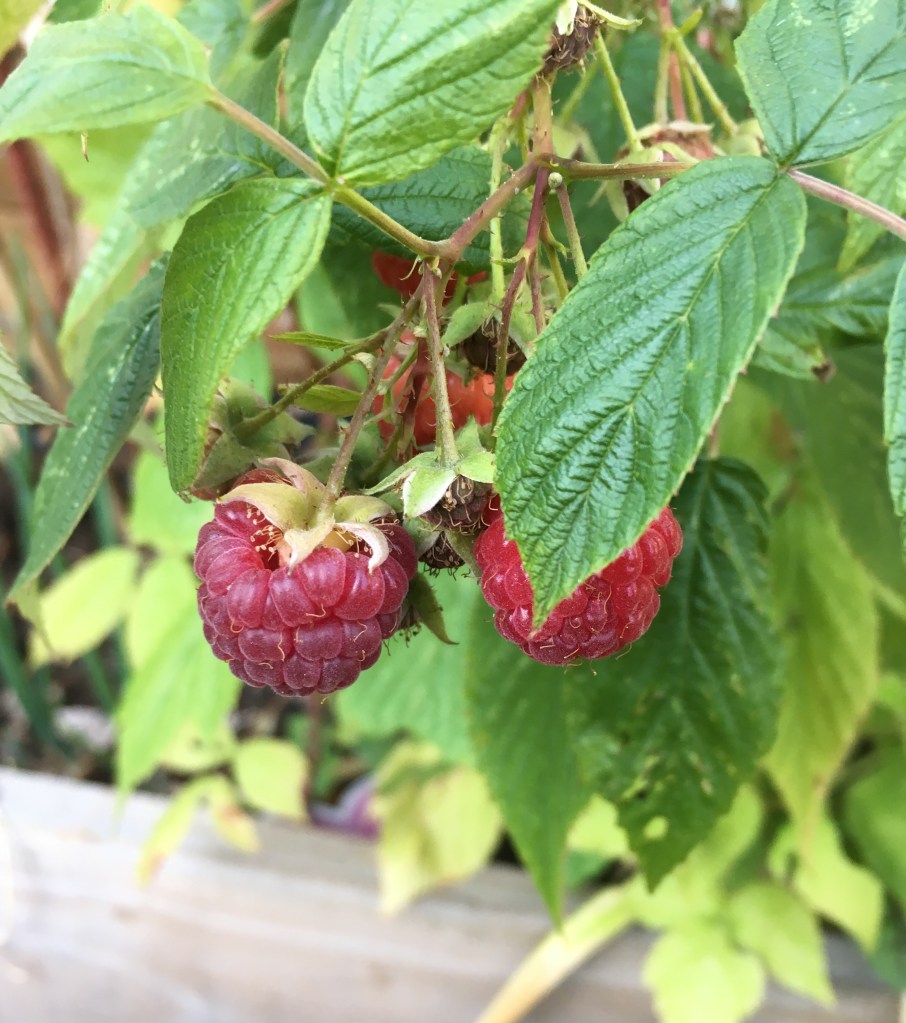
Raspberry plant

In 2011, with the blackcurrant I bought a raspberry. It didn’t survive. On a whim in 2018 I tried again with a pound shop malling jewel. I looked it up and it’s a sweet variety. Avoid anything that says tart or acidic in the description, unless you’re fond of sour. Often raspberry descriptions that don’t specifically say sweet -will not be sweet. Full of flavour does not equate sweet. It’s a marketing ploy. It was of course a tiddly little stick, like the blackcurrant and didn’t amount to much in the first year. In 2019 though there were maybe 10 raspberries on it. Hopefully 2020 will be its year to flourish.

Blueberry and Gooseberry
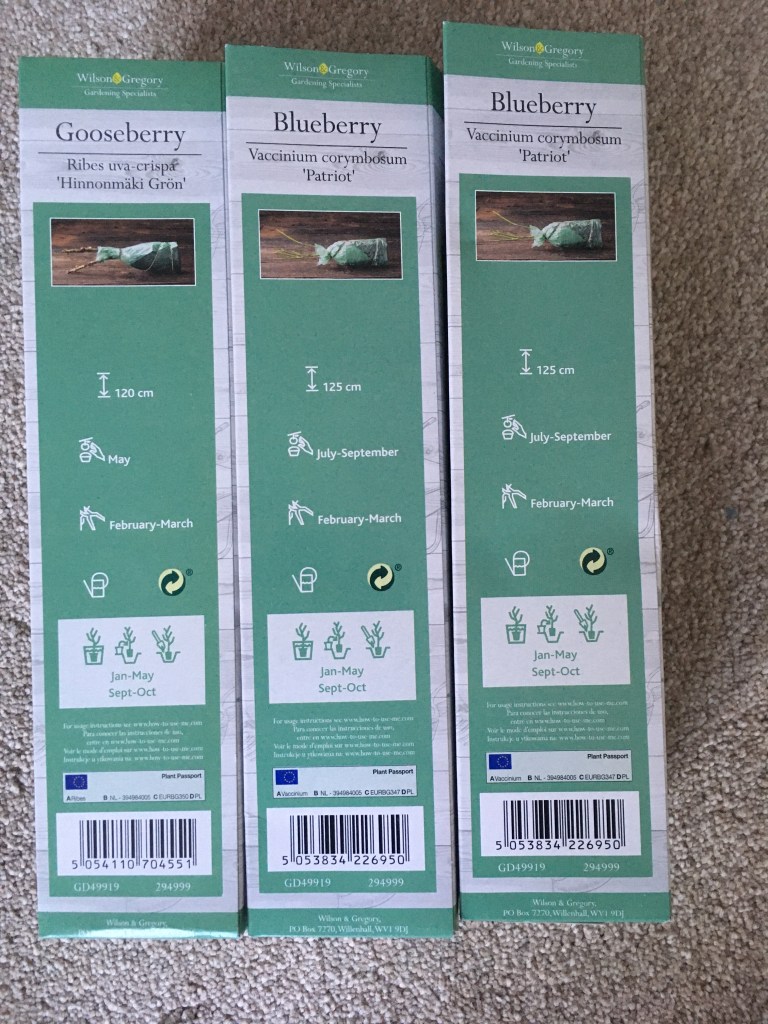
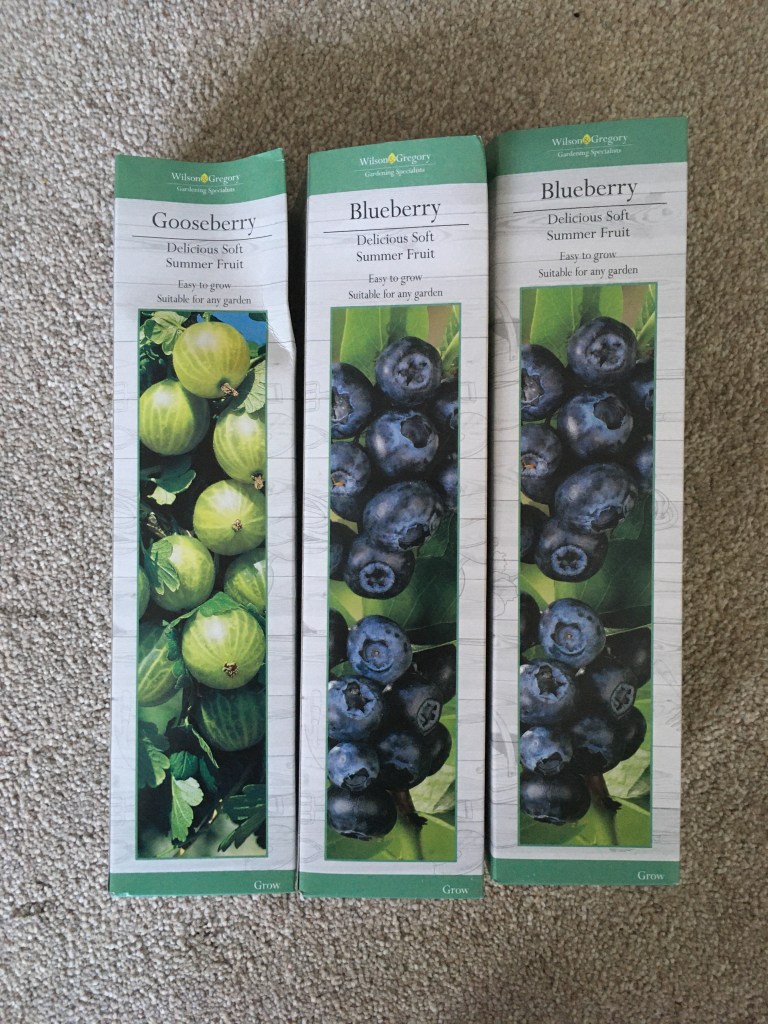
This year 2020 I have bought 2 blueberries “Patriot” and gooseberry “Hinnonmäki grön”. This may be foolhardy. I already have 3 very productive, carefully chosen blueberry plants and a gooseberry that I bought last year that hasn’t produced any fruit yet. It’s just so hard to resist a potential fruit bush that costs a pound. I did at least check before I bought them that they were likely to be tasty. I figure they’re so tiny and can be put into a pot and dumped somewhere for the next 3 years before they get really productive (or die) then I can try and find a space to squeeze them into. Alternatively, I can continue reclaiming bits of the lawn over the years until the husband concedes defeat.
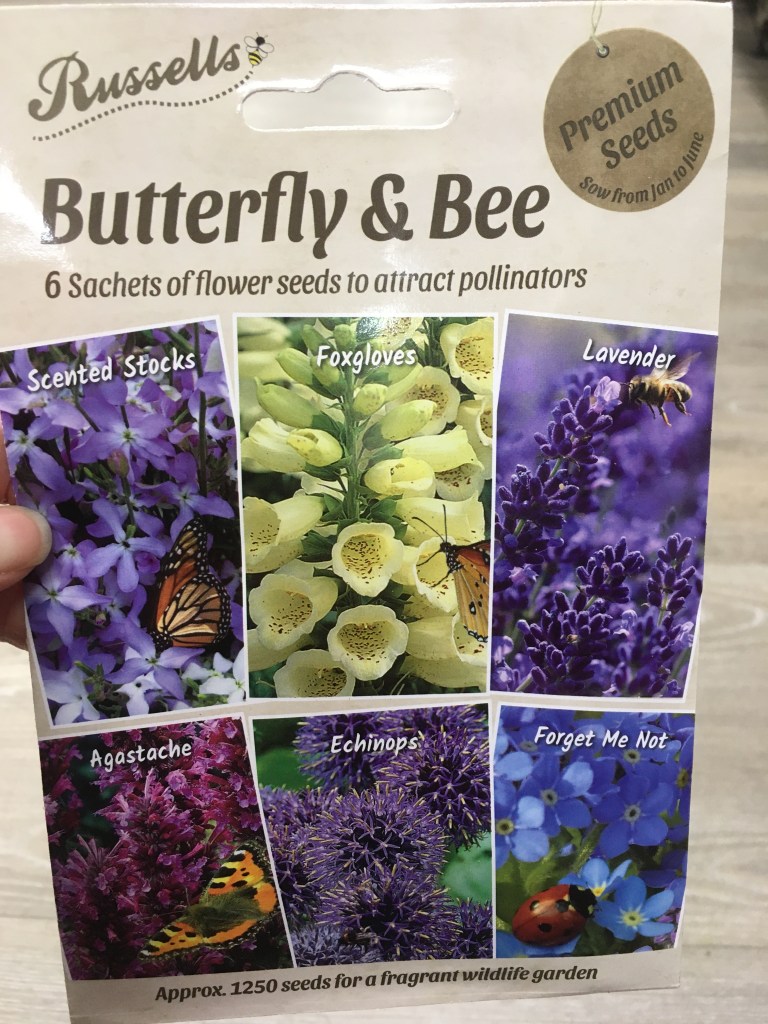
Flower seeds

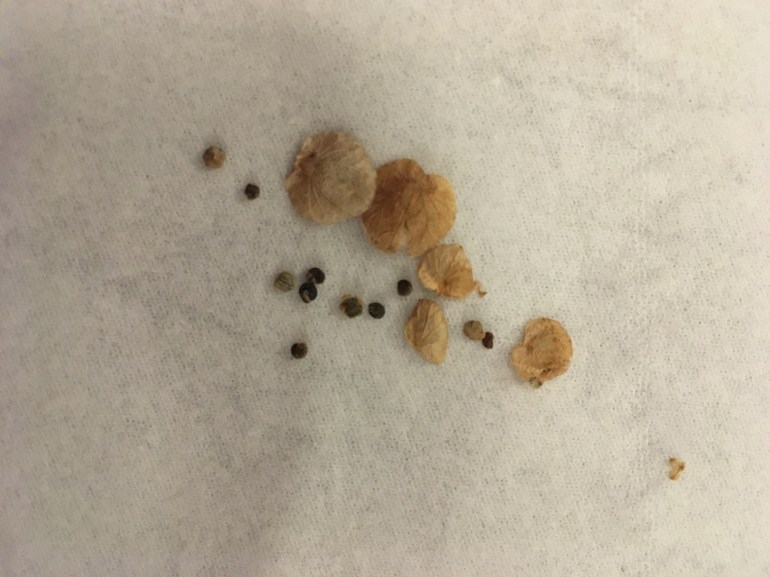
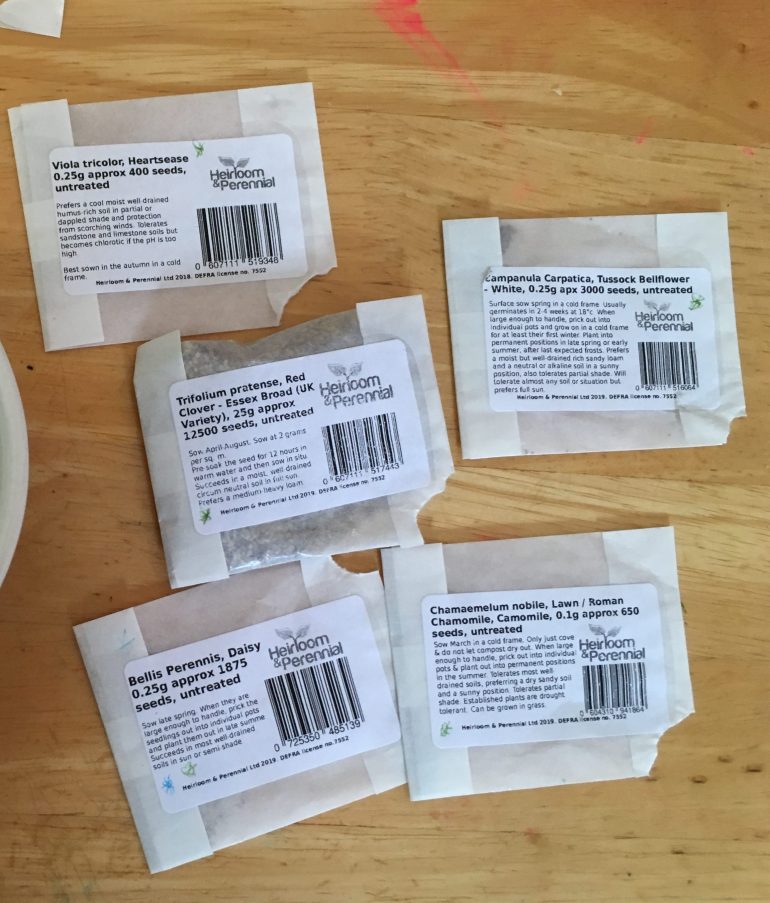
I don’t really grow flowers, unless I can eat them but 6 different varieties for a pound is hard to resist. I bought some last year, 2019, though the flowers weren’t all the same as the one in the photo. This is a pack from this year. I didn’t sow all the flowers in the end as things like foxglove are toxic. My little one is good at recognising the edibles, but I don’t think it is worth the risk. I ended up scattering the non-toxic ones in a pot last year and then forgot to water them. I wasn’t too sad as it was only a pound.  

Flower bulbs

There are a large variety of flower bulbs. However, only the dahlia interested me. I have read that the flowers and tubers are edible. I figured that this was a cheap way to see how difficult it was to grow them and then see if I could figure out if the ones available were tasty. Apparently, they were considered as staples by the Aztecs, but due to the breeding of dahlias for display purposes over the year there is now a wide variety of looks and taste. I will need to do further research and maybe some tentative testing but supposedly all dahlias are edible, but not all taste good.

There are other things available like onion, garlic and shallot sets and bare root flower plants, which I haven’t tried. I guess if I followed my own advice, it wouldn’t be much of a risk to give these a go, but I’d rather have the space in the garden to grow my more perennial or self-seeding edibles. If I had an endless garden, I would probably fill it with pound shop plants…. Well, a girl can dream.
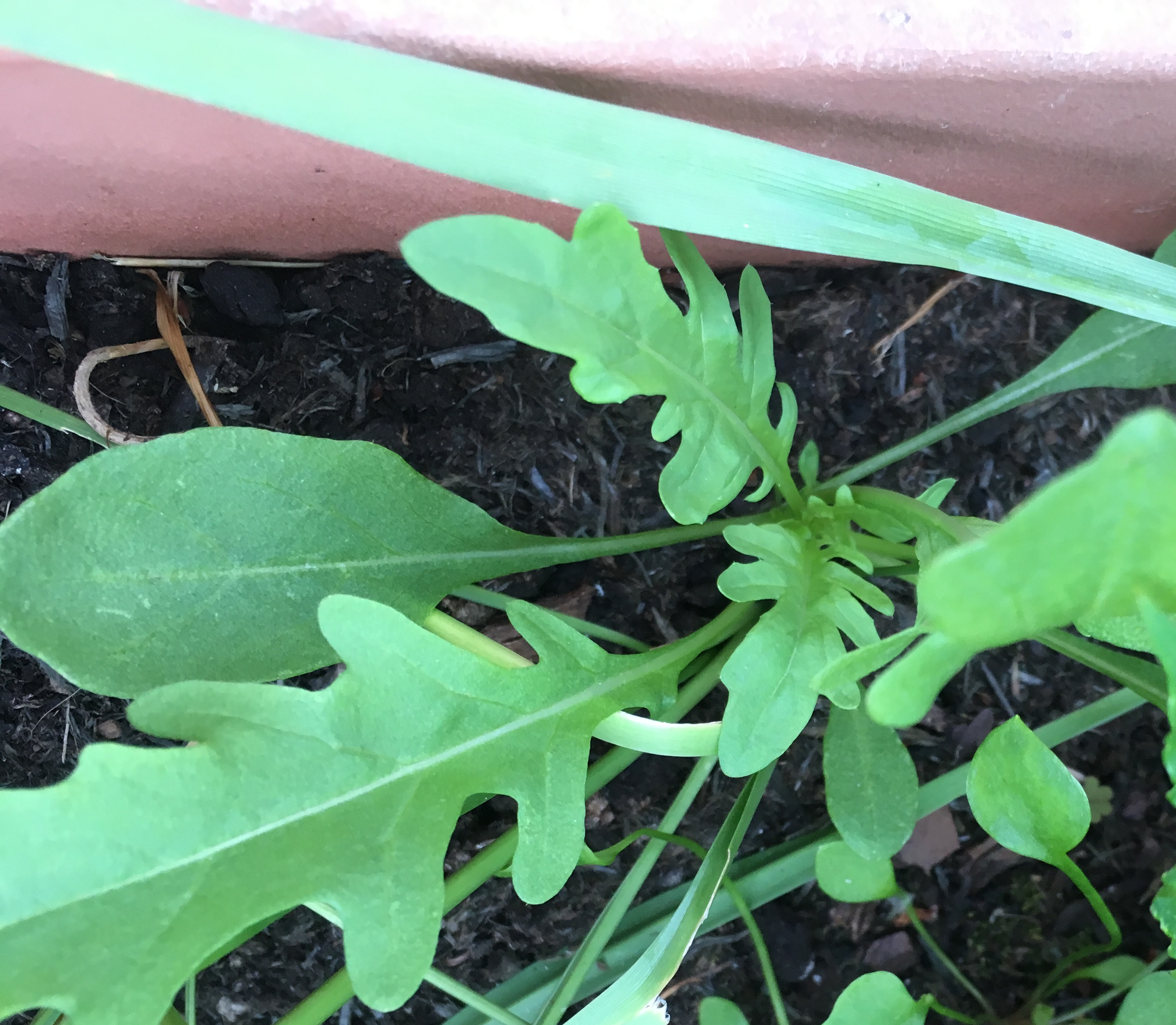
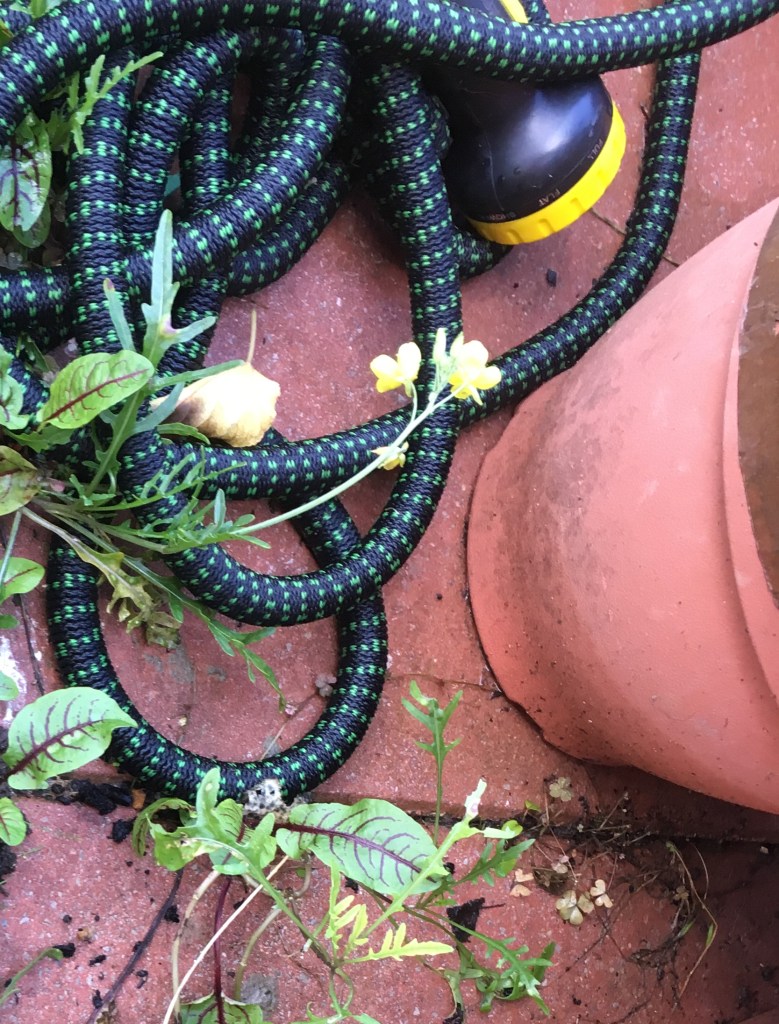
Wild Rocket

Short version:

Not for the faint hearted, this is a spicy rocket that really packs a punch. It’s perennial AND self-seeds readily. It grows in shadier conditions with poorer soil and lasts most of the year.

Arugula, rocket, rucola – whatever you want to call the regular, shop bought version is a complete wuss compared to the wild rocket, also called perennial wall rocket. Latin name Diplotaxis Tenuifolia.

Taste

Wild rocket is much punchier in taste, so be prepared. In the summer months it becomes so spicy that I can’t actually bear to eat it raw. If you’re at all unsure whether you like rocket you should probably avoid this. If you LOVE rocket, then this will definitely satisfy you. You may even find that you have to ‘dilute’ the spiciness with some more benign leaves, or some oil like cream or cheese. After gifting some to my neighbour, she sent it back over the fence in the form of an amazing pesto. That is literal by the way. We don’t often call each other or knock on the doors but conversations are held through the greenery and things are often passed in the gaps.

Growing

Seeds are easily sown straight into the ground a couple of weeks before the last frost. It germinates fairly quickly – around 2-3 weeks. It begins fairly spindly but by the second year if you cut it down to the ground it can become rather bushy. It does well in partial shade. In fact, some shade helps as hotter weather can cause the leaves to become very spicy. It does fine in poorer soils too.

Harvesting

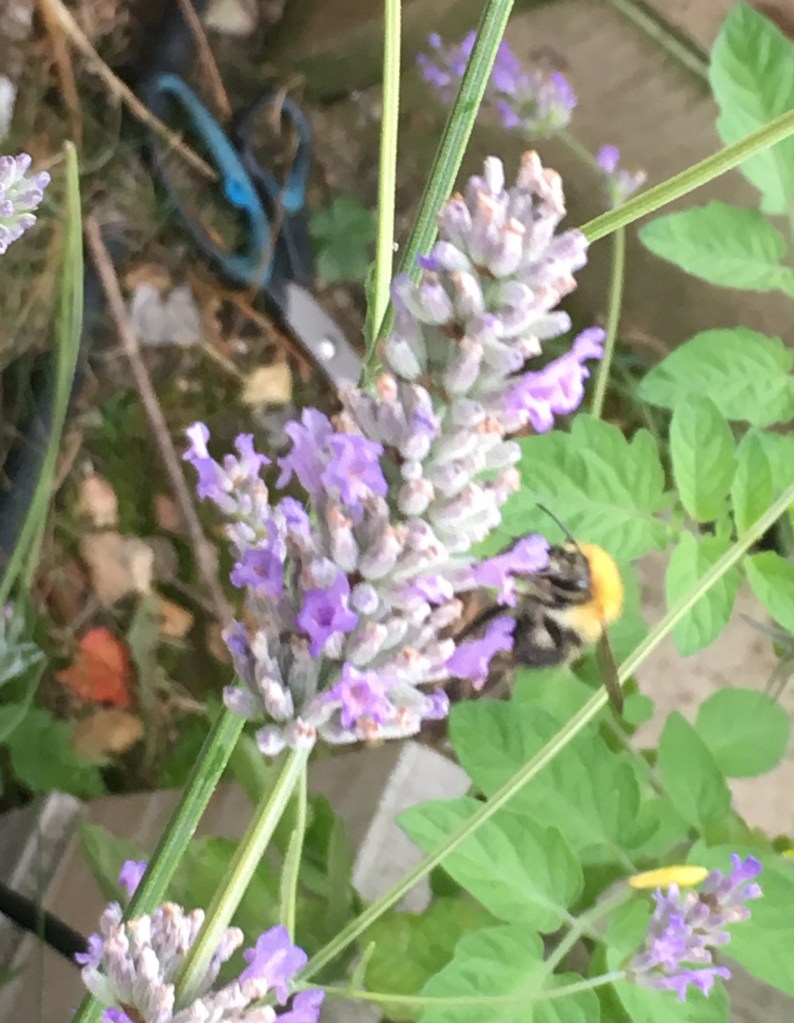
Harvest the leaves as soon as you think the plant has enough to spare. You can also cut whole shoots for a more substantial harvest. This discourages flowering. This can be treated as a cut and come again plant for most of the year. Flowers can be eaten and smell rather sweet. Bees seem to be rather fond of them.
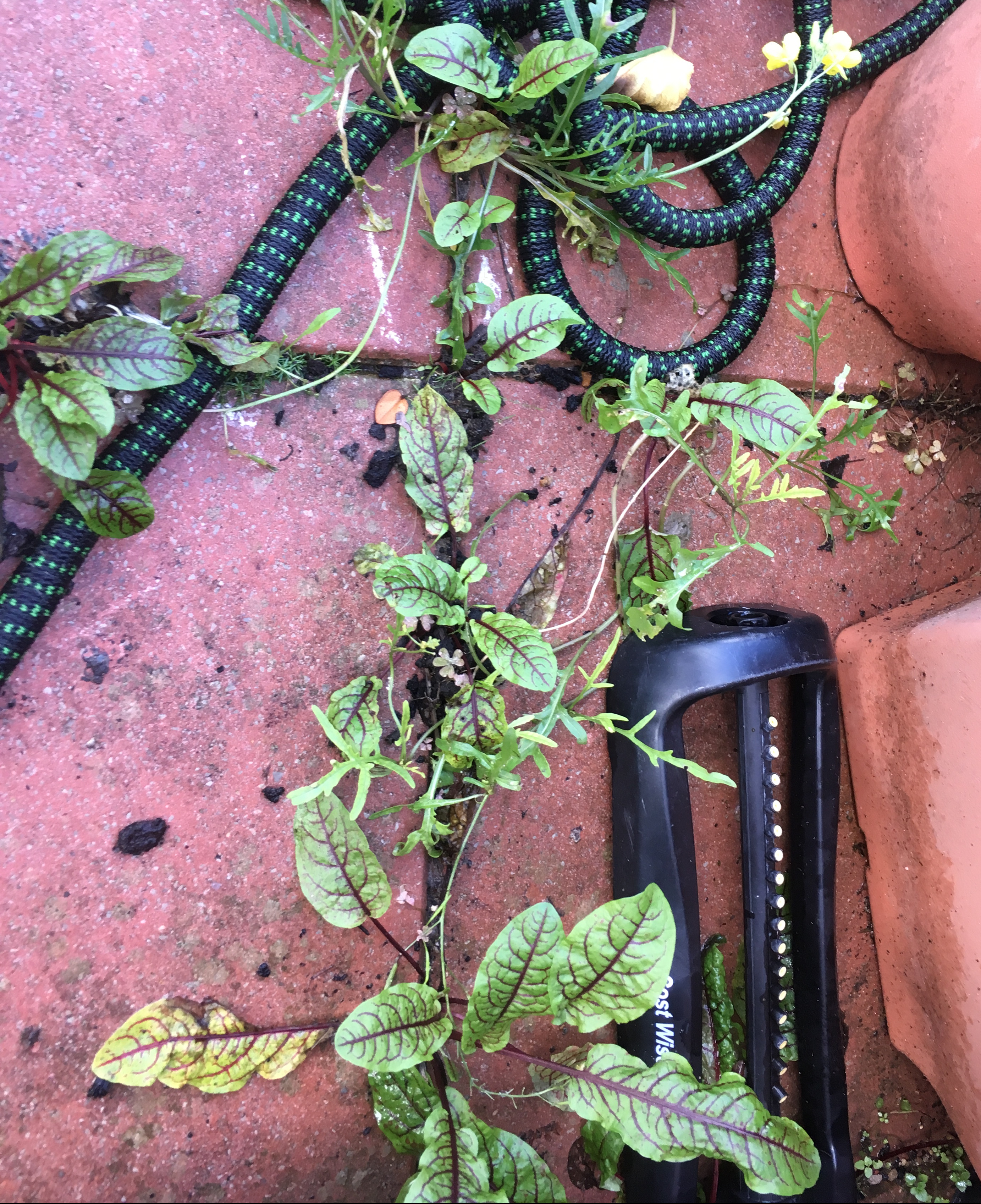
When the summer comes I stop trying to eat the spicy leaves. This means that flowers tend to grow. I like the smell of the flowers and my little one likes to pick them – though she won’t put them anywhere near her taste buds. This means that will an abundance of flowers the plant often goes to seed. I find the rocket springs up in the cracks of my flagstones. They become my much loved bonus plants. In the areas of the patio with low foot traffic I let them be. That way I don’t have to actually give up any garden space to the plant and still get to eat them.

The question now is why grow this over normal rocket? The perennial habit of wild rocket wins it for me. When the conditions are ideal this plant has continued to provide food well into winter and only had a little break for about 2 months before it was raring to go again. In my experience it can keep going till November and is back by February. It grows slowly at the beginning of the year, but it can be a useful green for the hungry gap. With absolutely no effort from me since planting 3 years ago it keeps coming back like a weed and just challenges me to eat it into submission. Just FYI, I lost and dug plants ups for other people’s gardens. 

Go to or organise a seed swap

Short version:

Seed swaps are great for sharing seeds that you have spare, finding new things to grow with low risk and getting small quantities of a large variety of seeds.

A couple of weeks ago a friend suggested I go to Incredible Edible Lambeth’s seed swap. It was in the Garden Museum by Lambeth Bridge. Having never been to a seed swap I had no idea what to expect. I picked my most exciting seeds (yes, I know – it’s not normal for people to consider any seeds exciting) – Caucasian Spinach, Malabar Spinach, Physalis, tromboncino and Chinese Chives. The idea was to take seeds saved from plants you’ve grown, knowing that they do well in our climes, to swap. Shop bought seeds were also acceptable.

Collected seeds

Be aware that your seeds may not always give the same traits as your original plants. This is because the variety that pollinates your seeding plant may be quite different. There are more details in ‘Pollination fertilisation and variation.

Of my seeds, the Caucasian spinach and Malabar spinach would not likely have had any other varieties grown nearby so they would probably be true to type. The Physalis (caped gooseberry) may have crossed, as I had seen a Chinese lantern (which has bitter small fruit) in a garden a couple of streets away. The tromboncino can be pollinated by butternut squash – so if there was any in nearby gardens then I guess there could have been cross pollination. Squashes especially produce flowers that favour cross pollination as discussed in ‘Squash surprise’. I have absolutely no idea about the pollination of Chinese chives.

The seed swap

I arrived quite late into the event, which was in a fairly small room with about thirty people. It sounded like many people had already been and gone before I arrived. There were a few tables set up and on each table were many packets, envelopes and jam jars of seeds. Some were already packaged into small envelopes and well labelled with plant, variety, growing times and date of collection but in some cases (like…er…me) there was just an old envelope with the name of the plant scrawled on it. I felt quite guilty, so spent about 10 minutes writing some more details on each envelope. There were also plenty of small brown envelopes that you could put a few seeds in and write the details on. The idea is that you can give away seeds that you collect from your own garden or surplus seeds as packets often contain far more than most people use. You only take a few seeds of each thing but there is no limit to how many things you take. It is a nice way to save money and be introduced to things you otherwise may not come across. It seems slightly unfair to the people who make a living selling seeds if you share packets of bought seeds, but at the same time it’s easy to avoid trying a new vegetable that may be hard to grow or may have an unknown taste. If you get ‘free’ seeds, then you have no risk. You may find yourself loving a new vegetable and then later buy more. So in a way, though you may be taking income away at the start, the more that people become interested in growing their own, the more money they will make later on.

I was surprised and relieved to find it wasn’t a direct swapping of seeds. I didn’t feel like I was being forced to network or feel judged on the seeds I had brought. Though events such as these can about community and meeting like minded people who enjoy growing, introverts have no need to fear. There was no need to interact with anyone should you be feeling that way inclined on the day. With no pressure, I felt conversation came about naturally and I chatted to a few people about the Caucasian Spinach.

My new seeds

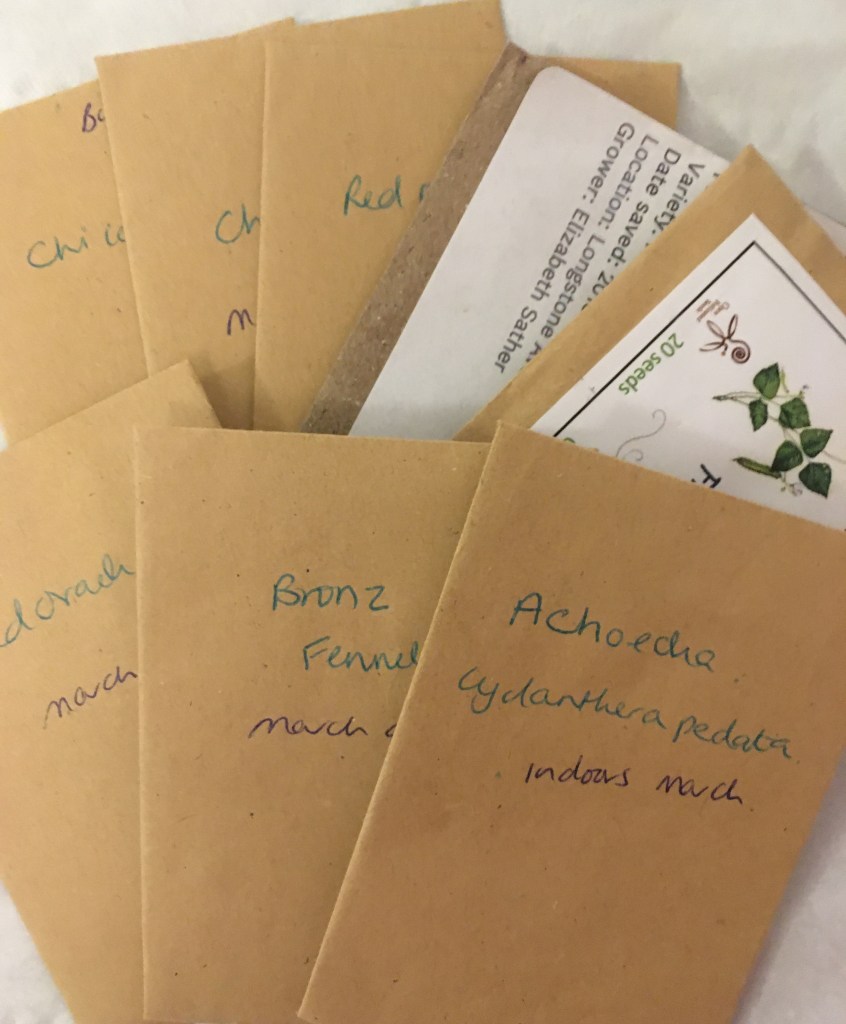
I came away with a few interesting seeds.  

  • Red orache, which is a red-purply spinach like leaf.
  • Calendula, as I’ve been meaning to try and grow more edible flowers.
  • Bronze fennel, a fun coloured fennel.
  • Chervil, which apparently tastes like a cross between tarragon and parsley.
  • Chicory, which I’ve decided not to grow this after some research as it can be bitter (even when you put in lots of effort to blanche it) and I’ve grown enough bitter vegetables in the past.
  • Achocha, which was a pleasing find. These are small cucumber like fruit that I saw on a blog by Skyeent. I was very excited.

I only a took a tiny percentage of what was available on the day as I was mostly on the look out for new things. I did also take a few chard, red kuri and a pre-packaged envelope of mixed French beans too for my little one’s school, as I only have any spare of my own seeds left at home. There were a plethora of legumes, salad leaves, tomatoes, sweetcorn, brassicas, aubergines, squashes, root veggies, herbs and flower seeds available though.

I would definitely recommend doing one of these should the opportunity arise and I might suggest something like this to the PTA at my little one’s school.

Apple trees

Short version:

Grow apples as they are great trees for adding structure to a garden and for under planting. They taste far better than shop bought, you can grow a variety not available in the shops, trees are cheap and popular in urban areas (providing you with access to pollination partners), it’s environmentally friendly and they can be trained into fun shapes.

An apple tree is a great addition to your garden because:

Apples are perennial trees

Once a tree starts producing fruit you can get a harvest for years. Trees are great for adding height and structure to the garden. Wildlife such as digging rodents, rabbits, cats or foxes don’t worry an established tree. You can also plant around the base with companion plants such as nasturtiums, mint, dill, fennel and basil – all of which are edible and can help deter pests or attract pollinators. With my small garden I find it hard to dedicate a patch to something like mint, that grows well but isn’t often used. I feel like the space above the mint is no longer wasted, and the mint is happy in some shade.  

They taste great (with a proviso)

The apples you pick off your tree will be fresh, naturally ripened and juicy. The proviso is that for your apple to also be sweet and tasty, you do need to have started with a sweet and tasty variety. If you grow a crab apple you can’t expect huge sweet fruit. Anything that is called a cooking apple will not taste great for eating straight off a tree.

I can with total honesty say that I have never tasted an apple that was as good as the Jonagold we picked from our tree early autumn last year. So many fabulous varieties are unavailable in the shops, but even a Golden Delicious apple picked from your own tree tastes nothing like a Golden Delicious from the shops. When you are picking your own, off your own tree, in small quantities, you have the luxury of picking individual apples as they ripen. If an apple is ripe you also have the luxury of leaving it on the tree a few days until you’re ready to eat it. You don’t have to worry about having to pick thousands of apples off hundreds of trees as they ripen together. Consider labour intensive fruit picking. Is the commercial picker really going to inspect each apple for perfect ripeness or are they just going to harvest absolutely everything that looks remotely ripe? If they are harvested by machine everything is collected off the tree at once. Leaving apples too long to ripen fully comes with the danger of apples going bad. The apples have to be picked before they are ripe in order to give them time to get to shops and to have a decent shelf life. Most are then put into long term refrigeration, allowing apples to be available all year round (source). I’m appreciative of this method as it means I can buy an apple any time of year, but it’s no wonder that a shop bought apple just can’t compete with a home grown one.

They can be grafted

You are unlikely to get a tasty variety from seed. Apple flowers can be pollinated by the open flowers of any other apple tree in the local vicinity. This means that the seeds of an apple that you like will probably not produce a tree that produces apples that taste like the original. In addition, it takes several years before you get any fruit from a tree grown from seed, so a graft gets your tree fruiting sooner.

In order to get a specific variety, a cutting is taken from the chosen variety and grafted onto a rootstock (a young apple tree with strong roots). Basically, all Golden Delicious are grown from trees that are clones of the original Golden Delicious. You can read more about why seeds don’t always produce plants that are the same variety as the parents in ‘Pollination, fertilisation and variation’
Another great thing about the grafting means that you can have more than one variety grafted onto the same rootstock. You get to have more variety without needing to use the space of two (or more) trees.

Dwarfing root stock is great for small spaces

With the small size of city gardens, it can be quite hard to fit much in. Most fruit trees suitable for the garden have a dwarfing rootstock. This rootstock determines the eventual height of the tree, which will be somewhere between 1m to 4m depending on how dwarfing the rootstock is. This means you can choose something that won’t become a nuisance in the space. The rootstock may also provide better disease resistance, hardiness or sturdiness.

There are plenty of pollination partners

Apple trees are very popular in domestic gardens. There is often a plethora of crab apple trees growing in urban areas too. This means that if you only have one tree you are still likely to have a suitable pollination partner in the vicinity. There are a few apple varieties that are self-fertile (can pollinate itself) but most need another apple tree of a different variety in order to set fruit. The ones that are self-fertile tend to have better harvests when cross pollination can occur. Apple trees that are grafted with more than one variety will usually have varieties that will pollinate each other.

Apple trees are suitable for training in forms

If you are short on space or want a living screen, you can prune the apple tree to make a productive and attractive feature.

Cheap and easy

Bare root trees (usually available late autumn until very early spring) are great as they are cheap and easy to transport. If like me, you are trying to do up a garden on a budget it makes it easier on the mind to buy fruit trees bare root. I have even found a bare root with 2 varieties grafted onto it here. I can’t however give you any experience of this website as I haven’t bought any fruit trees from here.

It may take a couple of years to get productive, but apples are generally reliable as trees that do well in English weather and pay for themselves in produce over time.  

Growing your own is environmentally friendly

Having a tree in your garden will capture carbon whilst providing you with more oxygen as the tree photosynthesises. In addition, your apples have zero food miles and packaging. As well as food miles, the time spent by store bought apples in storage will have a carbon footprint attached. They are kept in a low temperature, low oxygen environment to keep the apples fresh. Basically, an apple, bought just before the harvesting season begins will be an apple that has been stored for almost a year. 

My apple tree

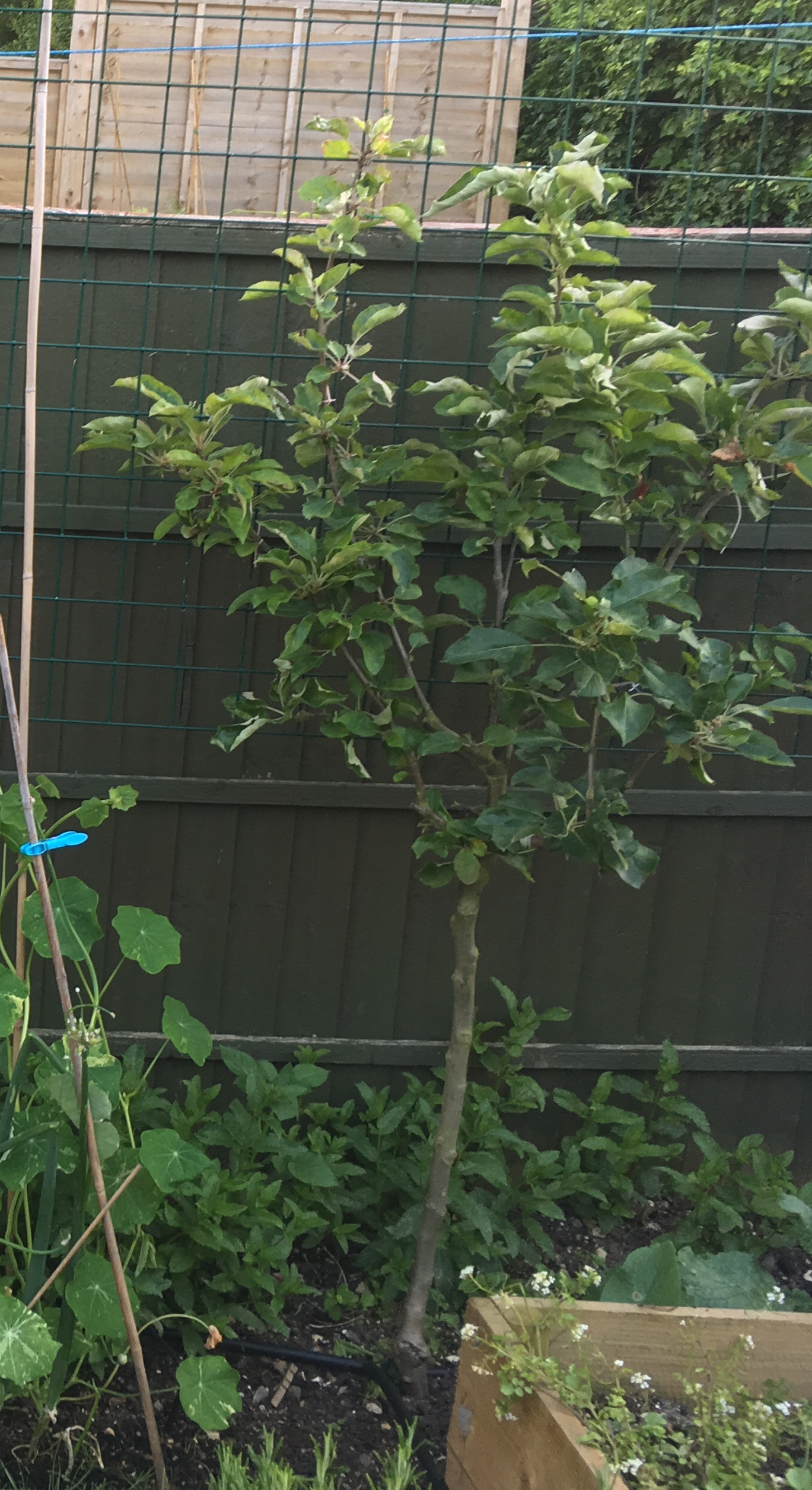
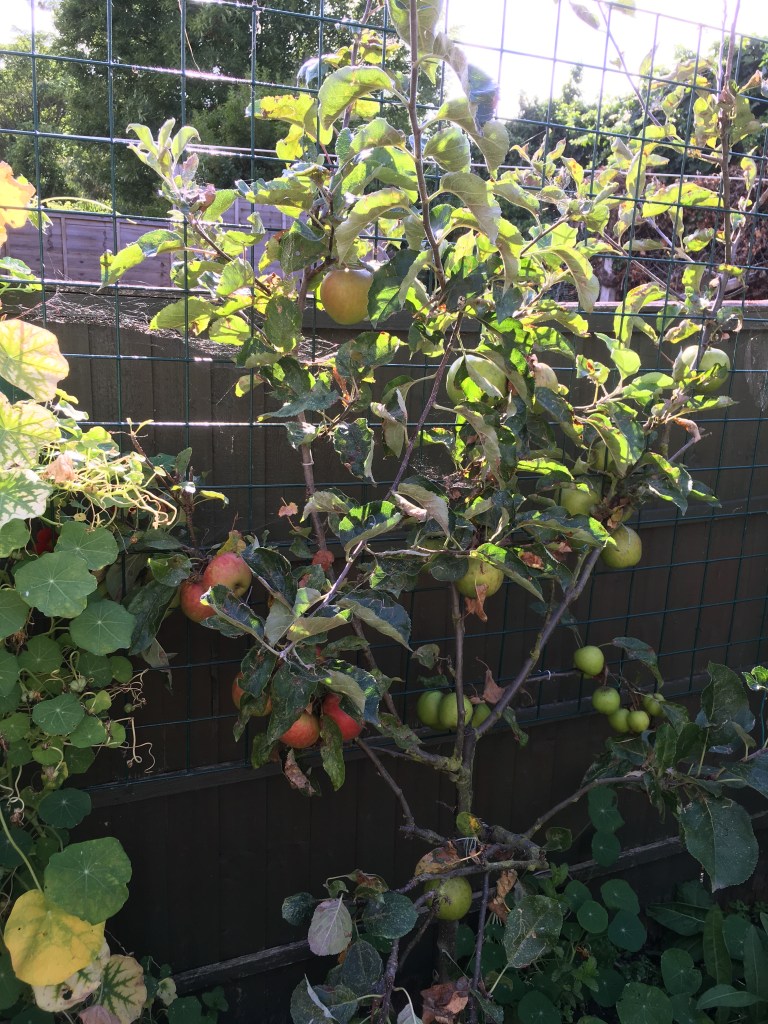
Despite extolling the virtues of growing a bare root tree, my apple tree was a potted one I bought in the summer of 2017. This is because of the timing of the creation of the garden which you can see here and also because I really wanted this crazy 5 variety tree from here.

It was expensive but is unusual to have that many varieties on one tree and this website was the only place I could find it. Even in the winter this particular tree is not available as a bare root. It has a very dwarfing rootstock and so is only expected to grow to 6-8ft. I get to have a small-ish tree with a variety of flavours that pollinate each other.

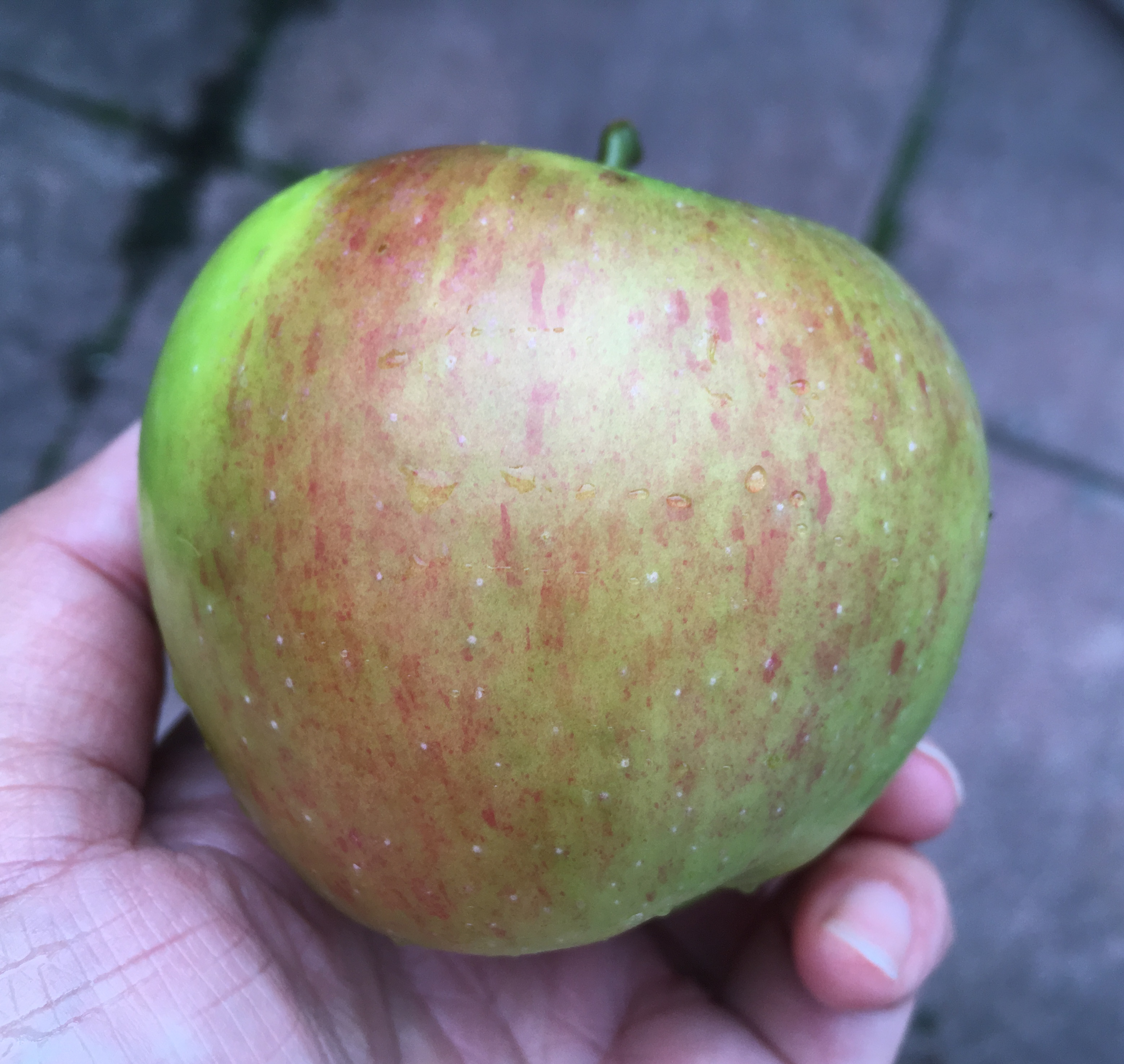
Summer 2018 there were a couple of apples of 2 varieties growing, but by the end of summer they all dropped off without growing much. Autumn 2019 there were 4 varieties that we harvested. Unfortunately, we are still not entirely sure which variety is which, which is part of the fun! We do know that we absolutely love the Jonagold – that is, if we identified it correctly. These are the varieties that we have on our tree:

  • Cox – striped red and yellow apple with crisp sweet flesh
  • Elstar – a marbled golden yellow with some deep red and crunchy white flesh. Sweet with some balanced acidity.
  • Golden delicious – golden green small apples that are sweet when ripe.
  • Jonagold – huge lovely yellow apples with red flushes. They are sweet with some balanced acidity.
  • Red Boskoop – lumpy dull red with russeting sharp cooking apple.

With different varieties on the one tree I will need to be careful to ensure via pruning that one variety doesn’t become too dominant. Another drawback of the many varieties grafted onto one tree is that if my tree’s trunk is damaged then I can kiss goodbye to all my varieties.

Recycling, reusing and waste disposal (Part 2)

Short version: (Part 1) Please see here for recycling and repurposing household stuff. (Part 2) If you have huge garden project that has heavy materials a skip and a good wheelbarrow (and maybe some helpful friends) is the most cost-effective way. A company can drop a skip off in your front garden or your kerbside (though be careful with parking restrictions) and then pick it up when full. For lighter, bulkier loads a waste management company is more expensive but requires less work on your part. For small loads you could try a ‘Hippo’ bag.

This is the second half of my two-week blog and talks more about the bigger items that are found in the garden or during DIY.

GARDEN STUFF

We got our forever house in early summer 2017. I call it ‘forever’ because I… AM… NEVER… EVER… MOVING…AGAIN! We had a really hideous purchase and move but I was very excited to have a big enough garden to grow edibles to my heart’s content.

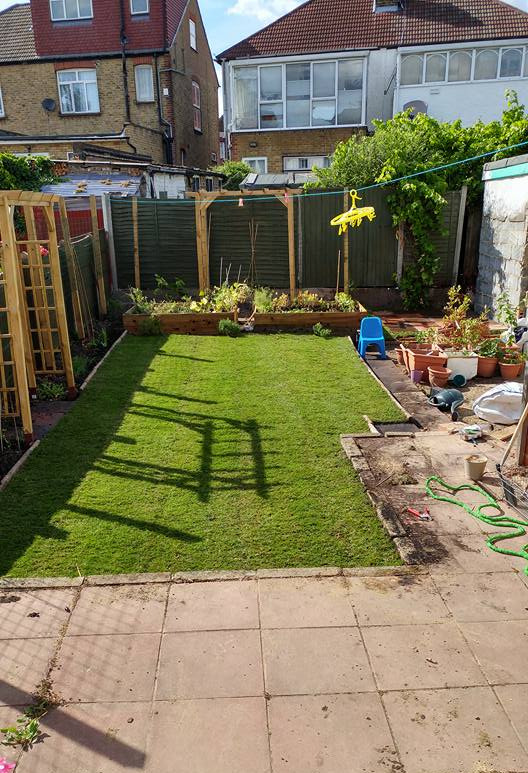
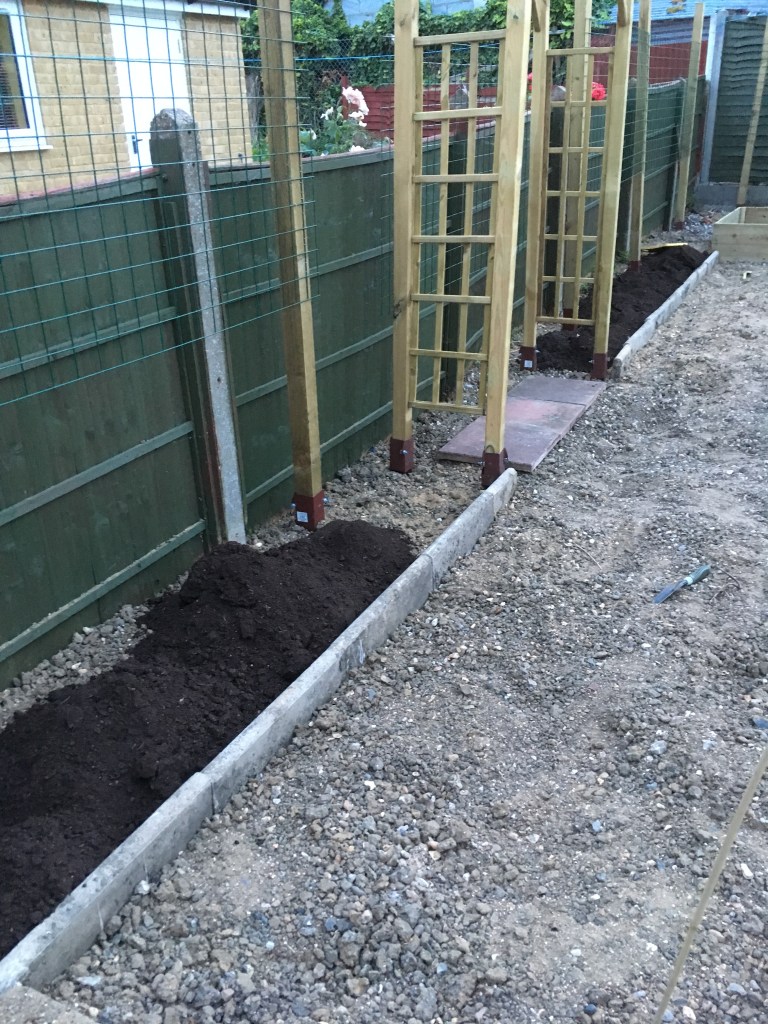
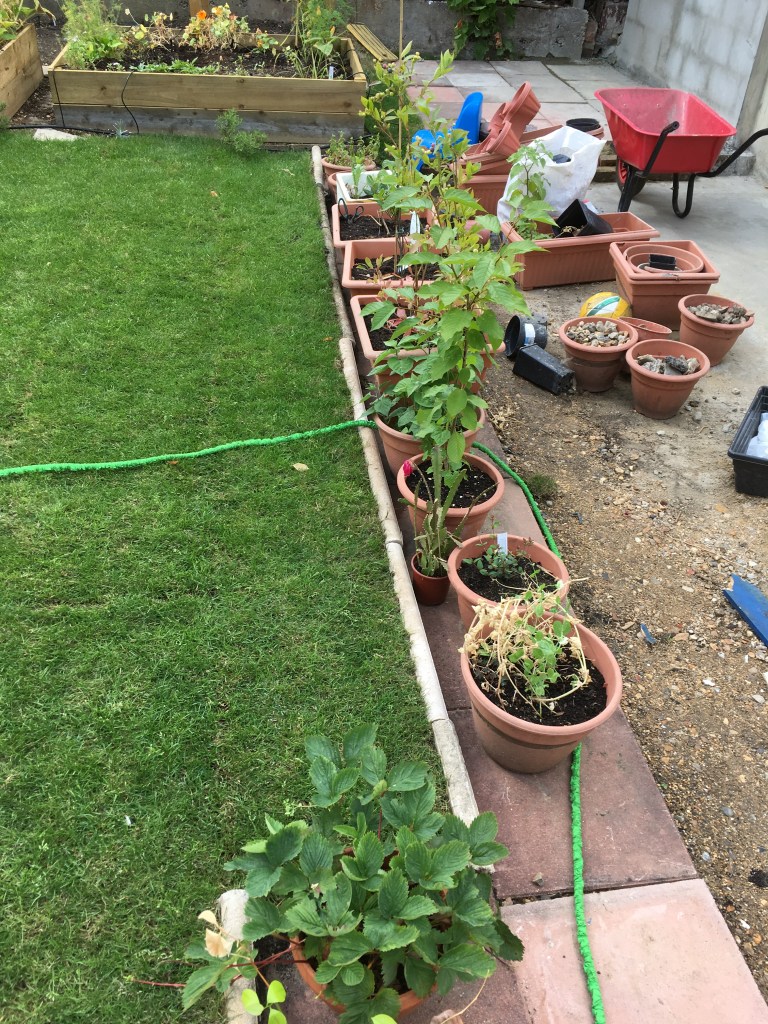
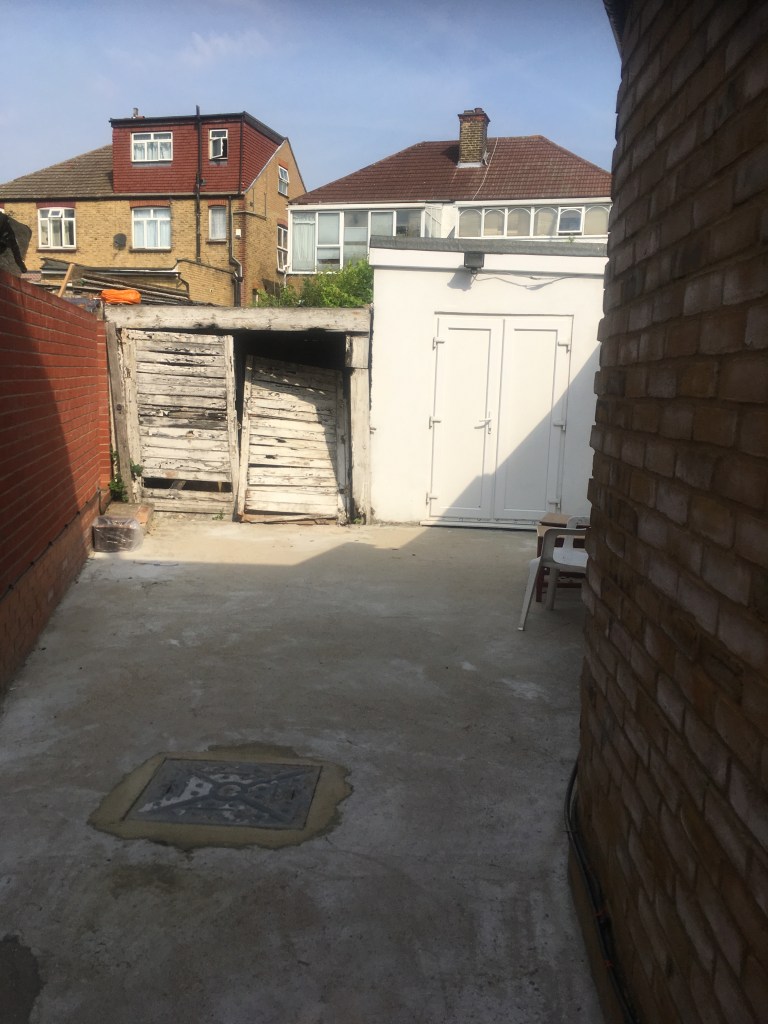
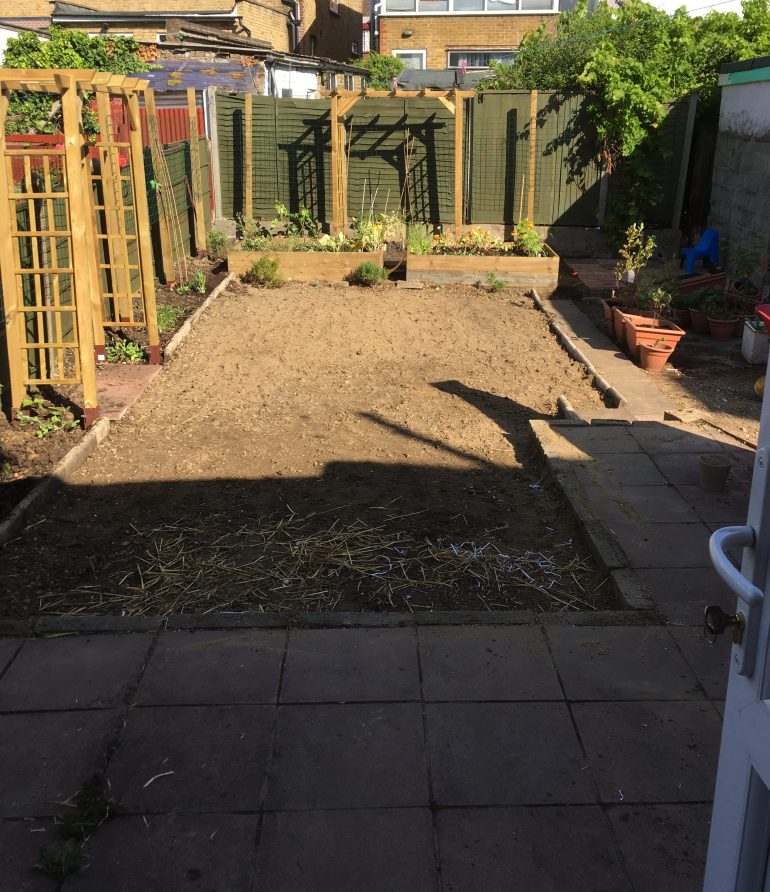
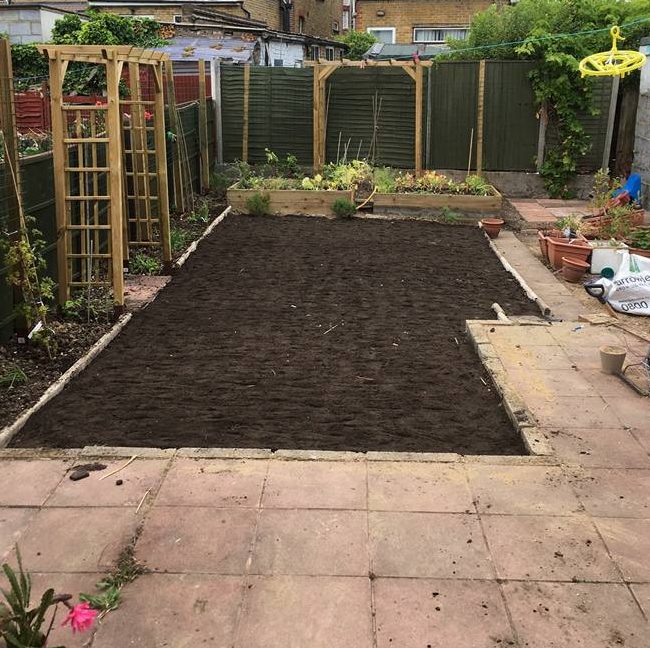
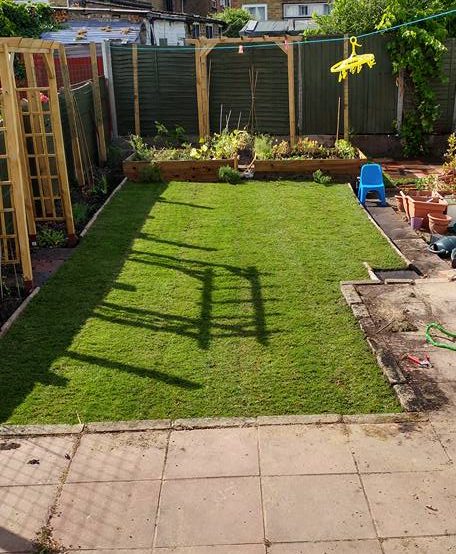
Creating my little ‘oasis’ from the paved monstrosity was quite a journey. You can see how it went from paved to lawn in this post. Whilst writing that post I thought it might be worth discussing what to do with waste.

Reusing

If you were to look at my garden, you would realise very quickly that I am more concerned with function than aesthetics. If I can squeeze both in all the better, but I will not compromise on function or sustainability for better aesthetics – especially as sometimes that can be quite subjective anyway. For example, I will grow flowers if they are edible, great for pollinators or can be used to create something fun. Anyway, this means that to save money and/or be more eco-friendly I have reused or repurposed some of the waste that I found in the garden. This explains why my garden looks like it’s been ‘cobbled’ together.

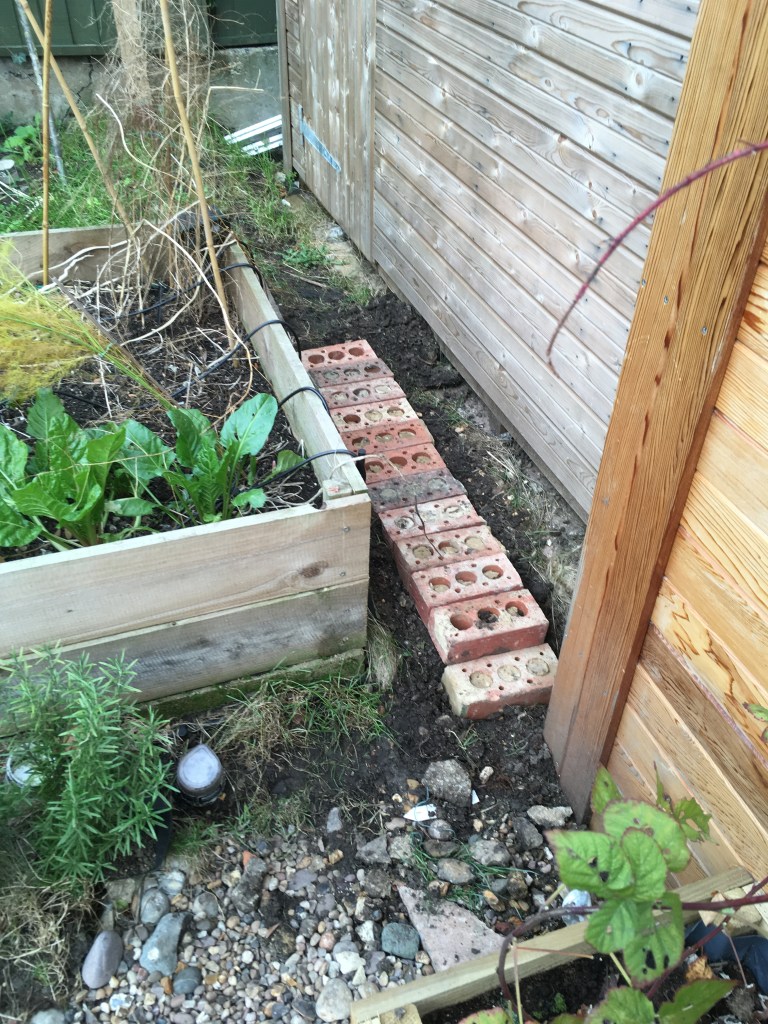
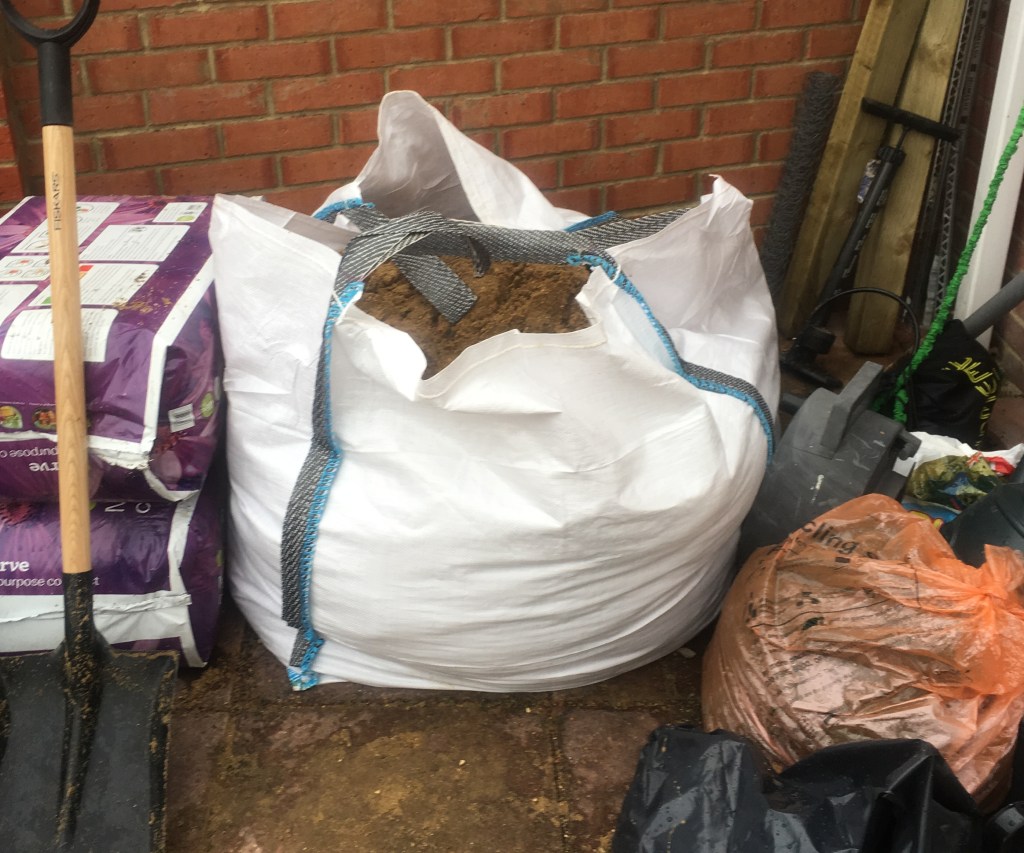
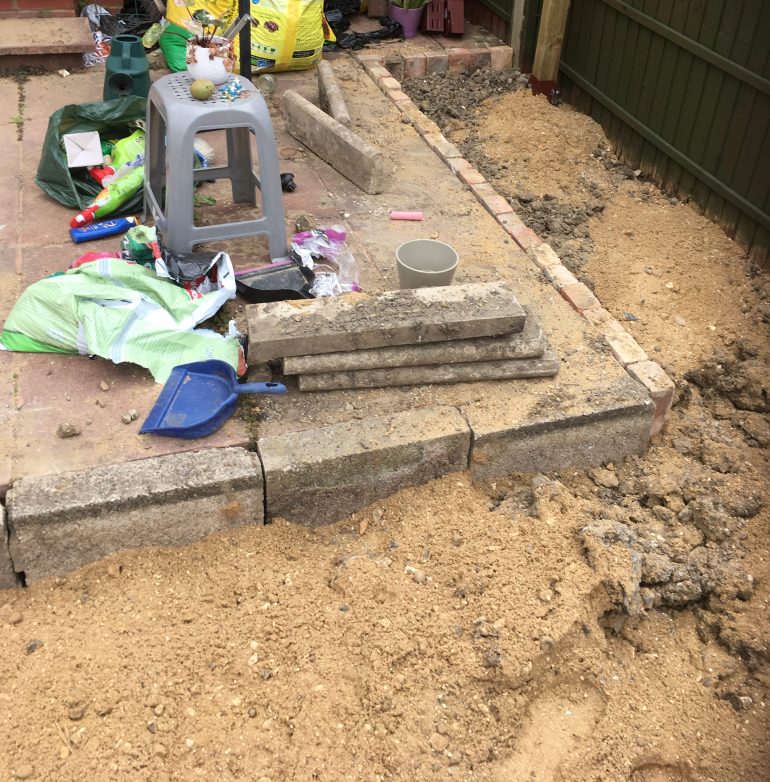
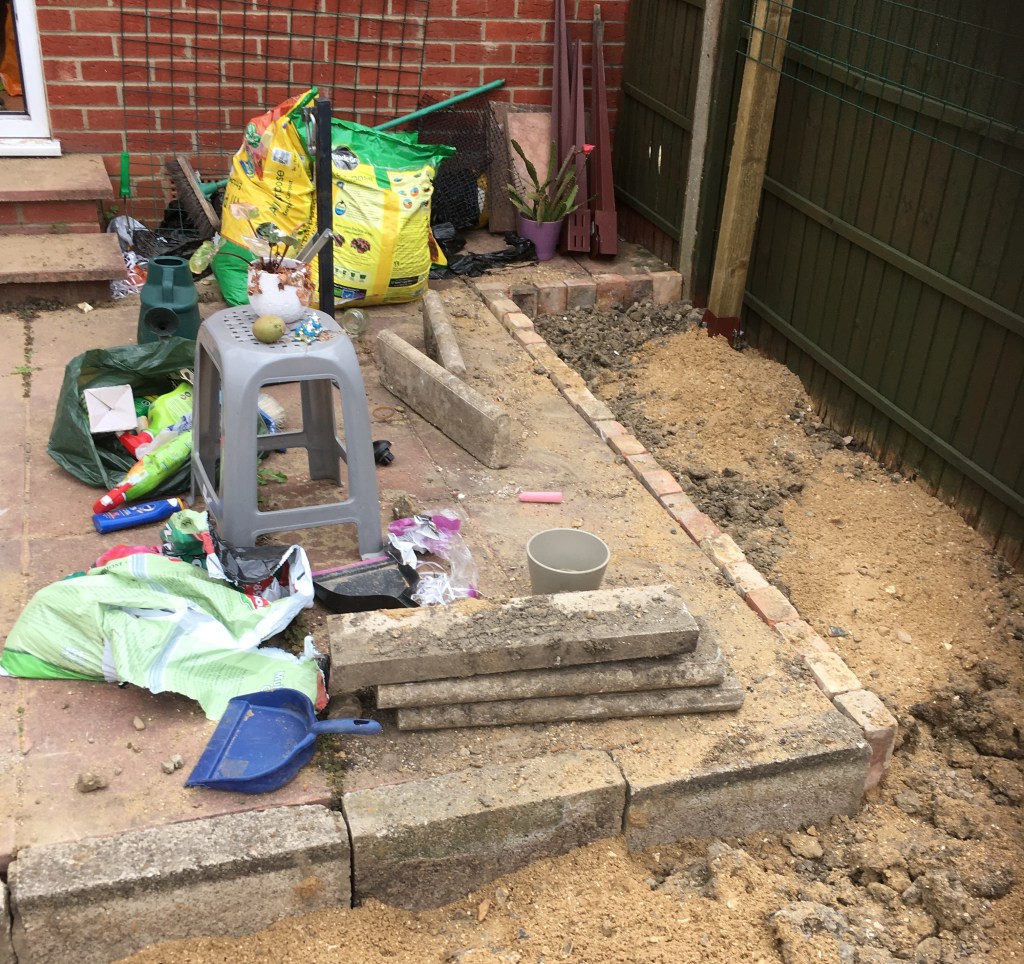
As I dug up the garden (to lay the lawn) there were edging stones and bricks that I was able to reuse to make the edge of the lawn or border the beds. I kept part of the patio (though it’s not particularly nice to look at) because it meant less work, less waste to shift and it is still functional. I kept some of the flagstones to make paths elsewhere. I used some of the flagstones to provide a sturdy base for the shed to go on. I kept a few bags of sand to use under the paths or for future projects. Old solar panel rails made a blackberry support and uses up otherwise empty space.

It’s worth keeping bits of wood whenever you have DIY projects as they often prove useful in the garden later on. I used some to hold together a pallet planter and mount a baby gate that became a squash climbing frame.

Almost all of the kitchen cabinets that came out when we had the kitchen done have been reused as storage elsewhere – either in the pantry or the shed.

London reusing

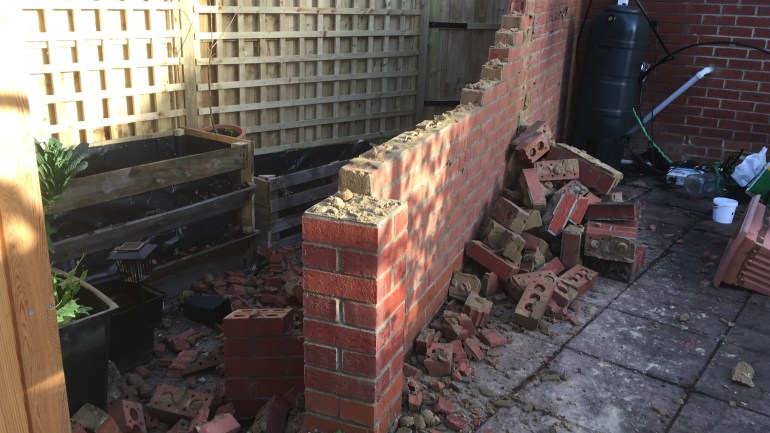
Like in the previous post where I wrote about how in London you often see things left outside homes for someone to take, we have also sent garden waste out into the world this way. As part of the ongoing garden renovation I removed a wall. It seemed quite new so I tried to keep as many bricks intact as possible for reuse. This meant that I had a large amount of bricks. I also took up a small section of the patio to make a brassica bed. Some of the bricks were used to line border the edge of this new bed, but I had far too many to use. I left them outside our house and let the neighbours know that they were going spare. One neighbour took some to make a path, one took some to make tea light holders and one took a single one to replace a broken brick in her front garden wall. I also had a large amount of sharp sand dug up from under the patio when making the brassica bed. This was harder to shift. There was, at the time, a friendly builder who I kept passing on the school run. I asked him if he had any use for some sharp sand. I bagged it into about 7 rubble bags. The next day he came round and removed it all as well as the remaining whole bricks. The broken bricks I piled into about 6 rubble bags that the husband dutifully took to the dump.

I dug up a rose bush to make space for a physalis and left it outside the gate. A neighbour adopted it.

When we had our roof done the excess tiles were taken away by my kung fu club for breaking in demonstrations and blackbelt gradings.

Composting

Wherever possible, any green waste is put into the compost bin. This is any green waste that doesn’t contain perennial weeds, weed seeds or diseased plant matter. Here is more info in ‘Why and what to compost

Green Waste

If your council has a green waste collection but you think it is too expensive you could club together with a neighbour and share a collection. My husband said no to having our own collection. I was annoyed as I think it’s a great resource. On the other hand, because I compost most of our waste it would be quite expensive to have a collection for how little green waste we would actually have. This was solved when a lovely neighbour offered to let me use theirs. I offered to make a contribution towards the cost, but she said no. I soothe my guilt with gifts of vegetables and by being respectful and grateful.

Disposing of large loads

So, with the great dig of 2017 (and the many ongoing projects) there has been a large amount of un-reusable, unrecyclable (in my home) waste. There are a few things you can do with this:

Trips to the dump

It is free and with the local centres they make it possible to split your waste into different skips so you know that any rubble can be reused as hardcore, any green can be chipped and used, any metal can be scrapped, cardboard is easily recycled, textiles have a spot and they even have an area for appliances that are still working. That at least makes it feel more eco friendly than landfill. If we had tried to move all of the waste from this house by car it would have resulted in husband expiration or divorce at the very least, the car would be filthy, we would still be doing trips to the dump 2 and a half years later and the suspension would be shot.

Collection by a company

One of the first waste removal attempts I paid around £500 for a company to remove flagstones and sand. Unfortunately, because their vans tend to be subject to weight limitations, they could only take about 20% of the flagstones and sand and a dilapidated shed. That was an expensive lesson. They removed some of the flagstones and sand from in situ but at the same time it was not what I had thought I was paying for. As a newbie to the process it’s easy to be taken advantage of.

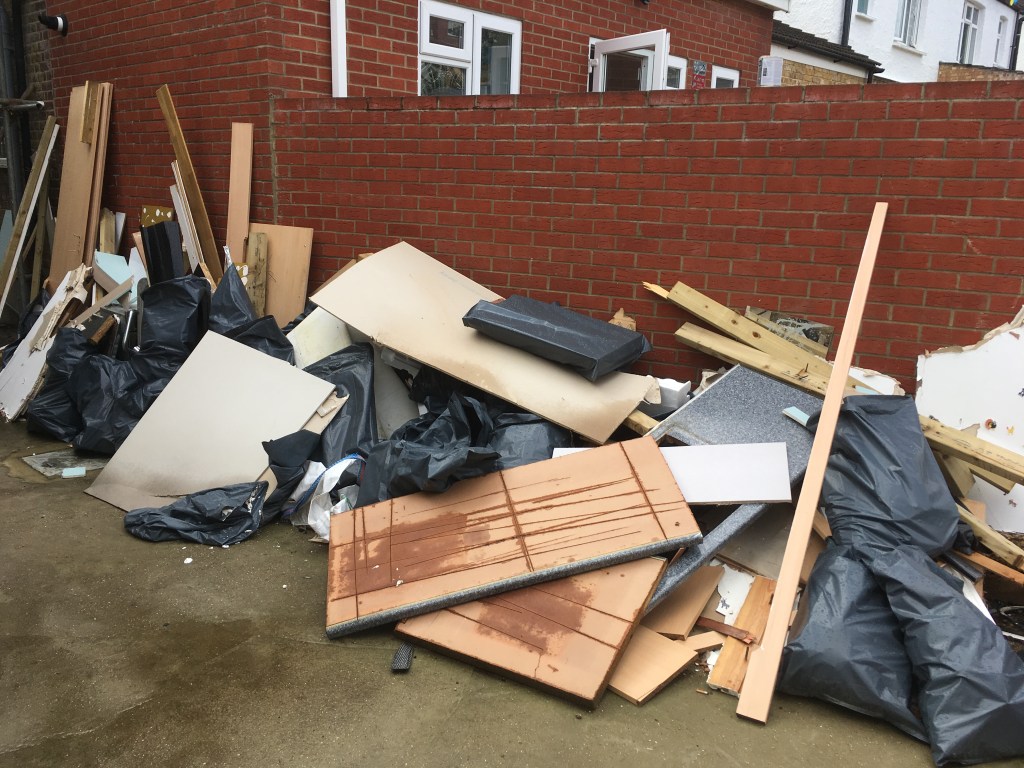
We did a second one about half a year later from a different company. I was less naïve. They charged around £300 for ethical waste disposal. Their ethos included recycling or upcycling what they could. After being stung the first time. I hired this company knowing that the waste I had this time (waste from the kitchen and bathroom refit that I couldn’t reuse) wasn’t as heavy. They did a great job and cleaned up the area afterwards. Hiring a company for bulky lighter weight items means that they do all the work for you and you know it’s not all going into landfill.  

This may be a good time to note that anyone coming around and offering to take stuff away for you for cheap is probably doing something illegal. A man in a van offered to remove a large amount of rubble from the side of the house for £100. When asked about where he was going to take it, he said he was going to take it to the dump. Now my problem with this is that is that I know that vans with DIY waste are subject to fees at the nearby refuse and recycling centres. This means that it was likely to be dumped randomly somewhere. It also may be worth mentioning that before we moved in several houses on the road (including our one) had been burgled. Picking up waste is a good opportunity for someone to scope out your access points. Basically, if the removal of the waste does not look like it is going to make business sense and/or doesn’t seem like a legitimate business then it’s best avoided.

Skips

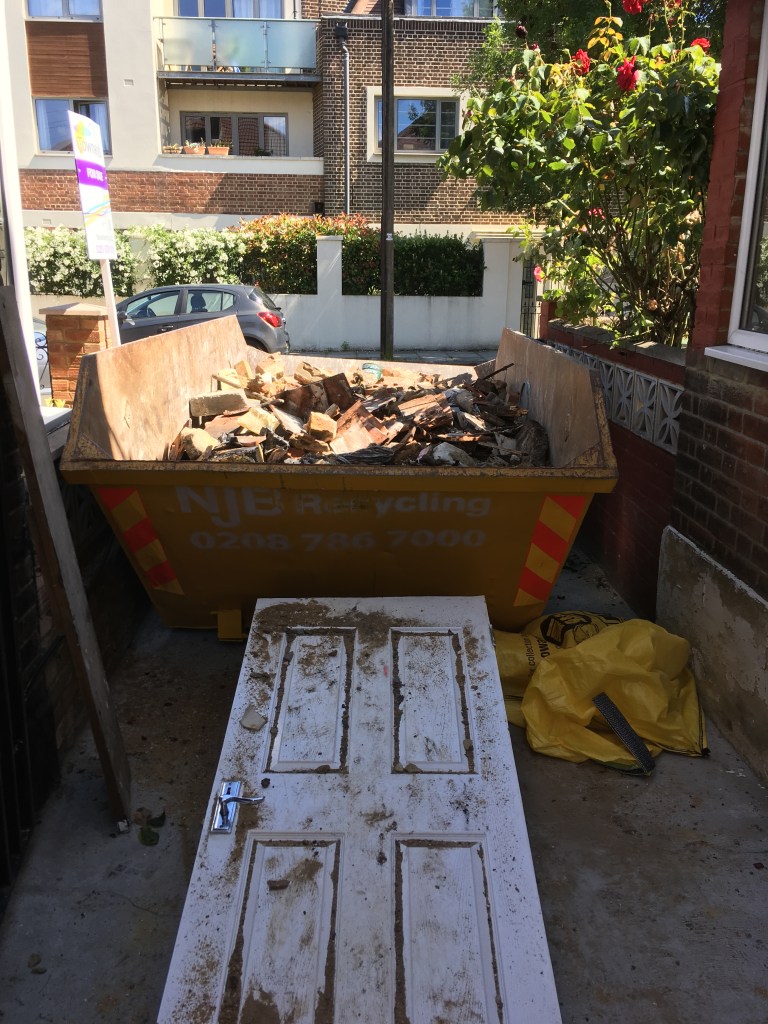
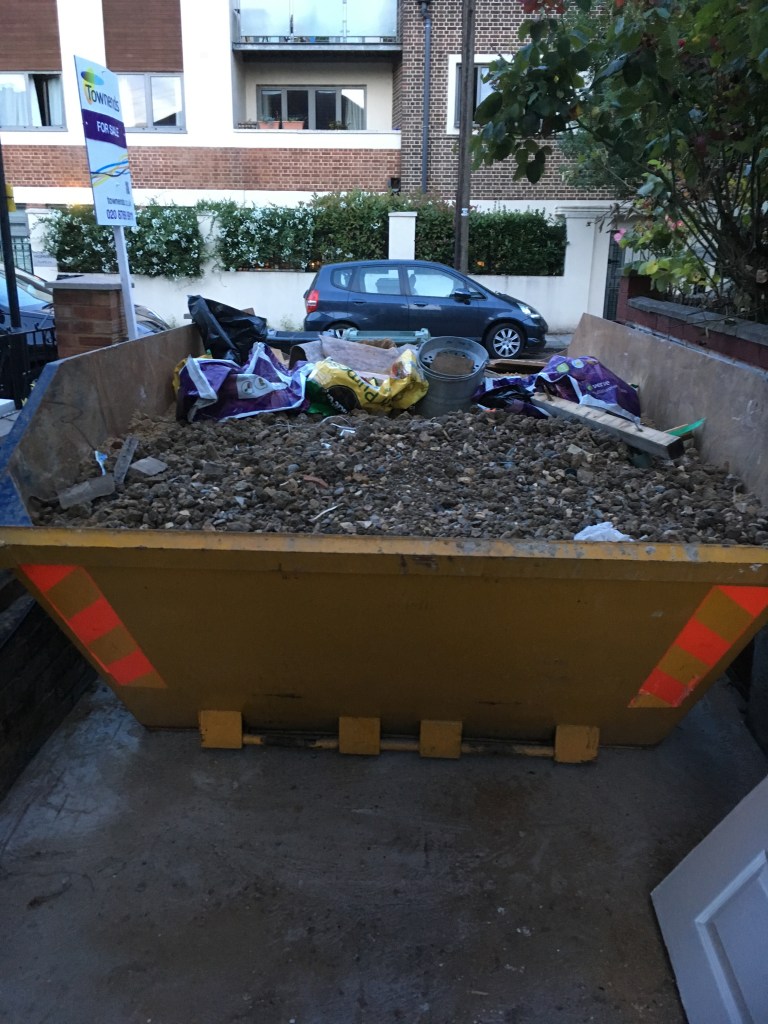
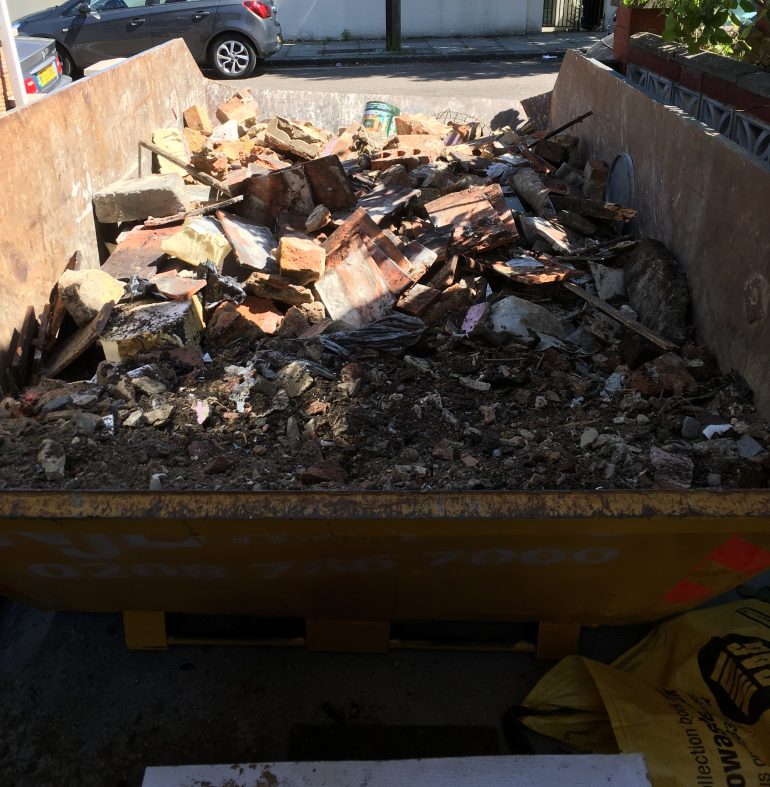
I absolutely love getting a skip. So much so that I’ve hired 3 so far. This has been the most cost-efficient option. It cost around £250 per skip. Each one was delivered (by a lovely company called NJB) on a scheduled date. It was then left for as long as I wanted as I filled it. I then called the company and they picked it up a day or 2 later. Skips are wonderful when you are hampered by weight, rather than volume. After the first waste removal company I got our first skip. It did take two skips, but those two skips took the last 80% of flagstones and sand left over, all the rubble under the sand (which in fact meant most of the waste from the extension built by the previous neighbours) and a crumbling wall we found behind the recently removed shed. Skips can be back breaking work to fill though. A wheelbarrow with an old door propped up by flagstones as a ramp was helpful. Friends willing to lend a hand speeds the process along (thanks Jak). The third skip was for most of the kitchen and bathroom refit. Unfortunately, we were scuppered by volume. There was too much for one skip. That’s why we went with the second waste management company. I was exhausted by this point. For almost the same price as a skip someone was going to take it away without any work from me.

Hippo bag

This is a variation on the skip. You buy a bag from a DIY store for a bit more than £10. You take it home and fill it. You can then call the Hippo company and for £100 they come and take it away. We bought the bag but then it wasn’t worth having it picked up. The garden waste greatly exceeded the weight limit and even with a couple of bulkier lightweight items it would have only removed about an eight of what a skip would have. In the end I ordered the skip and emptied the bag into it. Hippo bags are hard to fill, by the way, as the sides collapse far too easily. Skips are much easier.

Asbestos removal

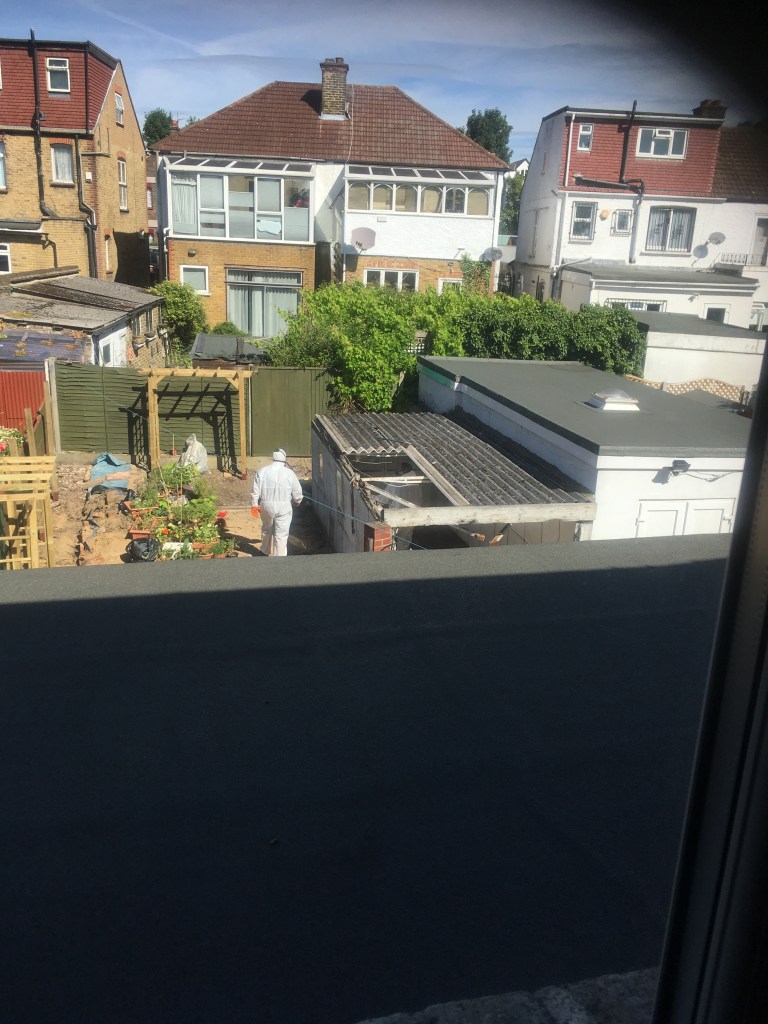
One last thing. You may find asbestos in your garden. In our street any of the garages with the original roofs will have asbestos in the roof. Annoyingly this wasn’t our asbestos. We had our garage removed by a specialist company. My idiot husband (often he’s smarter than me – in this instance he was NOT), after pulling down a wobbly wall behind the removed shed, he found some asbestos. This was the asbestos from the roof of our neighbour’s garage. Our neighbour’s rather naughty contractors, rather than dispose of it properly, had just shoved it behind their new extension that backed onto our garden. I suspect husband actually had to pull it out from what was technically their land to bring the dreaded stuff into our garden. He did this, knowing it was asbestos, without any protection at all. I told him that if the asbestos didn’t kill him, I would. As a defence he said that he didn’t want there to be anything around that could damage our little one’s lung health. It wasn’t ‘friable’ asbestos, which means it doesn’t crumble easily so if left alone and hidden it shouldn’t do any damage. Moving the sheets and sliding them across each other and breaking them apart – this is what is dangerous. We were about to put a new shed in front of it so really, as it was the neighbours waste, on the neighbours land, we should have left it. We technically stole their dangerous, badly stored waste. I was then charged with disposing of it. This is not something you can put into a skip. It is something that London councils will collect if you bag it up and label it with their precise instructions. They will do a certain amount for free. We paid £20 as we were a bag over the limit.

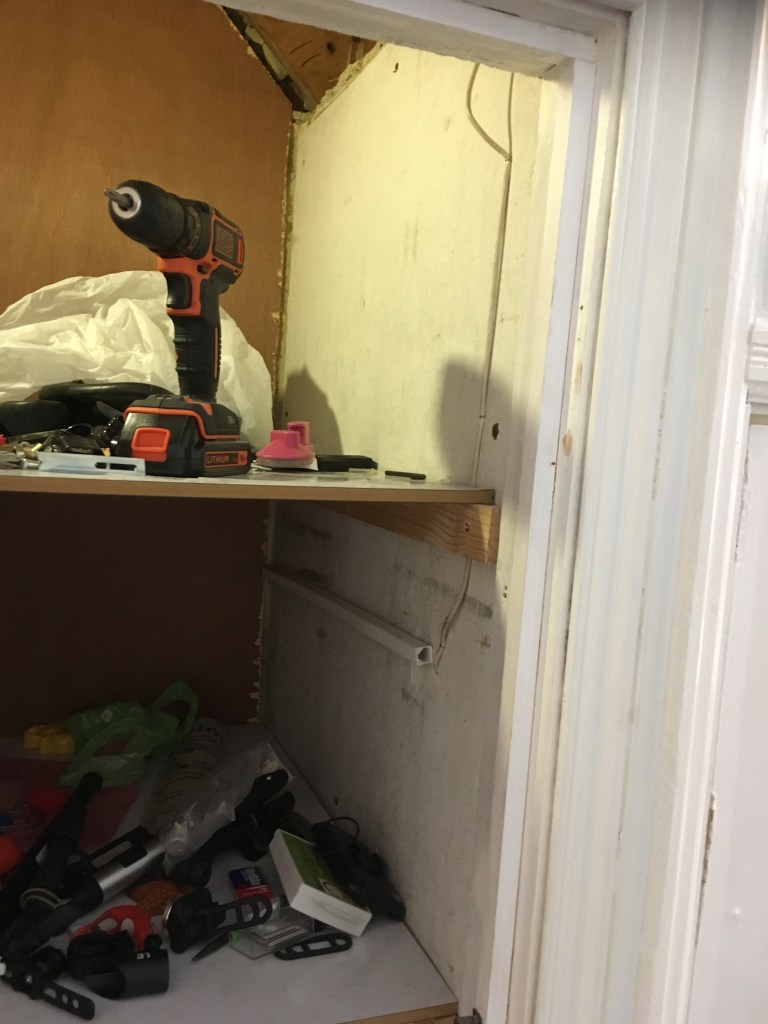
If you suspect you have asbestos in your home (or garden) there are companies you can call that will extract, clean up and dispose of it safely for you. We used R and S Environmental who removed the whole garage for around £1400. They offered us a much cheaper option where they just removed the asbestos roof and we would remove the rest ourselves but to be honest (despite husband’s attitude) I really don’t think you want to take any risks. About a year later realised that there was an asbestos panel attached to a wall in the under stairs cupboard. This was both a relief and a nightmare. It was the awful, friable kind that is really dangerous. It had been drilled into by the previous owners (see shelves with supports drilled in) so there was probably asbestos dust on the floor of the cupboard that had been shifted around as we used it. However, in the big garden dig we did find a small piece of something that tested as positive for friable asbestos and couldn’t find the source. We had about 5-6 pieces tested after the mother-in-law visited and spotted it. Most of it turned out to be plasterboard. With this confirmed tiny piece I had this terrible dread that buried under the garden was a huge source of dangerous asbestos. I finally knew the source and could even see a piece removed that matched the size of our discovered piece.

FYI – No one is paying me to name drop (though I would love it if someone did!) NJB and R and S Environmental are both companies that I have used more than once, and they were great every time. 

Recycling, reusing and waste disposal (Part 1)

Short version: (Part 1) There are many ways to reuse your waste. When repurposing things like jars, tubs and bottles you could save yourself some money whilst giving you or your family a fun project. Consider reusing before recycling. (Part 2) Please see next week for large scale waste disposal and asbestos removal.

This is a two week blog. The last blog on lawns got me thinking about large scale waste disposal, but not many people are dumb enough to launch into a big garden project the way I do (I have no idea how I convince myself it’s a good idea at the time) so I started thinking more about the everyday things and how we dispose of those. Next week we shall delve into skips and waste disposal companies.

HOUSEHOLD STUFF

Some ideas are easier than others, but the main point is that anything you reuse or repurpose means that that is one less thing that you are paying money for and one less thing that is manufactured which involves an environmental cost. E.g. the energy and resources put into making and transporting a new plastic plant pot, a cloche or a slug trap. Here are a few ideas that hopefully inspire you to find other new uses. Feel free to post anything you’ve done yourself or any ideas that you have in the comments.

Repurposing

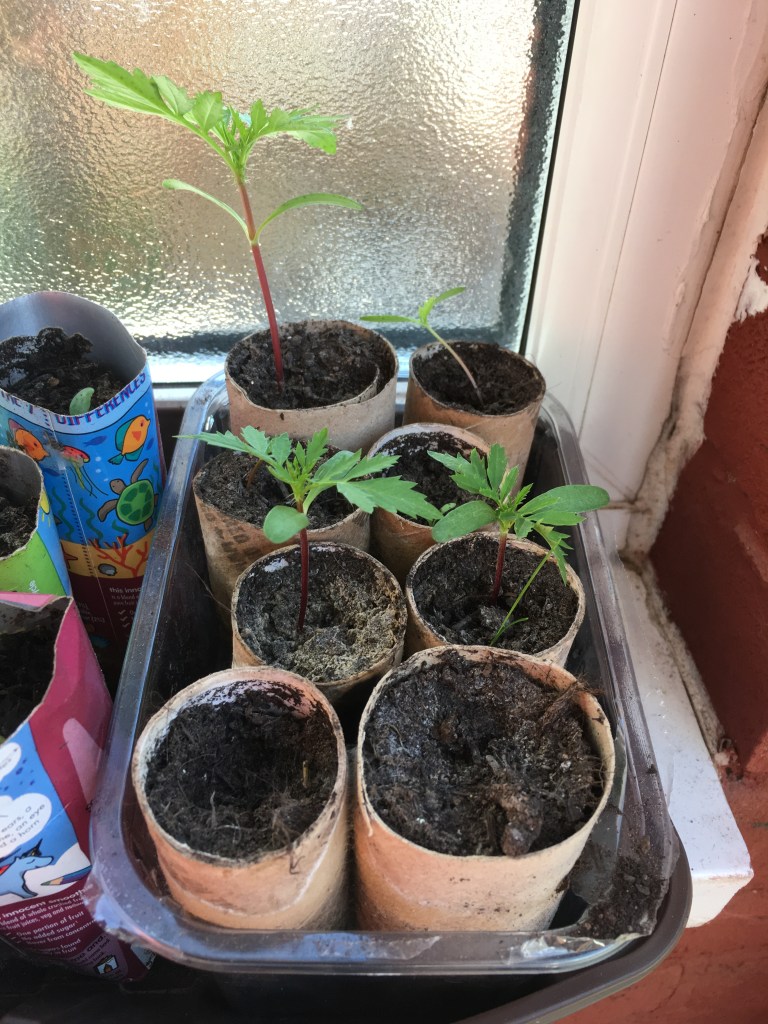
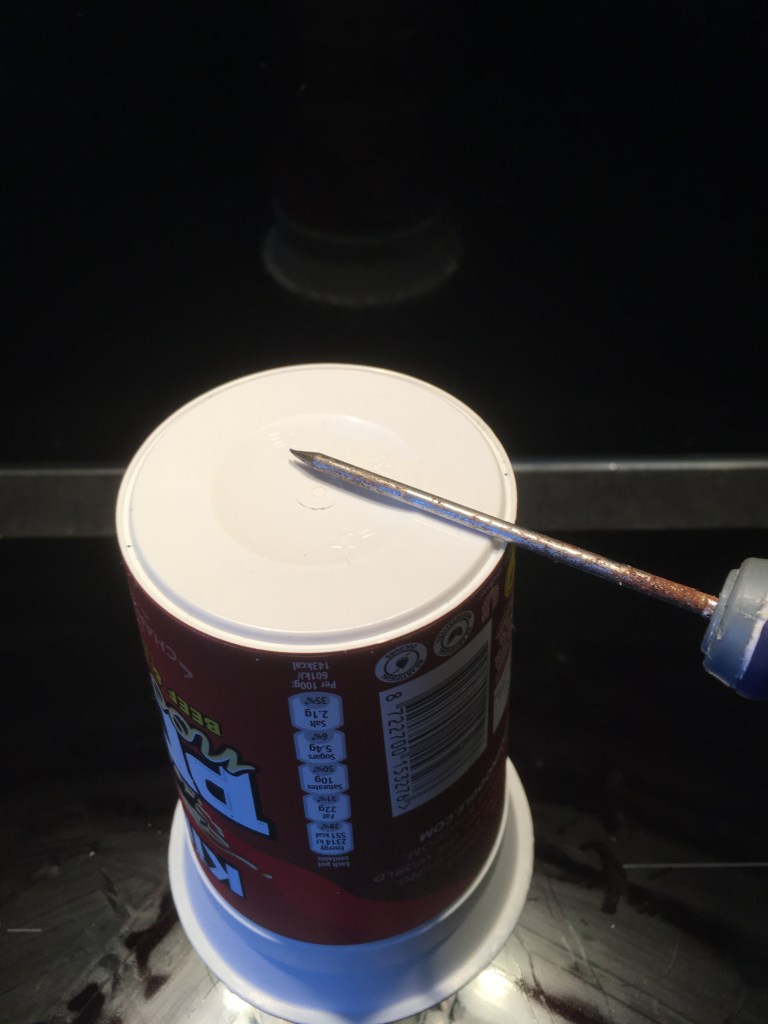
The whole tube can be buried into the ground when your seedling is big enough and/or the frosts have passed. The only problem with these is that I would suggest fast growing seeds as they can go a bit mouldy before you get them into the ground.

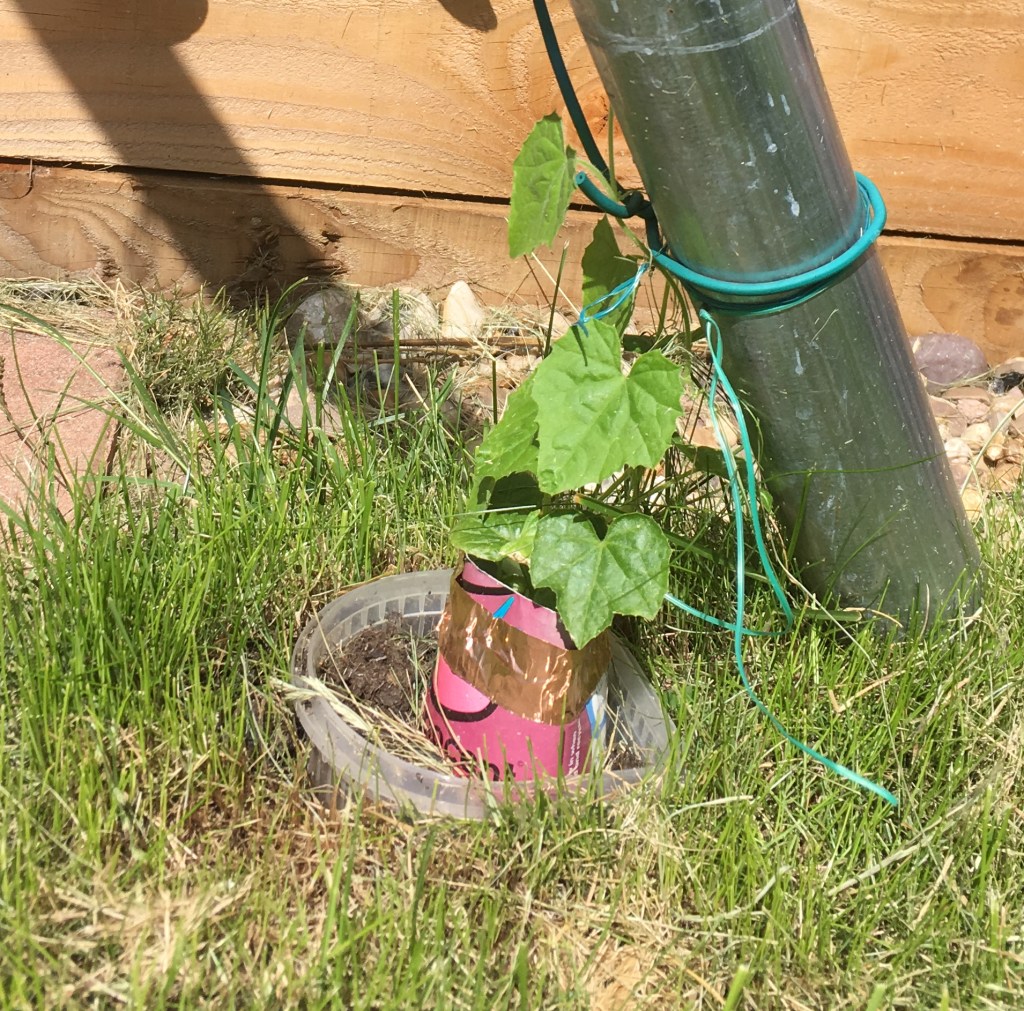
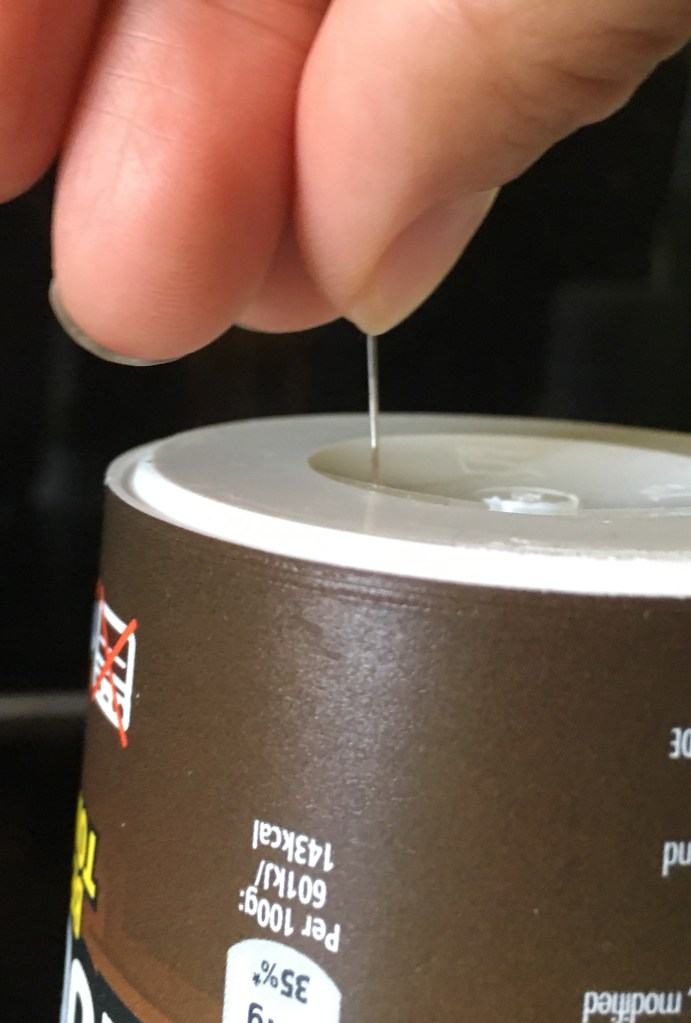
Tetra Pak cartons or plastic pots are better for seedlings that will be in them for longer or for cuttings. Tetra Pak is made of layers of card, plastic and aluminium pressed together to provide a lightweight and recyclable container that can keep things inside fresh without refrigeration. This means that the carton will last much better than a toilet roll and have a few more options.

If extracting the seedling is hard you can cut down the side with scissors to unwrap it. I’ve also cut the bottom off with scissors and buried the whole carton to provide a bit of extra protection for the seedlings. It’s a great way to give away cuttings or seedling to other people without worrying that I’ll have to buy replacement pots. When you’re done with the pot they can still be recycled after.

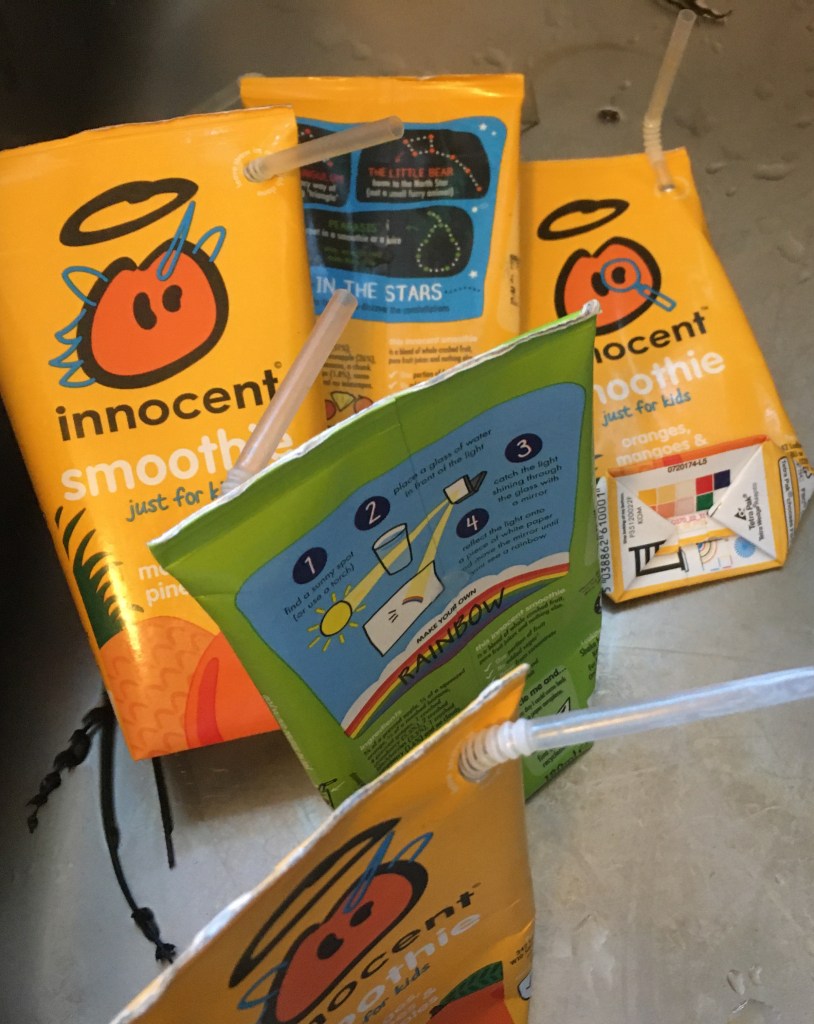
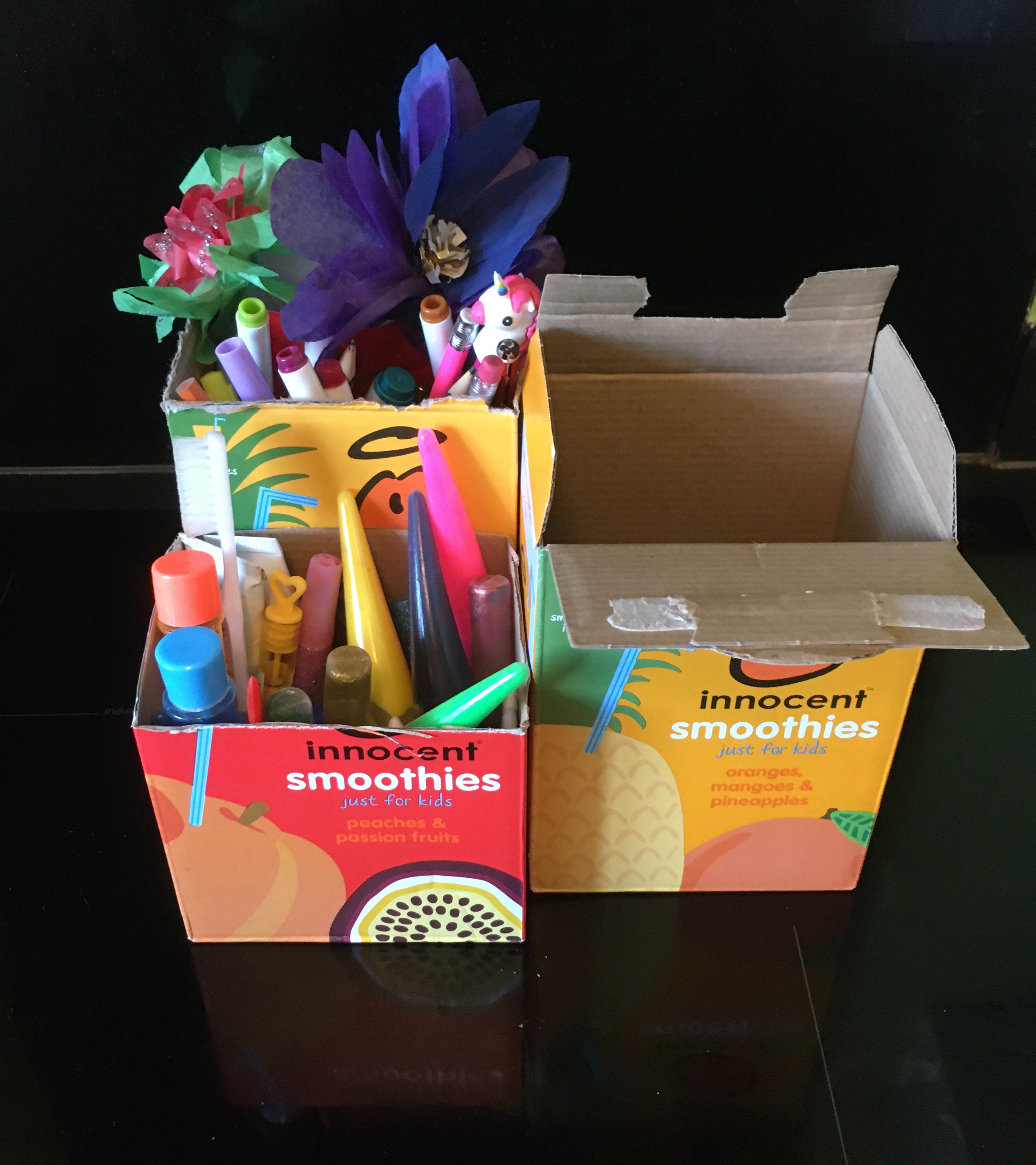
We bulk buy innocent smoothies for the little one whenever they’re on offer, so we always seem to have loads of cartons hanging around. The boxes they come in are also rather useful. They’re an easy to shape sturdy box that makes good storage containers.

Old jar, especially large ones, are great for ‘pickling’ things that don’t require pasteurising. Things like kimchi and sauerkraut are especially good in large repurposed jars as any heat treatment kills off the required beneficial bacteria. If ferments aren’t your thing fruit ‘brandies’ are easy – literally a jar full of vodka with a couple of tablespoons of sugar and some fresh berries, sealed and left for a couple of months. Blackcurrant or cherry are two that I would definitely recommend trying.

Large old jars also make great ways to store leftover wetter foods like soup, stew or spaghetti bolognaise in the fridge as they take up less space (area) than a tub. I used to take the jar into work. It’s heavier and more fragile but they don’t spill the way Tupperware does. The jar (minus the lid) would go straight into the microwave at work.

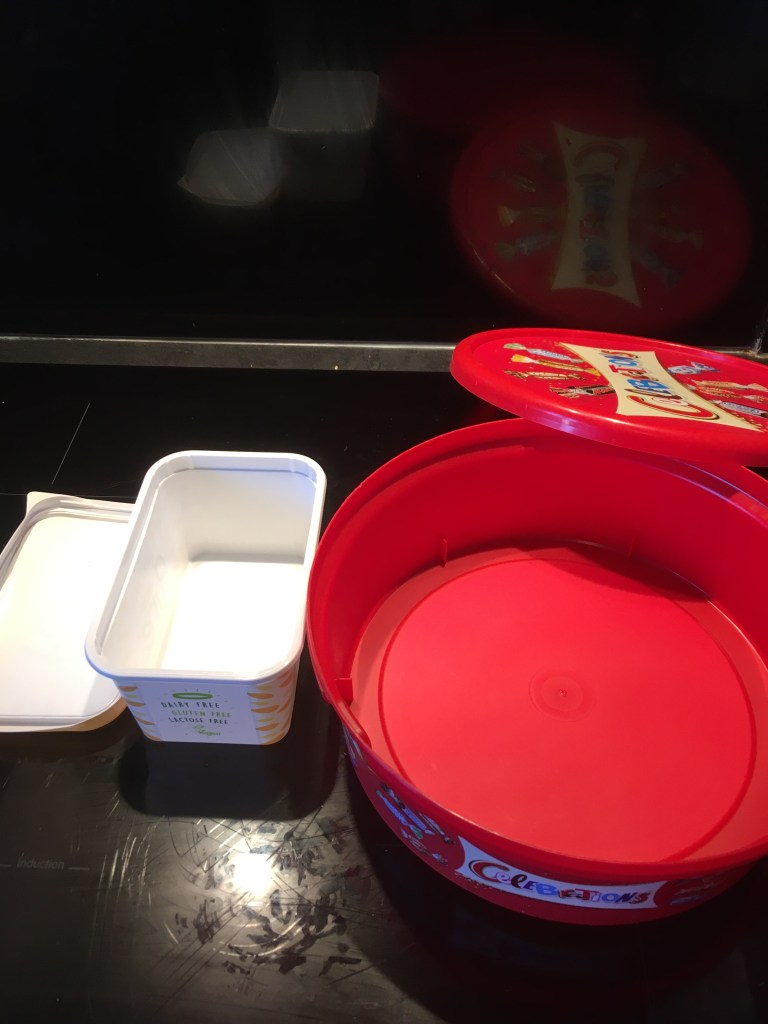
Of course, plastic tubs are great for holding lunches. They’re also great for storing leftovers. I know proper Tupperware is nice, but this is free and environmentally friendly.

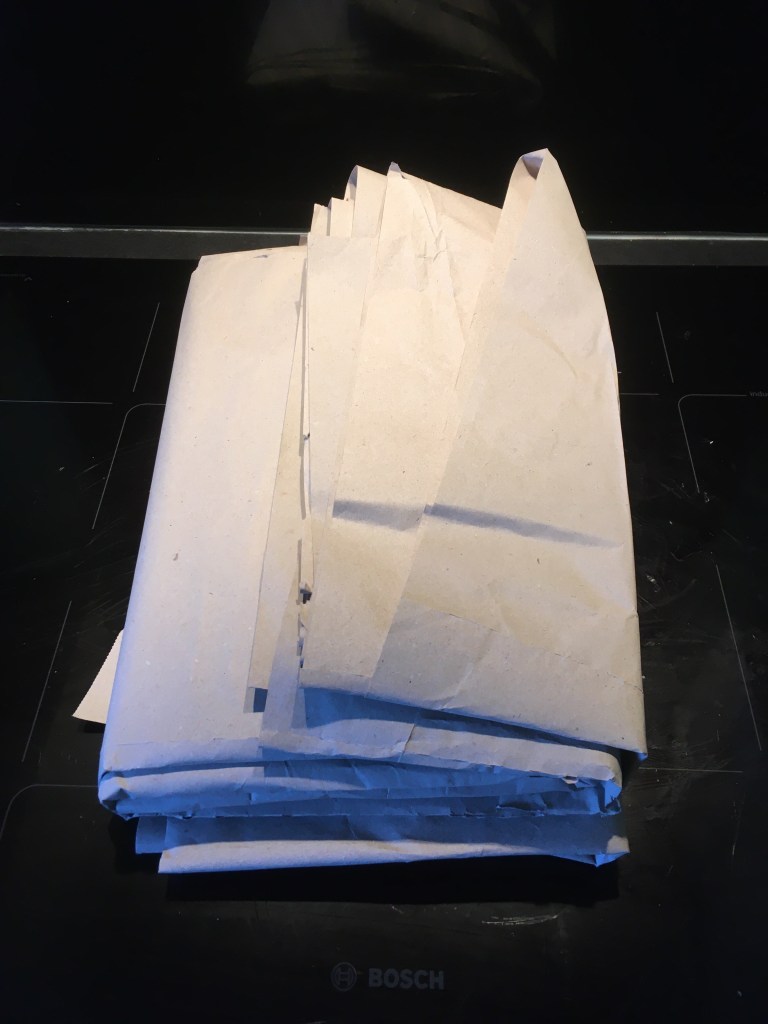
That amazon paper as well as cardboard boxes have gone into a new project too. I’m trying to grow mushrooms without buying the expensive kit. The box kits are an excellent gift, for anyone who is fond of mushrooms but they don’t really produce enough mushrooms to make it cost effective for an avid vegetable grower. The cardboard and paper was boiled to kill microorganisms and pulp it down. The excess water was squeezed out. The whole thing was put into a bag and after cooling mushroom spawn was added. After 4 weeks it looks like the mycelium has almost taken over so I think I might try cutting a hole and seeing if I get any mushrooms. This will make its way onto the blog at a later date. 

There are also a few waste bits that I keep in the little one’s ‘making box’. Bubble wrap, tissue paper from packages, bottle tops, netting orange bags, bits of card, flower catalogues and old wrapping paper makes its way there. This is little one’s go to box for craft materials. It’s great for exercising the imagination and it’s free. She seems to get much more use out of these than the expensive plastic toys that she got for Christmas. That both saddens and pleases me in equal oscillating measure.

It may now seem that I keep everything and horde lots. I do put a lot into recycling too and when I’m done with the pots and jars, they can still go into recycling after their second life.

Food Waste

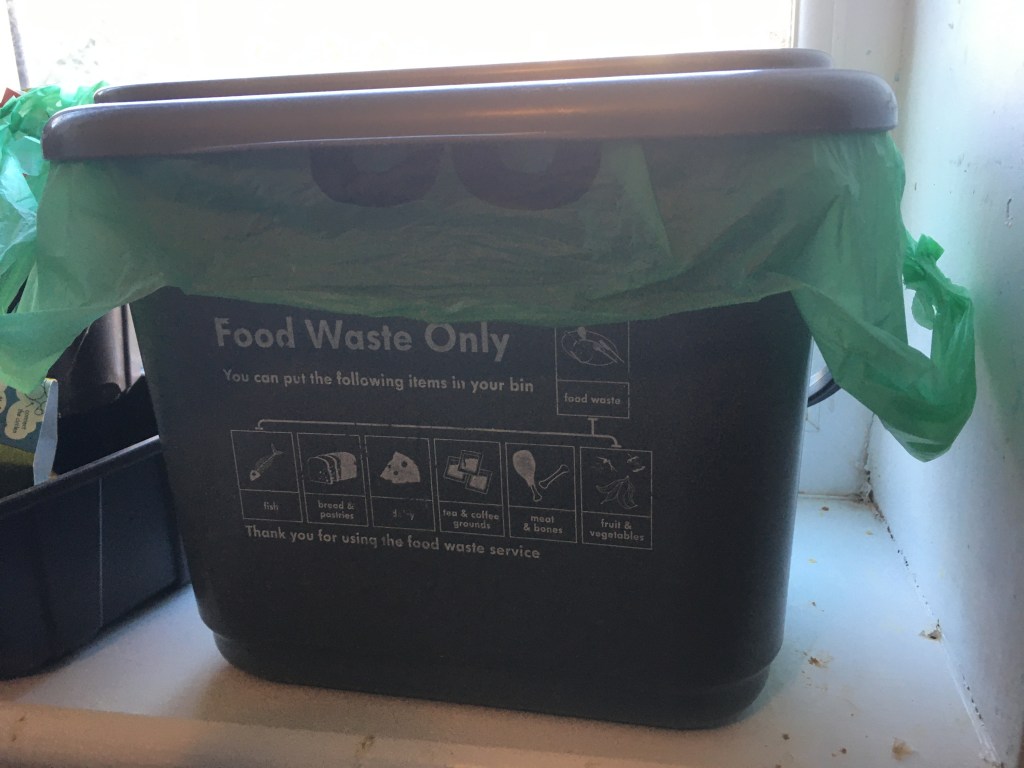
This can be split into compostables and council collection. I try and keep what I can for composting. Full details of this can be found in ‘Why and what to compost’ but basically any peels, cores, tea bags and spent coffee go into my compost tub in the kitchen to go to the garden because it’s free fertiliser for the garden. All meat, dairy, stuff with sauce and seasonings go into the food waste which the council helpfully collects. Co-op now has compostable bags as carrier bags which can go into the council provided tubs to decrease the ‘ew’ factor that comes with emptying these things.

London reusing

This is something I have only seen in London, though I’m sure it must happen elsewhere. People often leave their unwanted but still usable items outside their house. I love this! This just reduces the city’s waste and purchasing of new items. Sometimes things are in amazing condition because their kids have grown out of it or because they were renting and can’t take it with them. You do need to be a little careful as it can be constituted as fly tipping and you need to make sure you’re not just stealing something that someone has just left outside their house for a moment. I have walked past interesting things before on my way out and decided that I would only pick it up if it was still there on the way back. Often a note saying to help yourself makes it more likely that someone will take it. Also leaving stuff out when the weather is nice and protecting when the weather is not makes something more attractive. We’ve left a few items outside like bricks (more on that next week) or suitcases left by the previous occupants of the house. We’ve collected things like an old push scooter and a drawing desk for the little one. In his university days my husband and his housemates got an old sofa and a coke display fridge, which the electrical engineer student in the house fixed. It took 5 of them to get it into the house and even then, it was too big to move beyond the front hall. I felt really sorry for their landlord after they moved out. 

Landfill

I’m afraid that despite my best efforts we still have a black bag full a week. I’m always extremely pleased when it feels a bit empty on bin day. Whilst a bag per household is still a pretty hideous amount of waste going into landfill there has been steps over the last decade to encourage much more recycling and reusing. From councils providing better options, to companies that try to be more eco friendly and/or have less or zero waste packing, to even the way everyone thinks about what they do with their waste. For now, we can keep trying our best and keep educating and encouraging ourselves and our little ones.

For some ideas on reducing plastic packaging please see ‘composting tea bags – a plastic problem’

Lawns

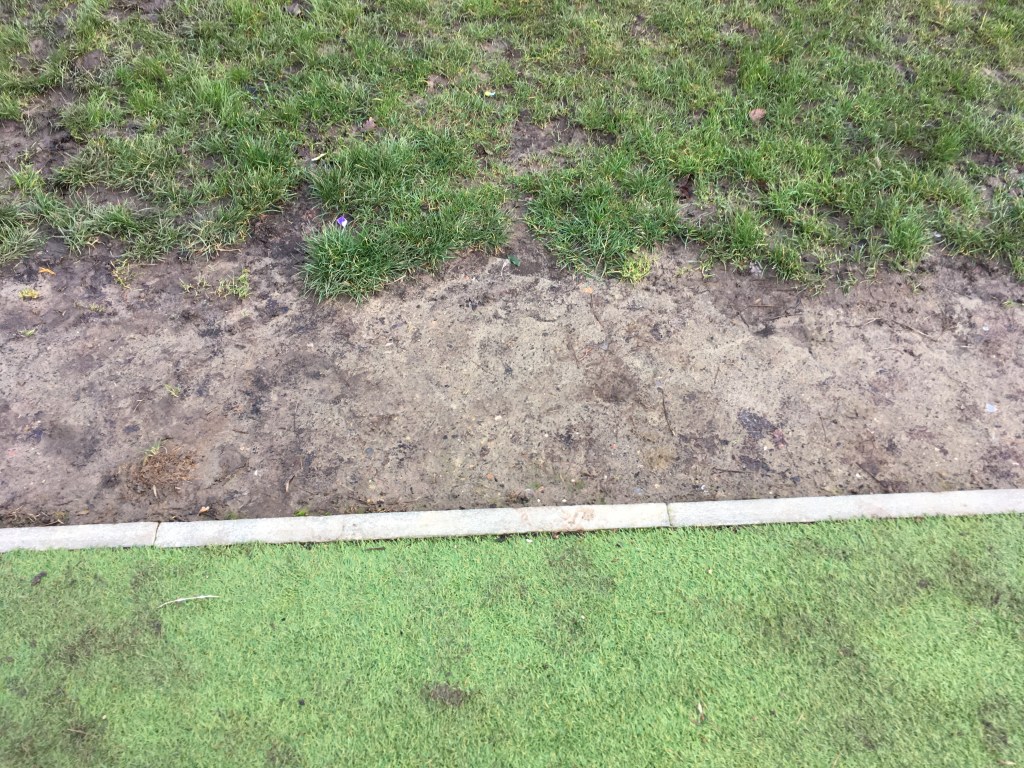
Short version: I feel that there has been quite journey with the lawn. We originally weighed the pros and cons of Astroturf given how hard a lawn on clay soil is to maintain in the winter. It’s the environmentally unfriendly option, but if it means you’ll actually use the garden more and maybe focus your gardening energy into planting more things (especially edibles) around it then that’s great. At the other end of the spectrum I was tempted to just have one giant vegetable patch. I ended up turfing about half. It’s enough to lie on or have a picnic and to provide a soft landing under a swing set. Now that it has been especially muddy this winter and has many little bare patches, I think this is a good time to sow with lawn flowers.

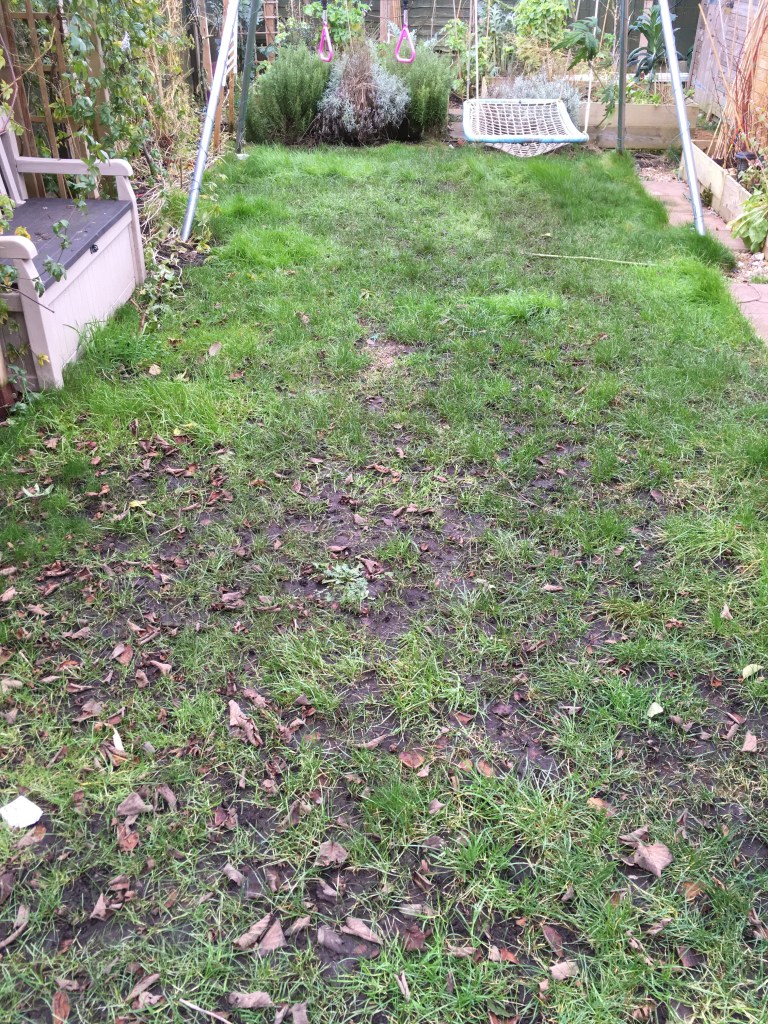
In late January the lawn looks shocking! There isn’t much you can do about this in London, unless you install turf with a very thick layer of topsoil. I did about an inch of topsoil and my lawn looks ragged in winter. In previous years it has recovered fine for the summer. It’s had more of a beating this winter, with an active 4 year old and being the straightest route to the winter edibles.

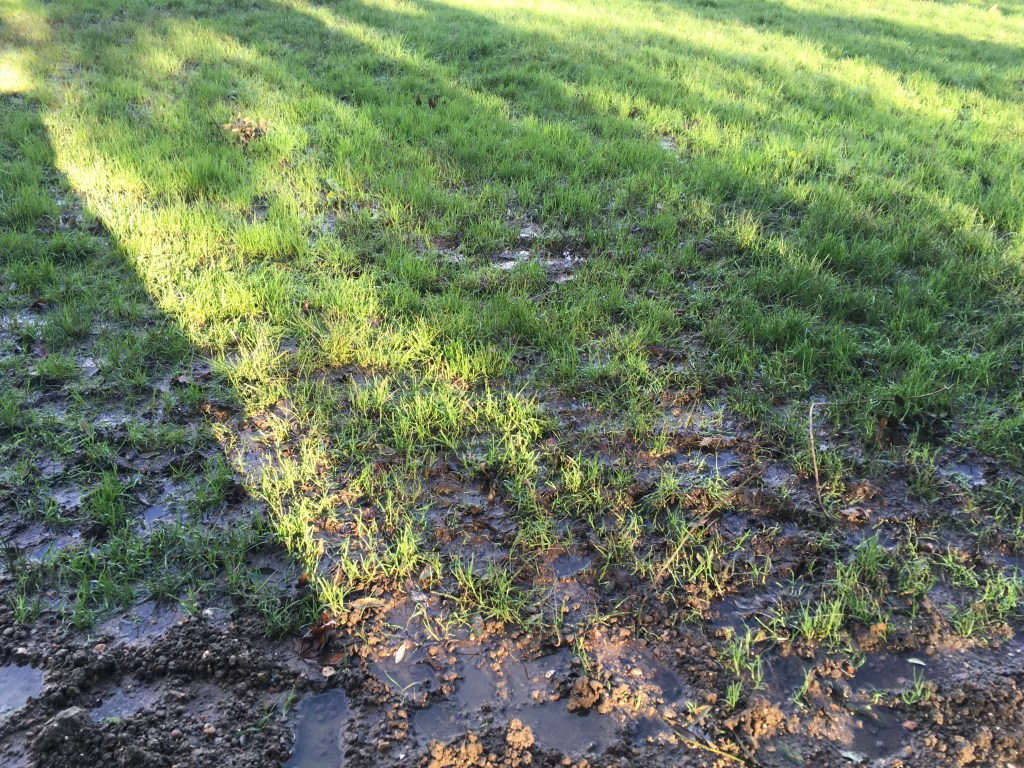
I feel vindicated when I see the swathes of muddy grass in all the nearby parks. The clay soil and the wet weather combined with any foot traffic just gives mud.

You might wonder why, knowing that the soil here isn’t great for grass, I bothered to install it in the first place. Well, my other half and the sprog had much to do with it. Also, a big (semi) permanent swing really did mean there needed to be something soft in case of an unexpected landing.

Artificial grass?

We considered AstroTurf because of the muddy winters. However, artificial grass is the environmentally unfriendly option. No offence to anyone who has it – we did consider it and you must do what makes your garden functional for you.

However, for those of you who are considering their options – I’m sure you are aware that artificial grass is made of plastic. It needs to be because plastic is durable, waterproof and easy to mould. Plastic is made from crude oil – so that’s the first problem. The manufacturing process of the artificial grass (and plastic) uses a lot of energy and resources and of course any energy from fossil fuels or wood burning gives off CO2. So that’s strike 2. Real grass photosynthesises, taking in CO2 and giving out O2. Astroturf does not – strike 3! Of course, if real grass means that you find it impossible to actually use your garden then whack down the AstroTurf but grow edibles around the edges and you’ll be saving on food miles and plastic food packaging. Planting a few bushes and /or a tree will help with the wildlife. Grow bushes or trees with edible bits and then you’re even further on your way to reducing the environmental impact.

The nearby school has some AstroTurf alongside real grass as a great compromise. There’s some grass there, happily growing and capturing carbon, whilst allowing an area for the kids to play on in the winter.

Turfing Project

So, having decided on turf, this is what we did:

I kept some of the sand to mix into the clay, in the hope that it would help stop it turning into a bog in the winter. To be honest I’m not sure it did much. What clay really needs is shed loads of organic matter. This provides better drainage in the winter and better water retention in the summer. 

A thicker layer of topsoil may have helped with the mud problem we now have, but topsoil is expensive, and I had blown quite a lot of the budget on waste disposal before discovering skips. 4 inches is recommended so my solitary inch was pretty measly.

Rolls of turf that were ordered online and delivered on a pallet were then unrolled to make a lawn. I’m afraid I don’t have any photos of the process as I was covered pretty much head to toe in soil and it was a hot day, so it needed to be done as quick as possible before the turf dried out. In all honesty, I’m probably not the best person to give directions in laying turf. I can only say, from experience, it’s a possible DIY project for a non-horticulturist. I pretty much followed this video:

Straight after laying it needs a good water. You are then not supposed to walk on it for 3 weeks. My little one gave it about 3 seconds before she ran across it. She absolutely loved it. That made the whole thing worth it!

Lawn flowers – the next step

I have slightly resented giving so much space to a plant that I can’t eat.

This is the silver lining I’m looking for. My grass with its many bald patches this winter may be perfect to sow some perennial (or self seeding) edible flowers into. The plan is to add short edible flowers like viola tricolor (a tiny wild pansy) clover, daisy and chamomile. Then some taller ones like calendula, marshmallow and bellflowers may be added to the edges where they won’t be mown so short. Hopefully some of the seeds from last summer will still be viable and / or I’ll sow some more in March.

This has got to be win-win for all involved right? Husband gets to keep his lawn, I get to grow some more edibles and little one can pick flowers to her heart’s desire. I can look on knowing that if she wants to nibble it’s safe.

I’m hoping that come summer I’ll be able to post a photo of a lawn dotted with colour. I will let you know how that goes!

Pesticides

Short version: I’m not here to condemn anyone who uses pesticides, as I’ve used them in the past and still use ant bait, but I’ve come to the conclusion that pesticides are terrible for the wildlife in the garden and when it comes down to it they don’t work that well in the long run. Caring for the wildlife in your garden allows creatures to do the job for you and also cares for the pollinators. Encourage small birds, hedgehogs, amphibians and predatory insects. Try other methods like picking infested leaves when harvesting, hunting for pests after dark, traps and cloches.

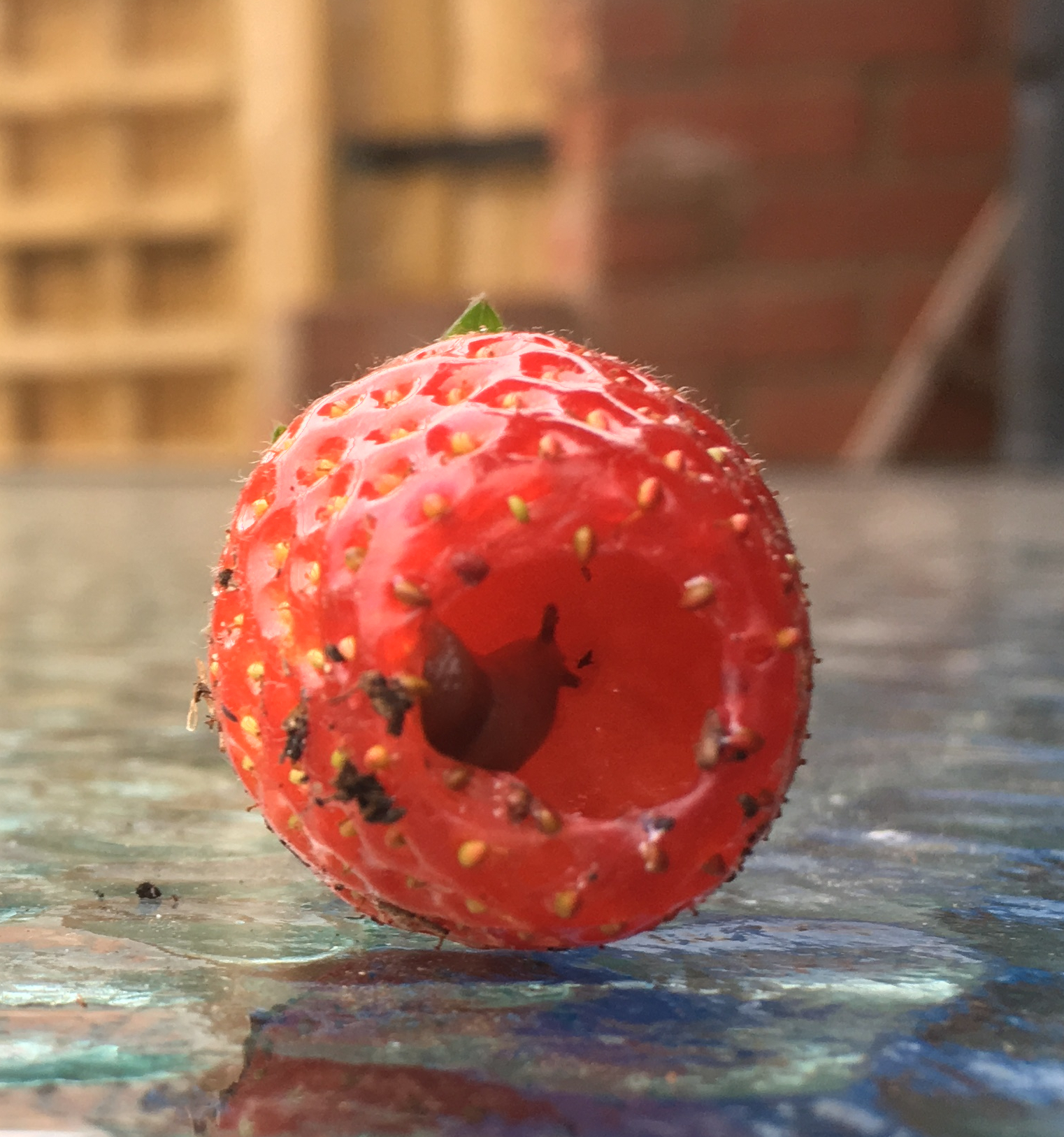
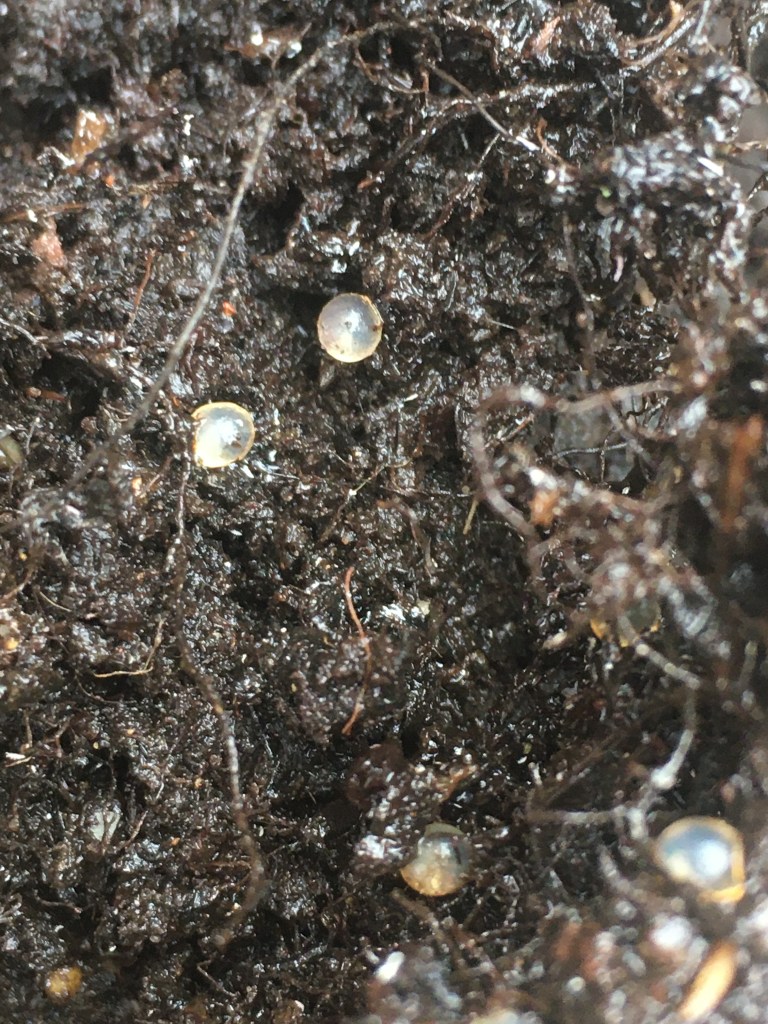
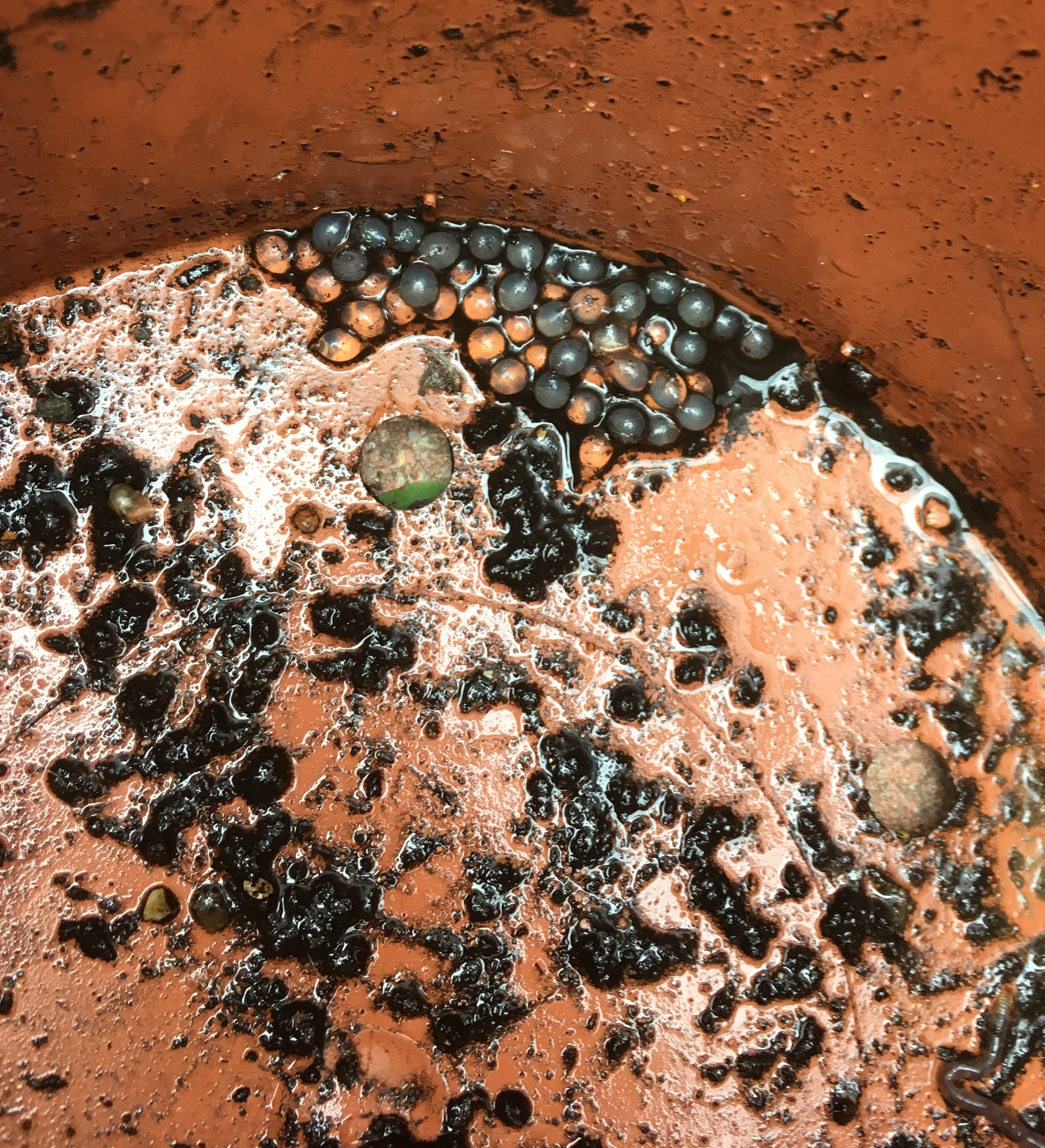
I have waged a constant war against ‘pests’ in my garden and I’m not slowing down in 2020. I’m afraid I’m not nice. I found a collection of about 30 tiny snails huddled up round the rim of a pot yesterday. They were so tiny and cute. I had to remind myself that they will very quickly become gooseberry sized monsters with voracious appetites. I squished as many as I could find. I then found a load of eggs a little later. I strongly suspected them to be snail eggs, but there is a possibility that they may be worm eggs. The internet failed me. There were matching pictures under both snail and worm egg searches.

Curiosity has gotten the better of me and I have contained them and will check weekly to see what happens. To be honest you can’t worry too much about this kind of thing. There’ll be plenty of snail and worm eggs in the neighbours’ gardens and in soil I haven’t dug. There’s only so much you can control. I took comfort in knowing that I had just removed about 30 definite snails less than 20 mins earlier.

Using Pesticides

Now I would be a hypocrite if I said that no one anywhere should use pesticides. I have used pesticides in the past. I don’t anymore (except for ant bait because we have evil bitey red ants) and I wouldn’t like to guarantee that I won’t use more pesticides in the future. It’s hard to state absolutes. However, I have concluded that you are better off trying your best not to use pesticides. It’s partly for the environment, but it is ultimately for selfish reasons. They just aren’t worth using. If you are on the fence or fond of using pesticides, then I hope to offer some thoughts.

The problems

Food chains and webs

So, those who remember GCSE biology might remember how energy is consumed up a food chain. This is a chain that would be quite realistic in our garden.

Sun –> kale –> caterpillar –> robin –> neighbour’s cat

Poisons tend to accumulate up food chains. Organochlorides (used in pesticides in the 1960s) were found to be the reason for death in birds of prey. Small birds were eating the poisoned pests. The predator birds were eating the small birds and the accumulation of the pesticides were killing the birds of prey or affecting their ability to reproduce (source).   

One can assume that many of the smaller birds which weren’t being eaten were also dying. From an ecological point of view this is terrible, but also from a gardener point of view you’ve lost a useful ally that was merrily eating your pests daily.

Taking it back to my garden food chain – yes, the caterpillars drive me mental, but if I poisoned them, they in turn would poison the robins, which would then poison the cats. I don’t like the cats eating the birds and I don’t like the cats poo-ing in my garden, but I certainly wouldn’t want to poison them.

By killing robins, there’ll be less robins to eat the caterpillars.

Predator – prey interactions

Another GCSE Biology topic. When left to its own devices, nature has her own way of controlling populations. E.g. aphids and ladybirds can have intertwined population cycles.

Let’s start with aphids. Let’s say that there is a huge population of aphids. This means that there is a large amount of food available to ladybirds. This means that the ladybird populations thrive and increase. The larger number of ladybirds means that there are more predators to eat the aphids. This means that the population of aphids decrease and there will be more competition for food. At some point the population of aphids will be too low to support the large population of ladybirds. This means that the population of ladybirds will decrease from lack of food and increase of competition. The decrease in population of the ladybirds means less predators for the aphids so their numbers then increase… and we are back to the start of the cycle.

Basically, nature will even out the odds. You may kill off the pests, but you may also be hurting their predators too that were helpfully gobbling them up. Chances are you will find that your pests will be back as it’s impossible to eradicate every last one (certainly not from other people’s gardens too), so the cycle continues in its never-ending loop. You might find that the predator populations affected don’t recover as quickly, giving you a bigger problem later. Why battle the inevitable by introducing harmful chemicals?

Targeting your destruction

In addition, some pesticides will hurt bee populations and other pollinators, like hoverflies, that are essential for pollination. No pollination means no fruit. Don’t forget fruit also includes things like tomatoes, aubergines, courgettes, cucumbers and the plethora of other squashes. There are bee friendly pesticides out there but there have been studies on how a cocktail of ‘non-toxic to bee’ chemicals have been killing off populations (source 1, source 2).

As a last, but rather important note. I also don’t want to kill my child as she grazes unashamedly on all my berries and salads.

Some options

Yes, it all sounds like doom and gloom but there are other options. These are some things that I’ve tried with varying degrees of success.

Harvesting pests

This is the most effective one for aphids and caterpillars and has the added advantage of real time results. Pick the most affected leaves for dinner and then soak them in salted water for 10 mins then rinse until clean. This removes the pests from the garden and washes them down the sink without introducing poisons. Anything too gross to consider eating can be put into the bin (not compost). 

I like to grow things that you pick regularly from over a long season e.g. perennial kale that you can pick from all year round, or chard that you can pick for about a year before the plant needs to be replaced. If you’re harvesting from the plants at least once a week (it can be every day in the summer) then you’ll see all the signs of pest damage and can deal with it quickly.

The night hunt

I also like to go ‘hunting’. There is an instinct in many humans to go forage, gather and hunt. There’s no reason why we must go after animals as sport, there’s plenty of satisfaction in going out just after dark (when leaf chomping pests are very active) with a pair of disposable chopsticks and an old jar and capturing slugs, snails and moth caterpillars by torch light. It’s sounds rather disgusting (and it is) but it is also incredibly satisfying. What you do with them after is entirely up to you. I have drowned them and then left them outside to be eaten (or decomposed) or sealed them in a bag and chucked them into the bin. I told you I wasn’t nice.

The large snails were apparently introduced to Britain by the Romans as food. You could ‘clean’ the snails by feeding them on safe leaves, such as lettuce, (as they accumulate toxins from the plants that they feed on) for a few days and them eat them as escargot, but I’m afraid that is currently a step too far for me. Maybe do some research on this first – please don’t poison yourselves.

Encouraging natural controls

Looking back at the food chain, and the bigger food webs you can see what predators are suitable for your needs and either encourage them into your garden, or even buy some to release.

BIRDS: Encourage small birds into your garden with bird feeders, water trays and some cover, like bushes and trees. You can also plant some bushes with overwintering berries. The trees we added were fruit trees, which are not yet big enough, but some day they’ll provide useful shelter. If you provide nesting conditions you may be rewarded with extra ravenous chicks to eat bugs. Many of the garden birds will happily eat the caterpillars and snails. Even some birds with seed-based diets, like finches, will happily eat aphids for you. Some of the birds may also eat some of my berry harvest but so far, they haven’t been a problem and I wouldn’t begrudge them some as a thank you for eating the pests. If it becomes too much, then I can also use netting to protect the berries. My mum finds that wood pigeons (who don’t really eat insects) are a pest in her garden, eating the young brassica seedlings, but this is also easily solved with a bit of netting.

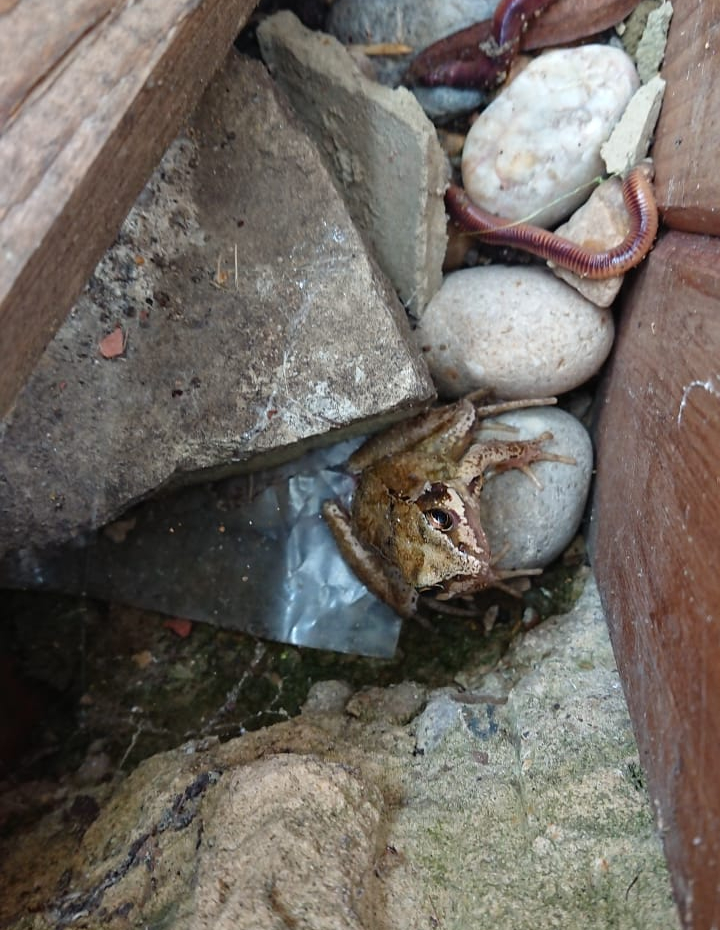
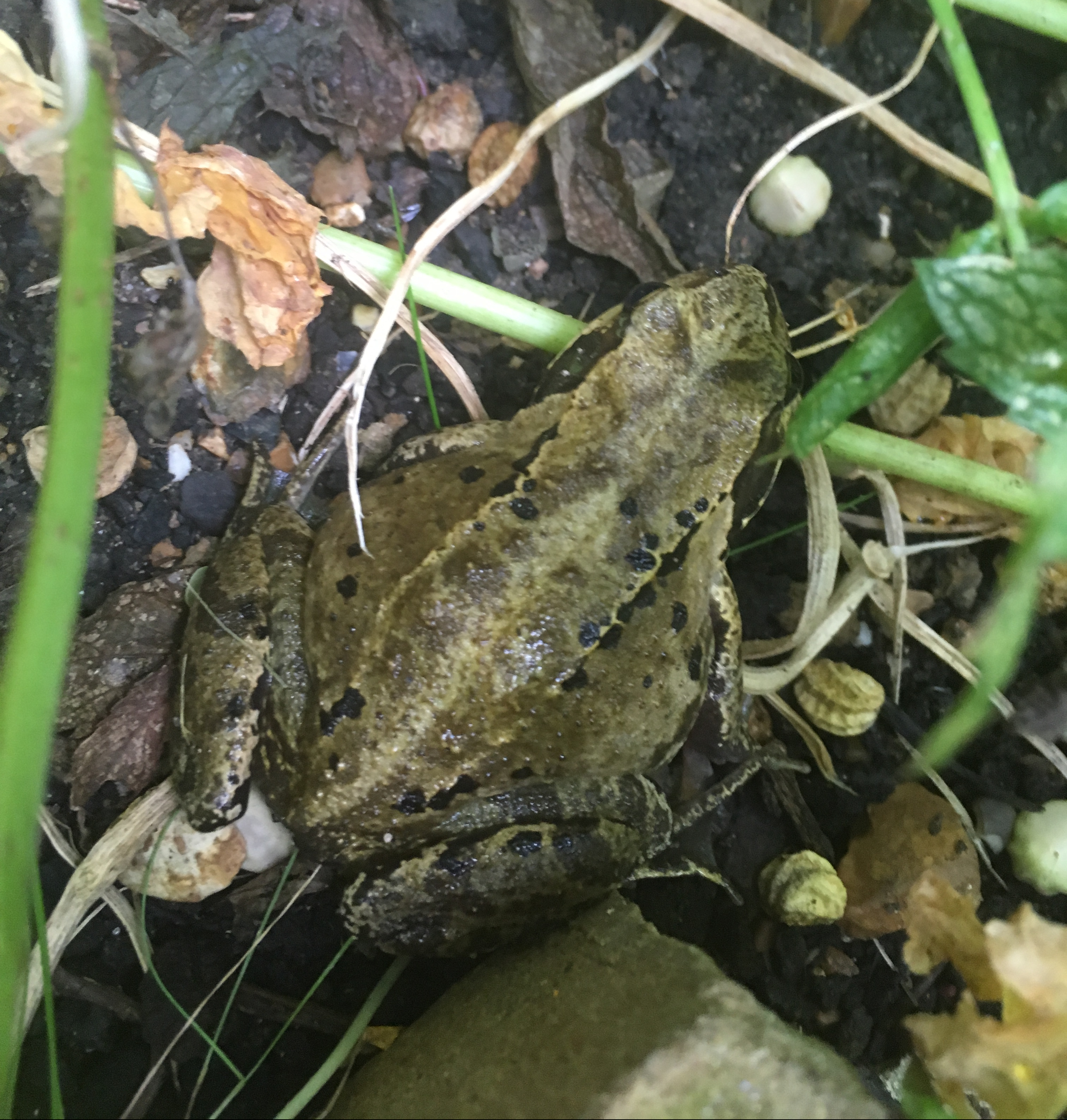
AMPHIBIANS: Frogs and toads don’t need a pond to make a home in your garden. They only need one for breeding. In our rainy UK weather, our garden seems to have enough damp, as there has been many a frog sighting in the past year. You will need to eliminate chemicals, especially slug pellets. It’s not just what they’re eating, but amphibians have semi permeable skin so even exposure to spraying is harmful. You can also provide places for them to hide, such as an upturned pot with a gap at the bottom or areas of long grass for them to hide in. They love hiding behind the clutter around our waterbutt, in our unkempt grass edges, under the rosemary bushes or behind the Chinese chive patch.

HEDGEHOGS: I’m not entirely sure if we’ve had a hedgehog, but I saw a poo that I really hoped may have been from a hedgehog. I don’t even know if there are any in our area as there are many foxes and cats about. If you have a fenced garden, providing a gap at ground level for them to get in can help. You can provide a hibernating spot with a pile of logs, pile of dead leaves or a compost heap (or even a special hedgehog house). Just be careful if you do clear up piles of leaves or turn your compost. Slug pellets are also terribly bad for them, so another good reason to avoid.

BENEFICIAL INSECTS: The main thing is by avoiding pesticides you protect the beneficial insects. It’s then worth encouraging predatory insects like ladybirds and lacewings by providing somewhere to overwinter. You could investigate a bug hotel of some sorts but do some research into the type of insects you are looking to attract and what they need. Apparently, some of the ones on the market look good but aren’t very functional. They will also need some maintenance and need to be kept in shady, sheltered places. I have picked off ladybird nymphs from roadside trees and put them in the garden in the past. I don’t know if they stayed.

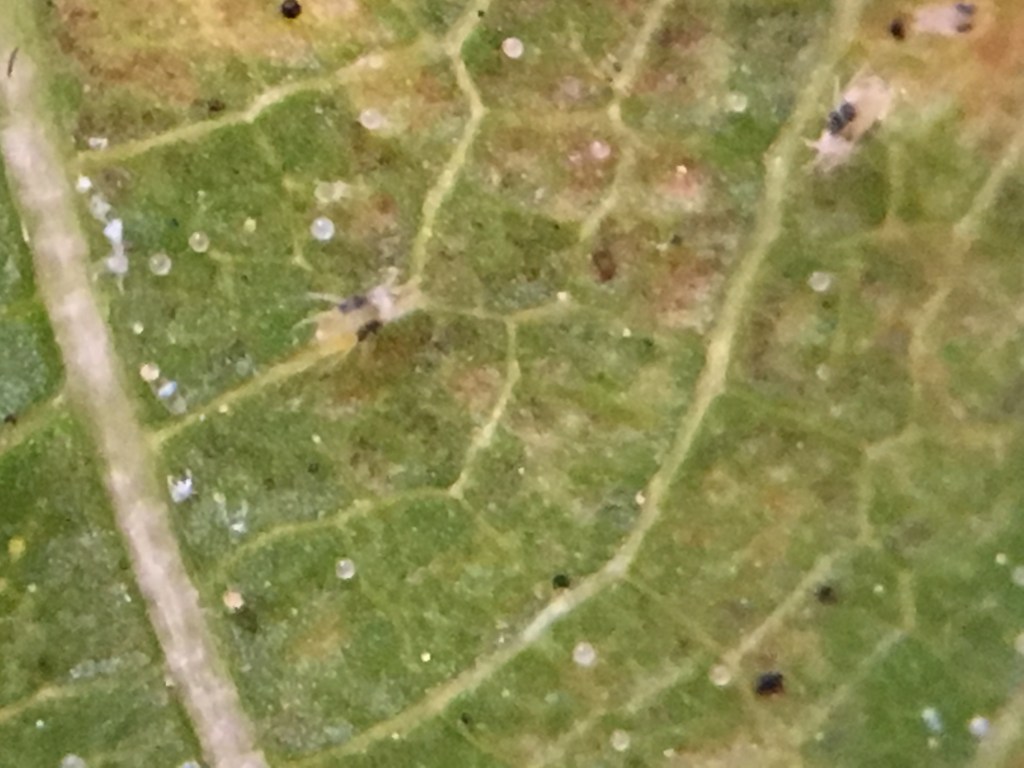
Ladybirds eat spider mites. Spider mites cause most damage when the weather is hot. They do less well in rainy periods. They do respond to pesticides, but then you’ll kill the predatory insects too. In the past I’ve controlled these very effectively by removing all the affected leaves and spraying the plant well with a hose and then spraying with a solution of rosemary oil and water which is said to discourage the mites without harming their predators.

There are also a host of specific parasitic creatures you can buy to target a particular problem. We had a ridiculous amount of whitefly one year and bought sachets of Encarsia Formosa, which is a tiny (smaller than a millimetre) parasitic wasp that lays eggs in the scales of the whitefly. They are really only for use in a greenhouse where you can keep the population captive and protected, but we used them outside, and they were still fairly effective.

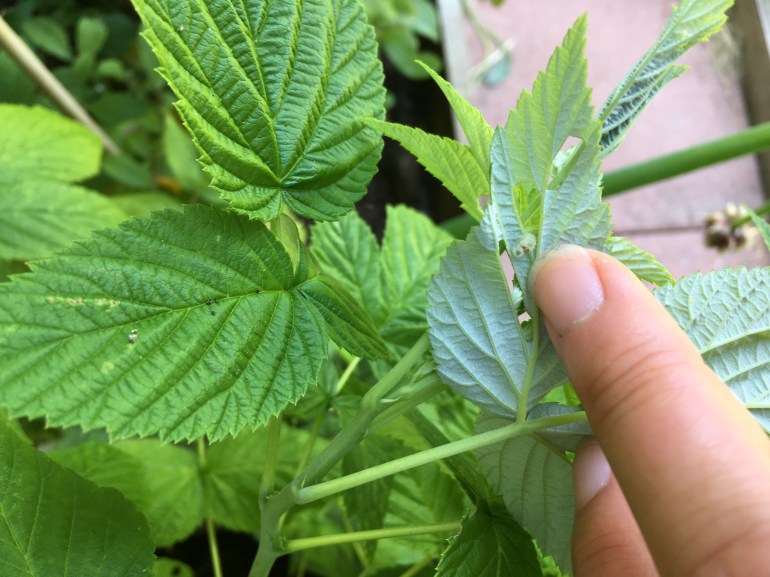
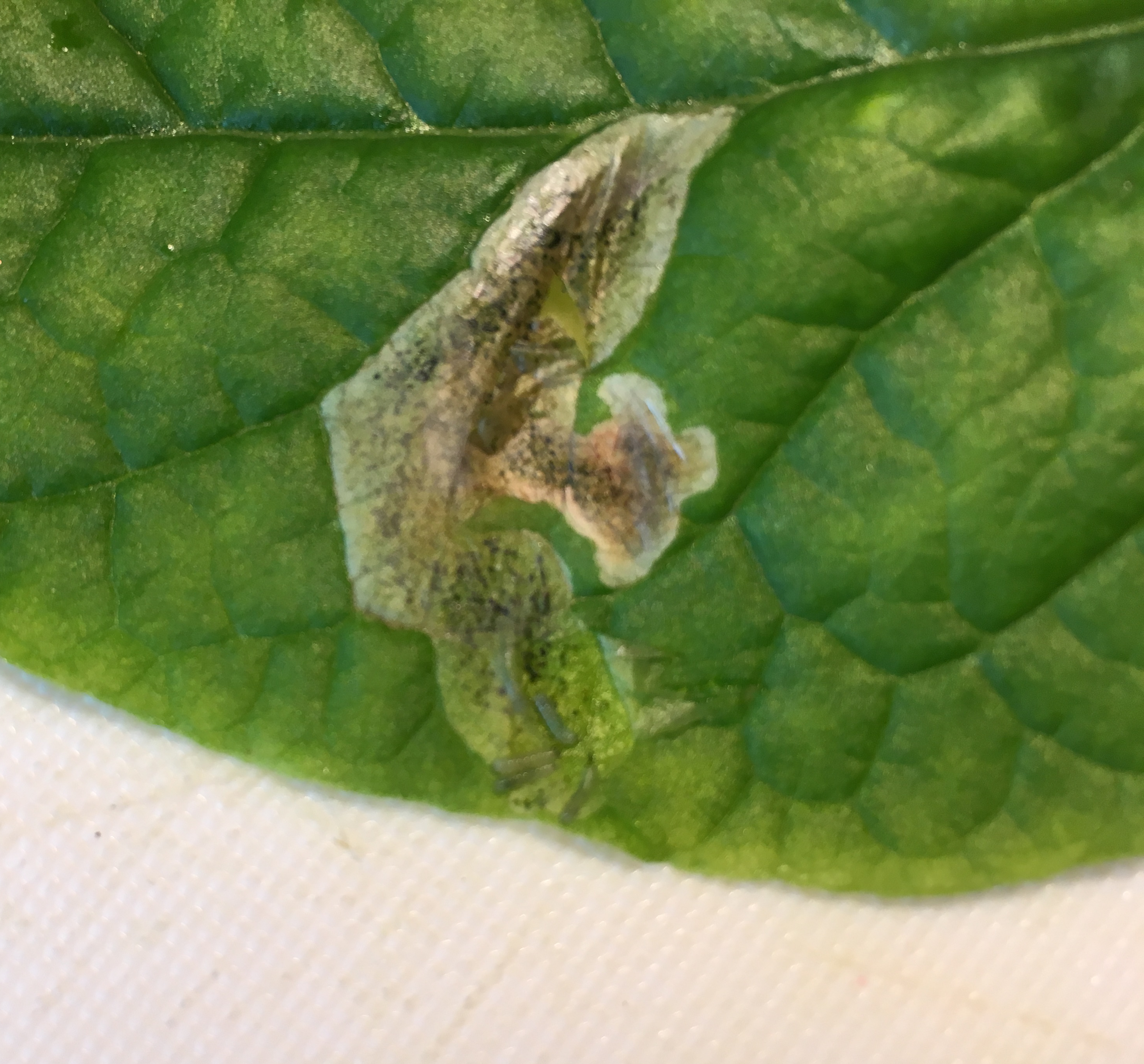
The damage to this leaf has been done by a leaf miner which is the larvae of a fly. Pesticides wouldn’t have been much use here anyway as the pest is protected by the leaf. Either a pesticide that is absorbed by the plant (possibly making it inedible) is required, or spraying needs to be timed for when the larvae has turned into a fly and emerges. For leaf miners there is a parasitic wasp you can buy but it’s easy enough to remove and bin affected leaves.

Traps

You can buy sticky traps for things like whitefly or you can make a slug trap out of an old plastic bottle and some beer. I’ll do a proper post on this to put in the ‘things to do’ section.

Copper Tape

You can buy copper tape that you can stick around pots under the rim. It supposed to work as a barrier that slugs and snails can’t cross as their mucus reacts with an unpleasant feeling. Apparently it need to be fairly thick to be effective or they stretch across. Also be aware that the adhesive sometime is a bit poor. We’ve used these on pots and they seem to be effective. It’s hard to tell though if the plants in those pots would have been fine anyway. There’s plenty of other things they can eat in the garden without having to climb a pot. If the copper is even slightly unpleasant for them they could probably go elsewhere.

Cloches

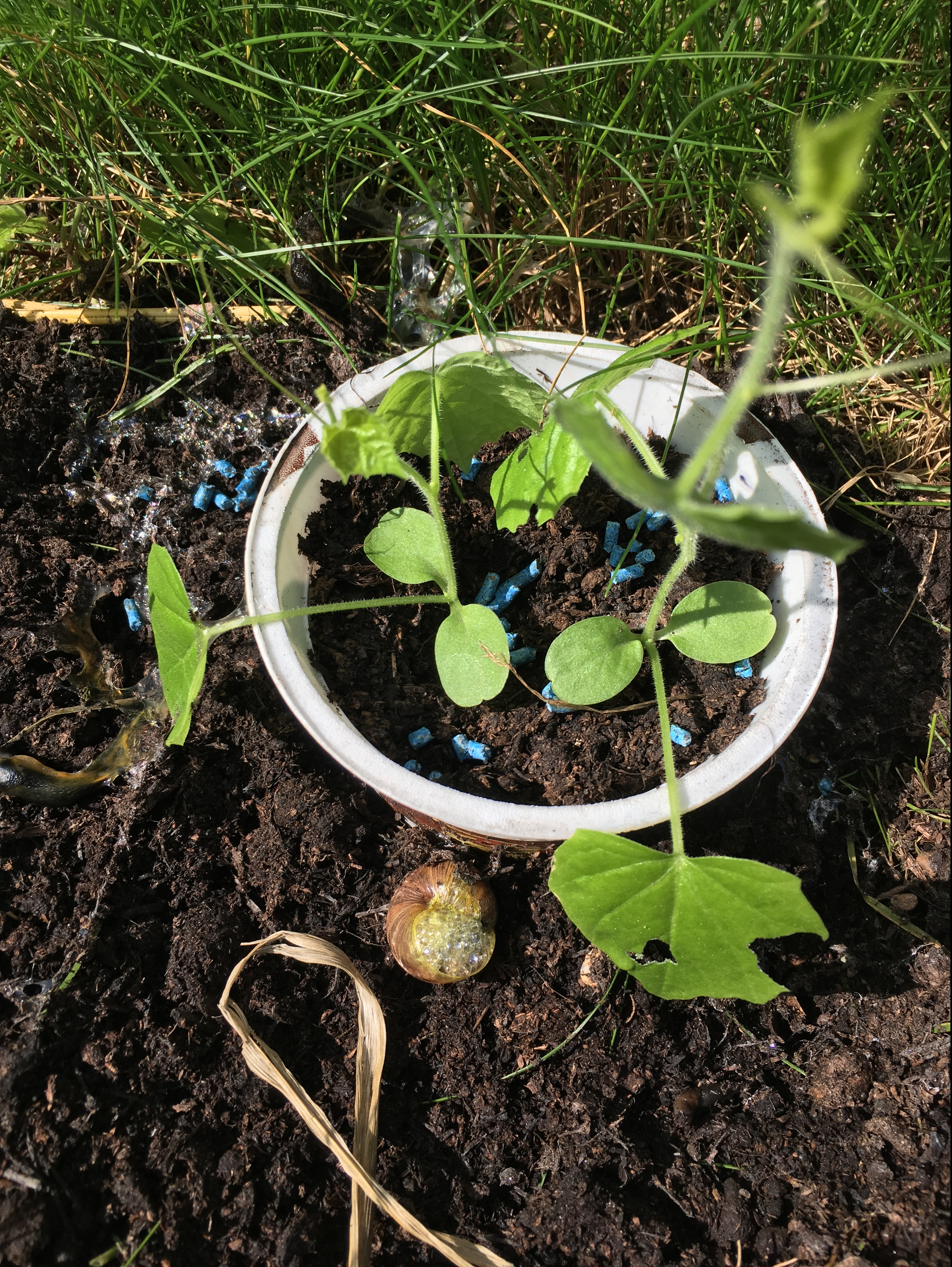
Yes, creatures have got to eat, they’re only doing what nature intended them to do. I would just like them to stick to eating a whole leaf at a time and not leave leaf doilies, or could they wait till a plant has grown lovely and big. They could have tender tips then. I wouldn’t mind so much. The frustration of a seedling eaten across a stem or an asparagus tip nibbled to death before it can fulfil it’s slender juicy destiny is the original reason I used to use pellets.

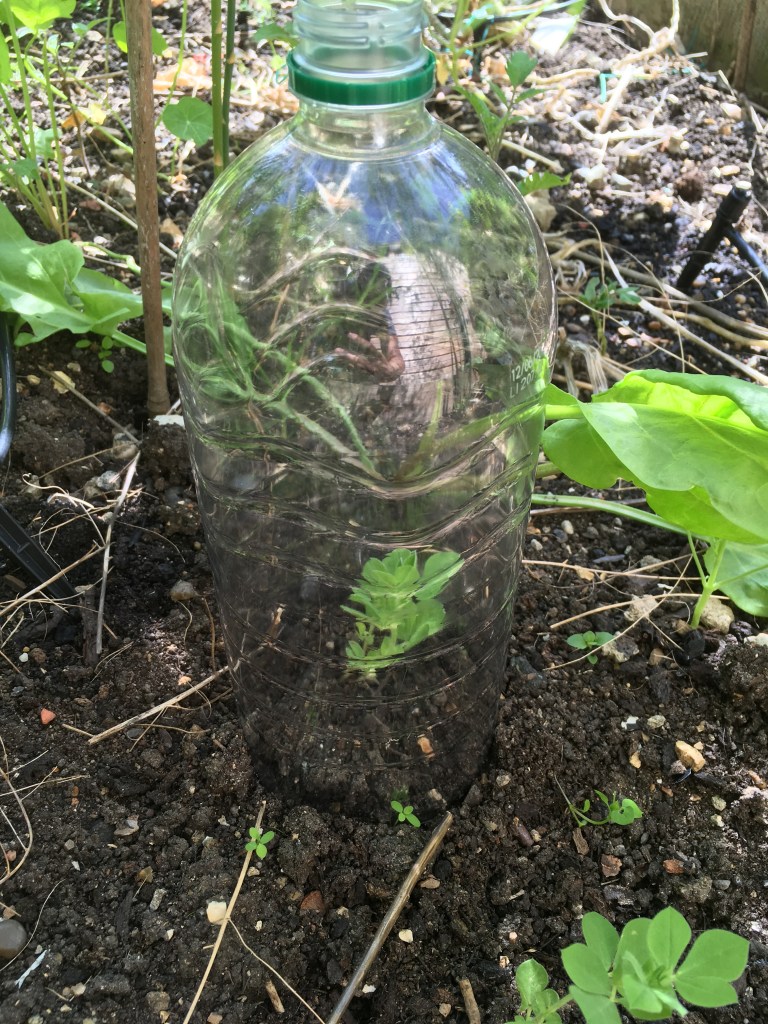
Cloches made out of old bottles have become my go to now for precious seedlings. Alternatively, plant for redundancy. Assume that a few of your seedlings won’t make it and plant a few more.

So… I’m just hoping to encourage the use of methods other than pesticides in the garden. If you have any helpful hints or anything that worked especially well for you, please feel free to share in the comments.

Watercress

Short version:

A punchy, mustardy perennial salad leaf with small white flowers that tastes much more benign when cooked. It is low growing, roots all over the place, does well in some shade and can feed you in winter.

Nasturtium officinale is its Latin name, though it isn’t closely related to nasturtiums, which have the Latin name Tropaeolum majus. They are similarly spicy when eaten raw, but come from different families.

Growing watercress

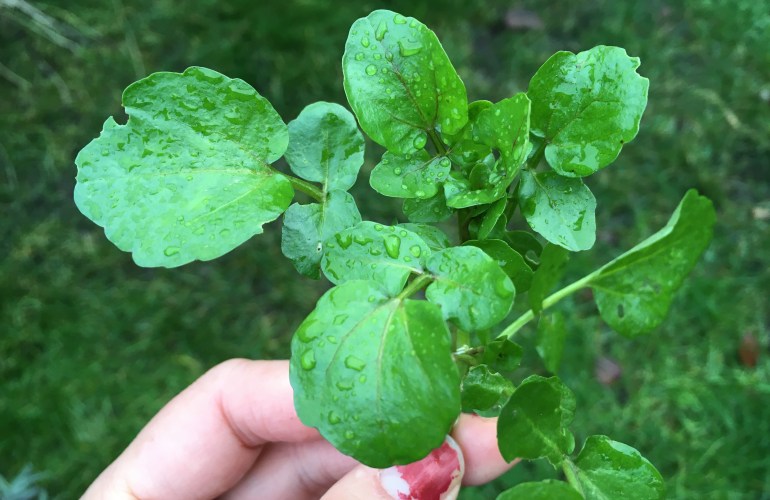
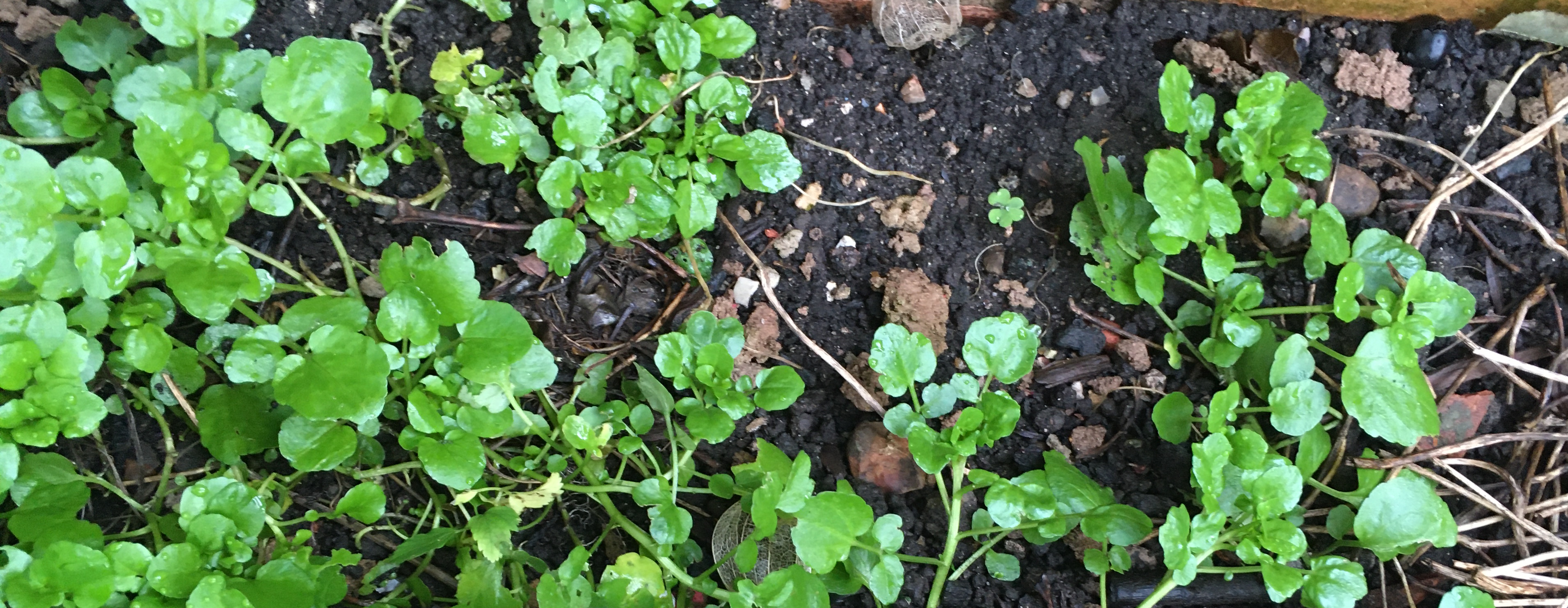
First things first – watercress does not need to grow in water. You do need soil that has plenty of organic material though, as it needs to be able to retain water well. It also gets rather sulky when you don’t water it enough and rewards your neglect by being tougher to eat and spicier. That is not a problem for most of the year here in the UK. It can grow in pots, in raised beds or straight in the ground and it deals well with shade and sun. It prefers a light shade, but we have an unexpected watercress patch in the sunnier front garden that does better in winter. I call it unexpected as it grew itself from some hole composted watercress. I didn’t have the heart to remove it, but now I love that it invaded this spot.

You can grow it from the tiny seeds which can be sown in late winter / early spring. Alternatively, they grow well from cuttings. You can even see it when you buy bags of salad with watercress. Sometimes you see little white roots at the leaf nodes. The plant will happily send out these little roots wherever the stems touch the soil or water sources.

The plant can grow to 15cm but generally it will happily creep along the surface of the soil, anchoring itself with its roots as it goes and forms a wonderful edible ground cover. It keeps the garden from looking barren in the winter and provides a welcome source of green nutritious leaves through the colder months. Because it does well in part shade, as the plants fill out in the spring it continues to do OK. It’s only when light is completely blocked out by other plants thriving in the summer or when the flowers develop it will start to perform badly. In winter it can go a little purple or die back a bit when the weather is freezing. It doesn’t seem bothered by a few overnight frosts.

After the watercress dies back after very cold weather or after it has flowered it can recover. It is therefore a useful perennial and if left to its own devices it will propagate itself in its creeping, rooting manner. I sowed the seeds in spring 2017, ready to take with us as we moved. I then planted into its semi shaded spot in a raised bed in the back garden that summer (I would have planted it sooner had we been able to move in sooner). Since then it has happily spread, and I have been happily eating it since. I don’t do any work with the watercress beyond harvesting.

Harvesting watercress

You can start harvesting as soon as you think your plants can provide you with enough to eat. Try not to pull the whole plant out, though you might find yourself pulling at roots where the stems have started to root. It’s a good way to keep it in check though. I harvest either with scissors or by severing the stems with a fingernail. I’ve found that where the watercress hangs over the edge of raised beds or borders, the stems don’t seem to develop roots as well and harvesting is easier. Roots also don’t taste great.

Harvesting flowers is a good idea as they are tasty and prolongs the harvesting period. Once the plant produces seed it isn’t much use for eating until it recovers late autumn / early winter.

Eating watercress

Watercress can be eaten raw as a salad leaf, but I find it hard to eat much due to its spiciness. My other half and little one will not touch the leaves when they are raw. Little one has tried several times to eat the flowers. She knows they’re edible and keeps checking to see if they taste as good as they look. The reaction is always the same. She spits them out and gets rather sad. I like to think that it’s a sign that she’s going to be a scientist… the need to keep testing. The flowers basically taste similar to the leaves with a slightly sweet hint. The roots are bitter so best avoided.

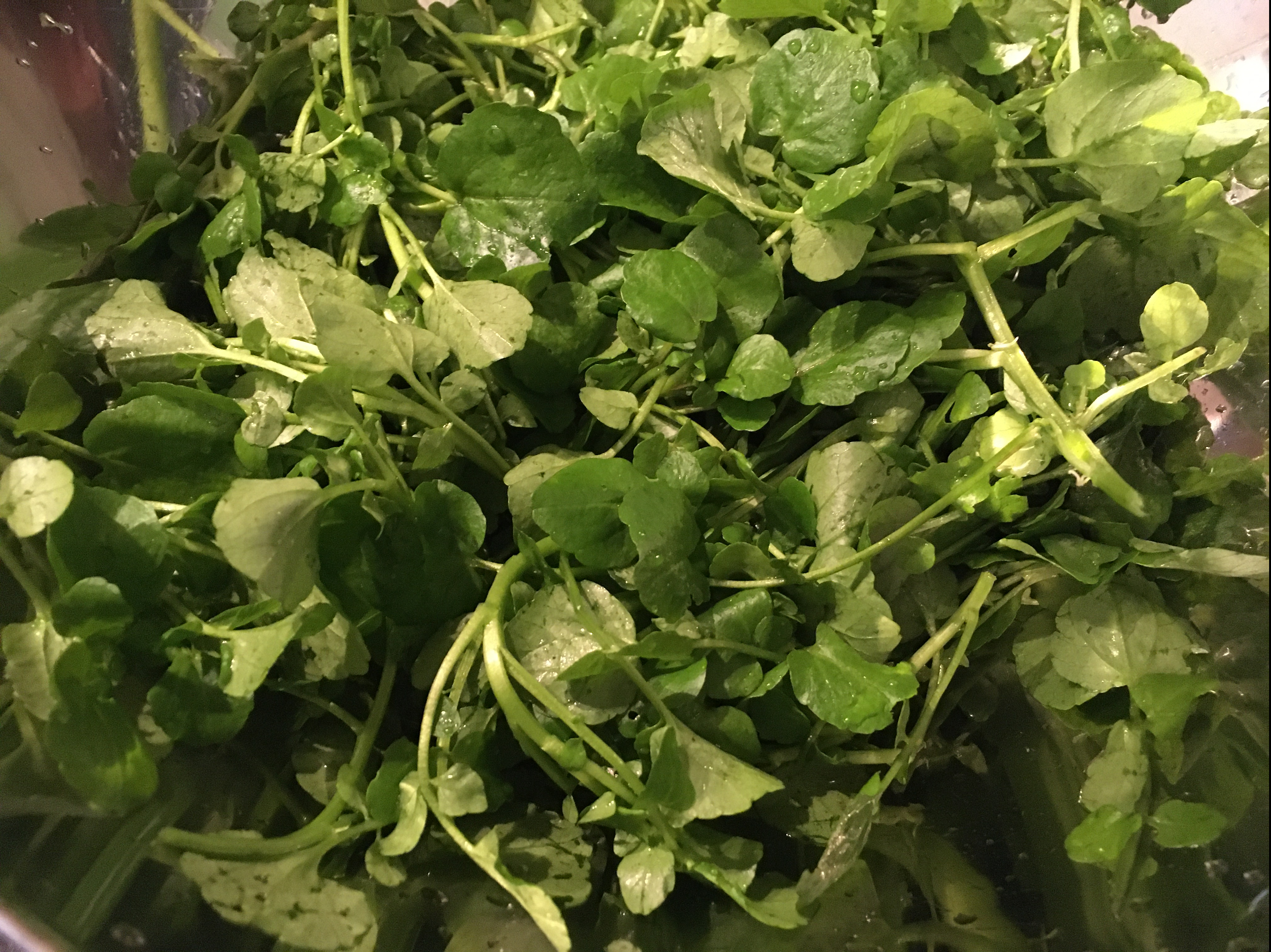
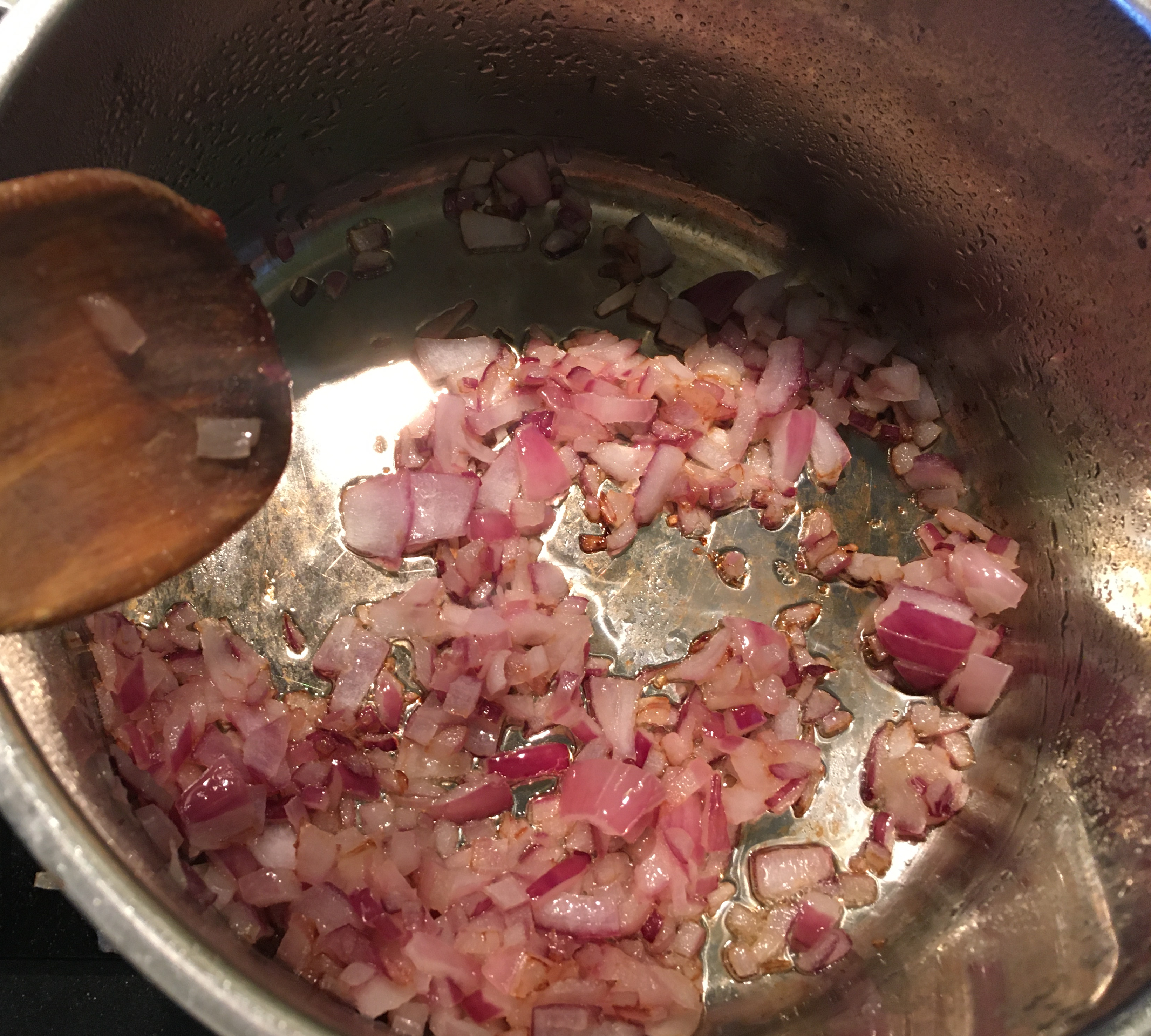
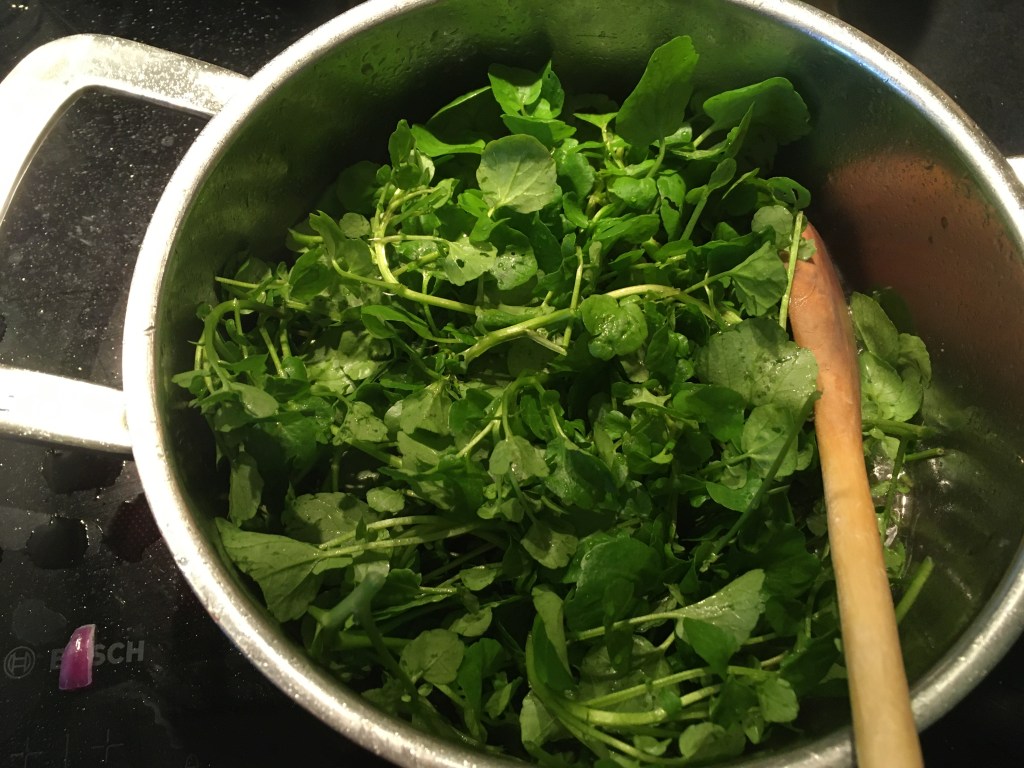
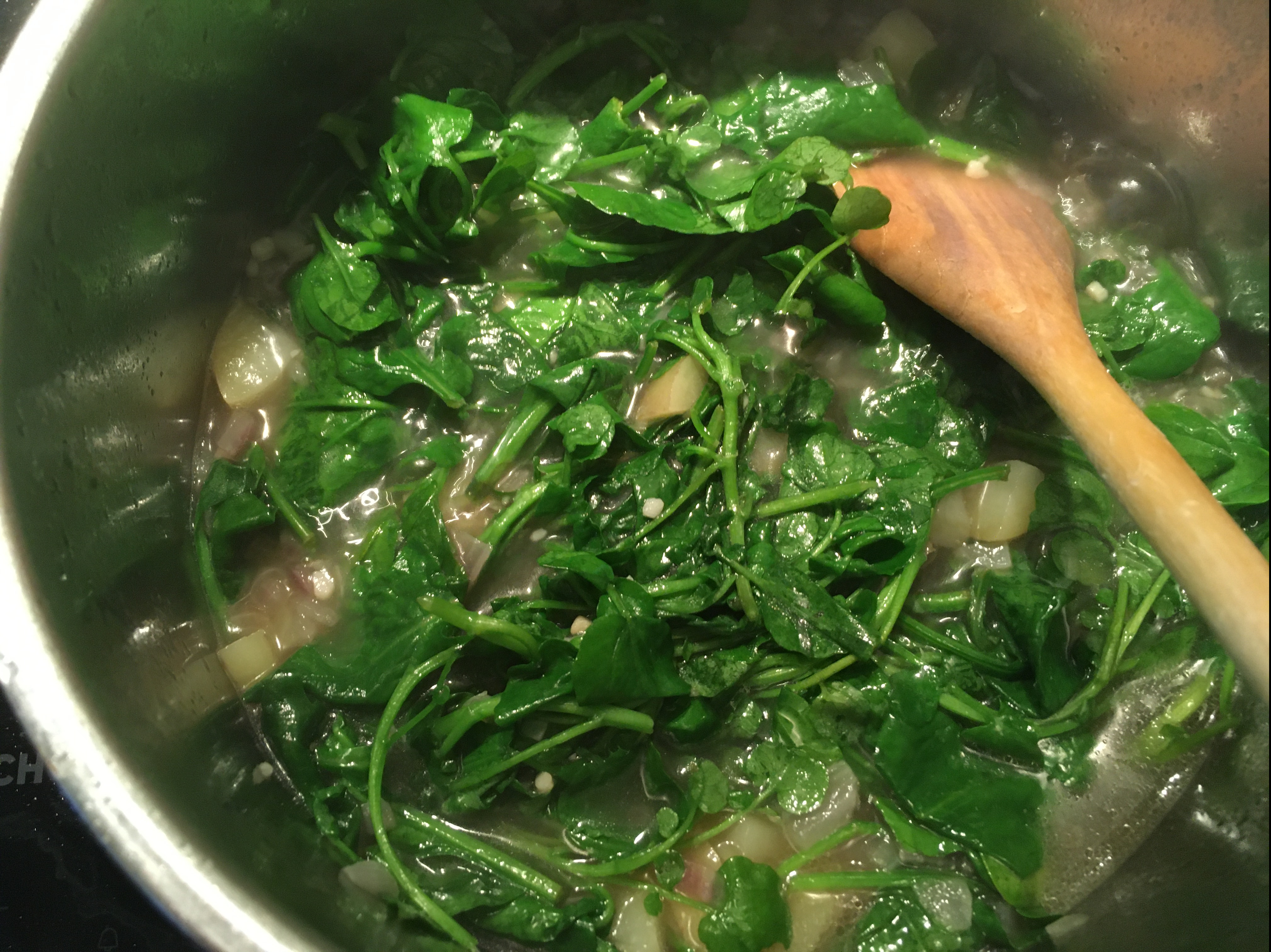
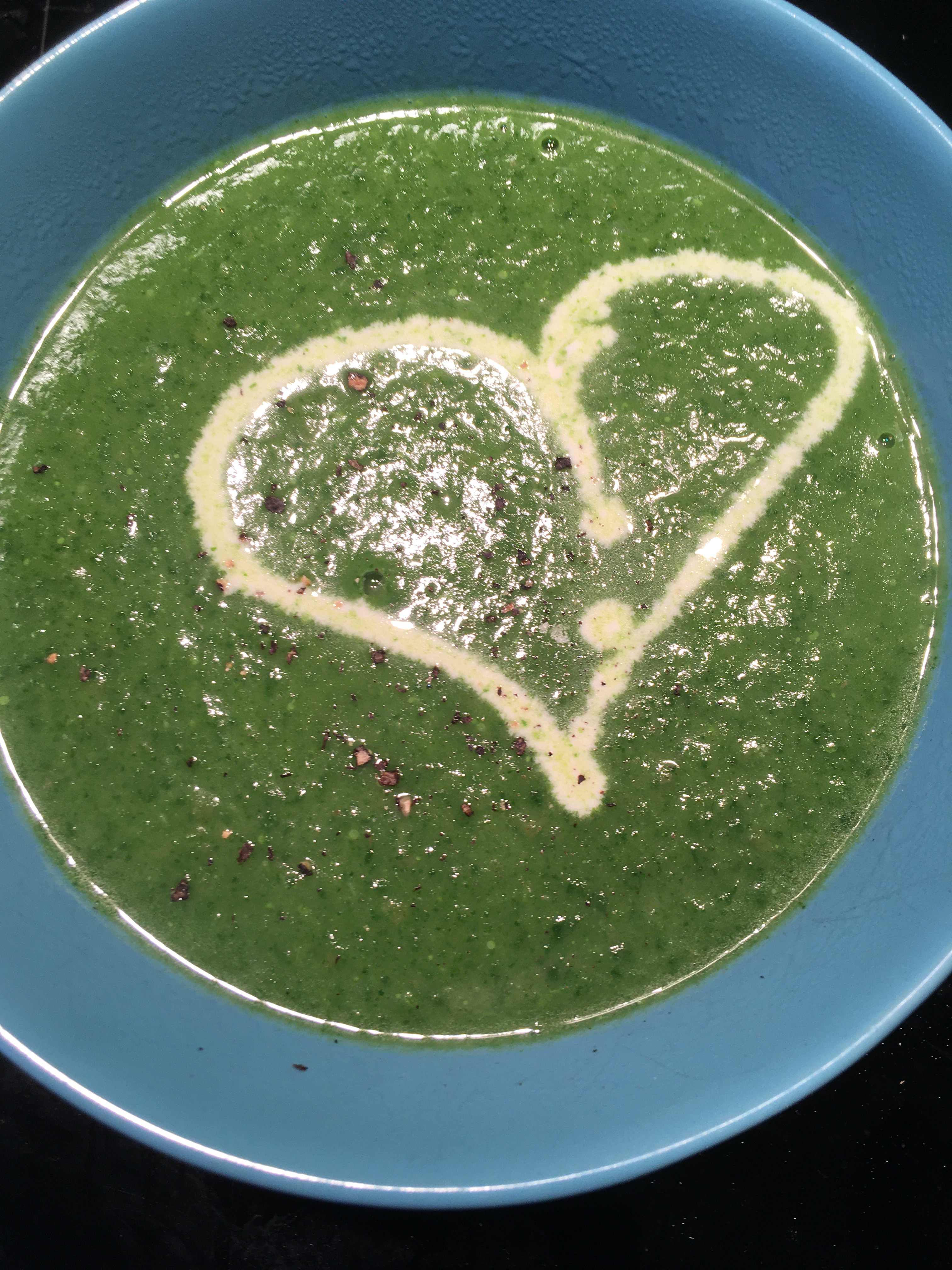
I find that everyone is happier if they are blanched or added to soups. You can make a yummy (and very green) soup from watercress. I’m rubbish at following recipes so I won’t give you a proper one but you basically:

Yacon

Short version:

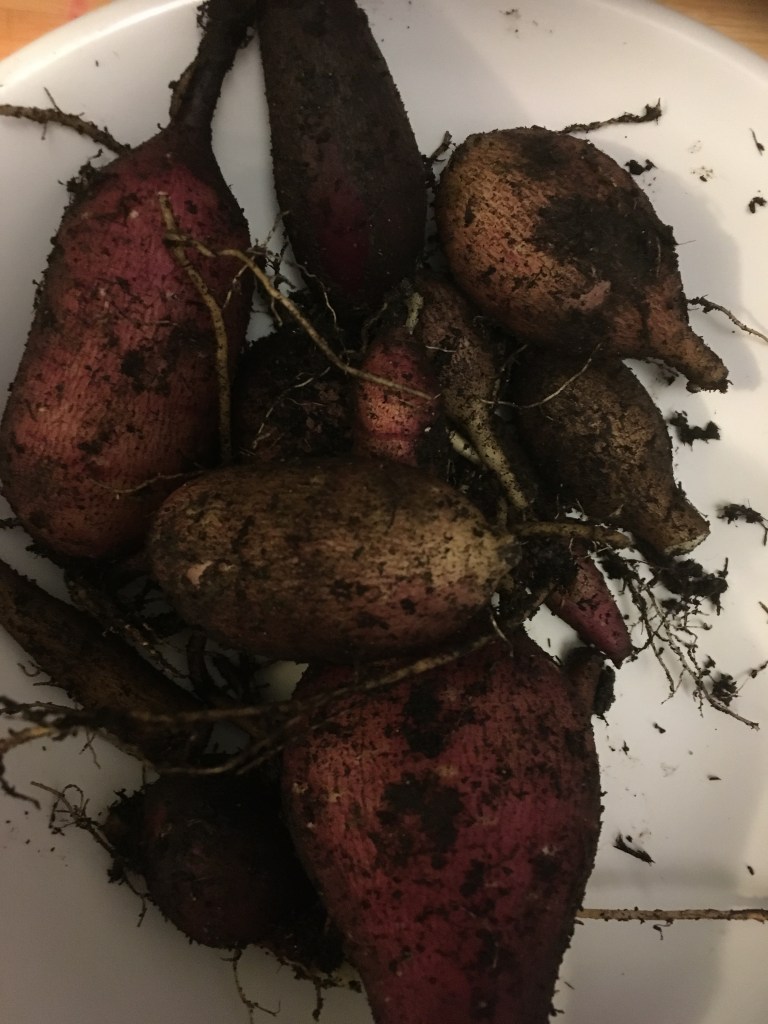
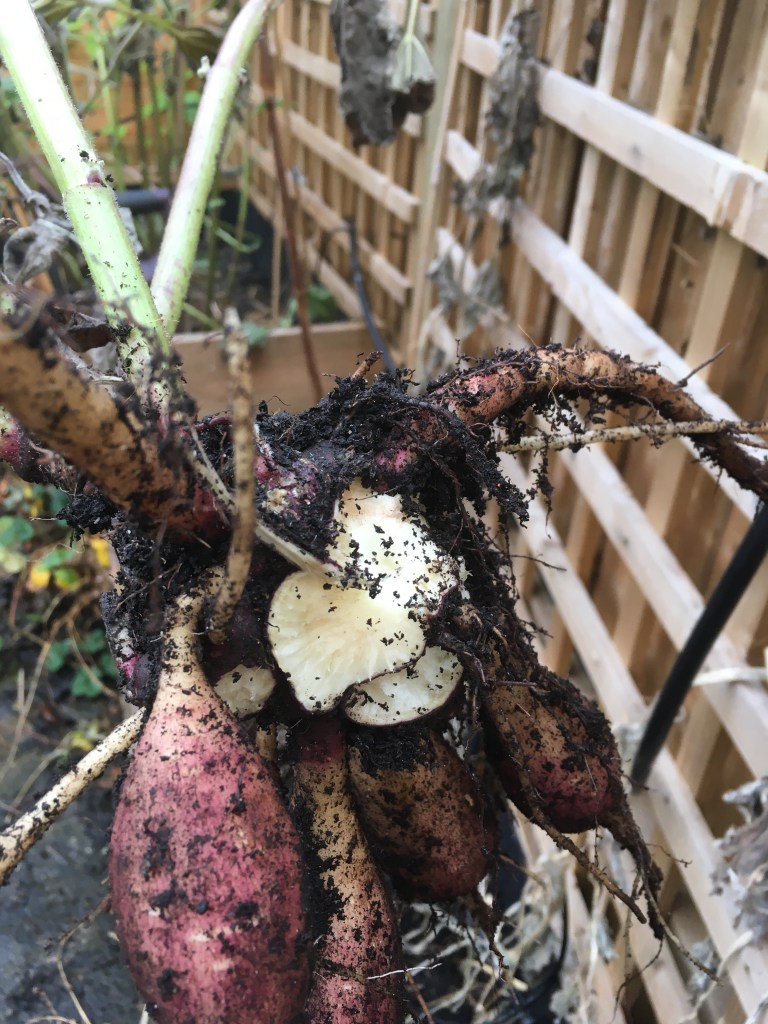
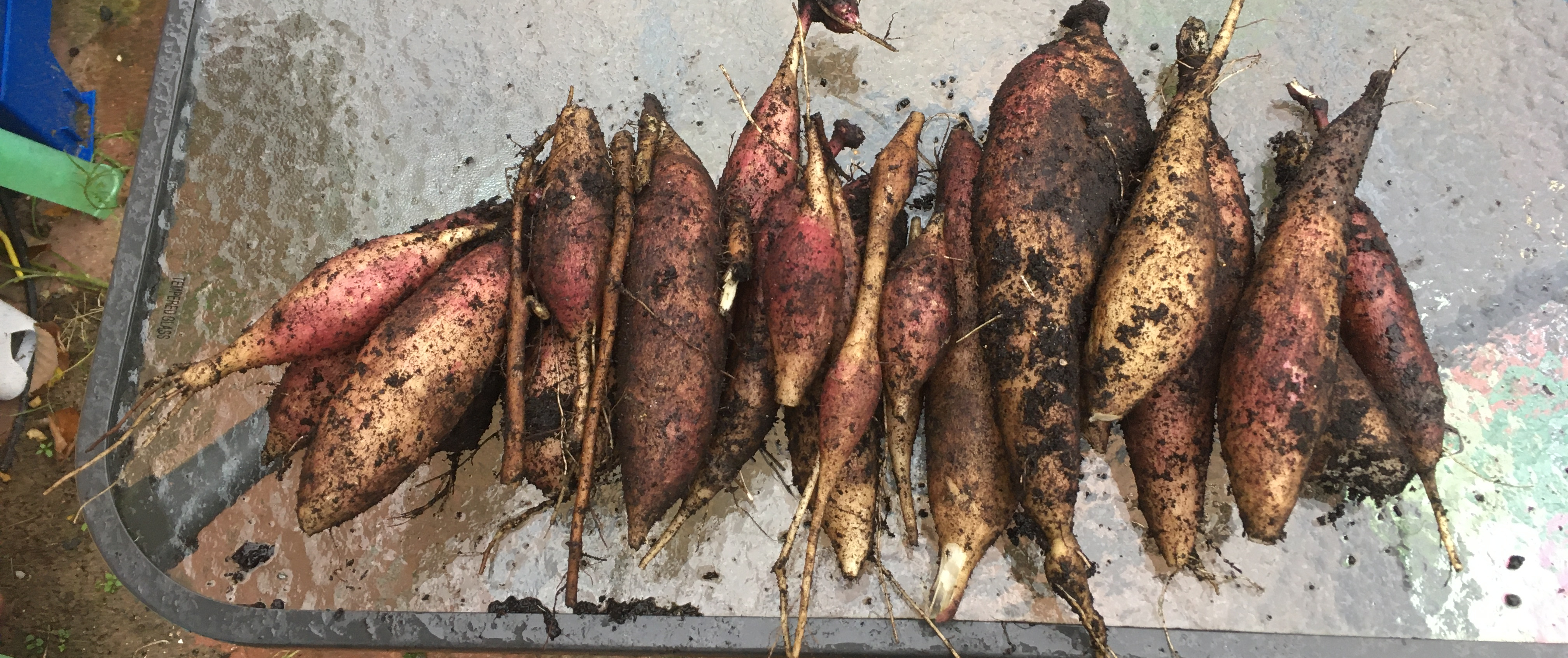
A perennial root vegetable that has juicy tubers that look like sweet potatoes, felty leaves and small daisy like, yellow flowers. They are harvested in December and have the texture of water chestnuts and the taste of the inner sweet core of carrots (according to a friend). They grow from the rhizomes rather than the tubers. Tubers contain inulin and become sweeter if left for a week on a sunny windowsill.

December is a good time to talk about yacon. As the frosts arrive, the yacon plants are shrivelling. They are a little-known, perennial root vegetable (in the UK anyway). I had only heard of it a couple of years ago as I strove to make my garden more perennial. So – like potatoes, yacon roots will swell to form tubers for winter storage, unlike potatoes which propagate from these tubers, the yacon also has rhizomes which will grow shoots in spring to form the new plants. I’ve read that the tubers also can be used to grow plants – but if you have these much less tasty rhizomes there for propagation, why would you not eat the tubers?

I’m not overly fond of perennial root vegetables, if I’m honest, as it requires more work than I like. For me, the perfect plant is one I plant one year and then for ever after (or at least for many years after) I get to harvest something from them. I don’t mind if it takes a couple of years for something to get going, but once it’s going, I prefer to pick fruit, leaves, nuts, stems… basically something that doesn’t require pulling up and replanting every year. I love low maintenance self-seeders too, like winter purslane or nasturtiums.

Young (ish) yacon plants at the top of the planter in early June. There’s strawberries in the front, a tromboncino behind on the left that had space to grow over the fence and some sugar snap peas that grew and were harvested before the yacon got too tall. The pallet planter itself was filled with around 3 months worth of kitchen green waste and cardboard and left to decompose the winter before.

What does a yacon taste of?

This is the first thing to talk about because this is the reason I grow it, despite my laziness. It isn’t available in the shops and its taste and texture is very unusual. Basically, raw, it has the texture of water chestnuts. For anyone who hasn’t had water chestnuts it’s like a radish, but brittle. Radishes (like carrots) I would call crunchy. Yacon is more, what I’d call crispy – like a crisp apple. Aaaargh! It’s difficult to describe. Now, the taste is something between apple, carrot, pear… celery? Or as my neighbour said – core of a carrot. Someone mentioned a slight honey taste. When freshly picked it doesn’t taste that amazing, but when left to ‘cure’ on a sunny windowsill it turns unexpectedly sweet. The texture gets a little softer, but that’s a price I’m willing to pay for the sweetness. After some cold weather, if left in the ground it also gets sweeter, though not as sweet as those cured on the windowsill. If anyone has the vocab to describe both the taste and the texture please comment. I really am stuck!

From what I’ve read, yacon has a sugar in it called ‘inulin’ which human digestive systems can’t process – so it’s supposed to be great for diabetics and those wanting to lose weight. Just a warning though, if you eat too much you get rather windy. This is because the inulin is instead digested by our gut bacteria creating gases in the intestines. It is, therefore, reportedly good for gut health as a prebiotic (something that feeds the bacteria as opposed to a probiotic which is something that contains lots of healthy bacteria to populate the gut).

Growing yacon

I’ve never seen these available as seeds. They are also not available from the usual companies. They can be found online on websites specialising in perennial vegetables or on eBay. They’re sold as rhizomes or young plants. I suspect young plants are the safer option as you’ll know it survived and rhizomes could’ve been damaged if not stored properly. Rhizomes are easier to send in the post though.

This small plant is then potted into fertile compost when all danger of frost has passed and basically left until the first frosts in winter kill the plant above ground. The more fertile the soil and the sunnier the spot, then the more likely it is that you’ll get many big tubers. They also need sufficient water for lovely juicy tubers. They don’t do well in our clay, stony soil so we only grow them in planters or very (I really do mean very) large pots. They are great for pots though as it makes for an easier harvest.  

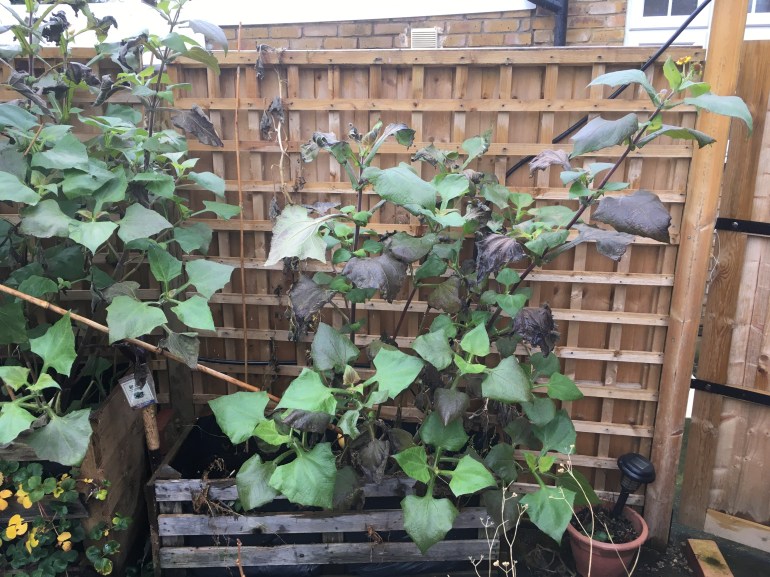
The yacon have velvety spear shaped leaves with slightly jagged edges. The stems go purple at the base and the flowers are yellow and about the size of a 50p. Depending on the fertility of the soil and the size of the pot the plant can be 3 to 5ft at maturity. They are also rather bushy.

Harvesting yacon

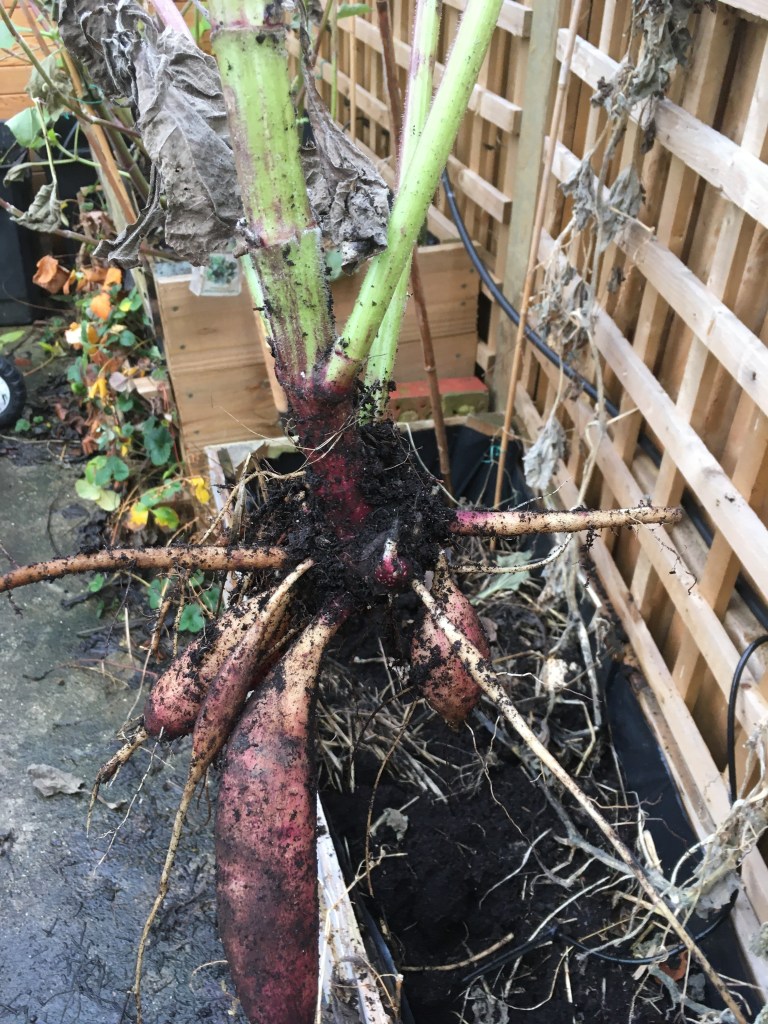
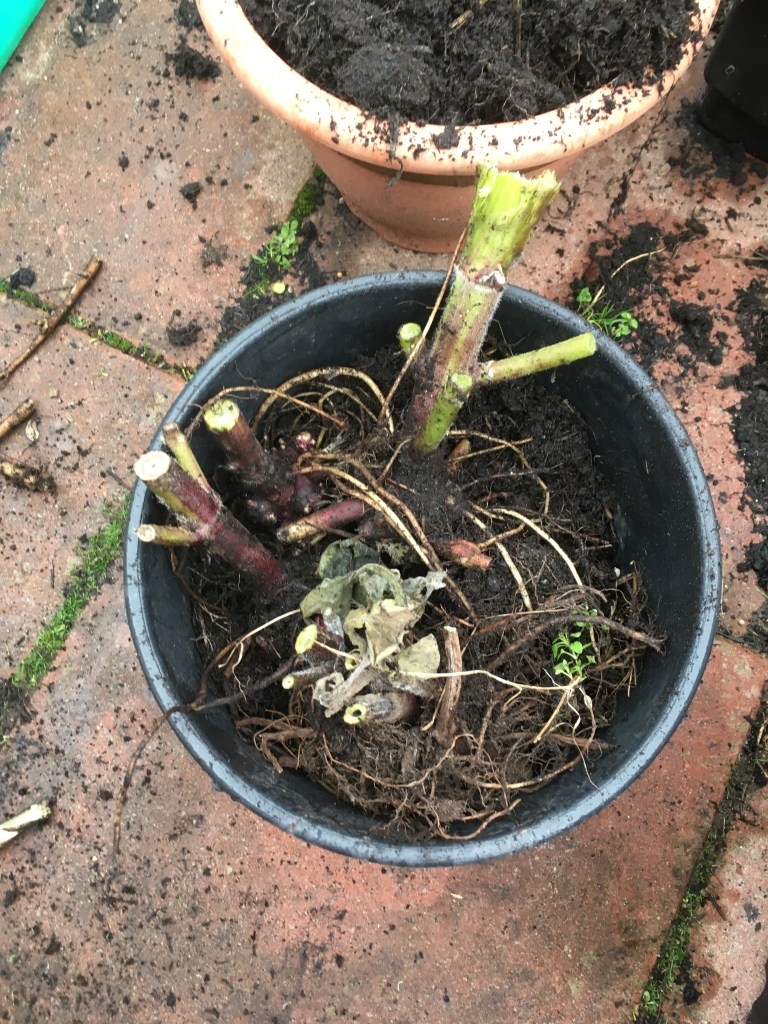
When the plant above ground is dying you can start harvesting yacon. This year we began at the end of November because I had run out of veg in the house. All you need to do is grasp the bottom of the shoots and gently and slowly wriggle the whole thing out of the soil. The roots are fairly brittle and the skin of the tubers quite delicate, so you need to be kind. When you’ve pulled the while thing out it will be fairly obvious if any of the tubers have broken off and been left in the soil. Alternatively, if they are grown in a pot you can shake the whole pot out and extract the whole root system.

You can stagger the harvesting as the tubers don’t go mushy in the ground after a frost. They can get sweeter with some cold weather. The plan so far is to harvest every 2-3 weeks to keep a continuous supply.

Once the roots are out you snap or cut the tubers off from the rhizomes. The stems and the dead leaves can be cut off the rhizomes and composted. The rhizomes can then be stored in some damp (but not wet) compost till spring. If you’re worried about the winter weather, they can be put into a shed or something. Mine have survived the winter fine outside so far but the winters have been mild here.

In the spring check the rhizomes for any sprouts. You may get several sprouting tips on each rhizome which can be cut into chunks according to sprouting tips and grown as separate plants.    

Storing and eating yacon

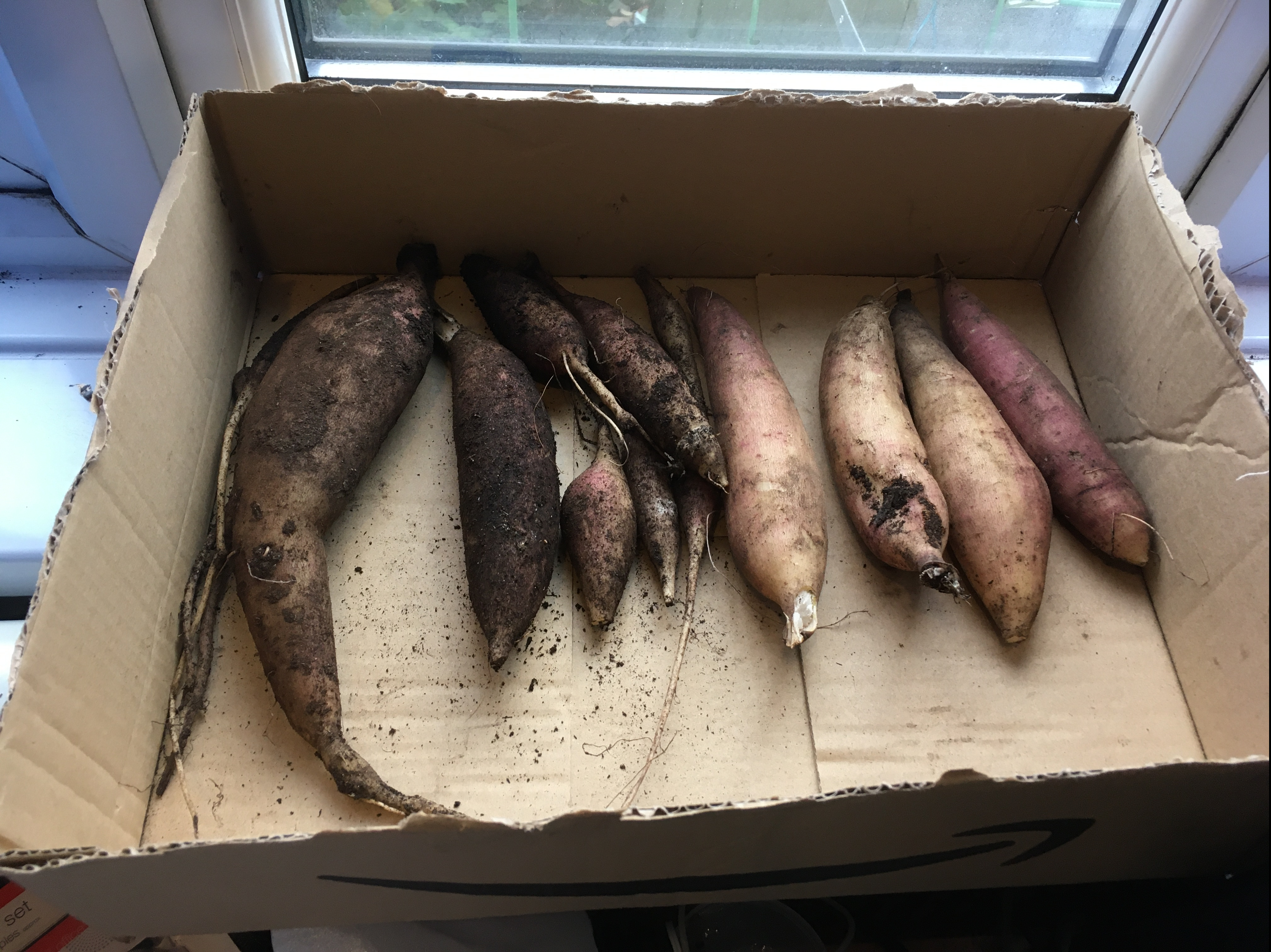
Let the yacon dry indoors for a day so the soil dries and can be brushed off with gentle fingertips and place on a sunny windowsill for around a week or two to ‘cure.’ Now, literature says that they shouldn’t be washed as scrubbing damages the skin and leads to mould. What if I didn’t scrub?I believe that they’re fairly damp when they come out of the soil so is there anything wrong with giving them a little rinse immediately after harvesting and patting dry before curing or storing in the fridge? I harvested a batch yesterday morning (12th Dec) and I’m going to try washing them and I’ll post in comments next week the results of washing.

You can eat them fresh, cured or anything in between the two. Curing makes the yacon sweeter (to the extent that it can be as sweet as an apple) but the yacon will be less firm (slightly rubbery to touch but oddly it’s still got that bite when eating) and it’s harder to peel because it’s a little soft.

The skin can be bitter so they should be peeled. The yacon will then discolour, it goes a very dark green (almost black) colour, quite quickly after peeling, especially one that has been cured. They still taste fine though. Because the skin was so thin, one time, I tried just scrubbing them the way you can carrots. This was a bad idea. They were still bitter on the surface and the water went very dark green and I ended up having to peel anyway. Just an FYI, the juice of the yacon feels sticky on your hands and is hard to wash off.

They are very juicy when eaten raw. They’re great chopped into salads. They maintain structural integrity when stewed. They have a pleasant bite when fermented with kimchi in the place of carrots. They can be roasted or sautéed. The absolute winner for me is that my little monkey loves them raw as a snack. Prebiotic veggies into child… that’s a mummy win… and she has no trouble letting one rip when the gas builds up!