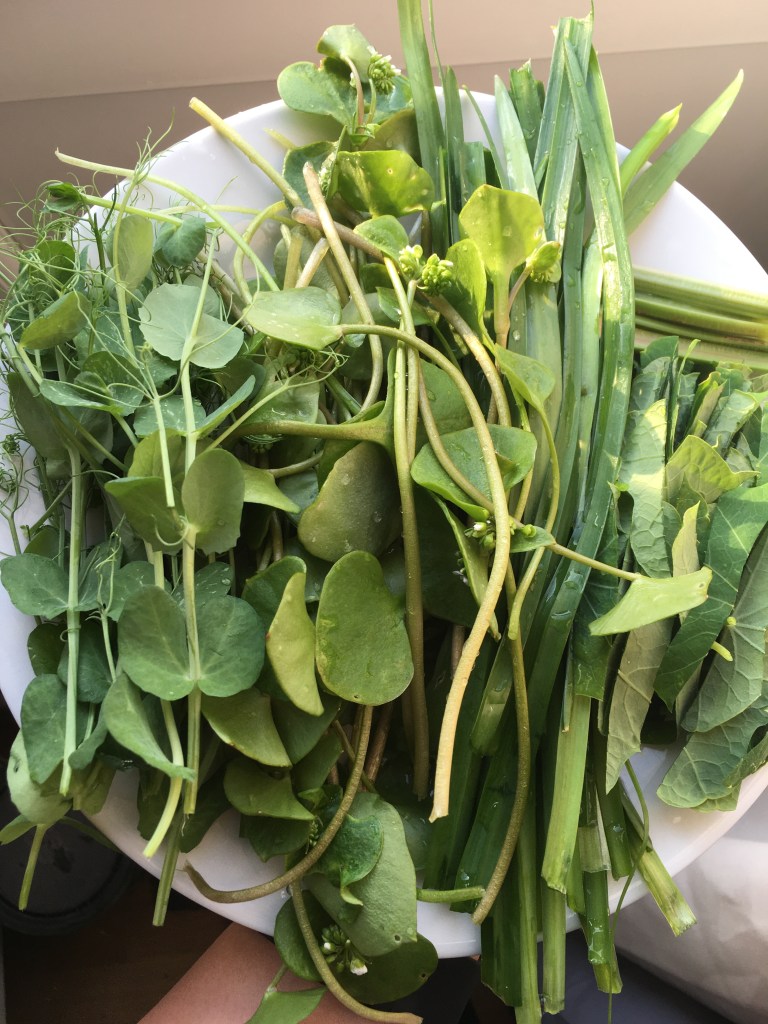
Turkish rocket

Short version:

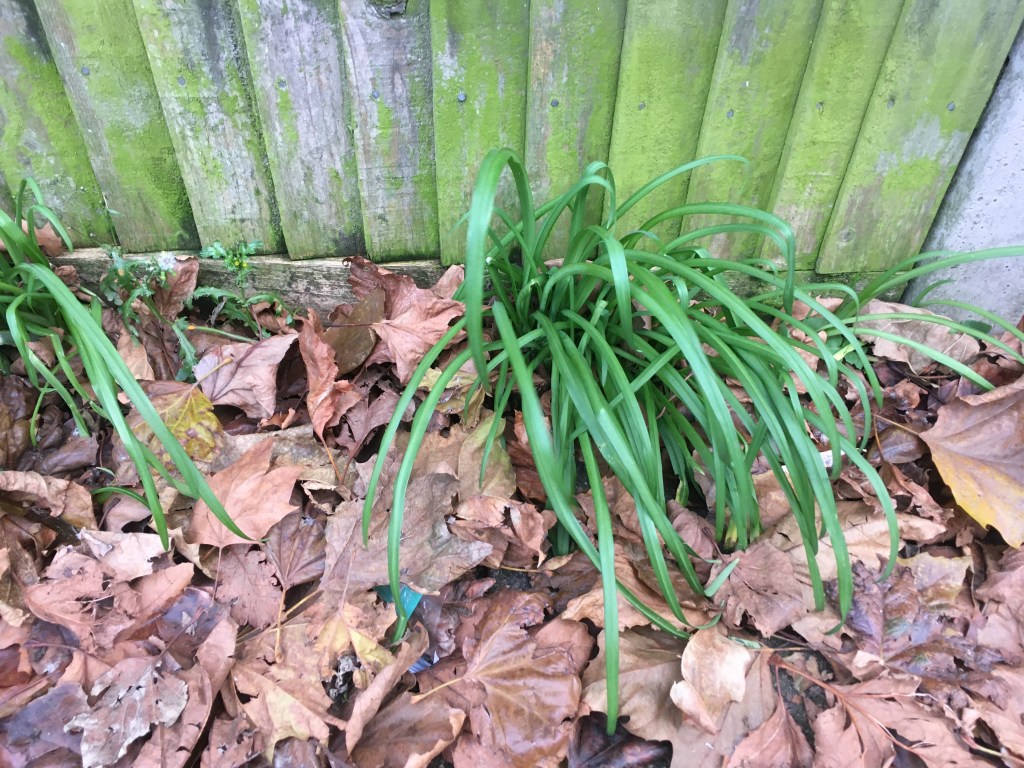
A hardy, perennial, shade tolerant, self-seeding vegetable with a long taproot that can be eaten all year round. The best bit to eat though are the flowering shoots.

I have no idea why it is called Turkish rocket (latin name – Bunias orientalis) as it is nothing like what people typically think of as rocket (Eruca vesicaria subsp. Sativa) or wild rocket (Diplotaxis tenuifolia). All three of those rockets are, however, all part of the Brassica family. Bunias doesn’t look like the other 2 rockets and it doesn’t taste like them either.

How to grow

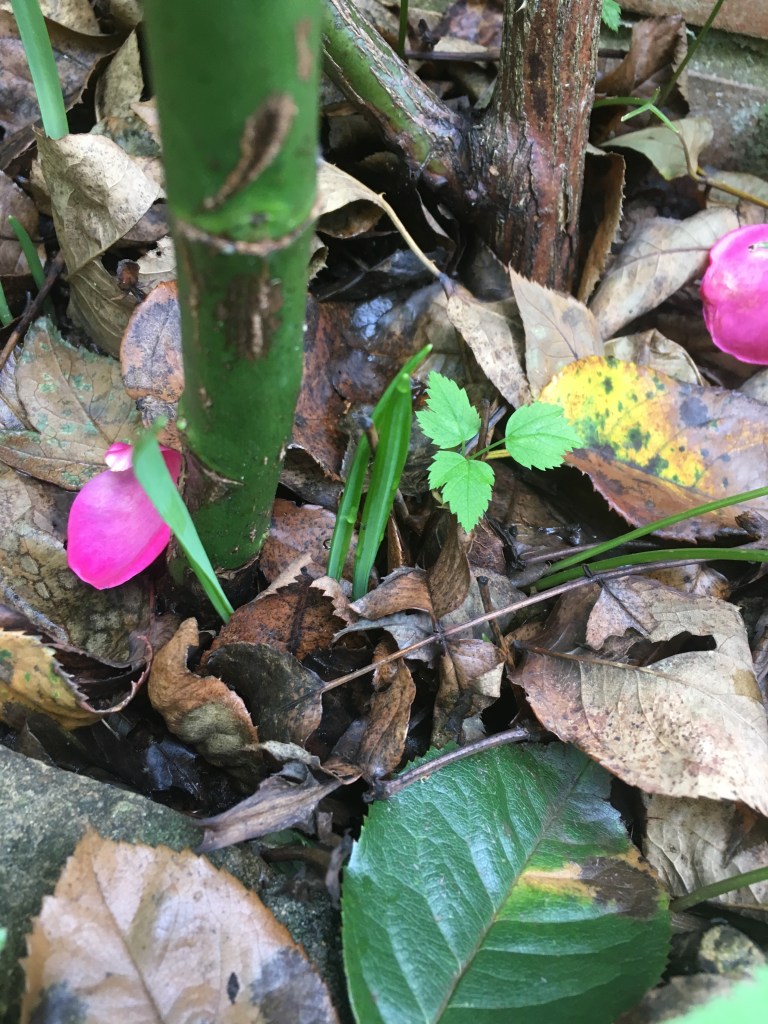
They can easily be grown from seed. As far as I know seeds are only available online but be careful and make sure you are buying Bunias orientalis because I’ve seen seeds marketed as Turkish rocket that look like they are just rocket. Turkish rocket can be slow to germinate so you do need to be a bit patient. I’d recommend starting them in pots indoors as they can look quite a bit like dandelion seedlings at the start with a similar rosette of leaves. This also gives you time to decide on a permanent patch.

The plants like a bit of sun but they do very well in quite a bit of shade. Our Turkish rocket patch is by the apple tree next to a tall fence. In the summer it sits in the dappled shade of the little apple tree in the morning and the shade of the fence most of the afternoon but in the winter I don’t think the low sun shines on it at all. They don’t do particularly well in pots because they have a deep taproot. However, they do very well in just about any type of soil. They have thrived in our heavy clay. This deep taproot can reach down many feet to get nutrients and water. This means it does very well in drought. This also means you need to choose your patch wisely because once it establishes itself it becomes quite hard to dig up. I haven’t seen it for myself, but I have read that if any of the root is left behind, the plant will return. It can also self seed merrily, but we’ve not really left any of the flowers.

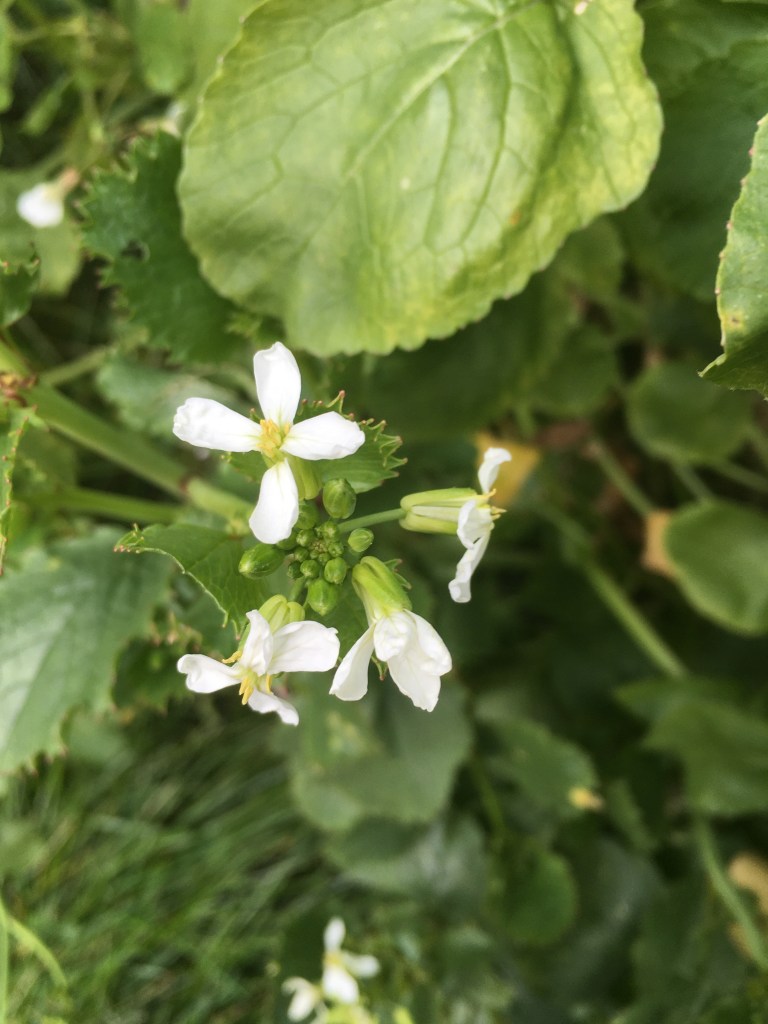
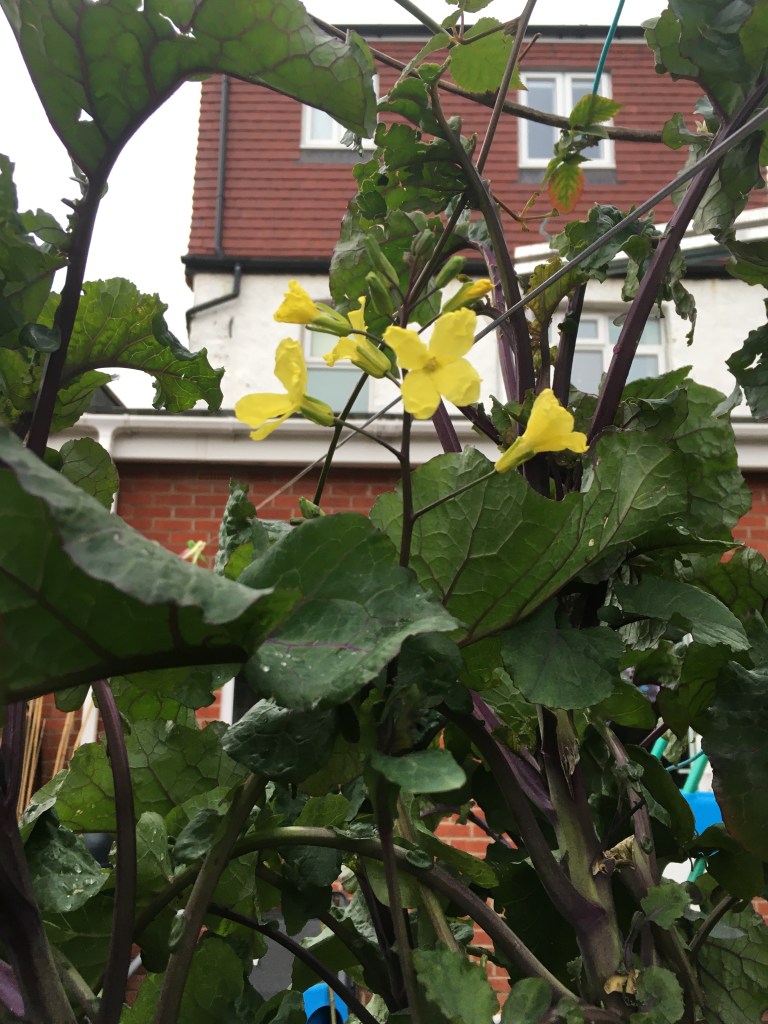
Most of the leaves are in a rosette around the base. The flower stalks can extend up to around 80 cm tall. If left to flower you get yellow flowers with the four petals typical of brassicas.

The plant is very hardy and can survive a very cold winter and come back fine the next year. I found with the mild winter we had last year we still had the rosette of leaves at the base.

How to harvest

The leaves and the flower shoots are edible. Leaves are available all year round. I don’t usually harvest any over the winter as it doesn’t seem to have many leaves, whilst my perennial kales and purple tree collard do very well over winter. The flower shoots start in late spring (making it a good edible for the hungry gap) and can continue in flushes through the summer. If you don’t want it to self seed, it’s no chore to eat all of the flower shoots. They are best when the buds are still closed.

How to eat

I wouldn’t recommend eating the leaves raw. They can be a bit bitter especially in the height of summer. To combat the bitterness, you can blanche with some salty hot water, then drain and discard that water. Then cook again in any manner of choosing, e.g. frying in a bit of oil, boiling, adding to sauces or stews.

The flower shoots are the best bit and can be eaten like purple sprouting broccoli. They taste a little bit like a cross between purple sprouting broccoli and mustard greens. The texture doesn’t quite have the same bite as purple sprouting broccoli. It is more like the stems of the Chinese vegetable choi sum.

Problems

I only added this bit because one of the best things about this plant is that I have never seen any pests on it. It seems to be untroubled by my usual brassica diseases like powdery mildew. It grows like a weed and doesn’t need any tending at all. It’s true that I have only had it for 2 1/2 years but in that time after the original sowing and then planting out all I’ve done is harvest and eat.

Encouraging birds

Short version:

Spring is when you want to encourage small birds into the garden. Most nesting garden birds feed their chicks protein so they will hunt out and devour the population of bugs that have been destroying your plants. You can attract birds with food, water or shelter. It’s a great thing to interest the kids and to help them learn about wildlife.

I am very new to the wildlife side of the gardening. I spent the first year in our new home (with our first proper garden) digging up the barren flagstone wasteland, laying turf, building structures and trying to establish lots of new plants. You can see some of that work in ‘lawns.’

The second year was spent trying to nurture the perennial edibles, establishing what annuals would grow well in the conditions and trying lots of new edibles.

In this third year, I’ve finally had a chance to try and make our garden more visitor friendly. I’ve written a post about why pesticides are an issue, but this comes from my science background and is more theoretical. This is the first year that I’ve really been able to see the result of any of those ideas. We’ve seen plenty of frogs. The garden is often filled with the pleasing sound of buzzing bees, especially by the raspberry and blueberry bed that has a long flowering period. I have seen many a ladybird adult and nymph. However, it is only recently that we’ve begun to get more birds. This is probably mostly due to the increased amount of tree like growth that provides shelter from the vast number of local pet cats.  

Making a feeder with kids

Attracting birds is something that my little one has become very excited about. In lockdown, one of the educational videos she came across was about feeding birds, so she made a bird feeder with hubby out of an old bottle.

They took a bottle and cut a hole about the size of a penny in it for the seed to fall out of it. Under this they cut a smaller hole and one on the side opposite. They threaded an old straw with an old lid stuck on it, to provide a little platform for any spilled seed to fall onto and a little place for a little bird to land on. The small hole and small platform hopefully mean that the bigger birds or squirrels have less chance of gobbling it all up. 

Attracting birds in spring is important because It turns out that even the seed eating garden birds in the UK will feed their chicks protein. Protein in the garden means bugs. Now that we’ve started learning about the birds, we can continue to provide food into winter and be able to help them more when food is scarce.

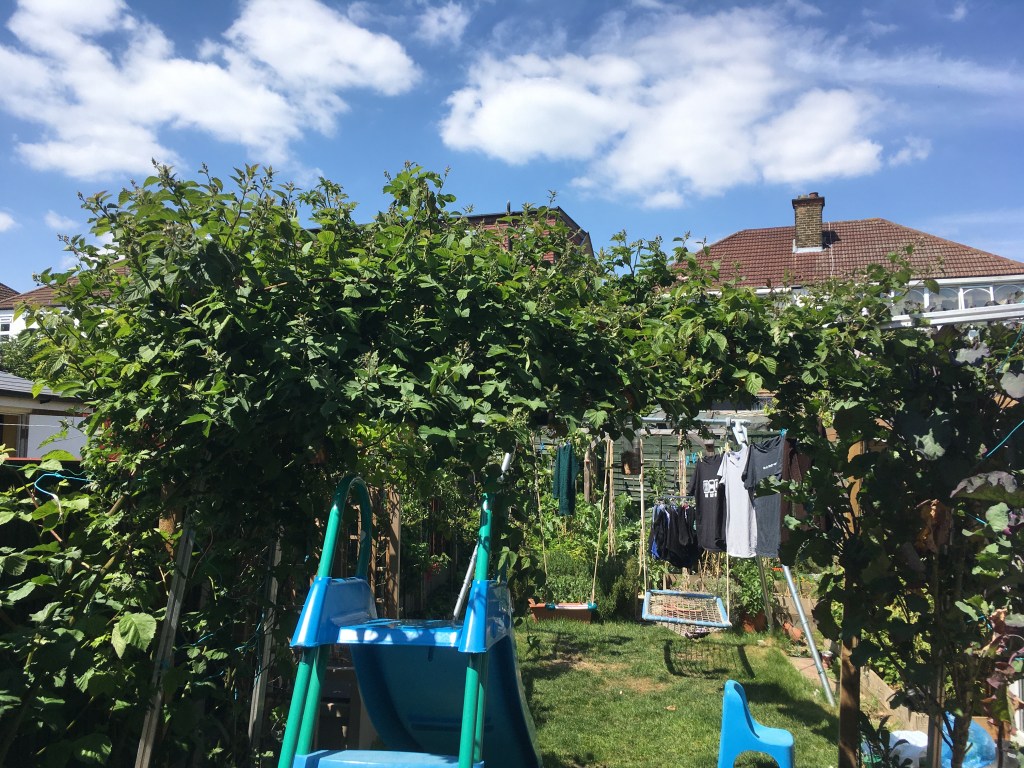
We chose to hang the feeder under the blackberry arch because it is covered and protected from the rain a little. It hangs from a frame that a cat should find impossible to climb and it is surrounded by greenery, which is hopefully more welcoming to the birds. It is also above the grass so that any seed that falls and sows itself won’t be a nuisance in vegetable beds.

I saw a robin trying to land on the little platform that caught the bird seed. Unfortunately, this is not how a robin eats. They prefer to pick off a solid surface. I just spread a bit of seed in a dish on the table. I was pleased when I came back to the dish and I saw evidence of it having been used. It turned out to be a pigeon. Humph!

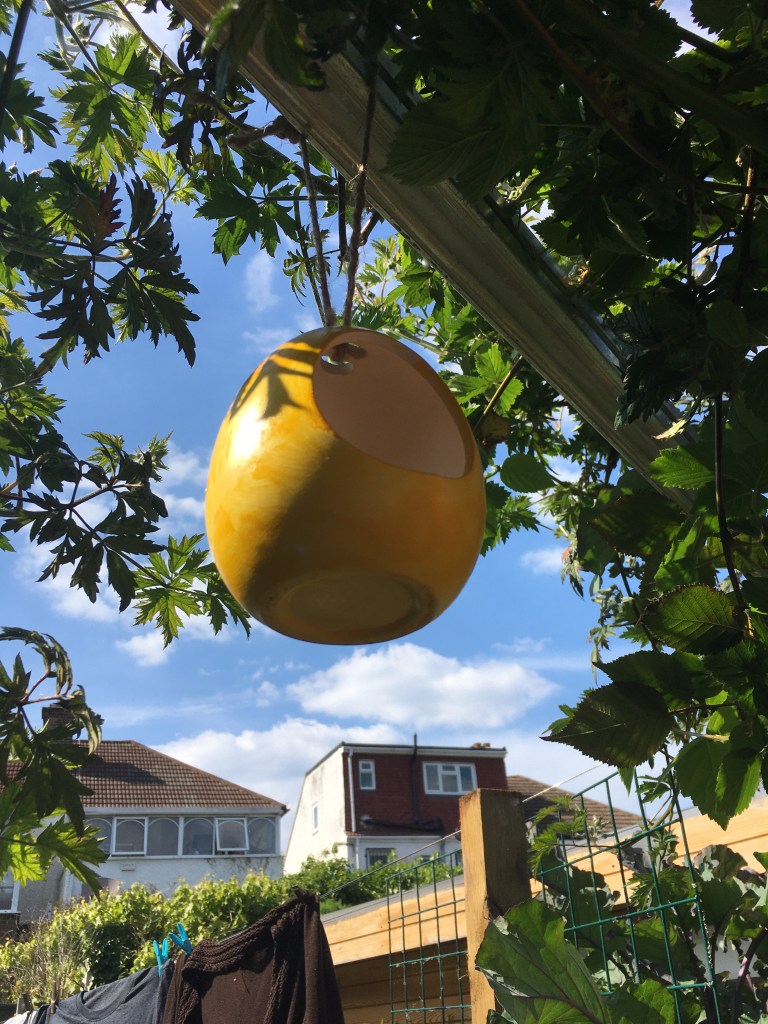
As an alternative, I let the little one paint a ceramic bird feeder. It has a space inside for a robin to sit. Hopefully, the robin will fit, but bigger birds will not.

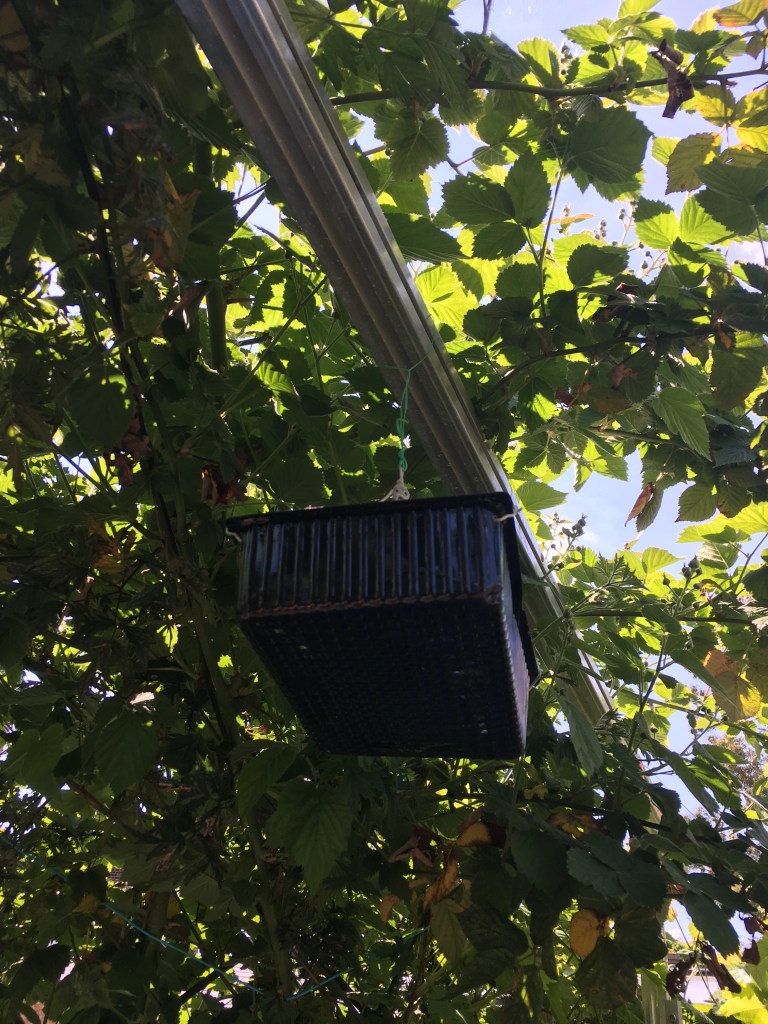
We added a water tray that was suspended from the blackberry support too. Especially in the summer months, birds need somewhere to drink. It is just a simple old mushroom tray that has been carefully washed and filled with about an inch of tap water. It’s not perfect, as birds prefer something much bigger, and much sturdier that they can bathe in and clean their feathers in too but I dare not make a large bird bath to go on any surface due to the cats. The water in the tray does need to be changed everyday and cleaned regularly to keep the birds that use it safe from diseases. This is also why we only have bird feeders that holds dry seed. We only need to clean and change the seed after it gets wet in the rain. A bird table that can hold scraps and other food needs to be cleaned everyday and emptied at night to avoid attracting rodents and going mouldy.

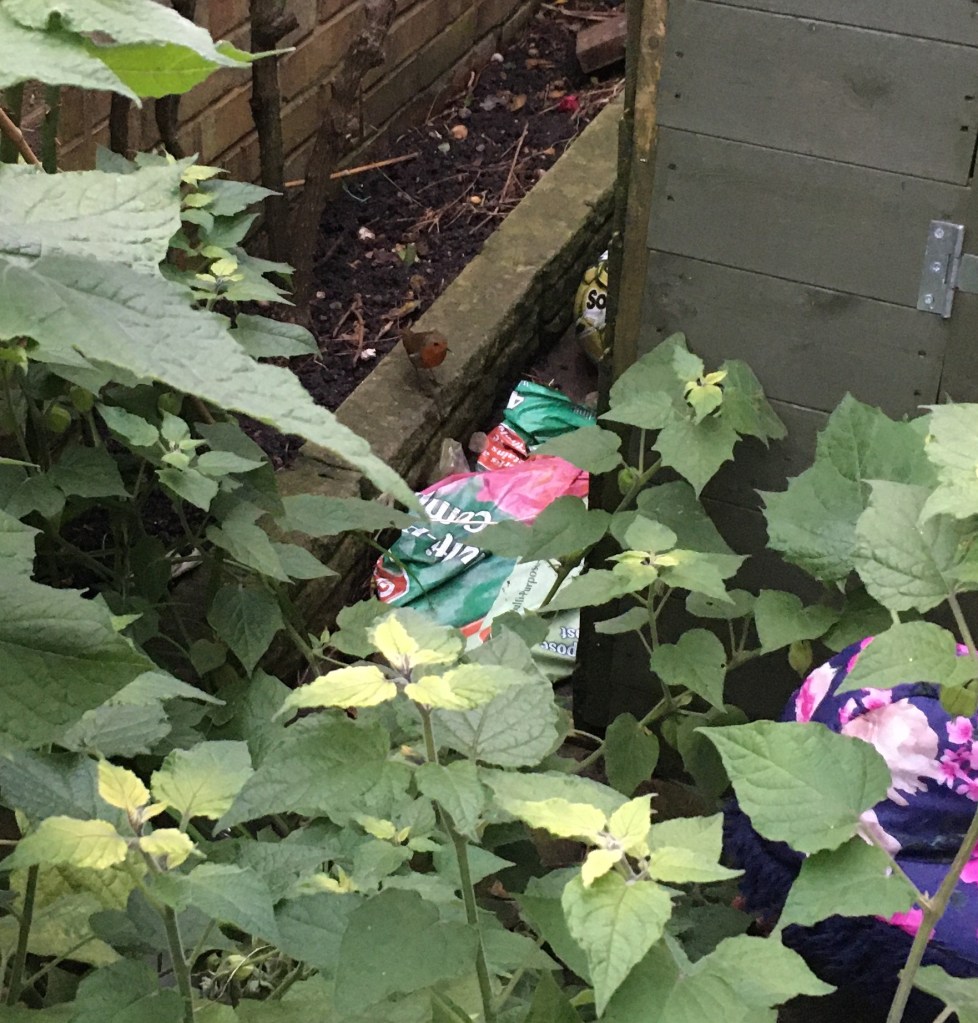
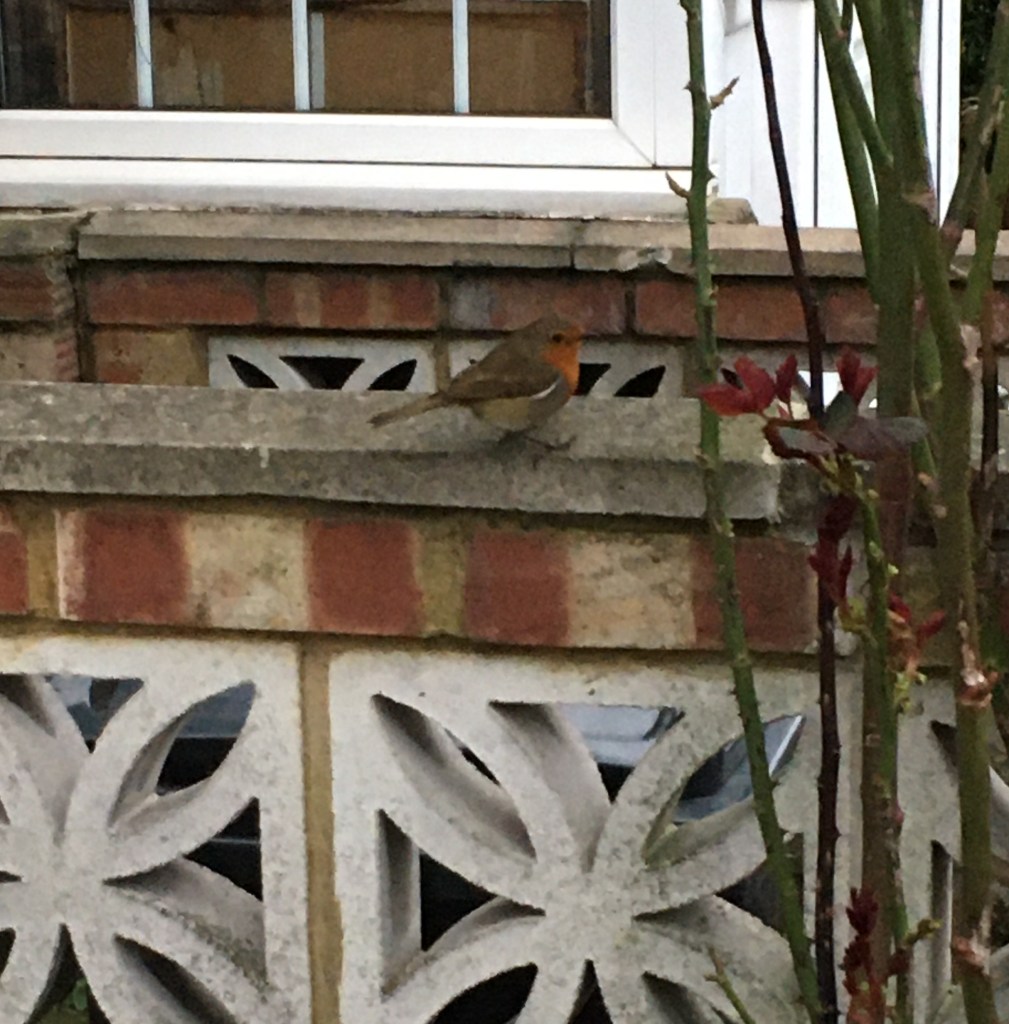
The robin is a frequent visitor. We have seen it hop around the garden and then fly off with a caterpillar in its mouth. I absolutely love this robin. Even though robins are very territorial, it’s definitely not just one robin. We’ve seen 2 in the garden at the same time. It may be possible that they are a nesting pair. This week it sat on our pergola and gave us a gorgeous tune. We were reminded by husband that this in bird language was probably something along the lines of, “Sling your hook! This space is mine!” Or, “Look at me, I’m so big, I sing so well, let’s have babies!” It sometimes follows me around as I garden, hoping for some unearthed worms. Unfortunately, this means that I always have gloves on or mucky hands and can’t get my camera out in time. We also do our best statue impressions when birds come into the garden, so we don’t scare them. So I don’t have many photos.

There is a blackbird that we’ve seen occasionally. There is a tree 3 doors down that seems to be teeming with magpies. We occasionally see one in the garden. We often hear and see great tits and sparrows. There was a house sparrow that sang very loudly and hopped in and out of our eaves for a couple of days. We think it might have been broadcasting its new home, hoping to attract a female. We really hope that it has only stopped because it was successful. We would love a nest of sparrows in the vicinity. They would help with the aphids.

Here is where we reach a gardening dilemma though. If we want to encourage birds into the garden to remove aphids, caterpillars, shield bugs, snails and slugs by providing food, then ideally, we shouldn’t be removing bugs that we find as this potentially removes the food source. I find it really hard to leave the pests and I find it really hard to look at the Daubenton’s kale with the new growth infested with aphids.

We put this nesting box in during the first year and naively thought it would be filled almost immediately. It has remained vacant. This doesn’t surprise me much now as the aforementioned barren wasteland wasn’t particularly inviting to birds. Hopefully as the trees and plants grow over the years the garden will become increasingly hospitable to birds that will happily eat our pests. I suspect this is also too exposed and becomes too hot during the day. I will move it a better spot. I just haven’t figured out what that spot is. This is all still a learning process as with the perennial edibles. Hopefully, utopia will be reached when the garden provides food for the birds and the birds provide a pest removal service.

Borage

Short version:

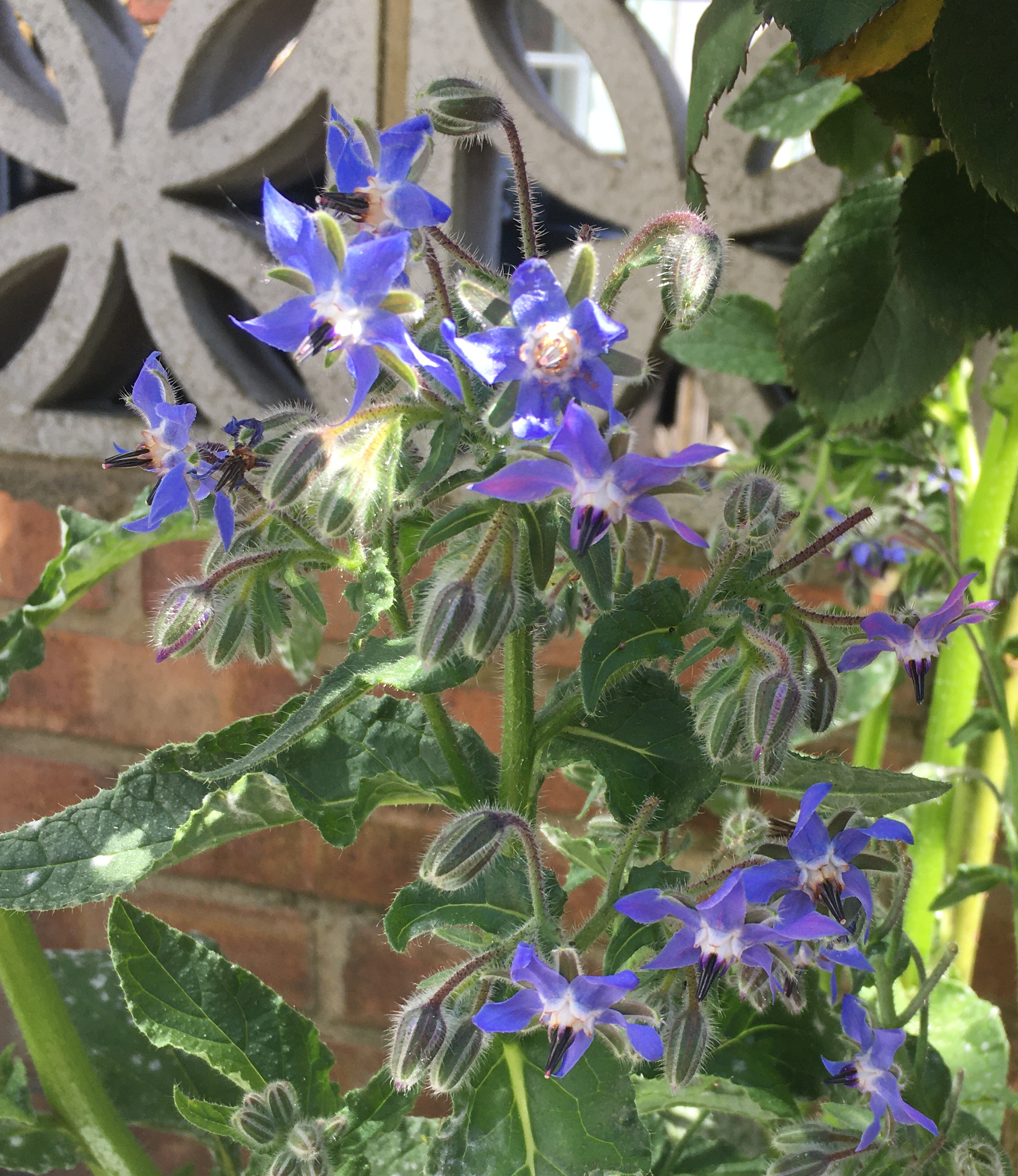
A self-seeding, upright annual that can grow to about 80cm tall. It has lovely edible blue flowers that bees and butterflies love. The young leaves can be used as a cooked green. Older leaves can be blitzed into soup.

My child thinks that I am really cruel for not growing her proper showy flowers in the garden. The general rule is – if I can’t eat it (or some part of it) I won’t grow it. Having a small garden in the city means that space is a premium. Even if I get a pot to put something fun in, that would still be a pot that I could grow something edible in. I won’t grow a bee or butterfly friendly flower for the sake of it. Some part of the plant also needs to be edible. I am, however, trying to convert the lawn into more of a bee friendly flower patch though, with edible clover and wild pansies. There’s more info how the lawn came to be here.

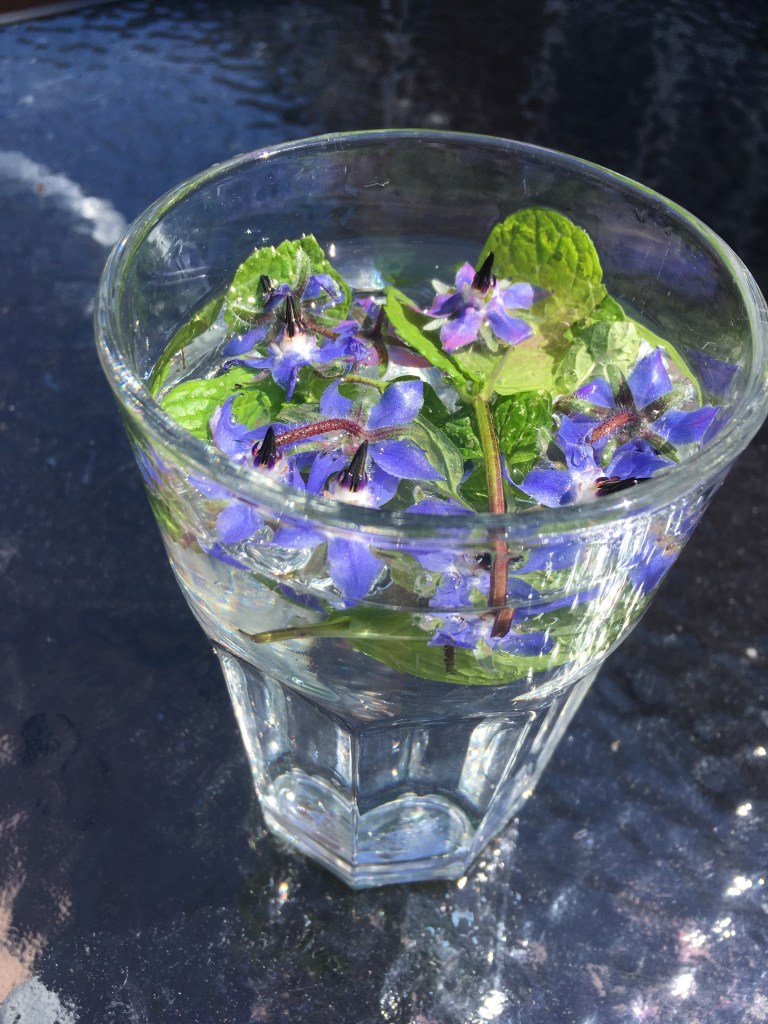
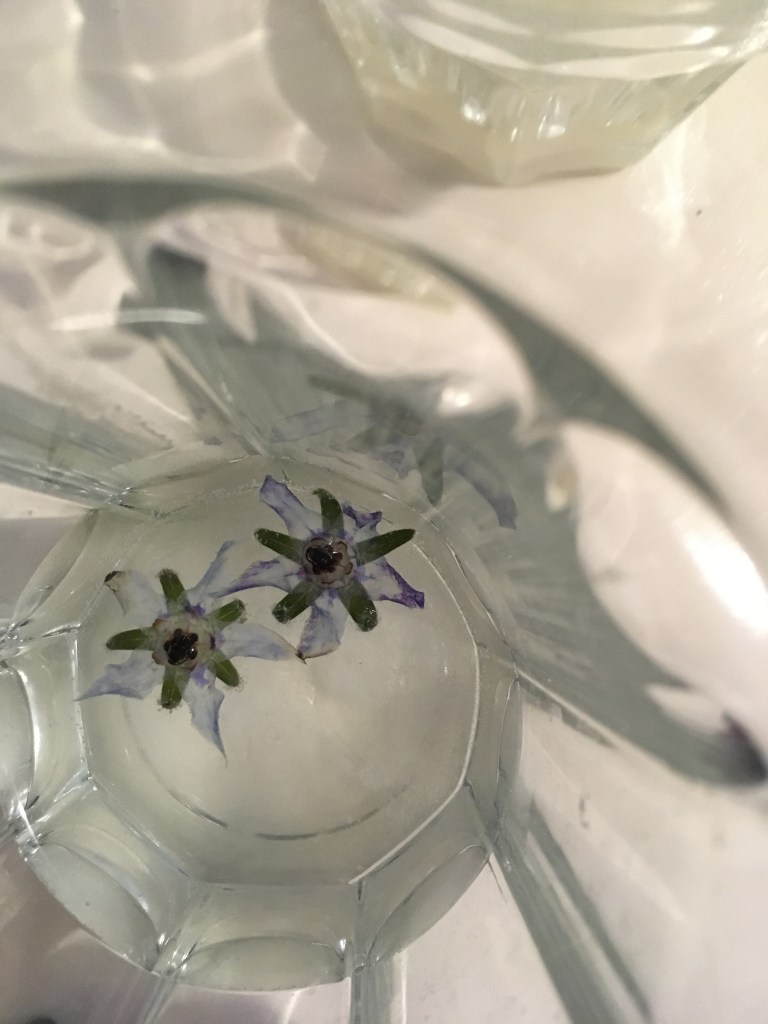
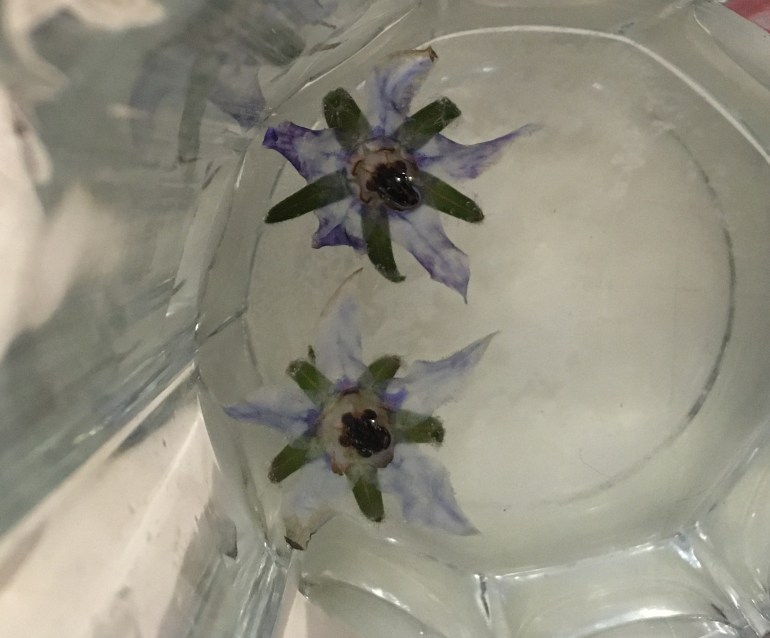
Borage ticks all the boxes for the little critters, the little critter and me. My little one absolutely loves grazing on the flowers and she loves to put them into drinks. We also like to make little ice cubes with them in.

How to grow

If you want very early plants, you can start them in individual in small pots from February. I say individual as the seedlings are rather large and they do grow quickly. Otherwise, the easiest way is to sow them straight into the ground around 1cm deep where you want them to grow between March and May. Give them plenty of space between plants as they can spread around 45cm. I like to squeeze them in, so I usually have them around 20cm apart. They like full sun best but will do fine in some shade. From seeing where my self-seeded seedlings have popped up, I can tell that they are not too fussy, but love a good compost.  

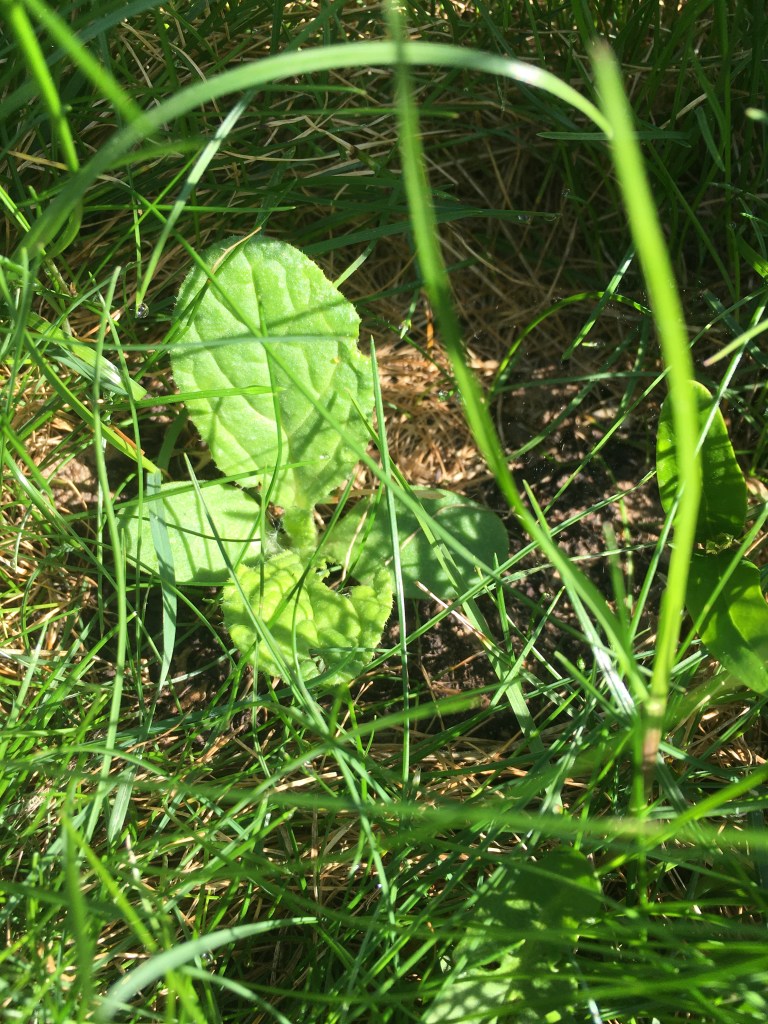
That is something to be aware of. Once you have sown borage, you never need sow again.  Self-seeded seedlings can appear as early as March, but they don’t mind being transplanted.

How to harvest

You can eat the young leaves. In fact, if they have self-seeded themselves into a nuisance you could pick lots of seedlings to eat. I love how borage can turn weeding into harvesting. I say ‘young’ leaves as borage leaves are a little prickly. The older the leaf the pricklier. After cooking the young leaves, the prickles will have wilted and not be noticeable. If you really want to use the older leaves it would be better to blitz them into soup. You would need some gloves to protect your hands. They don’t sting like nettles do, but they can be uncomfortable to handle. Once the flowers start appearing you can pick the flower off and eat straight away.
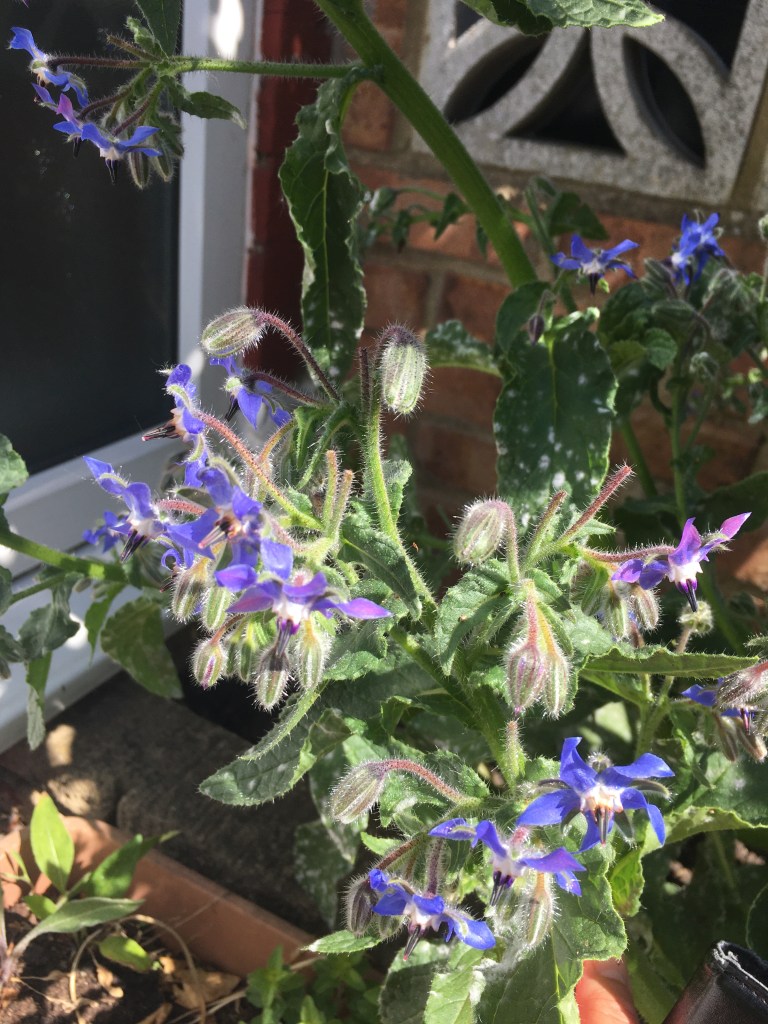
No matter how much you try to eat every flower (believe me, the kid has tried) you will never get them all. That’s a great thing. It’s good to leave some for the bees and butterflies. You can still eat the flowers after they have visited, but it’s hard to time harvesting after a pollinator has had a feed. The plant will give out plenty of flowers over a long period. This plant has been flowering for 6 weeks and it doesn’t show any sign of giving up. Unfortunately I didn’t stake it up so it has collapsed all over the place and it has also become a bit diseased.

How they taste

The leaves and the flowers have a cucumbery-lettucey taste.

The flowers have a bit of added sweetness due to the nectar. They are best eaten raw as a foraging snack, scattered in salads or sprinkled on dishes as a garnish.

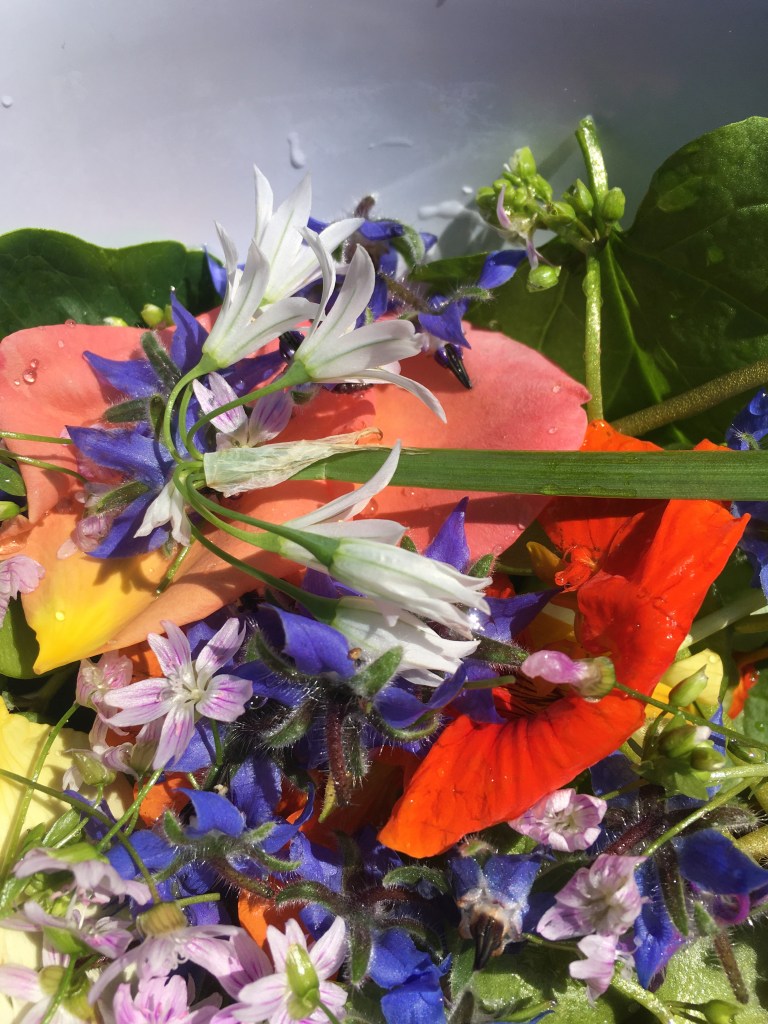
The salad above was mostly picked by little madam. It had to be washed about 4 times due to the large amount of bugs. All ingredients were from the garden:

Borage (obviously), nasturtiums (the yellow and orange flowers should be added in moderation as they are spicy), siberian purslane (tiny pink flowers – their rather bitter taste is masked by everything else), winter purslane flowers (really tasty but not bitter – the flowers are so tiny that you pick the whole stem, with a circular leaf), there were some kale flowers (taste a bit cabbagey), there was some three cornered leek flowers (I added those, but she then demanded I remove them for being too garlicky), rose petals, Caucasian spinach leaves, dill and mint.

Borage looks and tastes great in Pimm’s. This is also where the borage ice cubes go down a treat. My four-year-old likes to put mint and borage together. It’s like she’s preparing herself to drink Pimm’s one day.

The leaves, when cooked, are very soft. They shrink down a lot, like spinach does.

Problems

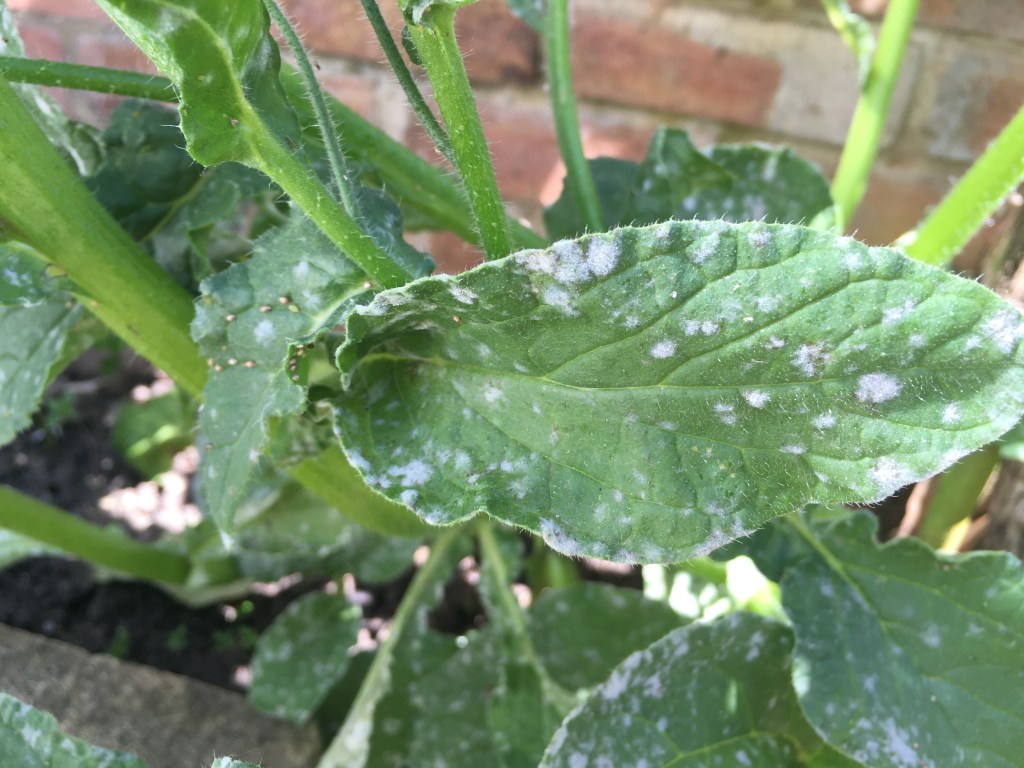
The only disease that has affected my borage, so far, is powdery mildew. This is something I get a lot in my garden – on the brassicas, tromboncinos and even on peas. Probably because I’m constantly trying to pack the plants into a small space. It is also because I get the little one involved in watering which inevitably leads to a spraying on the leaves. This provides perfect conditions for powdery mildew – humid air that doesn’t have space to circulate well. I’m afraid the best way to get rid of it is to catch it early and remove all affected leaves. If left too late the whole plant must be binned. It can’t even be recycled in the compost as the spores will make infection more likely next season.

Fun science stuff

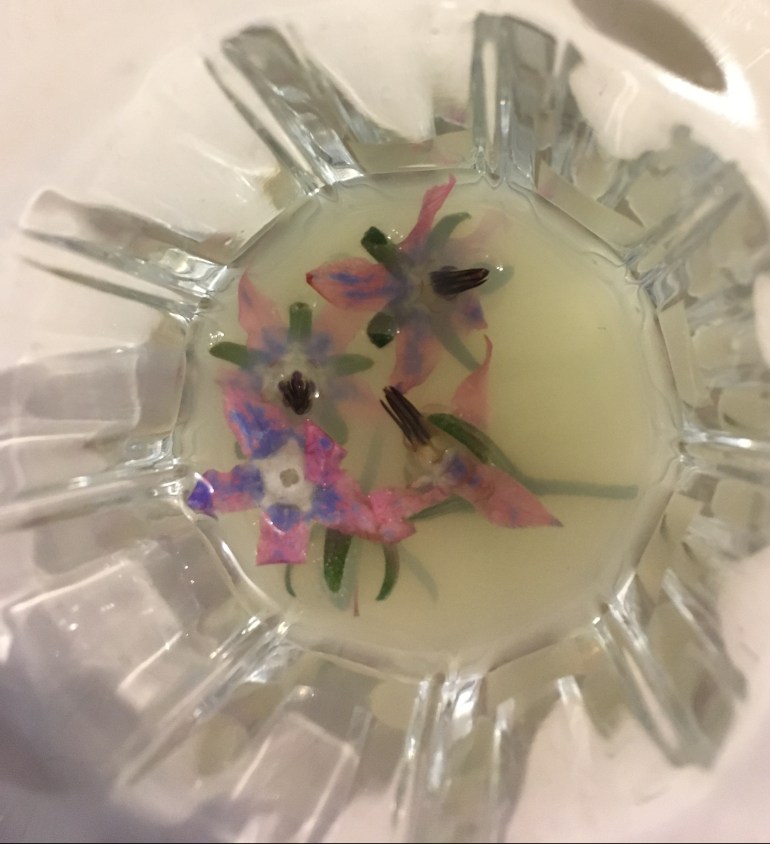
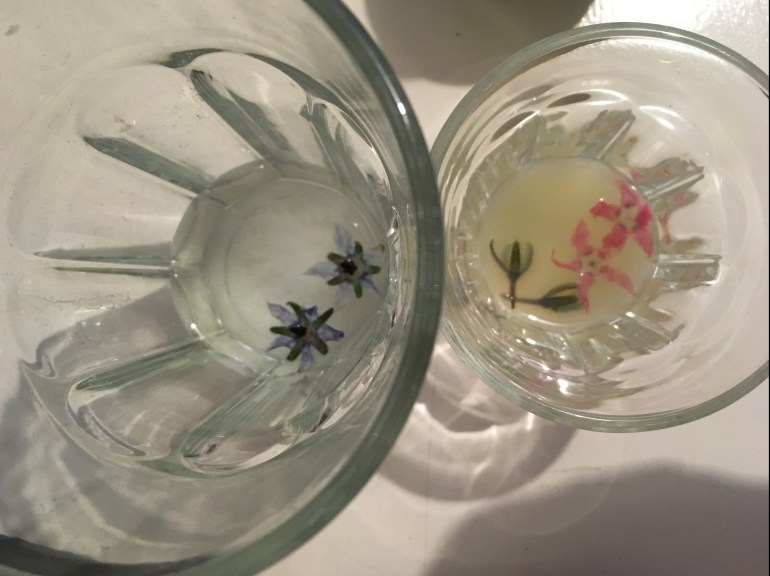
The flowers make for a great acid test. If you put the flowers into an acidic drink, they will turn pink. It does takes quite a while though (20 mins) and happens very gradually.

Radishes

Short version:

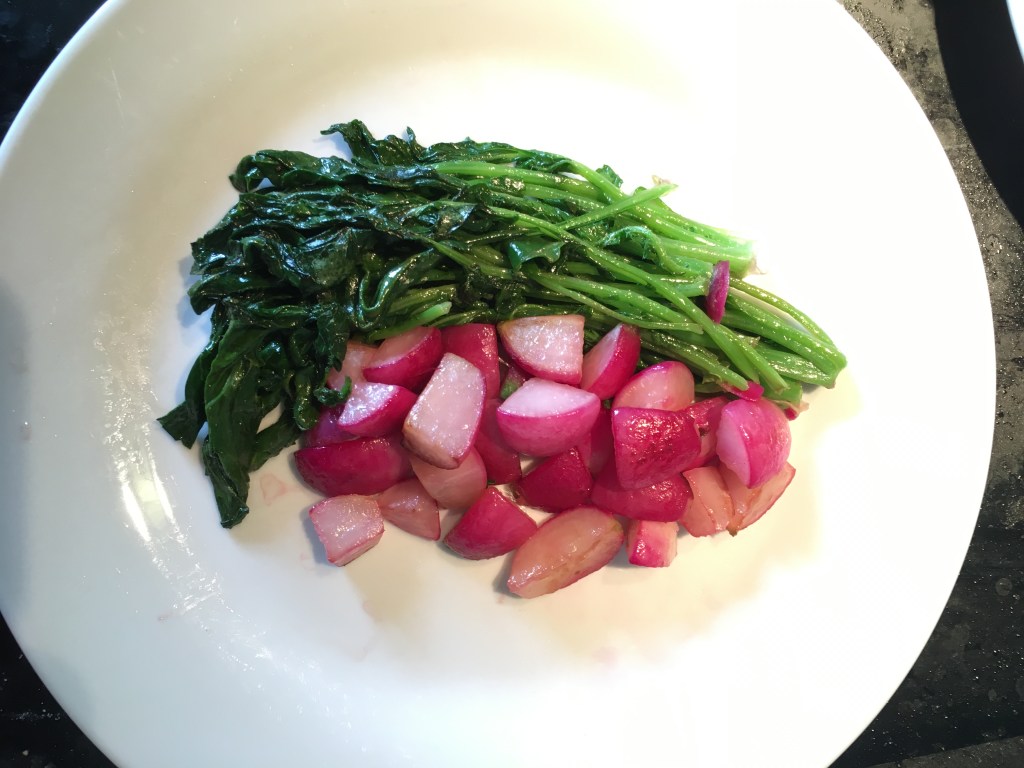
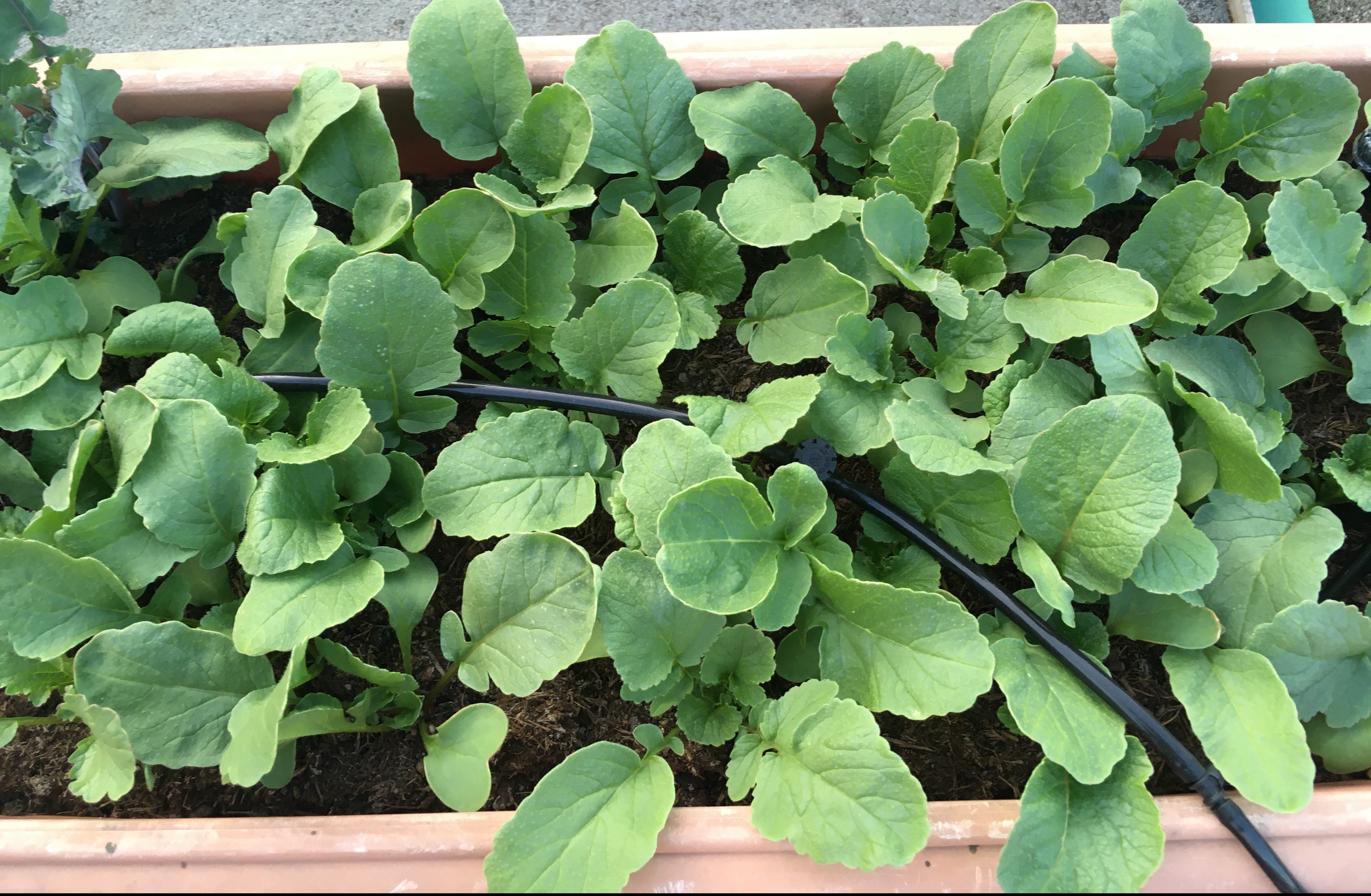
Radishes can be available as early as 4 weeks from seed. They’re fine in a big pot and you can also eat the greens too. The young shoots are great stir fried if you leave them to turn into triffids. The flowers and green seed pods also make a great snack. Kids find them to grow and they’re great to carve.

Radishes are a great quick crop veggie for these lockdown times. Being so small you could grow radishes almost anywhere. They can be used to fill up space in between other larger vegetables when they are still small. They are great in borders or round the edges of beds. They are compact enough for balconies and deep window boxes. You can eat all the radish, including the greens so it feels like a triumph to waste absolutely nothing. When you buy them in the shops, if you’re lucky enough to get ones with tops on (so you can see how fresh they are), chances are they will be too wilted to be particularly appetising. They can be grown through most of the year so are a great vegetable for winter and the hungry gap. One of my weirder bonus points is that radishes come out very cleanly (unlike beetroots, which I always have to hack at with a knife and peel).

How to grow

  1. Sow straight into the ground. Radishes don’t like having their roots disturbed. This is great as this saves time and effort transplanting.
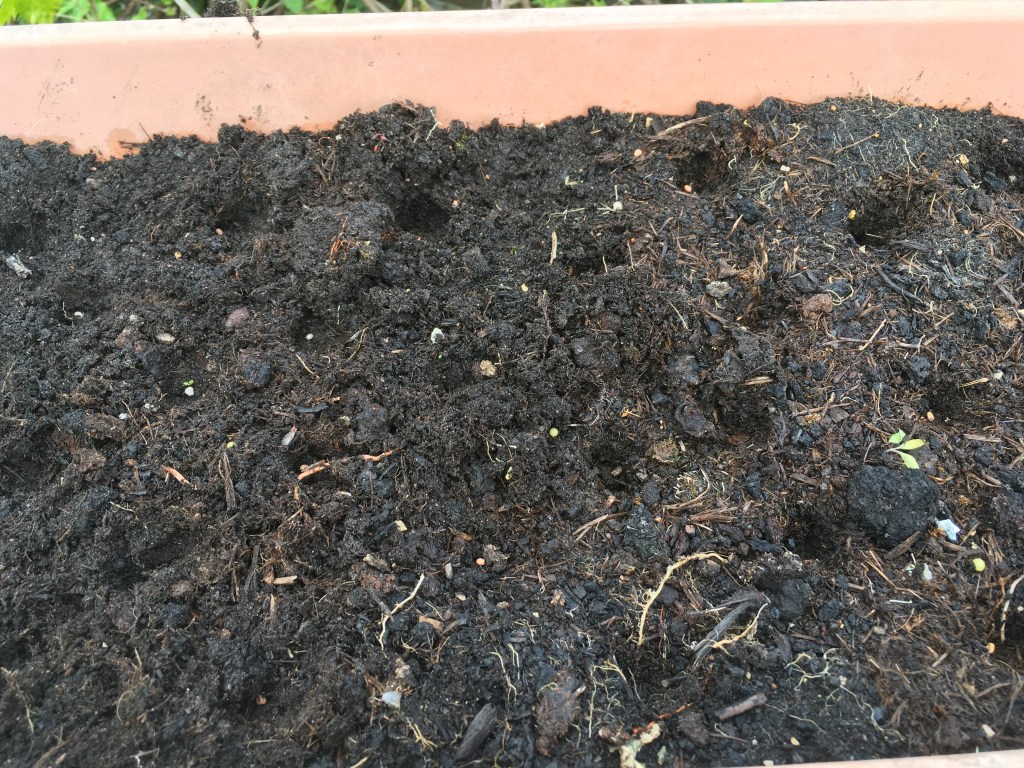
  2. Ensure that the soil is stone free and has a good amount of compost. Radishes don’t like to dry out too much, nor do they like being waterlogged. Sounds like hard work but basically, they don’t do well straight into my rubbish heavy clay, stony soil. I prefer to grow them in pots anyway as they are small and can be put anywhere (like the shed roof). Soils with more compost retain water better without getting waterlogged. Radishes do have roots that extend beyond the base of the radish so have a pot that allows about a foot depth of compost.
  3. Sow the seeds in staggered rows about 1.5cm deep and leaving about 4cm between seeds. Many recommendations say to sow in rows and then thin out. You can do this and eat the thinnings but it ends up being more time consuming and I often find that pulling up a spare seedling will disturb the other seedlings around it. If you just sow them where you intend them to grow, then your job is done till harvesting (except for regular watering of course). Alternatively, you can also sow the occasional seed here and there around bigger plants. Because the radish is primarily a root veggie, it won’t have the same nutritional needs as fruiting plants. You can sow around aubergine, peppers, chillies and squashes if you start early enough.
  4. Water the seeds in and then ensure that the radishes don’t get too dry – moist but not waterlogged. Good compost and a pot with a hole in the bottom can reduce the worry.
  5. You can sow a few seeds regularly (every couple of weeks) to ensure a consistent supply of radishes in spring and in autumn. There’s not much point sowing in summer as it can get a bit hot so the plants will bolt. You’ll get small woody radishes and thin flower stems. If you leave some radishes past their best in late autumn they will provide you with leaves over winter. In early spring they will have plenty of new growth and flower shoots.

How to harvest

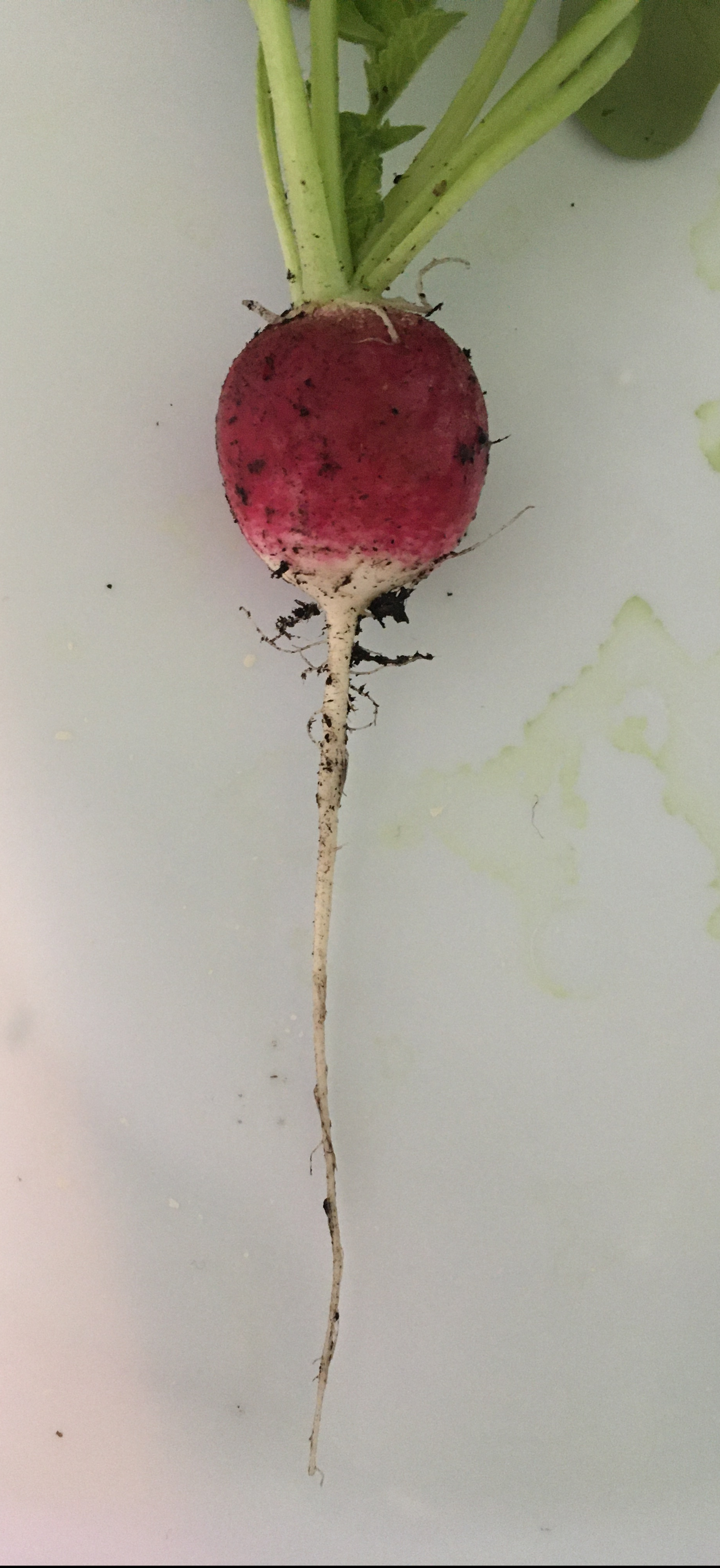
When conditions are suitable you could be harvesting lovely little radishes 4 weeks from sowing. Because I’m trying to use the garden as a larder I go and gather each day. With radishes you can check they’re ready by pushing the soil away from the base of the leaves. You can see how big the radish is. Around the size of a ping pong ball is ideal (depending on your radish variety). Pick the biggest ones and leave the rest to grow.

If you don’t harvest the radishes when they’re the right size, you can leave them to grow into shoots to be used like purple sprouting broccoli. You could sow them slightly further apart or harvest and leave well-spaced plants with this intention from the start. The flower shoots and young leaves make a great green vegetable.

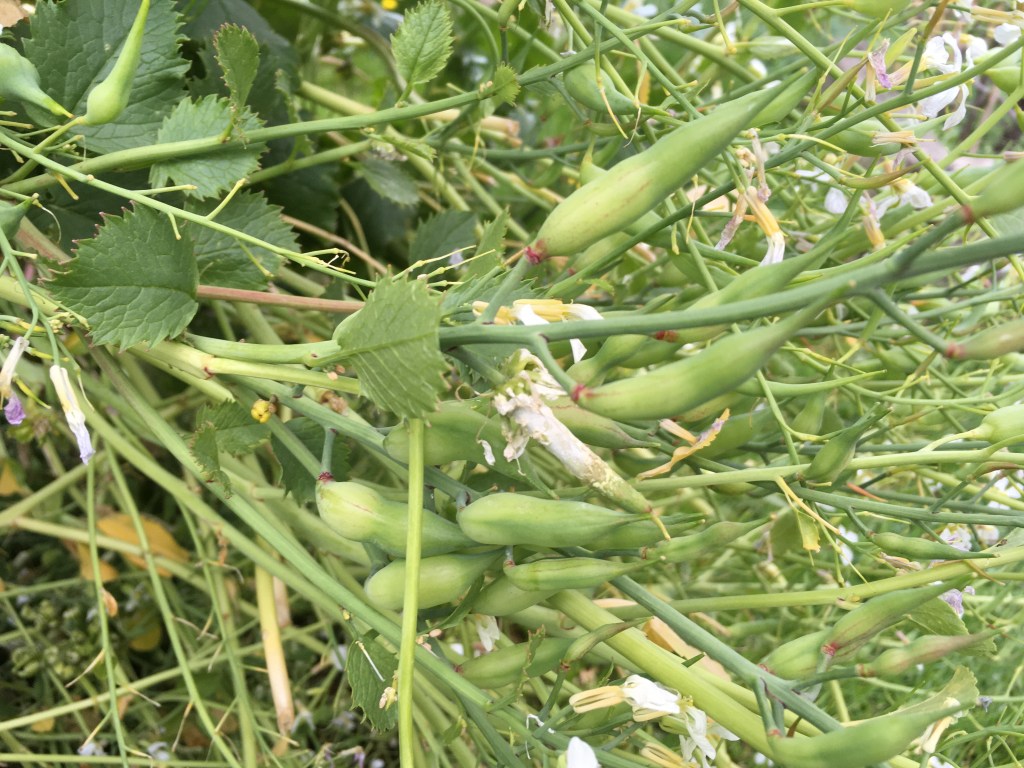
The flowers themselves and green seed pods make a great snack.  

How it tastes

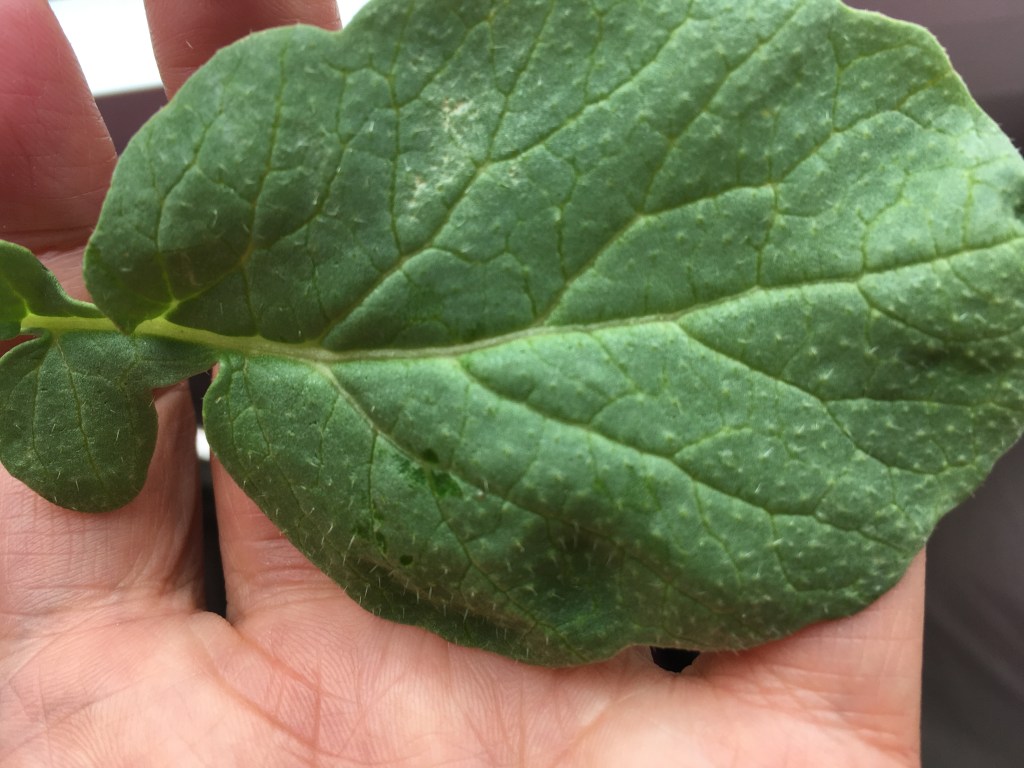
I absolutely love the radish for being one of the few vegetables where you can utilise absolutely every part of it. They are primarily grown for the roots, but the greens are fantastic. They’re no good in salads as the leaves have slightly prickly bumps on them but when they’re cooked these completely soften.

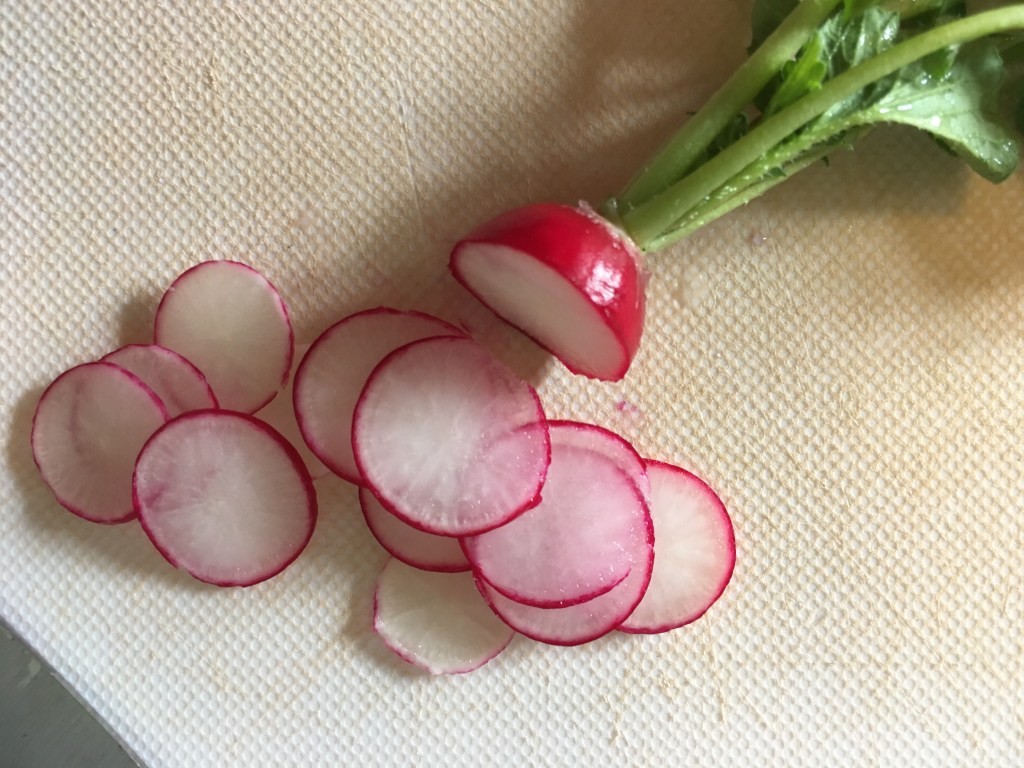
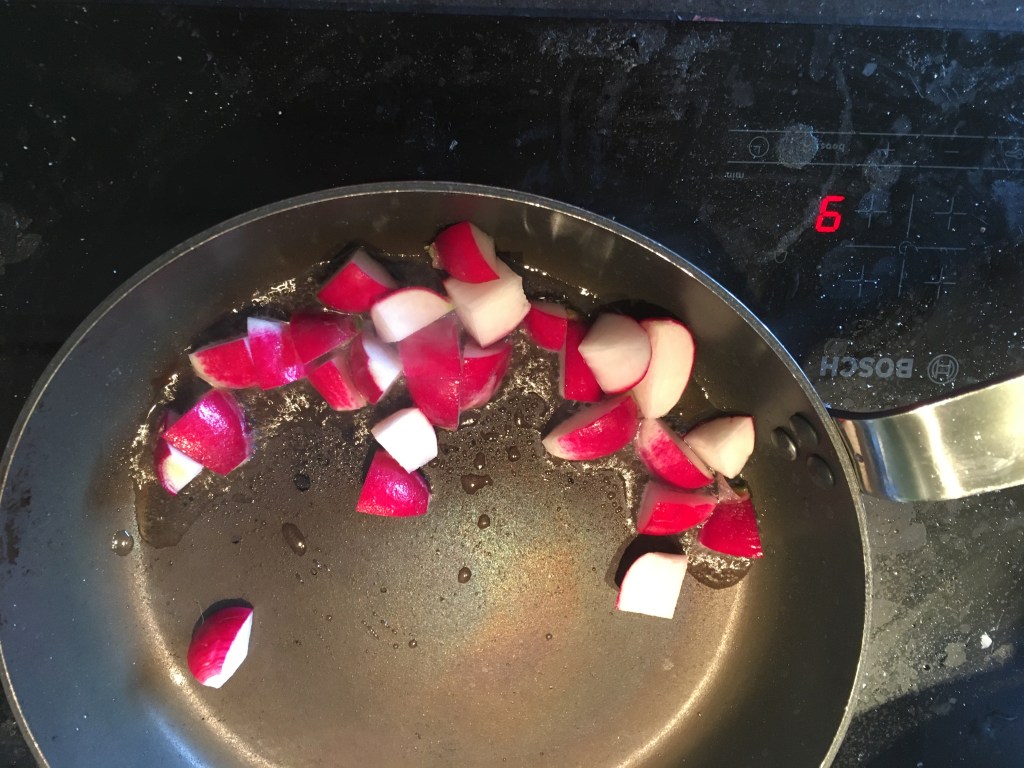
The radish itself, when raw has that horseradishy / mustardy taste. They can be quite hot. It will depend on the variety. They have a lovely crunch when raw and are tasty and cute sliced thinly into a salad. The whole family prefer them cooked. They taste like turnips and are great sautéed or roasted. They lose their spiciness when cooked.

The greens that come with the radishes can be thrown into the pan when the radish roots are almost done. They can be used to bulk up stir fries or blitzed into sauces. The young greens from a radish pulled for the root have a chard like taste. The thing that I find it most similar to is theChinese leaf – choi sum.

The flower shoots and young leaves can be used like purple sprouting broccoli. It’s a bit softer in texture and taste like a cross between broccoli and cooked radish.

The cute little flowers can be added to salads and taste a little like cabbage, but with a hint of sweetness to it.

The raw green seed pods are juicy and have that same slightly sweet cabbagy taste. I’m afraid I haven’t yet collected enough of them to have tried cooking with them.

I generally just snack on the flowers and seed pods raw whilst in the garden.

The older leaves are a bit more prickly and even with lots of cooking can still be a little weird on the tongue. These are better added into a blended soup.

I leave you with a last image. The radishes are great fun to carve because of the amazing contrast of the pink against the white. In case you can’t tell…er… it’s supposed to be a rose. I carved it for my little one… like the cat boy Halloween pumpkin. Incidentally, radishes are a fun one for kids. The seeds, whilst small, are still manageable. She likes to drop them into the holes that I’ve made in the compost. They seedlings appear within a week. They can be harvested quick and they’re easy for little ones to pull out. They’re also an amazing colour. Littl’un asked for a radish and called it her jewel. She won’t eat the radish itself, raw or cooked, but she does like the shoots of the overgrown ones.

Sorrel

Short version:

A perennial that self-seeds itself into a nuisance because (I think) it’s hard to consume in large quantities due to its tart taste. It’s a lovely interesting one to add to a salad instead of a vinegarette and it’s refreshing with any rich or fatty food. It is a good plant for the hungry gap. Avoid if you suffer from any kidney diseases.

I’m a bit ambivalent about sorrel. Doesn’t sound like a great start but hear me out. It’s wonderfully easy to grow and some varieties are a perennial evergreen so you can eat it all year round but it can be a bit of a shocker to the taste buds. My issue is that despite being able to easily grow immense amount of it, I am saddened to find that I cannot EAT immense amounts of it.

Despite being a perennial, it is apparently often grown as an annual as the taste deepens with age. I like to grow it as a perennial because it’s much lazier.

There are a few types of sorrel you can grow. This is where I show my lack of horticultural education. I have heard of broad leaf sorrel, sheep sorrel, wood sorrel, French sorrel and red veined sorrel. Sadly I have only grown the last two on that list, so I feel it would only be fair to comment on those.

How to grow

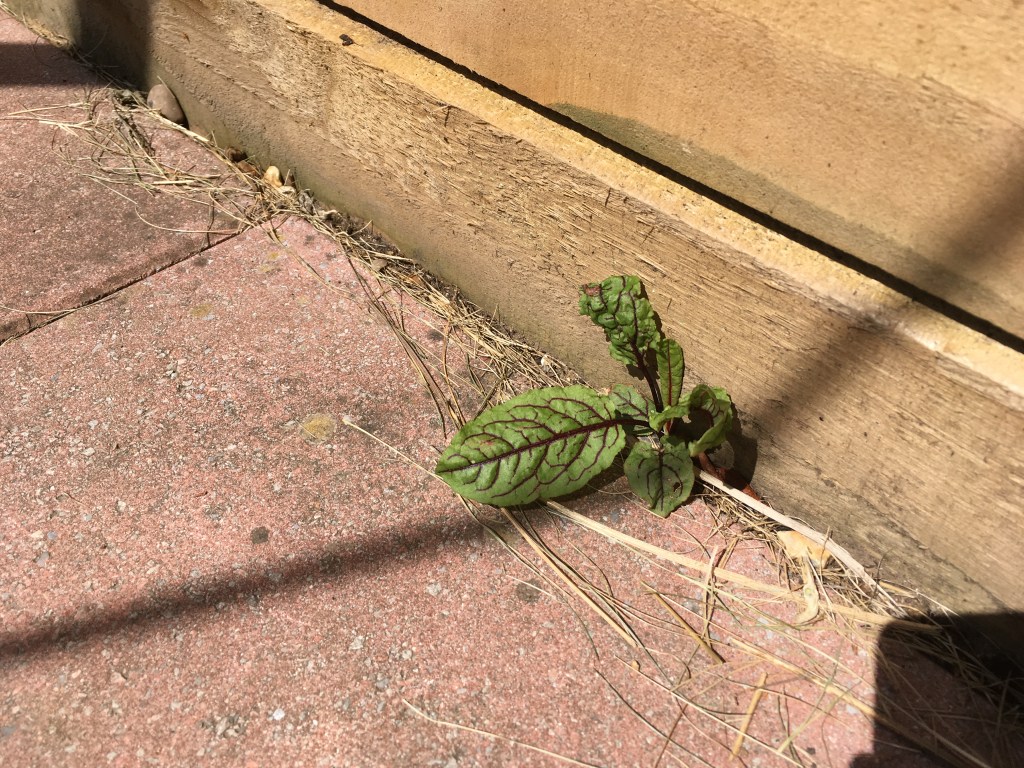
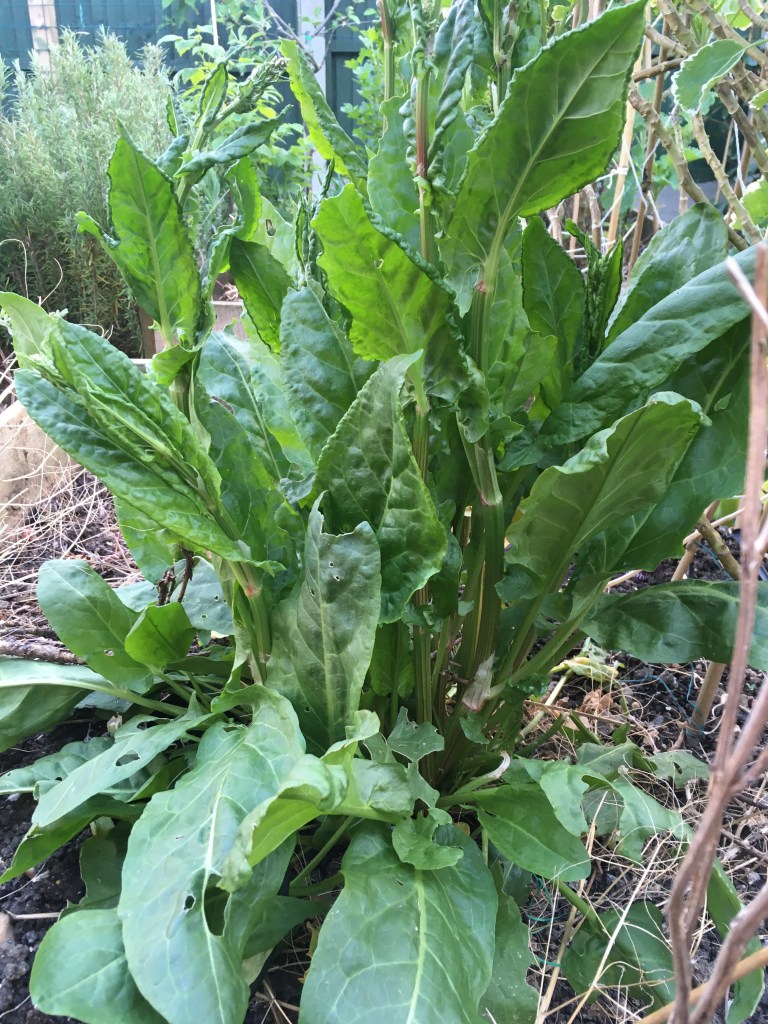
Both red veined and French are incredibly easy to grow from seed. The seeds are tiny, but the plants will grow to about 50cm tall and 50cm wide so do not be too temped to plant them too close together. You also don’t need many plants, especially as they self-seed very well. It appears to do very well in almost any soil. It seems to grow very well in the paving cracks, where they have self-seeded. I should weed, but I like having edibles that don’t take up any space in the vegetable patch (though pretty much all the garden IS the vegetable patch). It has a deep root system so survives well under most circumstances. This tap root does mean that it is hard to dig out when well established and doesn’t transplant well. They do well in light shade areas and in full sun.

The French sorrel seems to be evergreen and we have been eating it through the autumn and winter. The red veined sorrel, however, dies back in late autumn and then reappears in late winter. You may find that the plant dies if the soil gets frozen in a very harsh winter and kills the roots.

Pinch out the flowers to keep the plant providing for longer. The red veined will die back after seeds appear. The French loses productivity when it seeds.

If you do want to grow it as an annual you can leave the plant to self-seed before pulling out the old plant. If you want to save seeds you can collect the mature pods and let them dry thoroughly before storing.

How to harvest

For the French sorrel harvest all year round, taking the outer leaves first. It grows quickly as the weather warms up and is a welcome green in the spring and in the hungry gap. The leaves remain soft no matter how large they get. For the red veined sorrel harvest the baby leaves. The larger leaves get tough and bitter. Treat sorrel as a cut and come again salad.

How it tastes

It is tart. That means that it is sour – but that’s the fun of it. If it was fruit, I’d be complaining. As it’s a green that requires no work and grows like a weed, tart is interesting. The taste is due to oxalic acid. I have read lots of things about oxalic acid. This is a good website that talks about it – eatthatweed.

There are many good points and even better, the information is referenced so you can decide for yourself how accurate it is. The main points are that oxalic acid exists in many of the things we eat, it binds with some nutrients but if you blanch it (discarding the water), it removes a third of all the oxalic acid and most of the soluble oxalic acid so the insoluble stuff pass through the system. It can also be mixed with high calcium ingredients like yoghurt to bind it. There has been some links between oxalic acid and kidney stones, but you’d have to eat a hell of a lot of it.

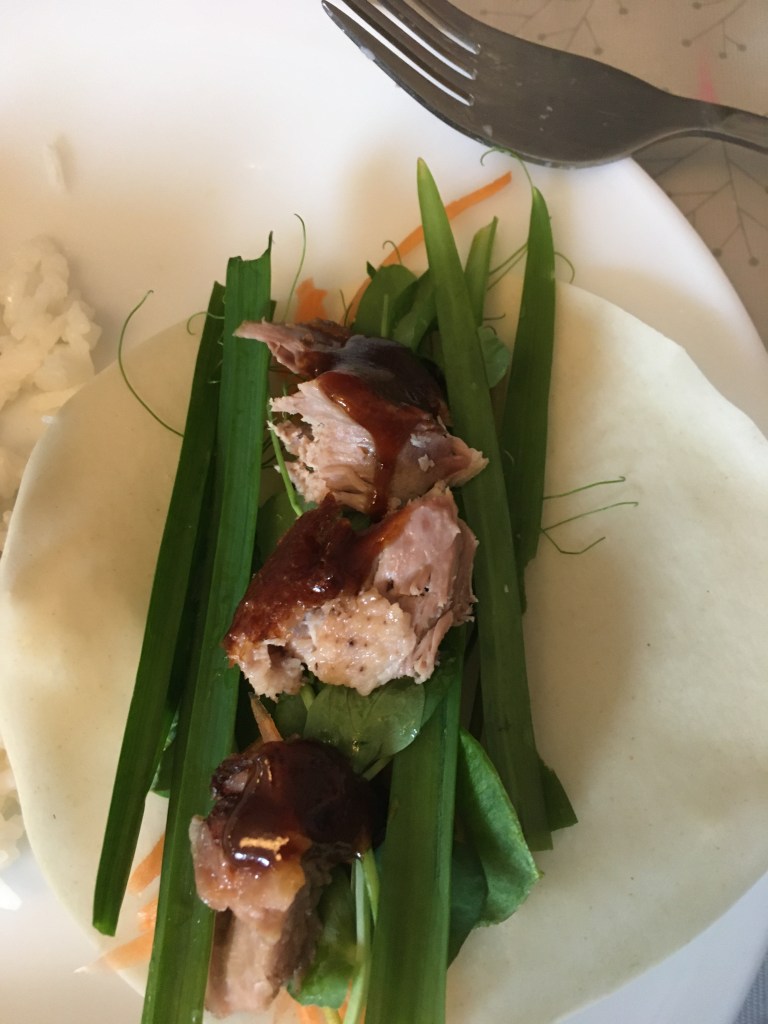
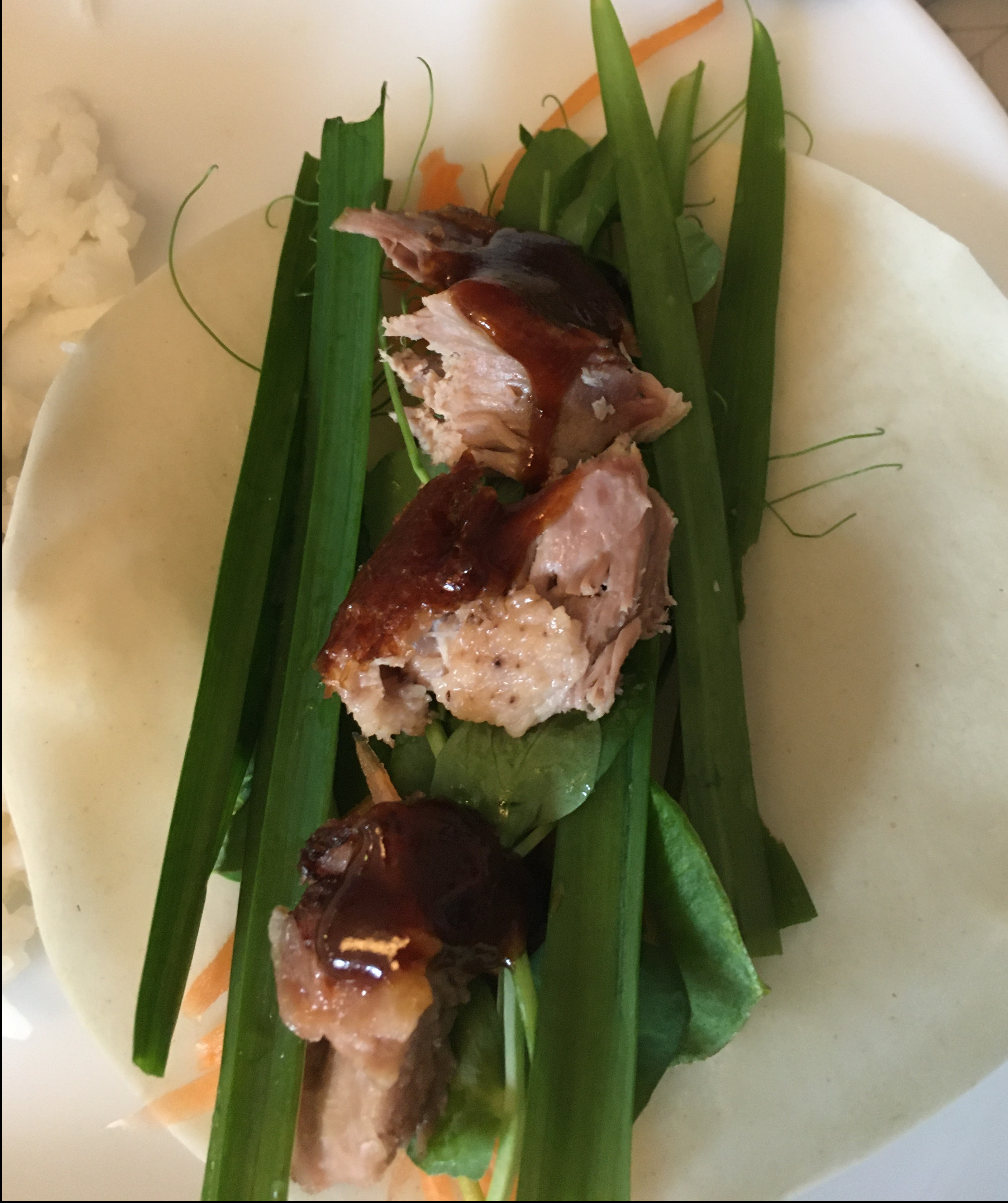
It’s lovely shredded and added into a salad. It makes a great sorrel soup that is popular in countries in the rest of Europe. It is great in crispy duck pancakes (which seems to be my default use of many of the unusual raw greens).

The blanching that removes much of the oxalic acid will also soften the taste. If making soup, make sure you discard the water used for blanching if you want less of a kick.

A little is lovely in oily or creamy recipes, cutting through the richness. So, it works well in salads with rich dressings, cheese or cured ham or in creamy sauces and soups.

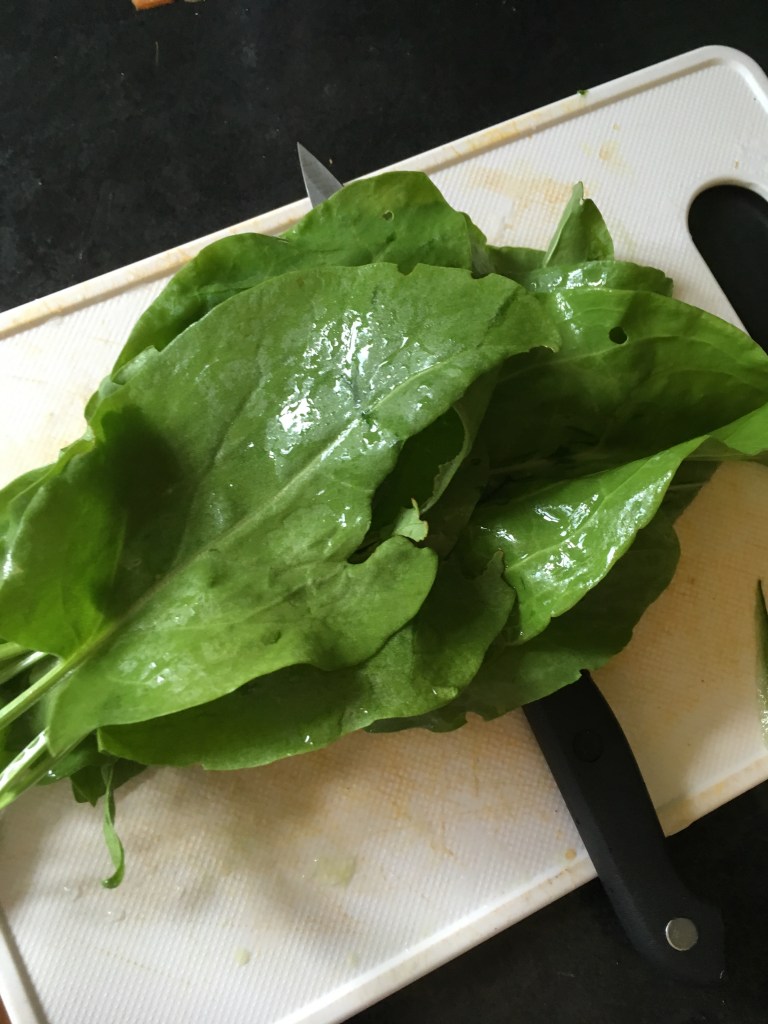
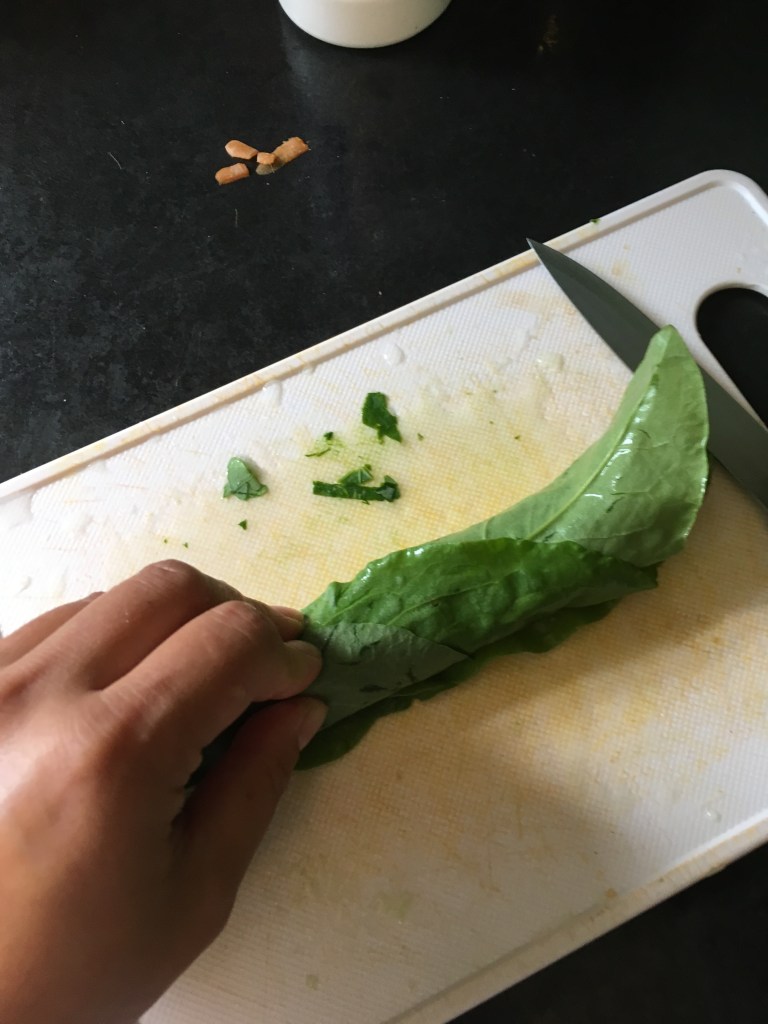
There is an easy way to shred sorrel:

I’ve read that sorrel gets sourer as the leaves get older. With the French sorrel I’ve found that there’s no difference in the taste of any of the leaves. With the red veined sorrel any leaves longer than 2 inches tend to be bitter and the leaves are tough. It’s a bit like chewing paper. The red veined stuff looks great though, so it can be something pretty to mix into your beds for a bit of colour used for just baby leaves.

I may not have sold it that well, but I don’t want you cursing me when you eat it after spending months growing it. It’s a bit like Marmite. Still, I like having it in the garden and sneaking it into dinners. Besides, it’s incredibly difficult to get hold of in the shops and I feel like some sort of gourmet foodie when I say I’ll just pop into the garden (in any month) and make some sorrel soup.

Three cornered leek

Short version: A sweet and mild allium (onion garlic family), that is an invasive, self-seeding, hardy, perennial that grows fine in the shade in pretty much all soil. The leaves, flowers, seed pods and bulbs taste great. There is something to harvest almost all year round and most importantly it works as a cut and come again mildly oniony vegetable over the hungry gap.
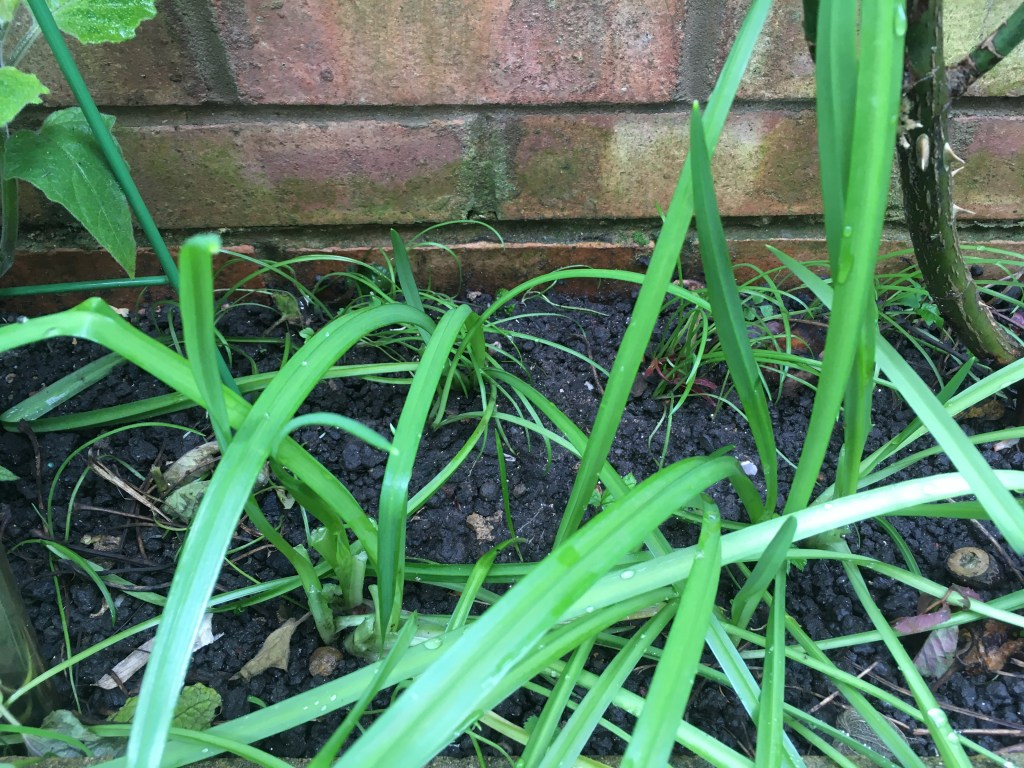
I first saw the three cornered leek (allium triquetrum), also called three cornered garlic, in a foraging book and then came across it in a friend’s garden. Not knowing what it was, she despised the stuff. She said it was garlicky, but she had not identified it so hadn’t been eating it. I could see why she didn’t like it. It had completely invaded her lawn from where it appeared to have begun in a border. After a mowing it would be hard to visually distinguish from the grass. I begged her for some for my garden and she was happy to give me as much as I wanted, as long as I was prepared to dig it up myself. I wasn’t prepared, but I was totally willing. I ended up digging it out with a soup spoon. There may have been some choice words I would not repeat to my 4 year old directed at the particularly deep bulbs.
Now that I had learnt to recognise it, I could see it everywhere. I have seen it creeping out under many many fences in the area. I have seen it in the herb garden of the local park. I have seen it coming out between paving stones. I have seen swathes of it in Green Park.

Having seen first-hand how invasive it can be I dug my new 20 odd bulbs into an enclosed bed in the front garden, under the roses. I didn’t want to keep the roses, but did because the little monkey loves them, they smell lovely and roses are apparently edible (something to explore this year maybe). Three cornered leek does fine with shade and grows very weedily so I figured it would survive regardless of rubbish conditions. Boy was I right. I left them fo r a year to acclimatise and didn’t harvest anything to let them establish. The next spring though there were plenty of new seedlings and the older plants have come back thicker and longer. This is a rampant self seeder.

How to grow

This is a non-native invasive plant listed on Schedule 9 of the Wildlife and Countryside Act so it is an offense to introduce it anywhere in the wild. Introducing it into your own garden makes it your own problem. You would think that, given that it is invasive, you would be doing someone somewhere a favour if you were to weed it out of your local park. However, it is not legal to dig up the roots/bulbs of any plant without the landowner’s permission. Besides there can sometimes be a fine line between foraging and stealing. Not to worry if you don’t know of anyone who has plants or who to ask permission from if you find it in a park, there are seeds available on the internet.

Based on where I’ve seen them growing, they can be sown or planted pretty much in any soil, with any light conditions. Most importantly, in a small garden, they seem to do well in shade. They can be used to fill up the shady areas of your garden that are less hospitable to edibles.

Once you have them though, apparently it is quite hard to get rid of them so make sure you put them somewhere where they can be contained.

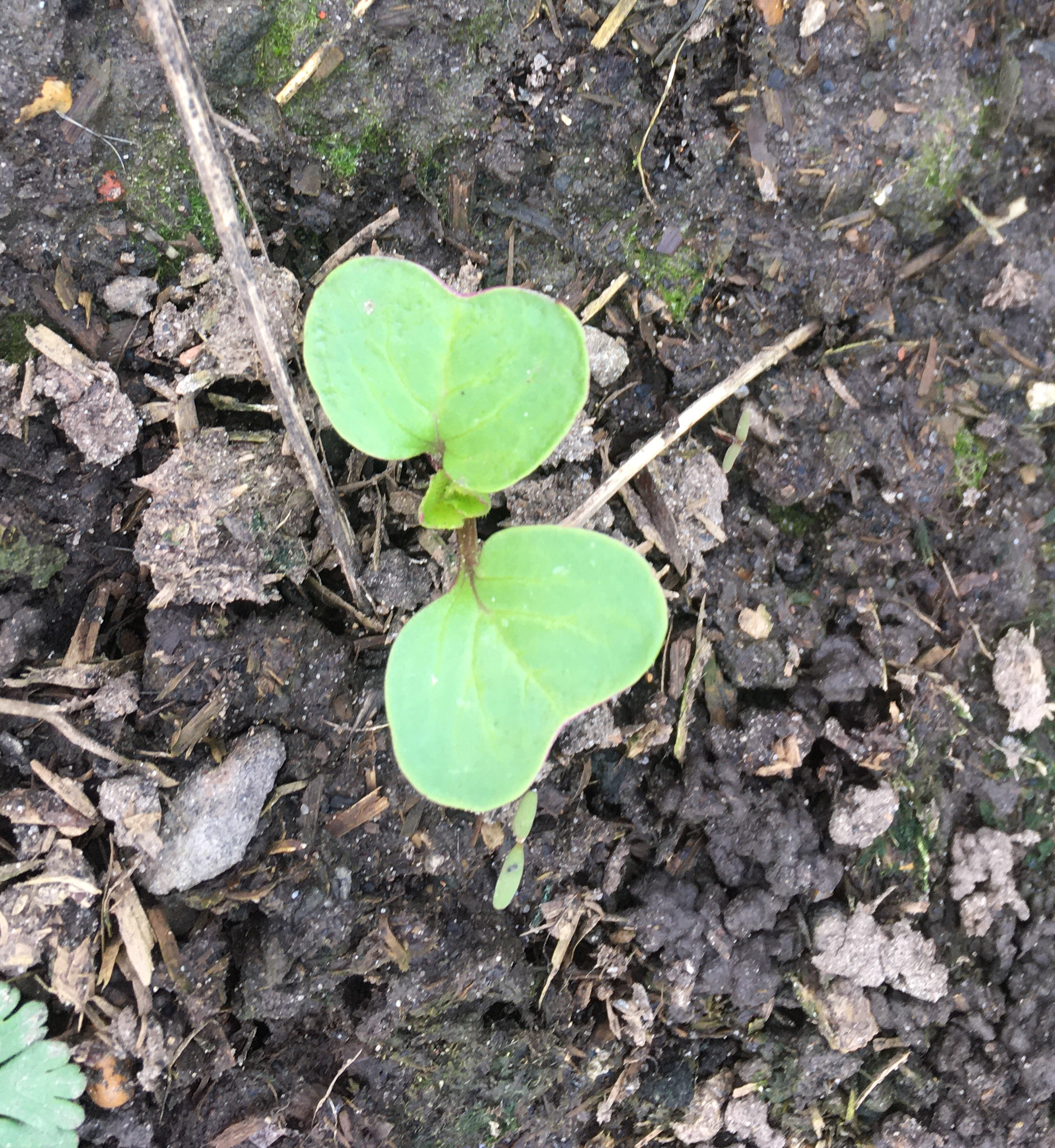
If you have bulbs plant them deep as they seem to like being a good inch or two down. Seeds can be sown in early autumn as they would be naturally. The seedlings that emerge are tiny so make sure that you’ve labelled them well as they won’t look like anything edible till the next year.

How to harvest

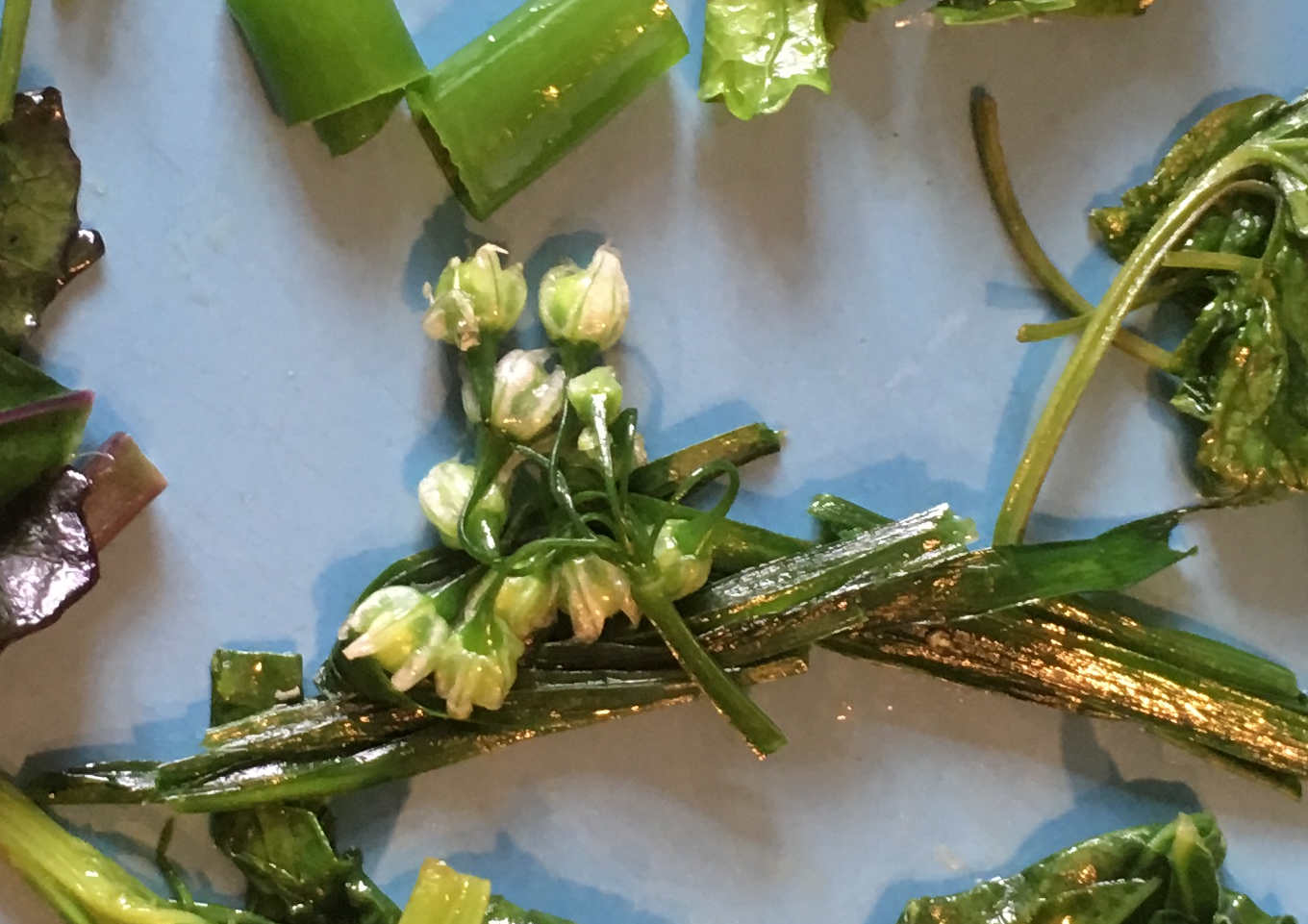
Harvesting can begin from when the plant is a year old. Existing bubs start poking their leaves out of the ground around October. This is also when the seedlings start to appear. The over a foot long leaves are available for harvesting from winter to summer. This makes it a good one for covering the hungry gap. The flowers can be eaten when they appear from April onwards. The flowers give way to green seed pods the size of petite pois in May. When the plant begins to die back towards the end of summer the bulbs can also be eaten but they are small and fiddly, and I rarely bother as it means less plants to harvest from the next year.

How they taste

The leaves have a sweet, mild garlicy/oniony flavour. They are great raw or fried lightly. If you add them into any dishes, add them right at the end, otherwise you lose a lot of the flavour. The flowers are lovely and sweet in salads. They too carry the allium taste. The young green seed pods keep a lovely crunch when lightly cooked and are very sweet and almost fruity. It sounds terrible, but I thought of lychees. Yes… and oniony lychee sounds foul… if you’re expecting lychee and get onion. However, if you’re just expecting onion and you get a fresh fruity added flavour then it is lovely. Basically, the seed pod is the fruit of the plant, like a tomato or a berry. Sound less icky? The bulbs have a sweet mild garlic flavour.

Warnings

I have read that eating too much can cause digestive distress. You would have to eat quite a bit. The same warning applies to all alliums anyway. In our 20s the husband (then boyfriend) and I ate a bulb of elephant garlic. It was huge – the name gives it away. It was not one of our better ideas. Also, of course if you have any sensitivities or allergies to alliums, this would not be a plant for you anyway.

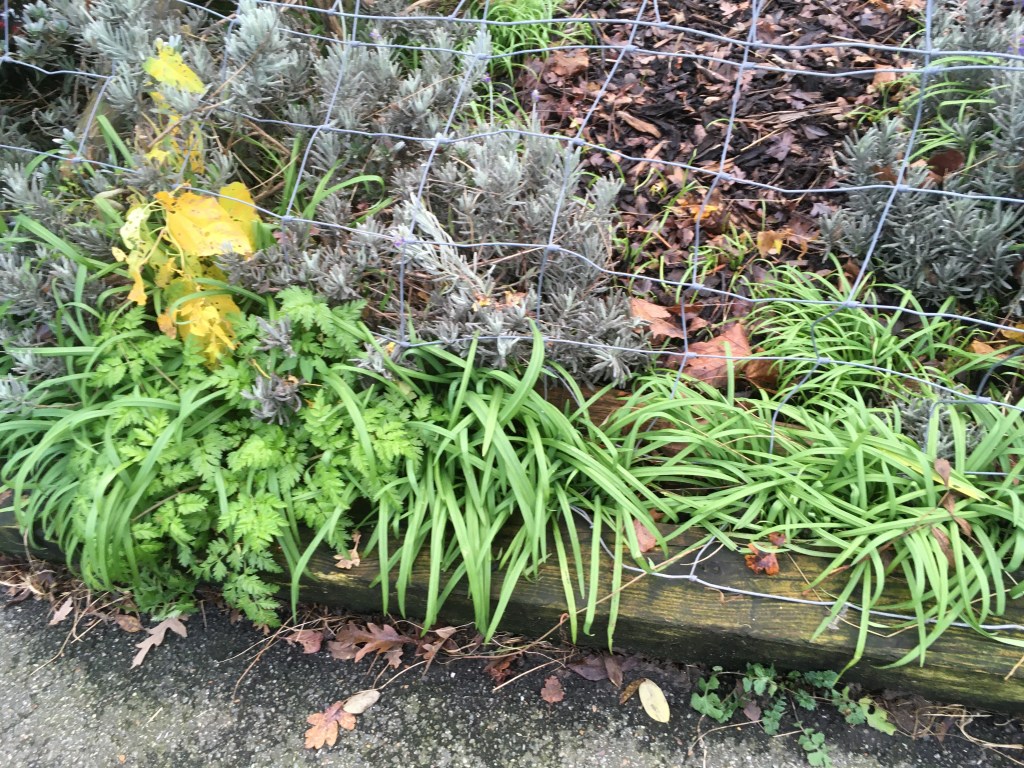
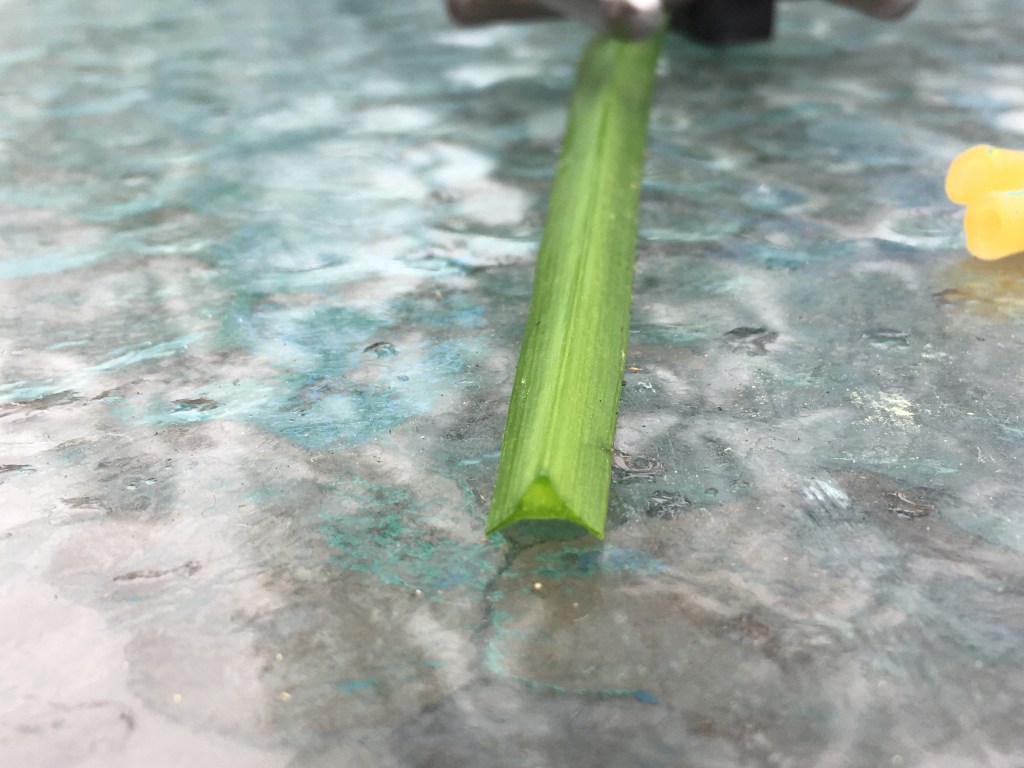
A more important warning is not to grow these in areas where you have bluebells or other similar looking spring bulbs. They are around at the same time, look very similar but bluebell leaves are poisonous. Of course, the smell is a good indicator, but also three cornered leeks are so named due to the central rib of the leaf protruding out, giving the leaf a triangular cross section.

Pea shoots

Short version:

Pea shoots are an easy to grow tasty and nutritious quick crop that doesn’t take up much space.  You can buy seeds especially for growing pea shoots or grow them from dried peas bought as groceries. You can also eat the shoots of your pea plants that you grow for pods or peas, but you can reduce the end harvest if you over do it. You can grow pea shoots indoors for a quick crop (you can begin frugal tasting around 3 weeks and proper harvesting in 4 weeks). Outdoors, in the spring, growth will be slower.

Pea shoots can be grown indoors at any time of year. They grow quickly and are tasty to boot.

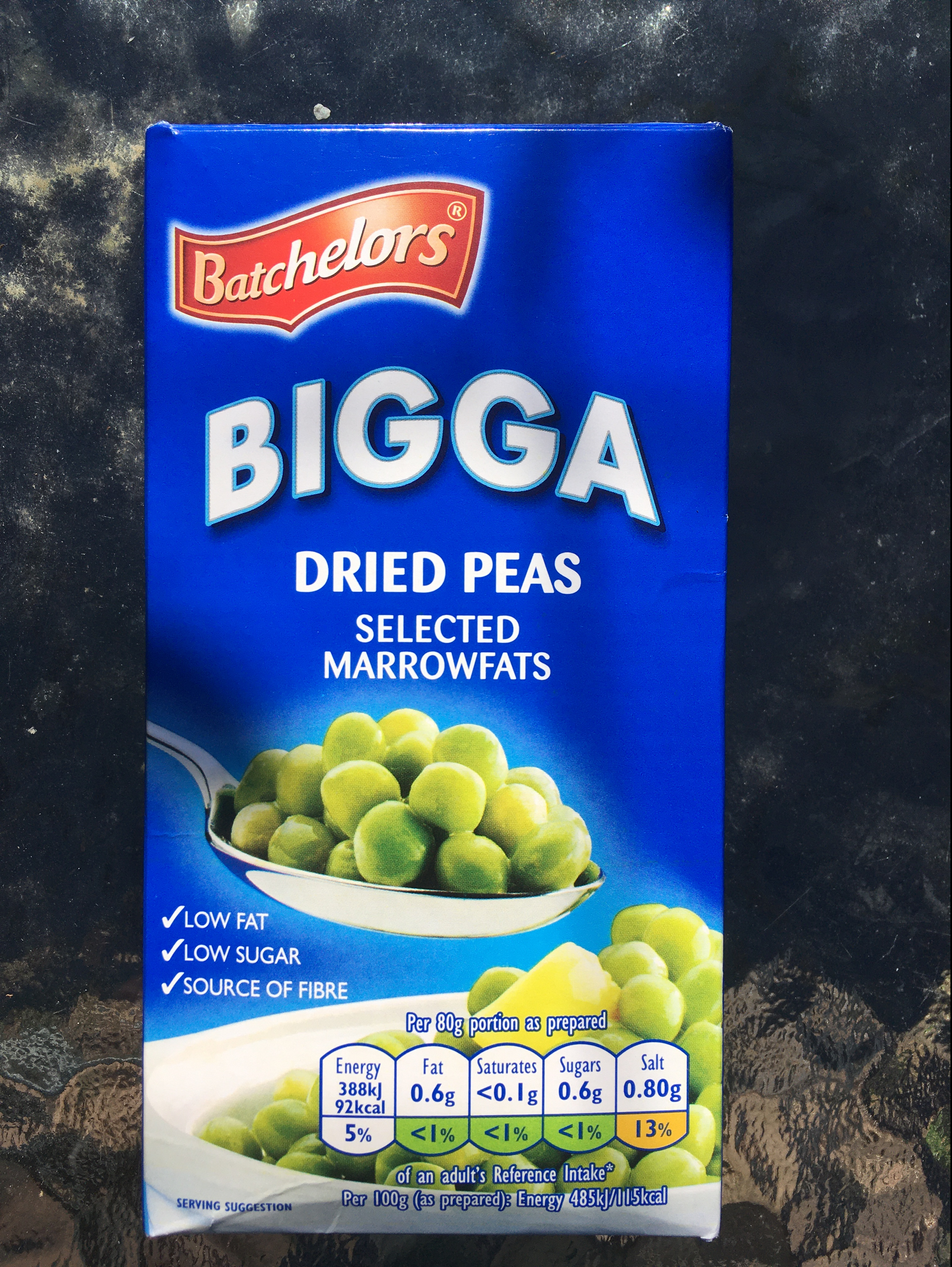
You can buy proper pea shoots seeds, but dried peas sold in grocery stores are cheaper and may be more easily available in the current climes.

How to grow

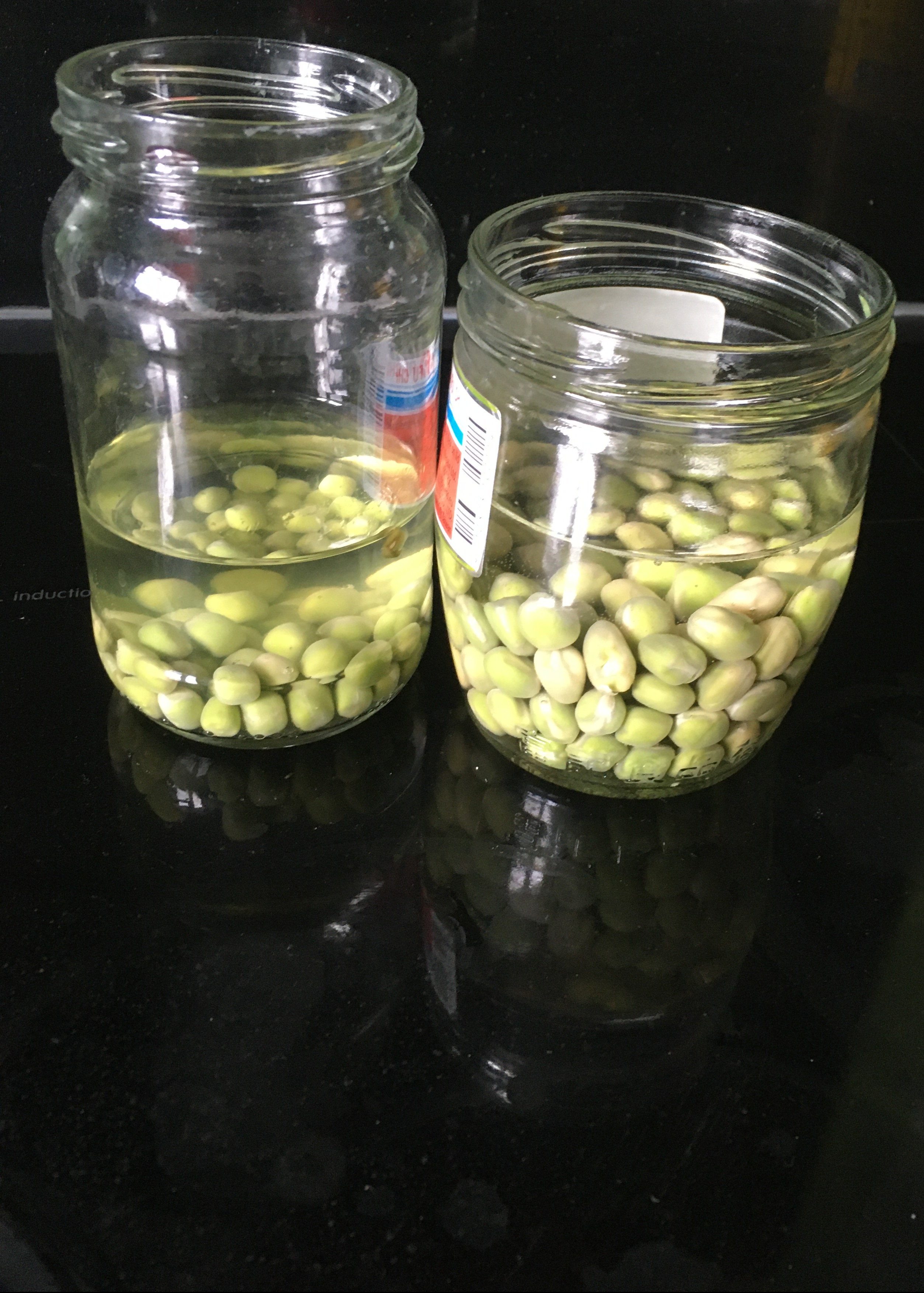
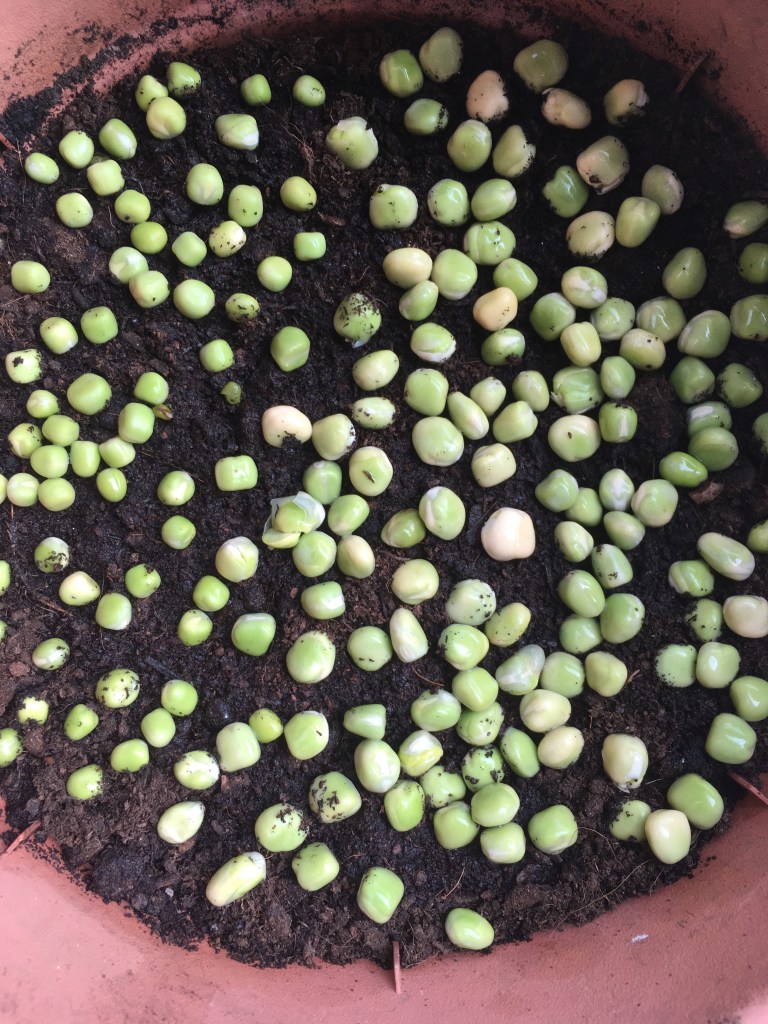
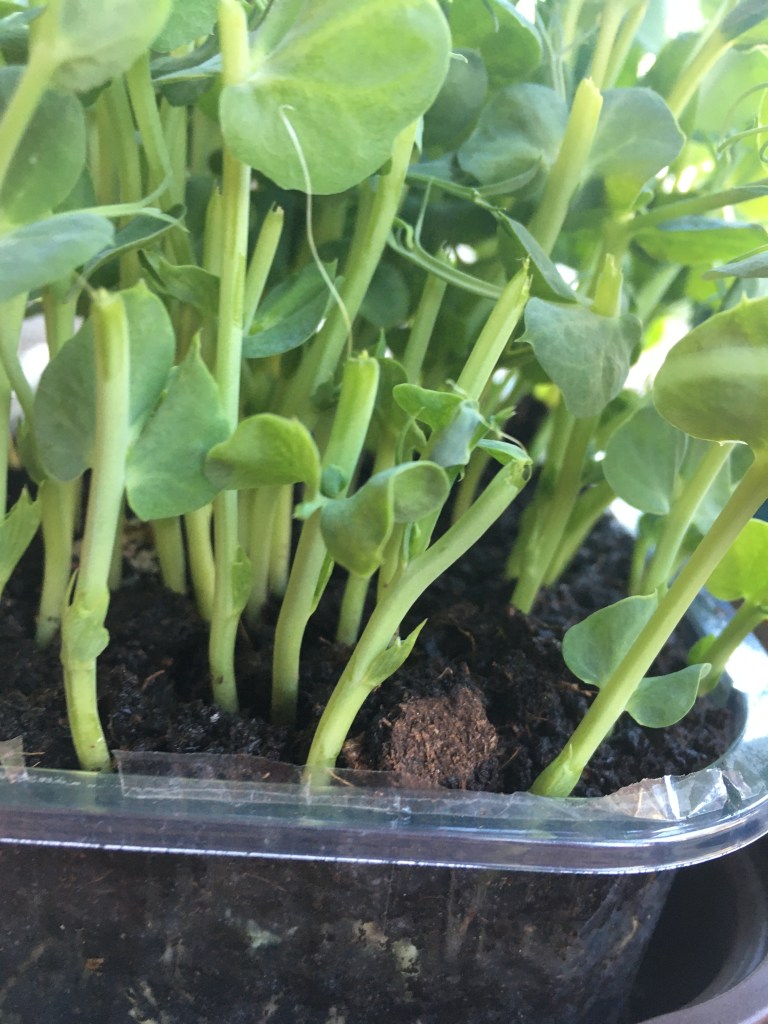
Soak overnight in water. Tap water is fine. Then sprinkle onto the surface of well watered compost and cover with a cm of compost. They can be sown densely. If I were to sow pea seeds for growing pods, then I would space them more like 4 to 6cm apart. They don’t need this much space when just growing the shoots. In fact, it helps a little as I won’t be providing any support for these as they grow. Being densely packed they support each other as they grow.

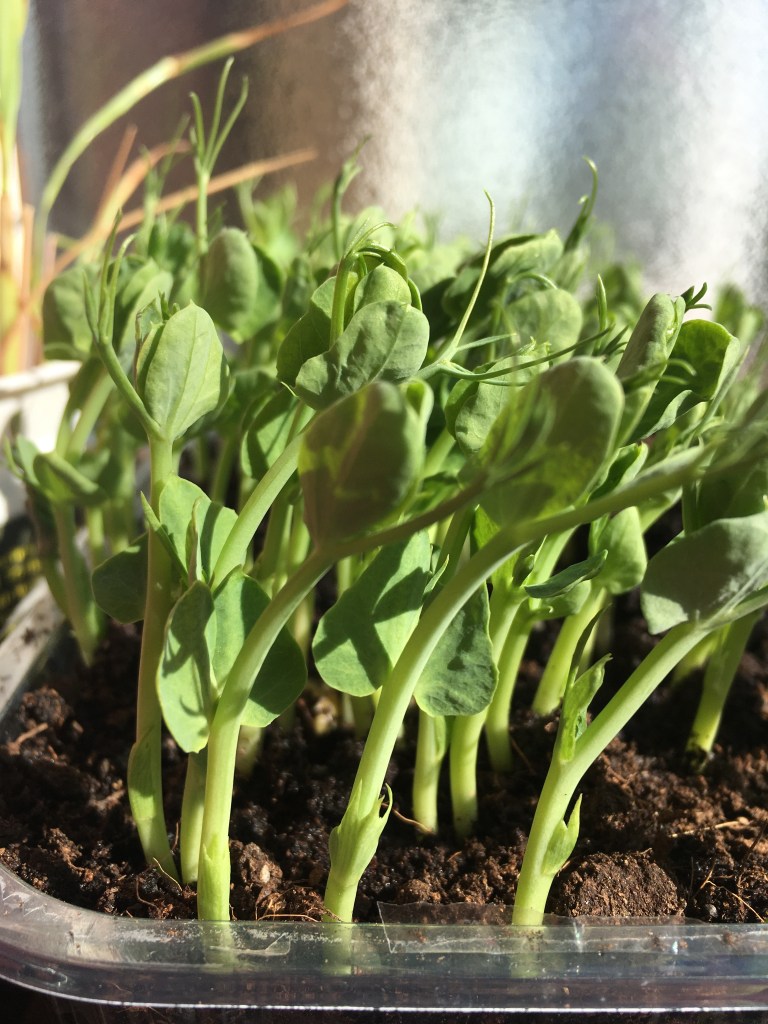
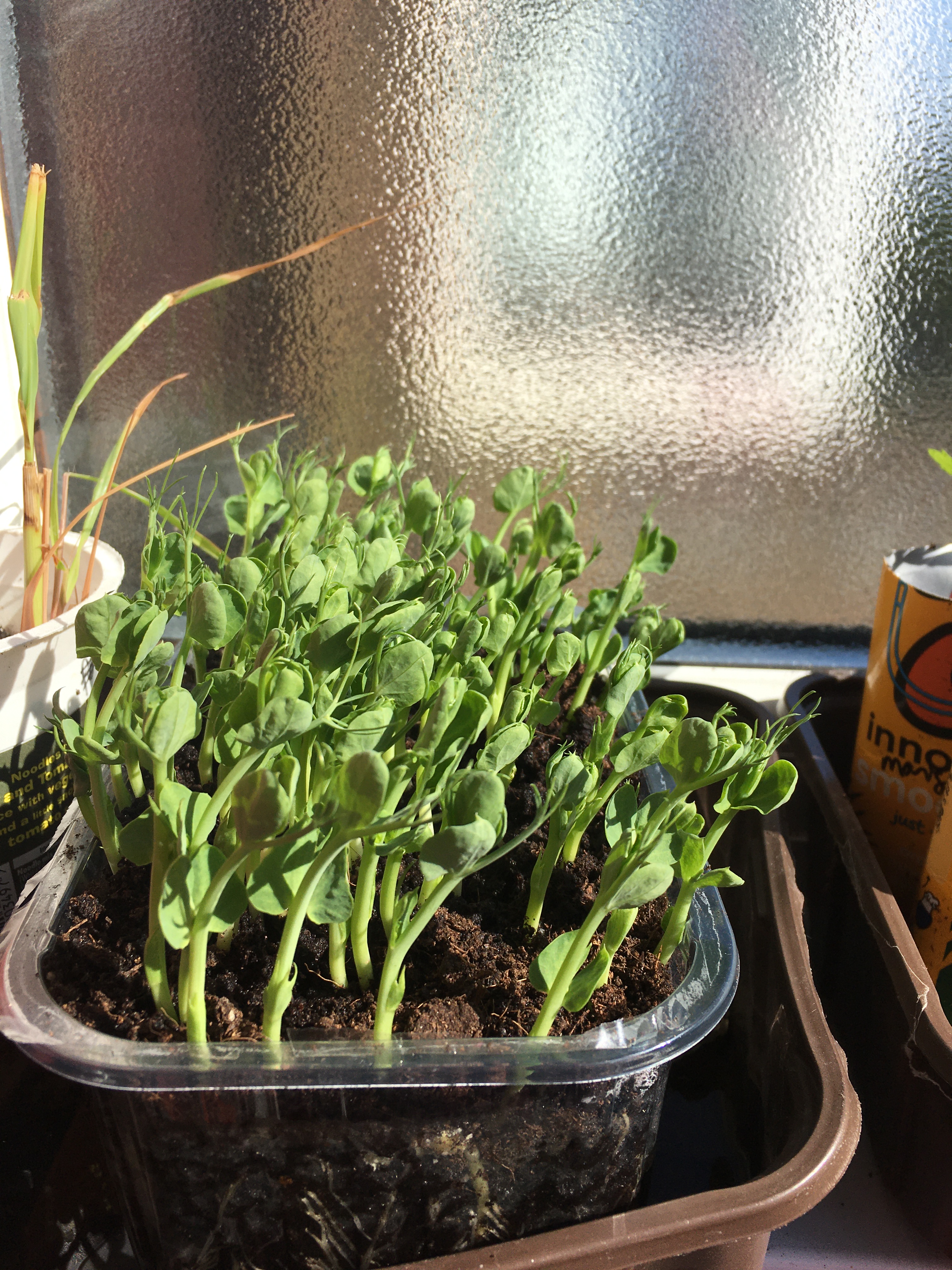
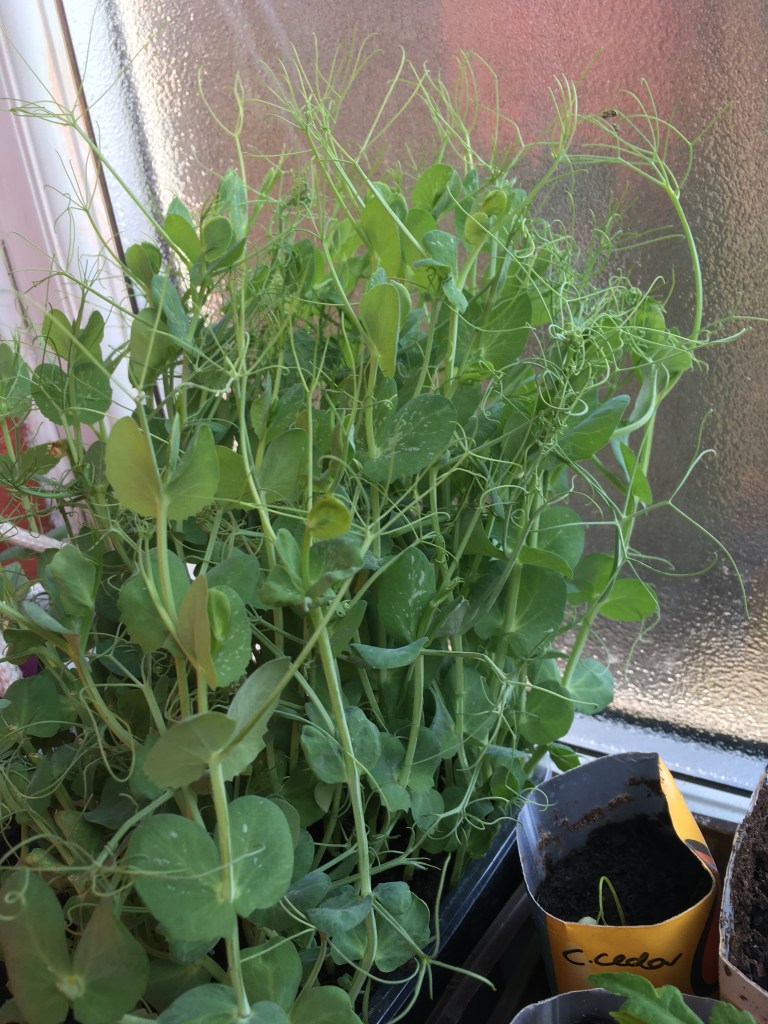
You can grow them in old fruit boxes like this grape tray in photos below. It already has holes in the base for drainage. It’s a good way to reuse plastic waste. It can still be recycled when you’re done growing. A mushroom tray that’s a size bigger can be used as a drip tray. They do well in pots.

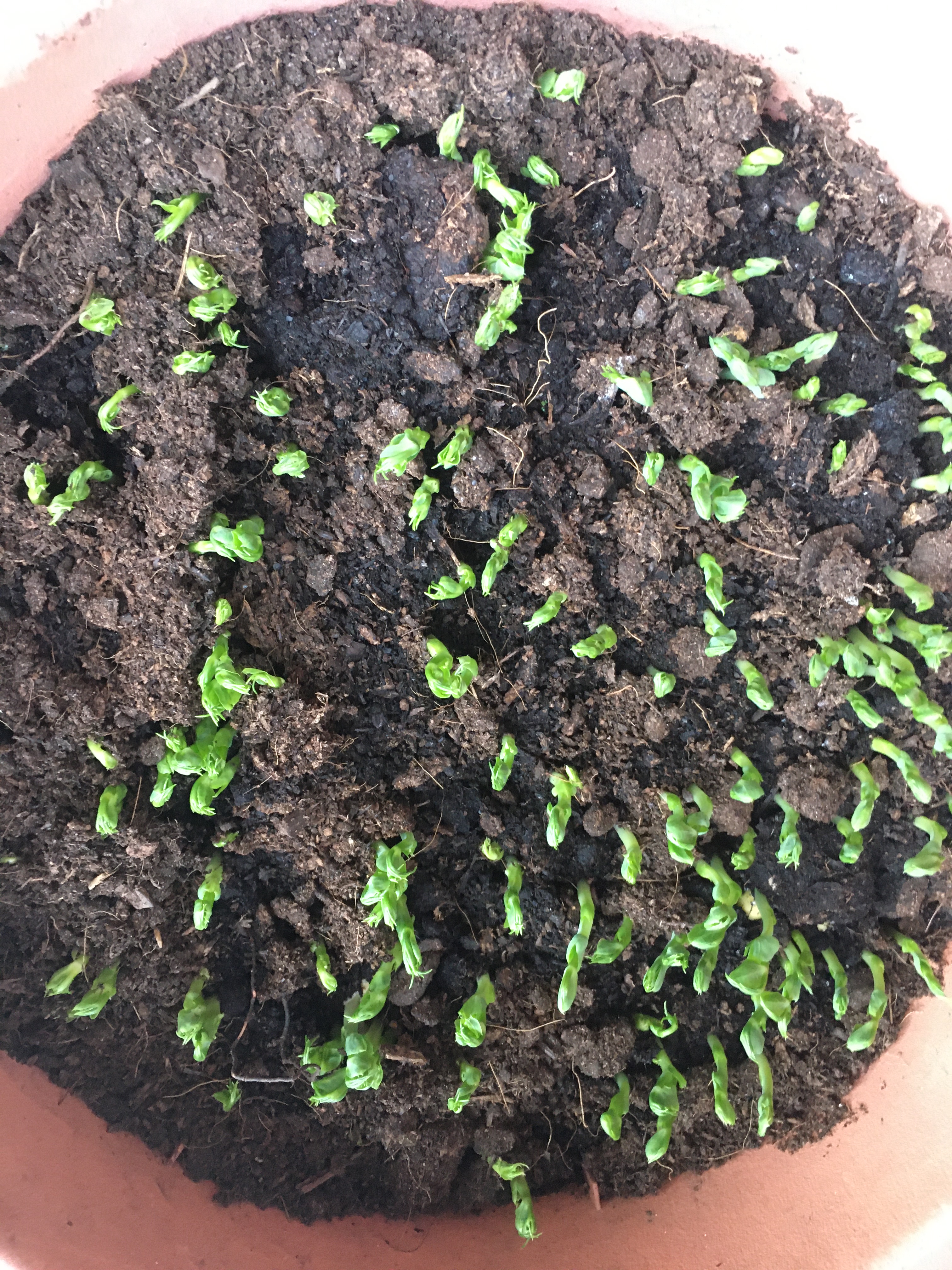
When grown indoors they take about a week to start poking through the surface when kept in the warm indoors. I grew half special pea shoot seeds and half marrowfat peas in this pot to compare. As you can see, there doesn’t appear to be any difference in how well they have sprouted.

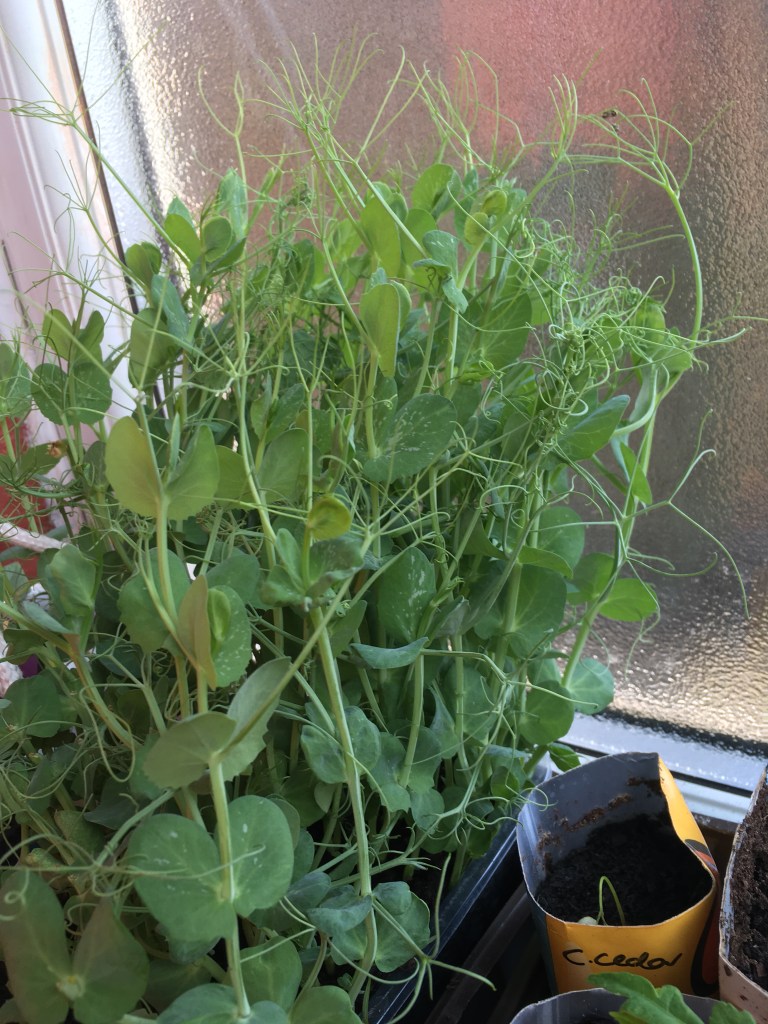
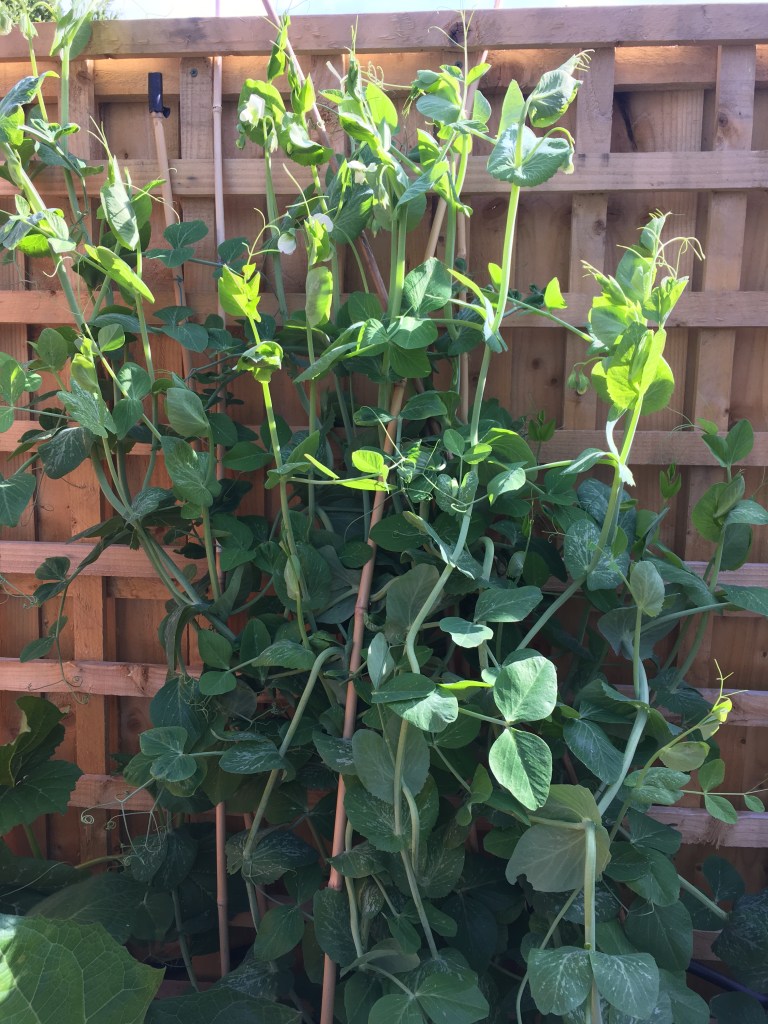
If they don’t get enough light, they will grow spindly with little leaf production. If they are underwatered, they will be a bit tougher. As you get later into summer the shoots will get tougher and less tasty. If growing outside they may have succumbed to insects, or more likely, some powdery mildew which happens when there is not enough air circulation, which will happen if they are planted densely.

How to harvest

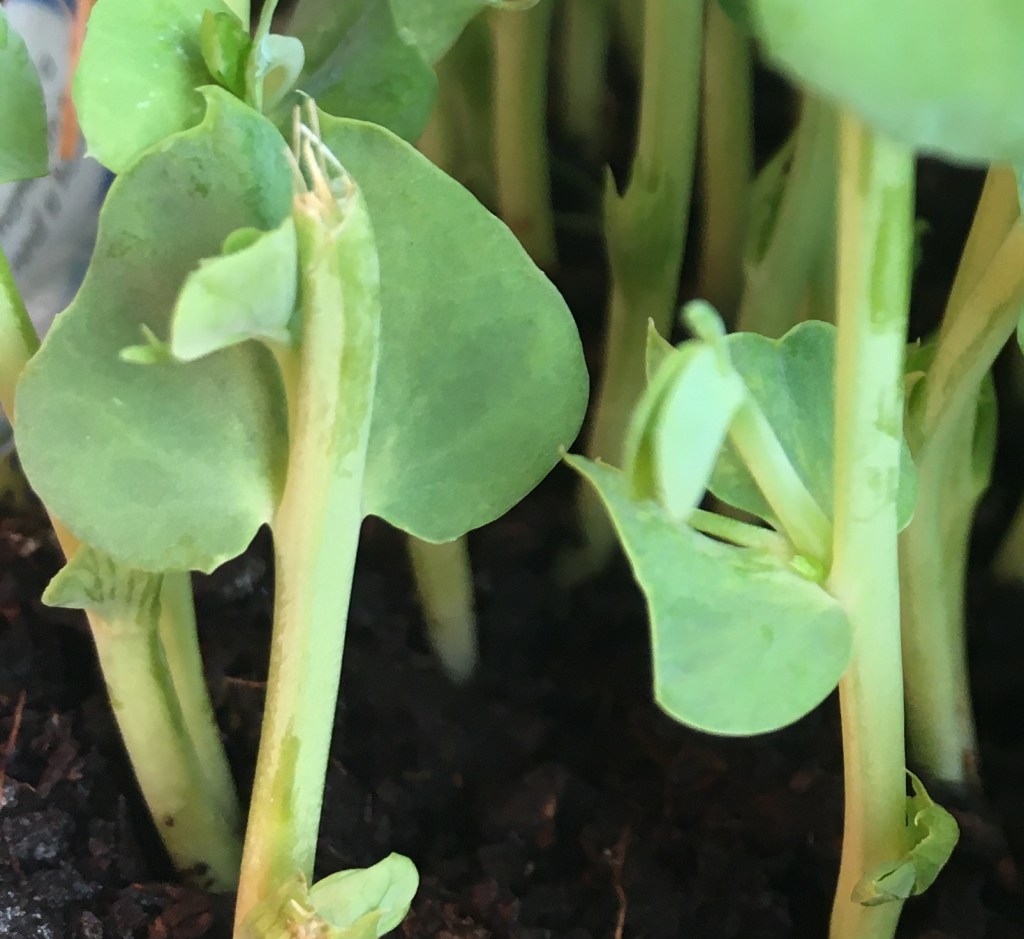
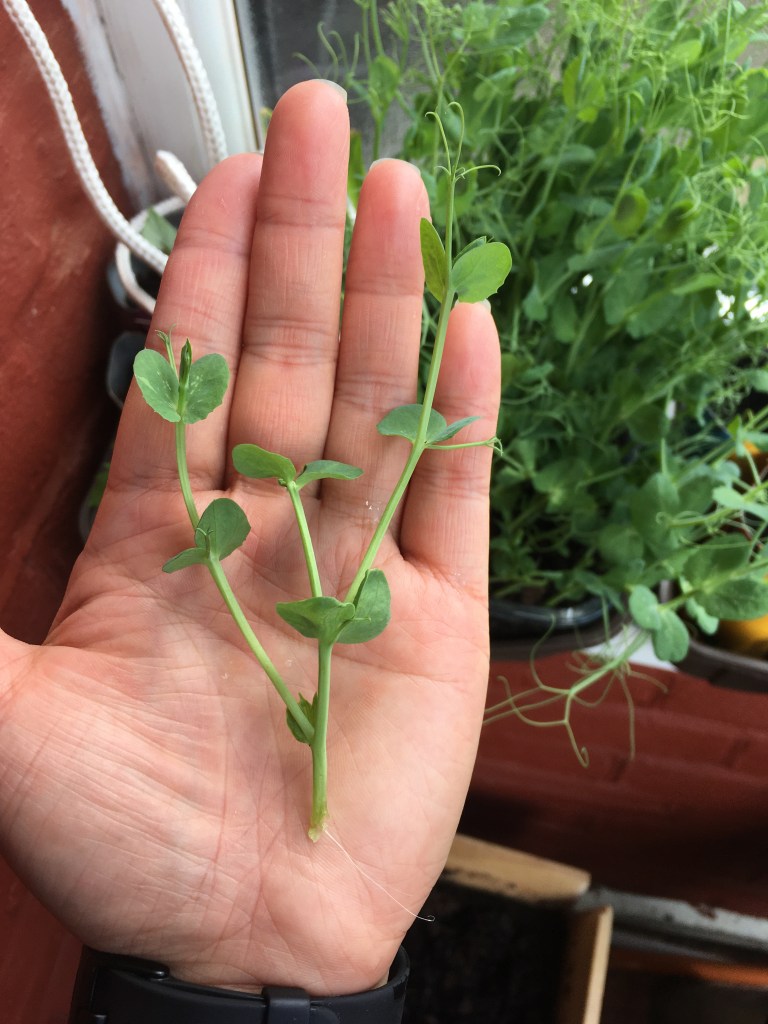
You can have a taste of the pea shoots when they’re about 20 cms tall, but if you can, wait till they’re about 30cm tall. When grown inside this will be in around 4 weeks. You take off the top half of the shoot, leaving some leaves. The shoots will then be able to branch from the leaf buds left behind. You’ll then be able to harvest again when these side shoots have grown. You can treat this as a cut and come again plant.

How to eat

They taste a bit like peas. Maybe a cross between peas and lettuce. They should be slightly sweet and succulent and can be eaten raw, fried or steamed.

What to do after

You can leave the peas to grow into plants and maybe try and get some pods out of it, but as the poor things have just spent a couple of months putting all its resources into growing shoots that keep disappearing and the pea season is coming to an end you probably won’t get much. Being planted densely doesn’t help. Also, the pea seeds that tend to be used for pea shoots are specially produced to grow into pea shoots. The pods may not be that tasty. The marrowfat pea seeds that I have used would probably grow into the same marrowfat peas, as peas tend to self-pollinate. It can’t be guaranteed though. The pea flowers may have cross pollinated with a different variety of pea if there was one nearby as it grew. I don’t like marrowfat peas anyway. I like growing sugar snaps and mangetout, where you eat the whole pod.

Anyway… that does mean that any pea plants you grow for producing pods, you can also steal a few pea shoots for eating. I do that a little sometimes, but if I grow a pea plant for the pods, I prefer to have it direct its energy into grow lots of lovely, wonderful, flavourful, sweet, tasty pods.

After you’re satisfied that you won’t get anything else out of the plant for food, if it hasn’t become diseased, compost what’s left, roots and all. Peas are legumes which have nitrogen fixing bacteria in nodes in their roots. When composted they will provide plenty of nitrogen rich material for the next thing.

Beansprouts

Short version:

You can grow beansprouts from the dried mung beans that you buy for cooking. Growing just requires soaking overnight, draining in the morning and then rinsing and draining twice a day. Sprouts are ready to eat within a week.

I have never cooked using mung beans myself, though I have eaten plenty of things containing mung beans cooked by others, especially by my mum. In fact, the only times I’ve only ever bought mung beans were to grow beansprouts. Beansprouts are easily grown at home in a jar from the dried mung beans available in any large supermarket.

How to grow

Find a clean a jar (sterilising using a hot wash in the dishwasher is fine or washing in very hot soapy water will do). Yay for reusing and then recycling afterwards anyway. Please make sure your hands are clean when dealing with the sprouts. Add about a centimetre of dried mung beans, cover with water and soak overnight. The next morning drain.

Then every morning and evening rinse the beans with water, always pouring off as much excess as possible. The most easy way of doing this is to cover the top of the jar with a bit of old tights (clean ones of course) or cheese cloth, secured with an elastic band. All you have to do then is add water through the cloth and then drain through the cloth.

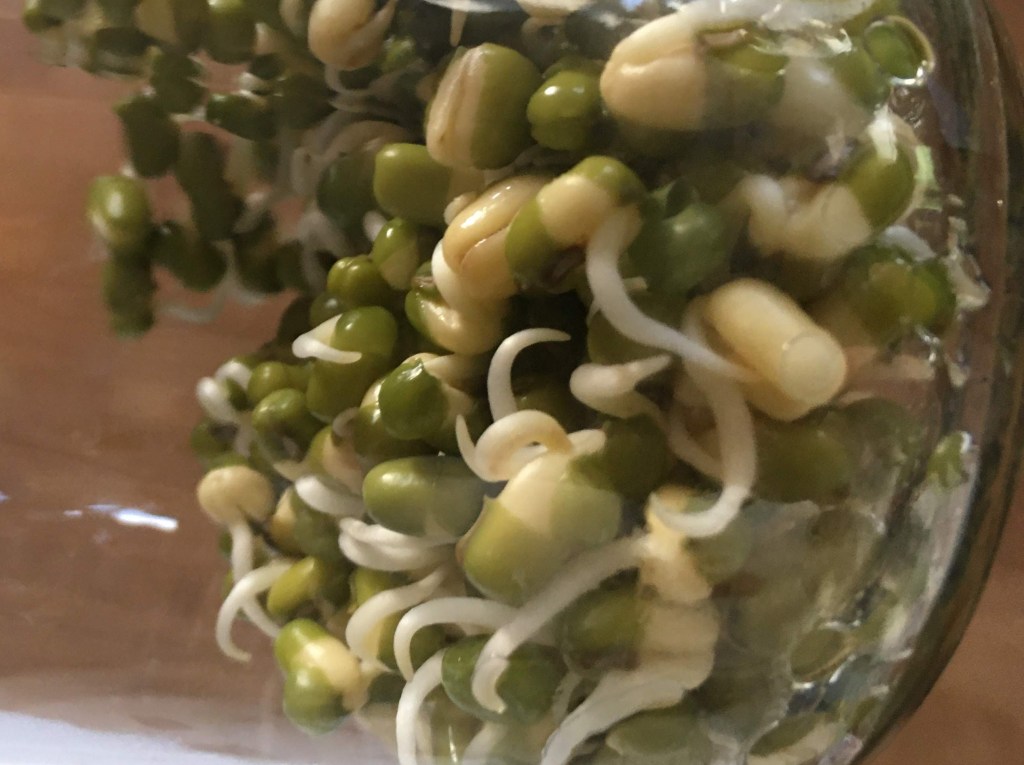
Really easy. Takes about half a minute each time. BUT… the sprouts you grow will be all curly and wibbly. This is because every time you tip the jar to drain you will change the orientation of the beans. The direction it is growing its roots in will constantly be changing.

There is another way to grow beansprouts that take a bit more prep. The daily rinsing and draining are as quick and easy though.

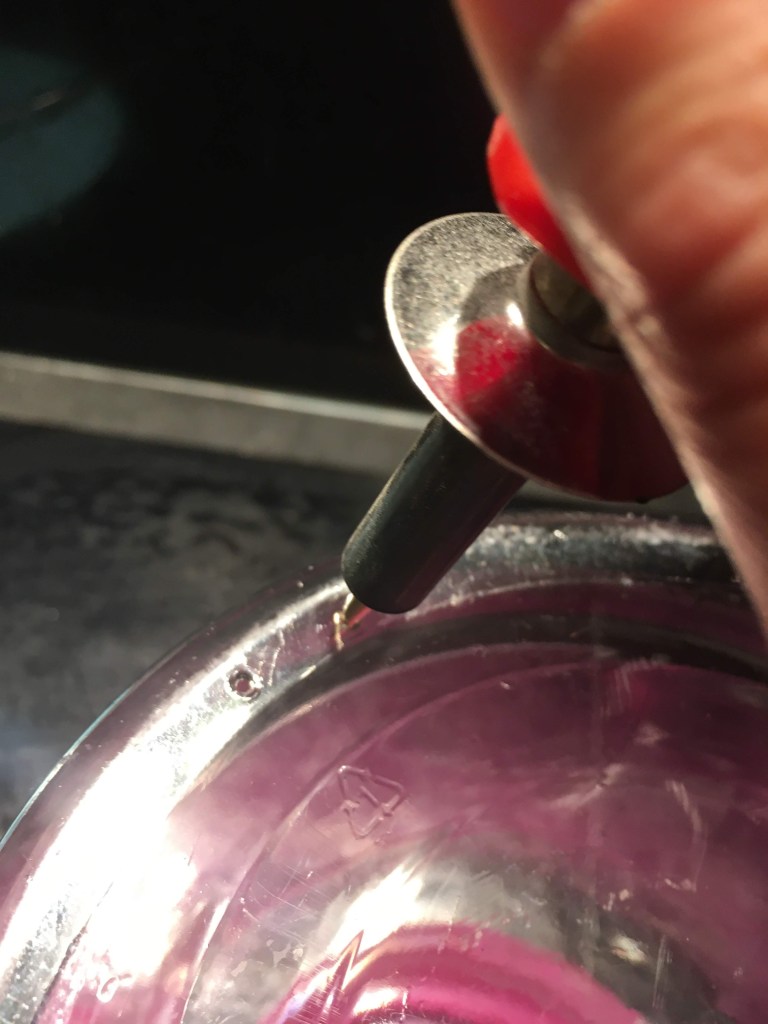
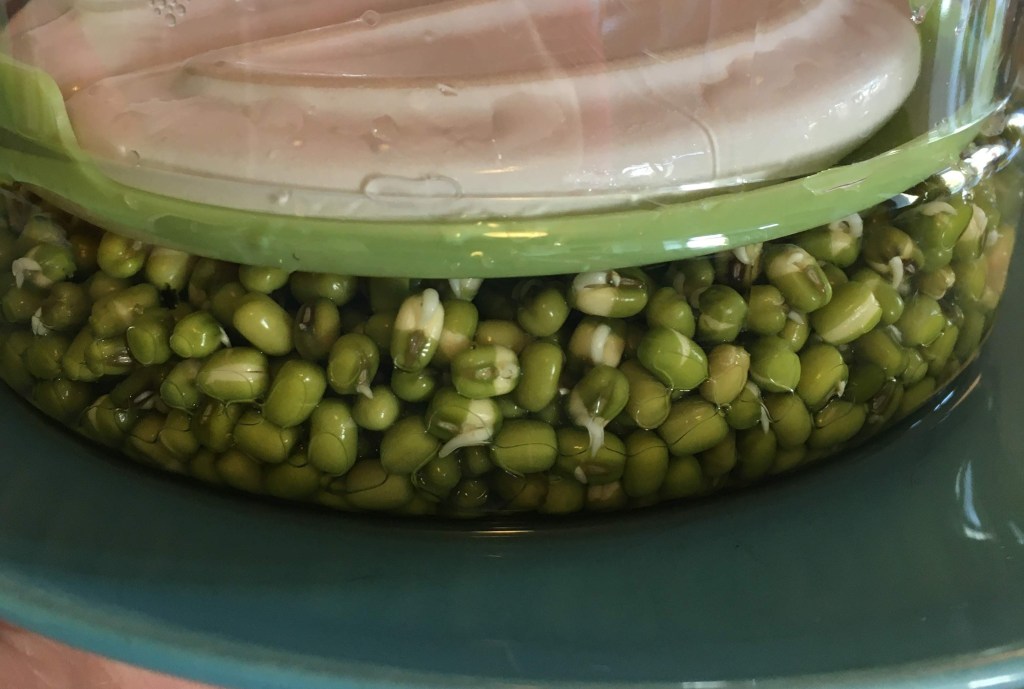
You need a plastic container. Poke or drill 5 – 20 holes in the base of the container, depending on its size and the size of your holes. You can use a bradawl (make sure it’s clean though – I wouldn’t put our old filthy bradawl anywhere near this project) or a heated pin. I have a woodburning tool that is really speedy. You also need something that can sit on top of the beans that is around the same size and shape of the container and a weight of some sort. I found this green flexible Tupperware lid and a weight from my fermenting kit. You will also need a tray or plate to collect any remaining water draining through the bottom.

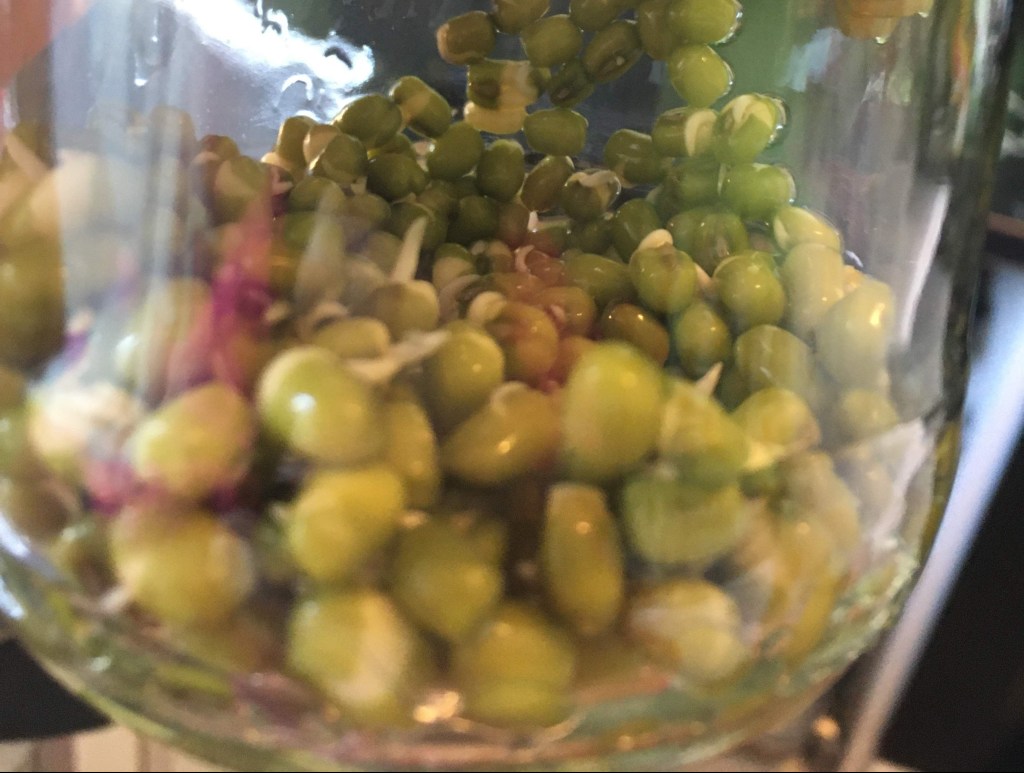
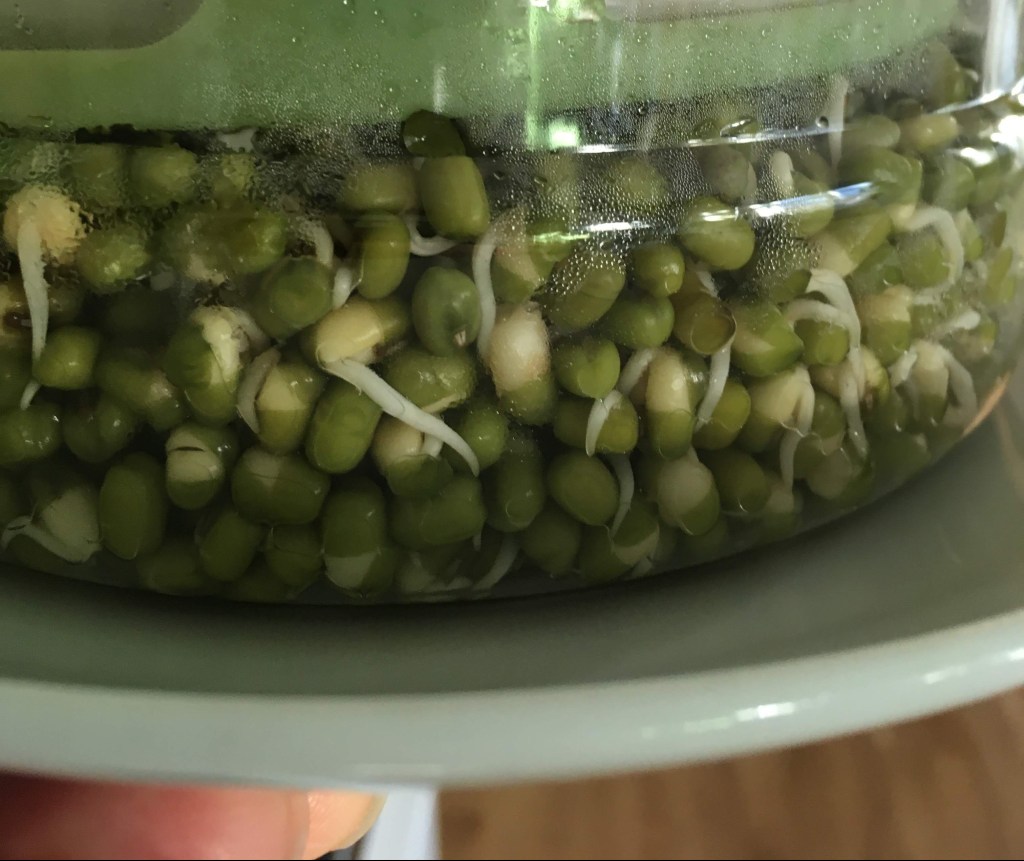
You do this so that you keep the beans in place when they get rinsed. The roots will always (for most of them) be pointing down. The holes at the bottom mean that you never need to tip the container to drain the beans. The weight on top helps hold them in place, but it also gives something for the growing beans to push against. This makes the root thicker. Using this method, you will get straighter thicker beansprouts.

However, it is still hard to get beansprouts that look as lovely as the ones you get in the supermarket. Still, they are fresh, nutritious, low in calories, high in fibre and protein and you can still get them without going to the shop. You just need to get hold of mung beans first, but they keep for ages if stored well.   

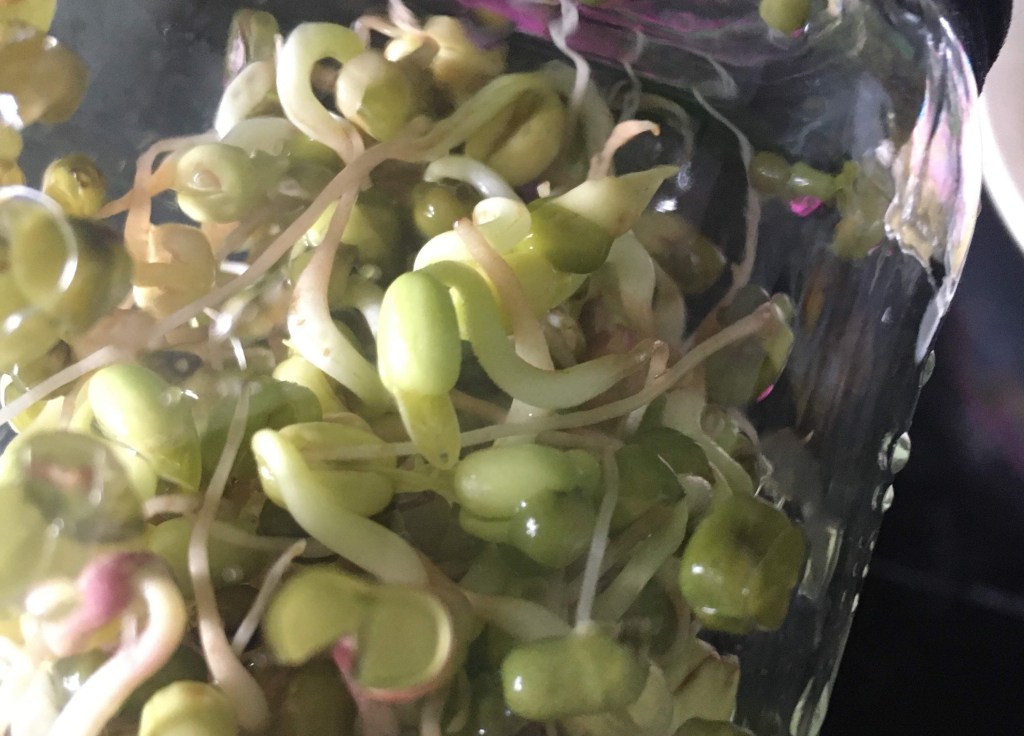
Within a week you will have beansprouts. If you’re not ready to eat them after a week, you should give them a good wash and put them in the fridge as the tips will start to go brown.

How to eat

You can literally wash them and stir fry them, add them to noodles or soups. My favourite is to make fresh pickles. You blanch them till thoroughly cooked and add a dressing of soy sauce, sesame oil and vinegar (cider or balsamic is nice). You can also add a tiny bit of honey (or pinch of brown sugar) to sweeten.

At this stage they still had great texture in what was left of the bean. That part was nutty and sweet. The white root bit tasted fresh and juicy and had that crispness that you get in apples. The root doesn’t have a strong flavour. It was a bit lettuce like. The overall beansprout was a lovely addition to a lunch and the four year old even ate a few of the plain blanched ones. This particular batch was used in 3 meals.

WARNING!

I haven’t said chuck them in a salad. Unfortunately, the lovely warm environment that suits the growing of sprouts also suits unwelcome listeria, E.coli and salmonella. For safety it is best that you cook beansprouts rather than eat them raw in salads. This is the NHS advice here.

This applies to shop bought sprouts as well as home grown ones, unless they are labelled ready to eat. Some producers can take steps to ensure no harmful bacteria exists. I don’t know what those are, maybe they are irradiated or maybe the growing of the actual mung beans themselves is done under more sterile conditions. I’m afraid it isn’t a matter of technique. It’s to do with the bacteria that may exist on the beans. You have probably kept everything clean and looked after it well, but all it takes is for there to be one harmful bacterium on one of the dried mung beans. You can’t treat them to kill the bacteria as you will then kill the seed. The warm, damp environment is suitable for the pathogens. Luckily, cooking will kill them so feel free to sprout, COOK and eat!

Other sprouts

You can also sprout a plethora of other seeds. I’ve found this fun looking website that sells seeds specifically for sprouting:

https://www.wholesale.molesseeds.co.uk/sprouting_seeds/

I’m afraid I have never used the company so I don’t know personally if they are any good. I have eaten and like soya bean sprouts and alfalfa but I have only ever sprouted mung beans and I have the mung beans in my house at this time so I will continue to do so whilst stuck at home. If I get around to buying and sprouting any of the others, I shall let you know. Of if you have grown any that you recommend, please feel free to share in the comments.

Sweet potato leaves

Short version:

Not like the poisonous leaves of the potato, sweet potatoes can be grown for their sweet and juicy, spinach like, leaves and shoots. They can be grown from an existing shop bought organic sweet potato. These perennials like sunny, but not dry conditions and won’t survive a typical UK winter outside. Fertile soil will give you lots of leafy growth.

Taste

Despite their similarity in producing tubers that can be eaten and used for propagation, sweet potatoes (Latin name Ipomoea batatas) are very different to our normal potatoes (Latin name Solanum tuberosum). Potato plants, of the nightshade (or Solanaceae) family, have poisonous leaves. Even a tuber that gone green from exposure to sunlight can be poisonous. The leaves of the sweet potato, however, are edible, tasty and useful as a cut and come again leafy green. Blanched or lightly fried they are sweet and juicy and a little spinach like. Raw they can be a little bitter. Sweet potatoes themselves can be used like potatoes and are, of course, sweeter. I think they taste like a cross between a pumpkin and a potato with the texture of potatoes.

How to start growing

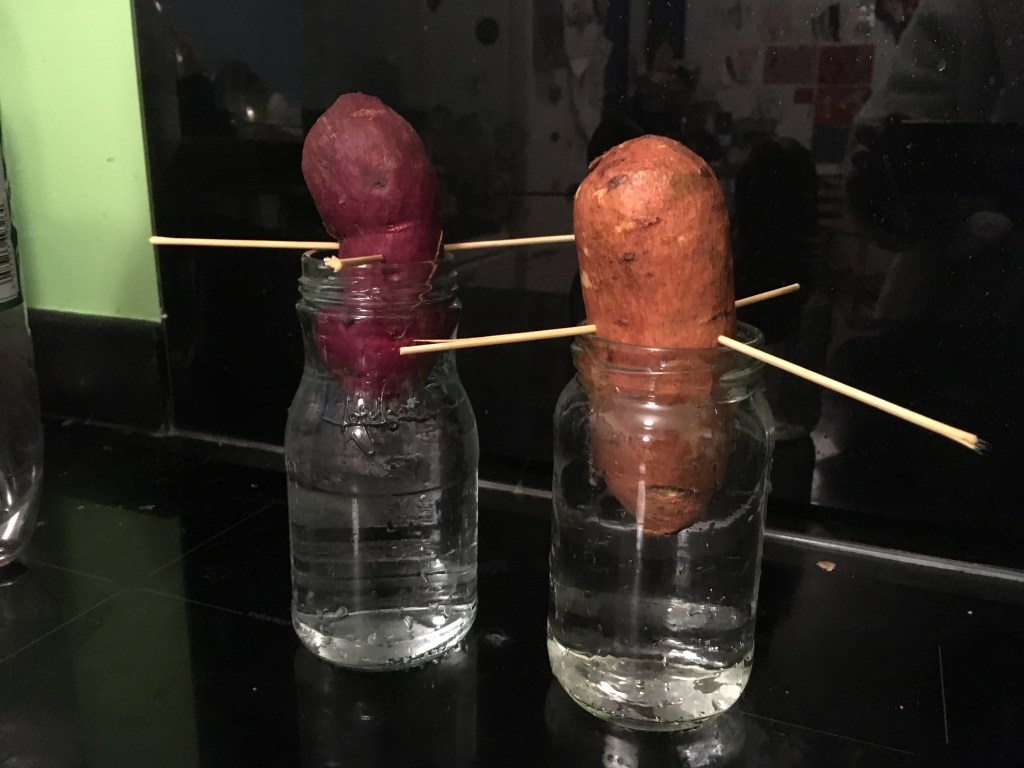
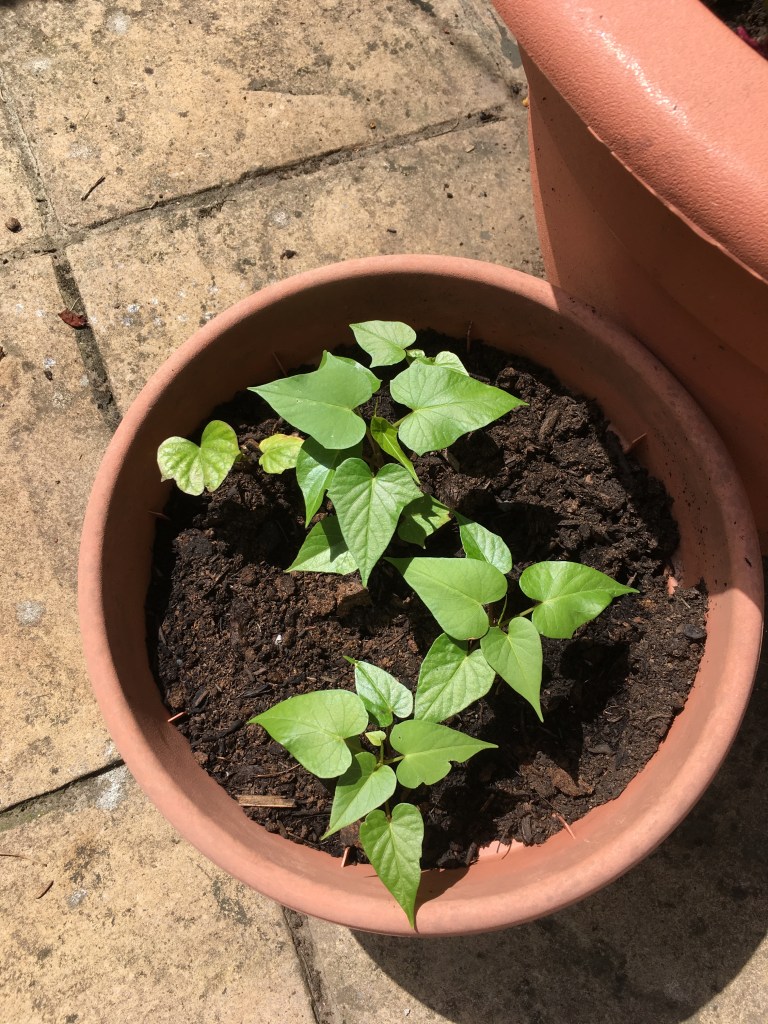
If you buy sweet potato plants to grow the tubers, you buy them as sweet potato ‘slips’. These are small shoots removed from a growing tuber. They’re not particularly cheap, but you are more likely to get varieties that will grow well in your climate. You can grow plenty of your own sweet potato slips from a shop bought sweet potato. The only proviso is that you need to buy an organic potato. Sweet potatoes are often treated to stop them from sprouting. Another issue you may face is that the variety you grow slips from may be from growing conditions that you do not have yourself. Because I was never expecting to be able to grow sweet potatoes, I was only growing for the leaves, this wasn’t an issue.

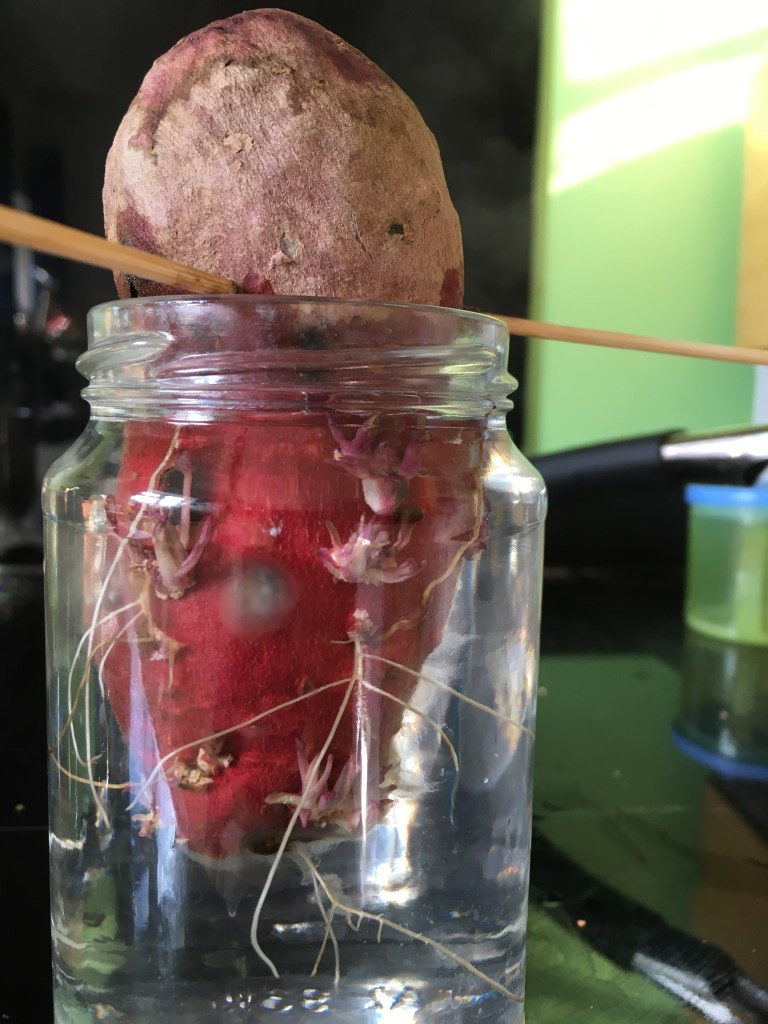
You fill the jam jar with water and wait. It is sometimes recommended that you change the water every couple of days, but I didn’t. In very hot weather, if the water evaporates quickly, the water will need to be topped up. They can sprout rather quickly.

That last photo was exactly a month after the tubers were first set up to sprout. There were no pictures in the intervening 2 weeks because we went away. That is why I transferred it to a pint glass – in order to be able to be able to leave it with plenty of water.

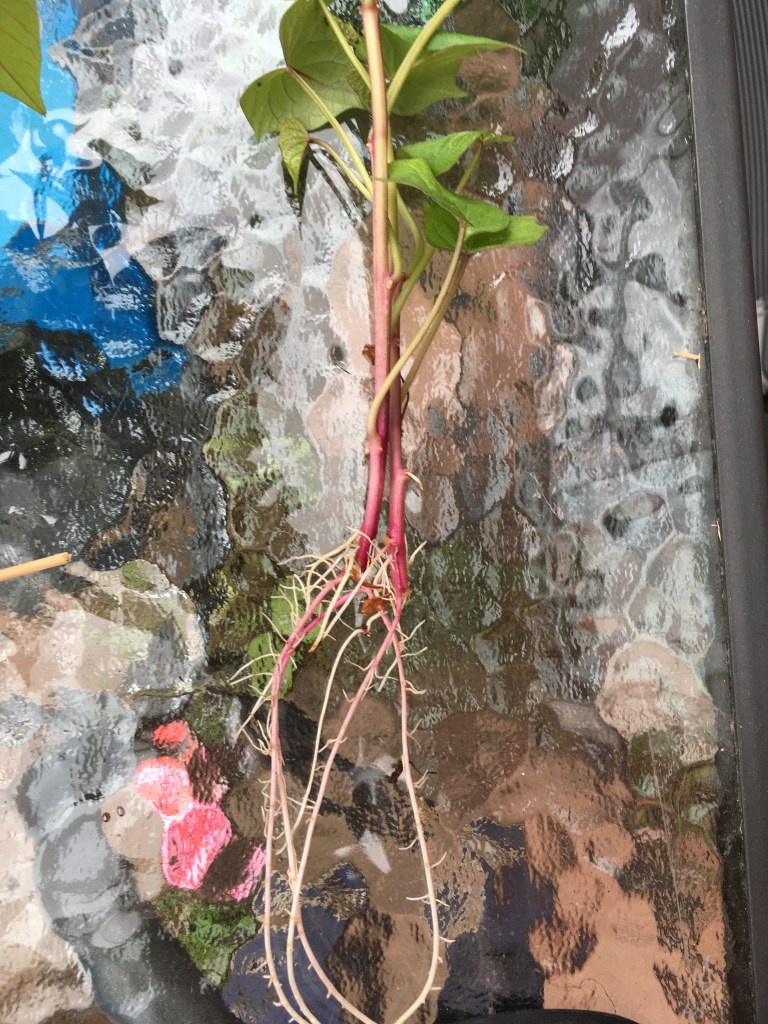
As you can see, within 4 weeks there were already some shoots and leaves that could be eaten. If there are any shoot without roots (slips) you can put the stems into water, and they will root. We ate them as a taste test instead.

Growing conditions

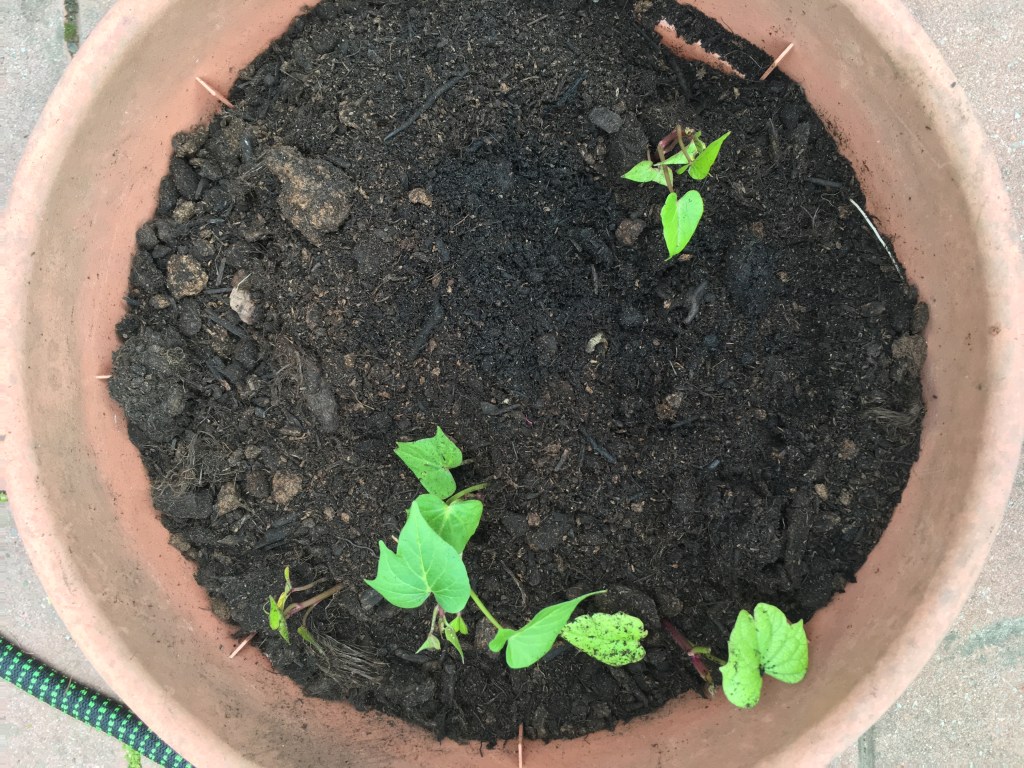
They were planted in some fertile compost in pots. As I had plenty of slips, I planted them in several different pots and in the edge of a big pot with a tree (a serviceberry) already in it. Fertile soil can lead to lots of leafy growth and less tuber production, but this is what I was aiming for. They need to be kept somewhere sunny, but also need regular watering in hot weather.  My pots were also going to be a bit small for particularly good tuber production.

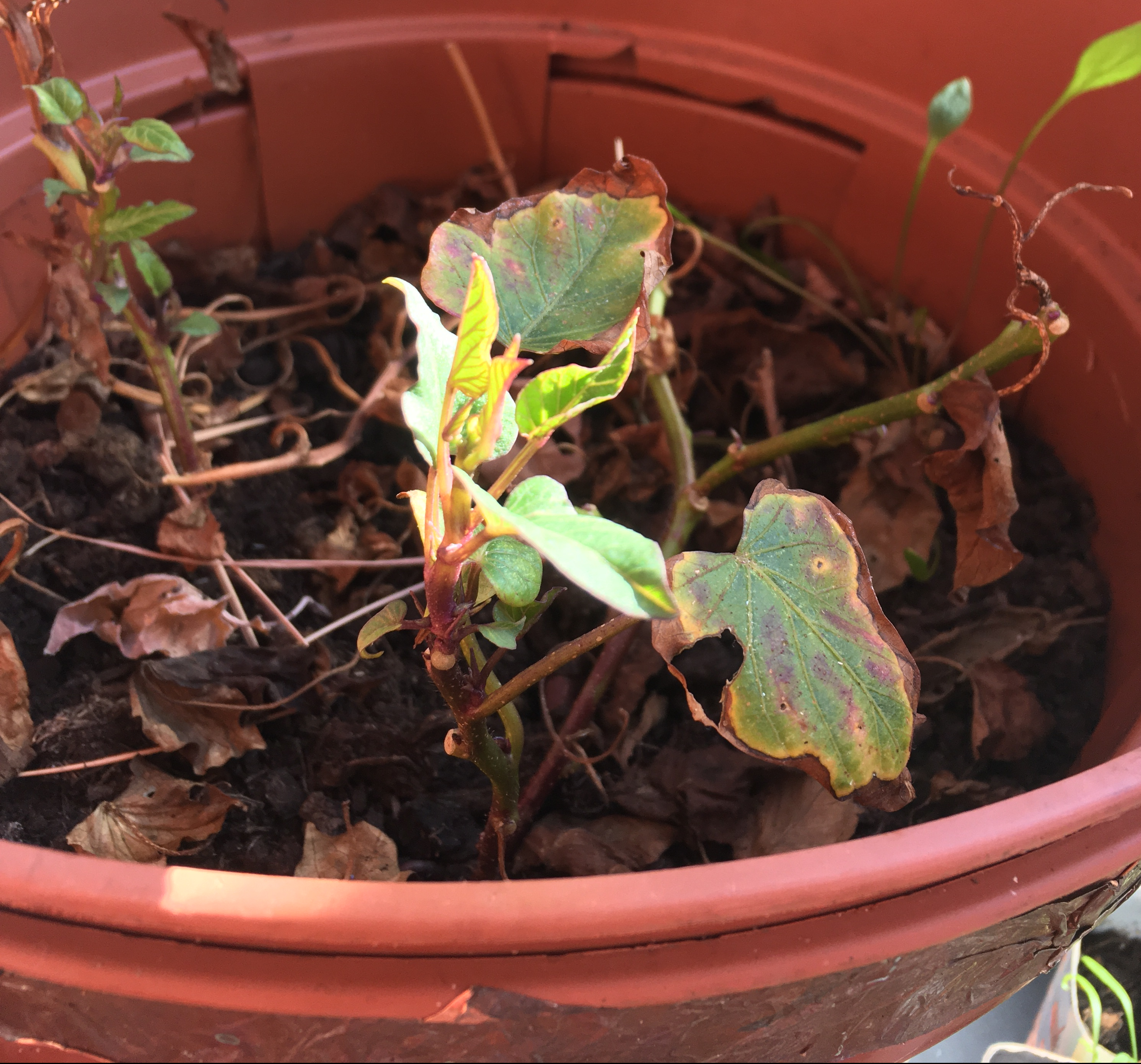
Unfortunately, I started these far too late in the year (July), which meant that they didn’t have a very long growing season. I didn’t mind as I wasn’t aiming for sweet potatoes, only for the leaves and shoots to eat. The cold weather killed all but one pot that over wintered in the porch. It has just begun to grow its shoots again now in late March. This means I should have something to eat from it in the next few weeks.
So, like potatoes, sweet potatoes are perennial. However, if you leave potato tubers in the ground (and you always inevitably will, as it’s easy to miss the tiny ones that break away during harvest) you will get the plants reappearing each year. Unless your winter is very mild, any sweet potato tubers left in the ground won’t survive the winter. You either need to overwinter shoots in a pot inside or grow new sweet potato slips the next year.

Problems

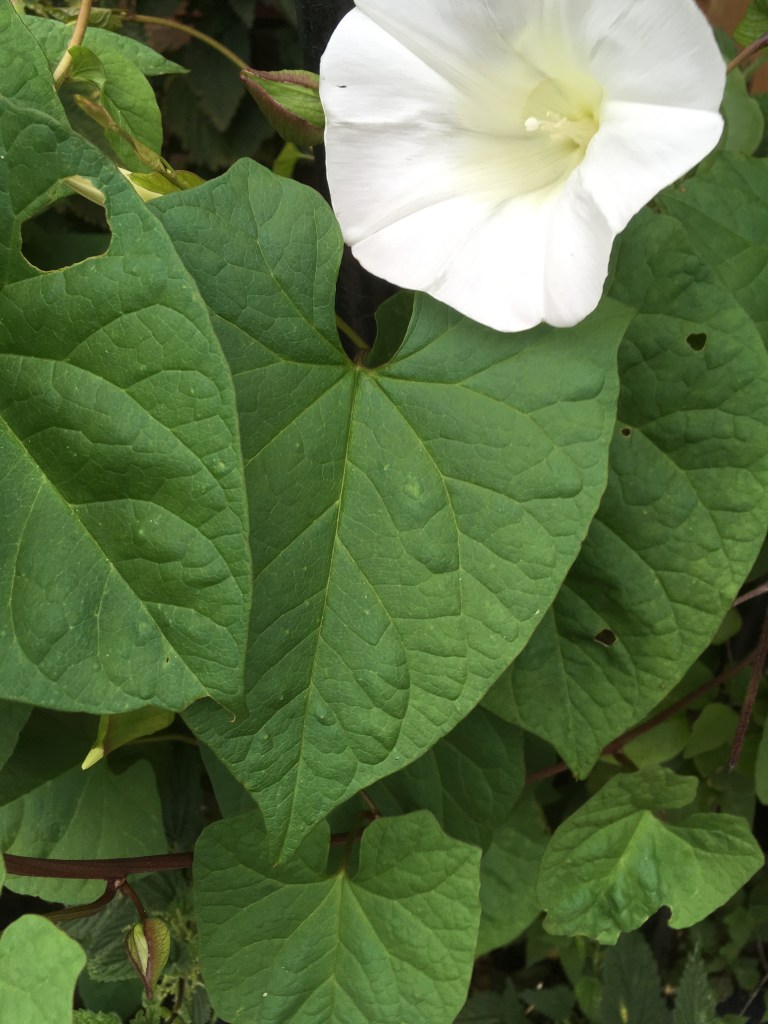
There didn’t seem to be many problems with slugs or snails, but there was a bit of an issue with two tone spider mite. This unfortunately meant removing the affected leaves. I was sad to lose a couple of meals. Spider mite is fine if you catch it early. If you notice too late, you’ll basically have to remove all the leaves that you can see are even slightly affected. A water spray with a few drops of rosemary oil may have helped. They tend to run rampant in hot, dry weather. Just so you know, spider mite are not species specific. They affected both the sweet potatoes and physalis nearby. Make sure you know where you’ve planted the sweet potatoes as the not edible bindweed can look similar. Sweet potatoes are unfortunately not as invasive or persistent. The flowers apparently look similar too, but my plants never got that far.  
Use in the lock down

It’s helpful to be able to grow nutritious green shoots from a tuber you can buy in the supermarket, if your nearest garden centre is no longer open for plants and seeds. It doesn’t require any specialist equipment and you could have some greens to eat after a month. It’s entertaining for kids stuck at home to watch them sprout and it’s a useful educational tool for them to see both shoots and roots. It could be expanded to a lesson on cloning if you’re that way inclined (are you feeling rather sorry for my 4 year old?). If you leave some of the leaves and give it a long enough growing season you could then be eating the tubers in autumn.

I’m rather excited to see how the overwintered plants will grow. Hopefully, if I put them in a much bigger pot, or in the ground in a nice sunny spot they will grow potatoes this year. I won’t be too concerned if the tubers fail though, as I’m more interested in leaves for quick food in these difficult times, I don’t know whether this variety grows tubers well in this country (grows leaves well) and my little one refuses to eat sweet potatoes anyway.

Before lockdown I started a new sweet potato in a jar for slips, but so far there hasn’t been anything. I’ll have to wait till the next time we emerge from the house to buy food to secure another one. I wonder if I can find another fun purple one?

Purple Tree Collard

Short version: If you like kale crisps get a purple tree collard. They seem expensive to acquire, but once you have one you get lots of food for their footprint, they’re beautiful, perennial and really easy to grow.

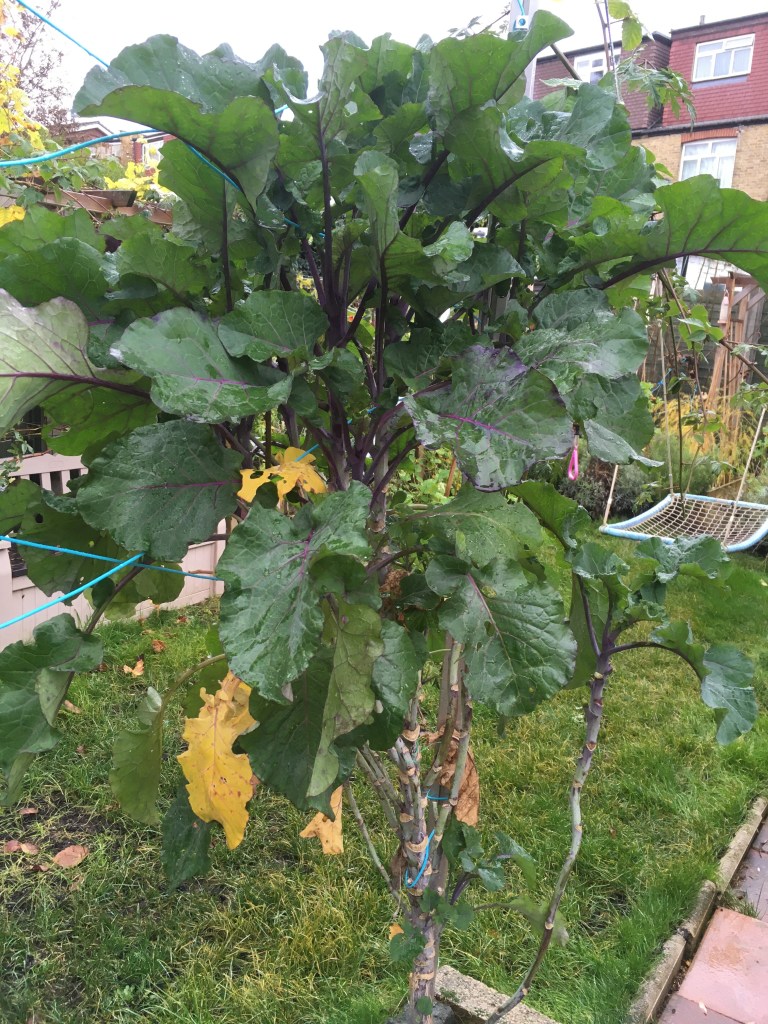
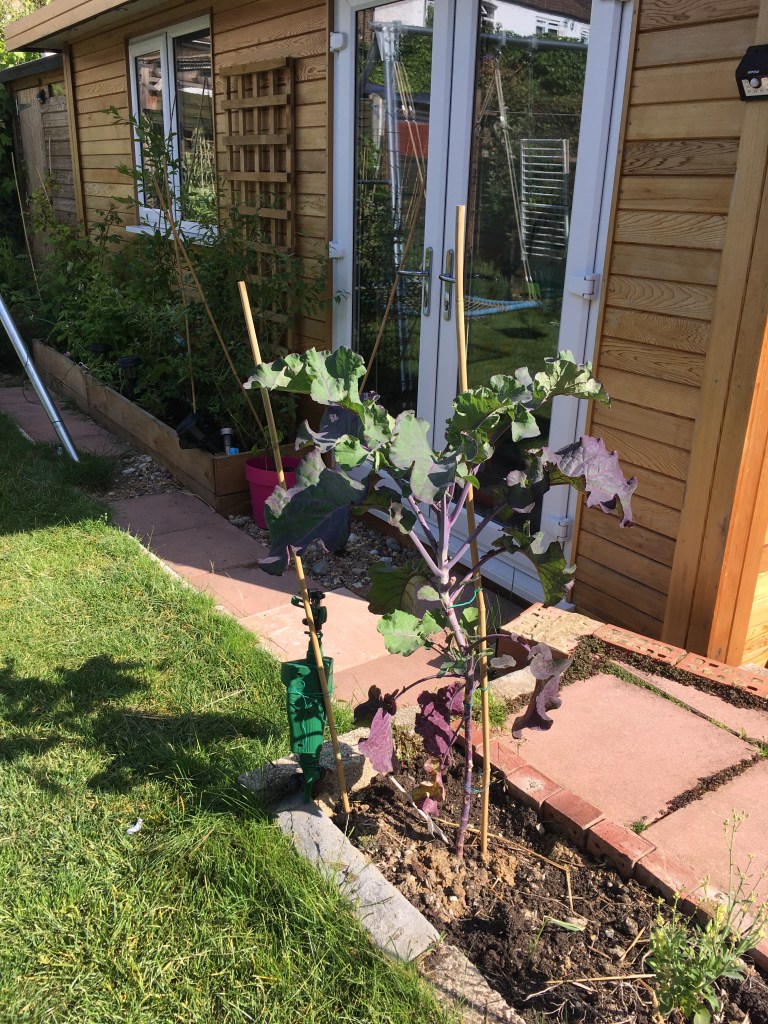
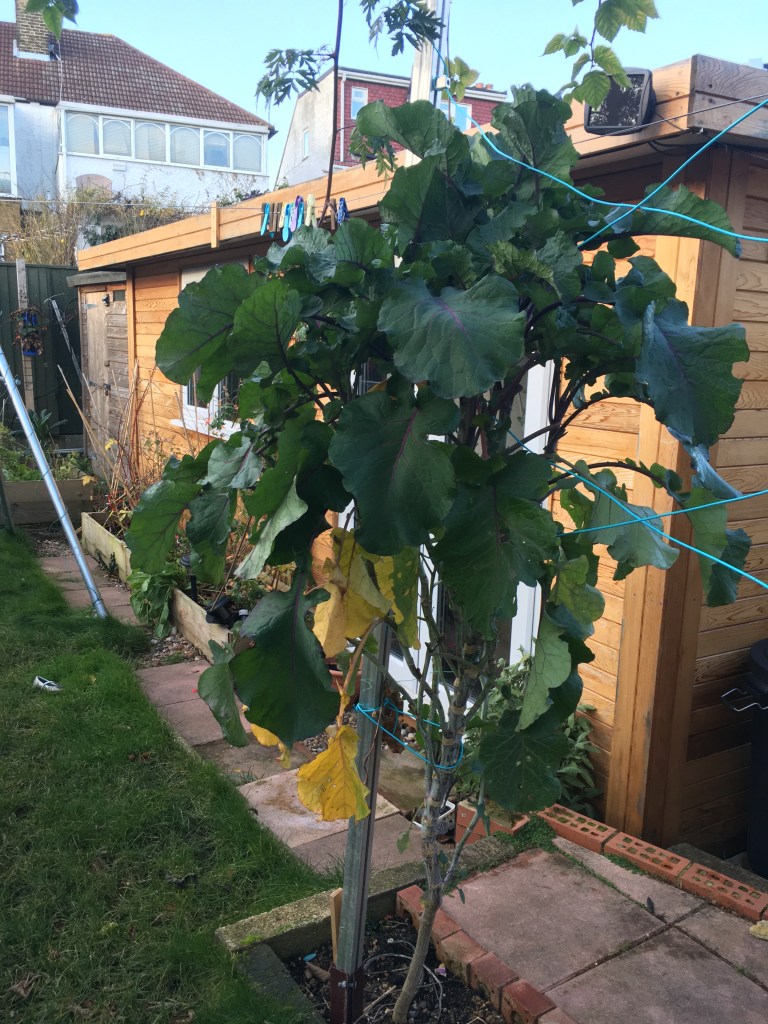
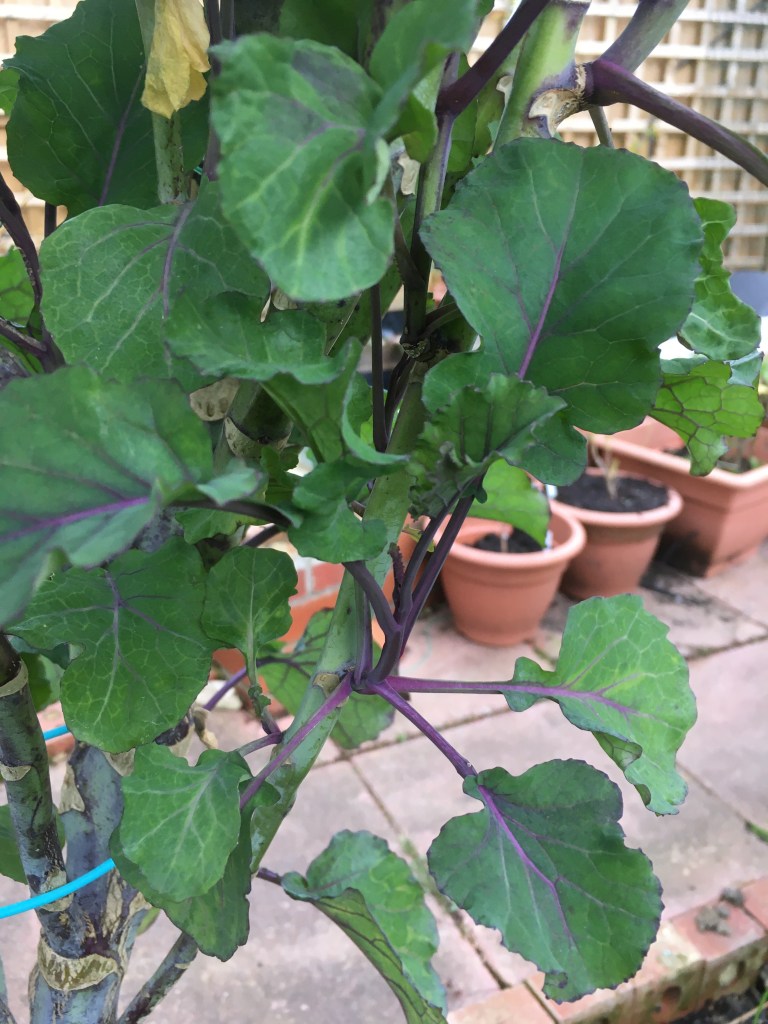
I have written a generic post on kales and collards before, but I think this is worth a special mention now. This is partly because it has grown into a pretty impressive, well… tree… since the last photo and also because:

  • Purple tree collards are perennial
  • They grow throughout the year, including winter and the hungry gap
  • They taste great (and in fact get sweeter after a frost)
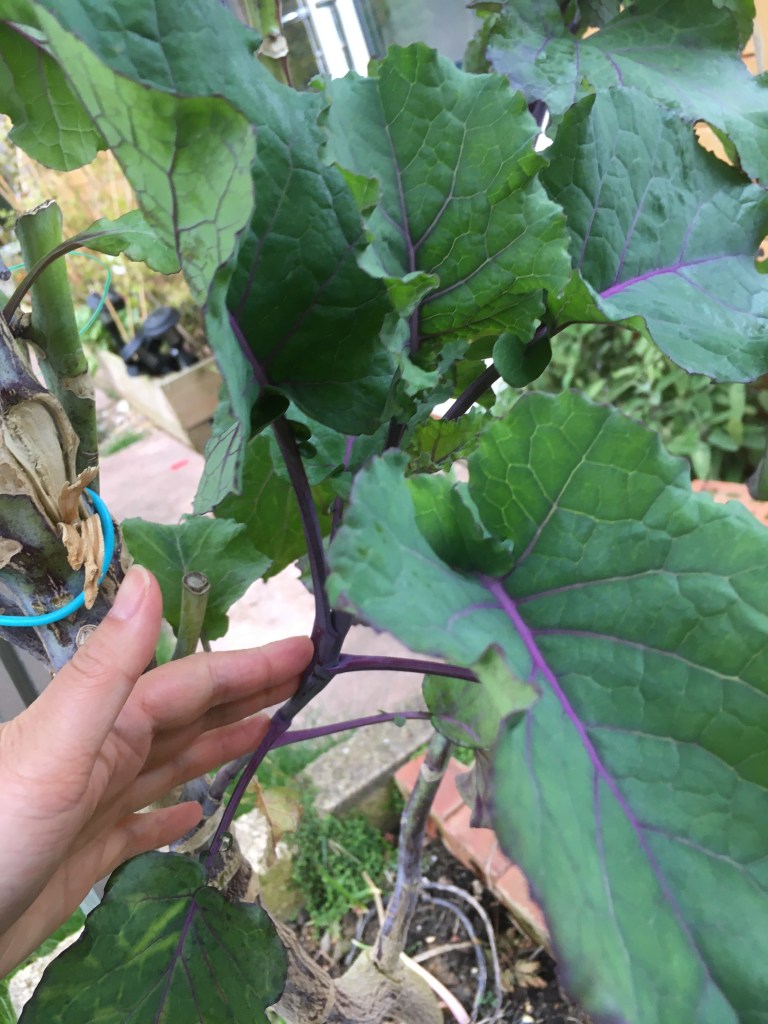
  • They’re rather attractive with their purple colours
  • The leaves get huge so that you only need a couple of leaves for a meal
  • They do fine in part shade
  • They do well in the alkaline clay soil that I have
  • They grow really tall, so they use up the vertical space.

When I say tall. I really do mean tall. I guestimated this to be around 8 feet tall. I put a standard folding garden chair in front of it today (20/03/20) for scale.

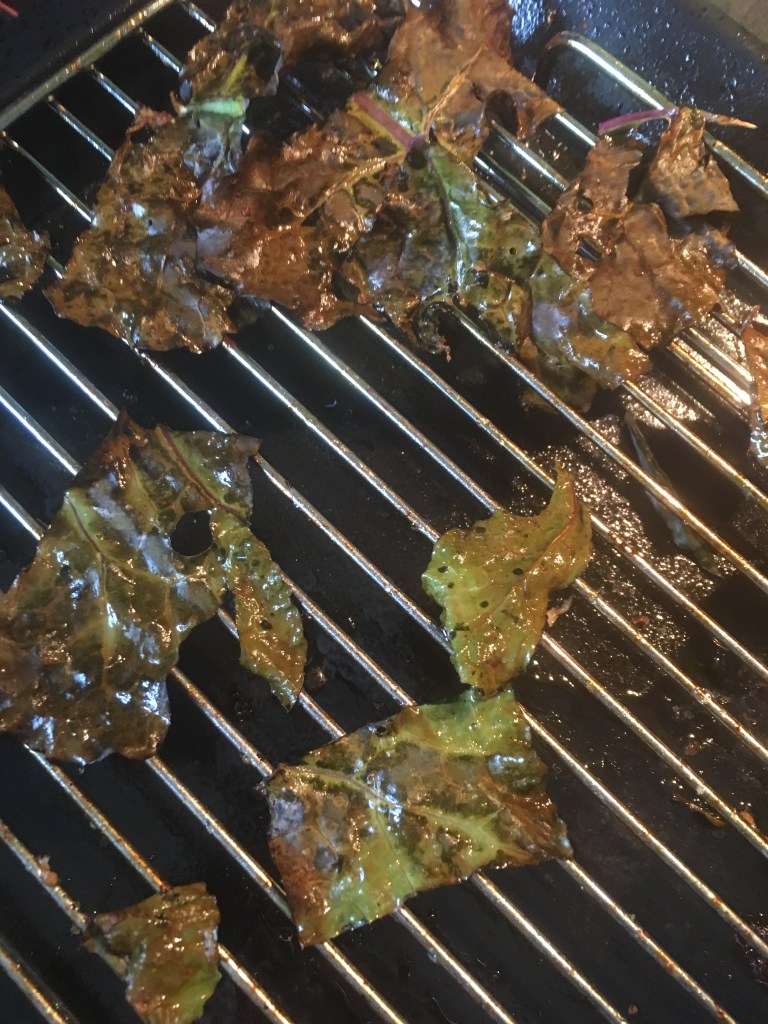
My only gripe is that whilst being tasty, the large leaves are quite tough, so a good old stew is required. Alternatively (and this is my favourite way to eat them) they make fantastic kale crisps. Because they’re tougher they hold together much better than the other kales.

Getting a purple tree collard

They are fiendishly hard to get hold of. Because they are perennial, they don’t tend to produce seed. Even if they did produce seeds, they may have crossed with another local brassicas so you wouldn’t be certain of how the offspring would turn out. Read more about cross pollination here . They are not sold by the usual commercial vegetable providers. This means that the only way to get one would be off eBay or a specialist website like https://backyardlarder.co.uk/ (like I did) or from someone who has one. The cutting may have seemed rather small for the £7.95 price tag with delivery added on top of it. However, because of the rarity of the plant and the wonderful provider that it has become, I think it was well priced. Once you have one, creating cuttings is rather easy so in a couple of years my lawn may have been replaced by a purple tree collard forest.

How to grow

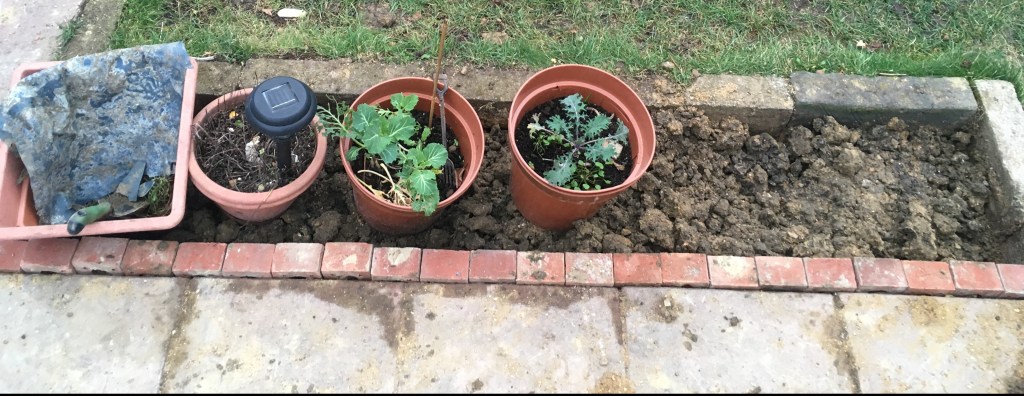
They like fertile alkaline soil so the clay soil in London is perfect. It is said that you should avoid growing annual brassicas (cabbage, kale, sprout, cauliflower type things) in the same spot year after year as they can develop club root. I’m not sure whether purple tree collard is susceptible to club root, but because the purple tree collard is perennial it can happily stay in the same spot for years. I would maybe suggest that you don’t start your purple tree collard in a spot that has had cabbages growing in it year after year. Also, as it’s going to be there a while it is worth adding lots of nutrient rich organic matter, like compost. I did some hole composting over winter before I planted the purple tree collard into this bed.

When I made this new bed, I mixed in about 2 months’ worth of kitchen waste (peelings, cores – any uncooked vegetable and fruit matter) and 2 shredded Amazon delivery boxes. I then covered it and left the worms and decomposing bacteria to do their thing for a couple of months. By the time I planted the purple tree collard in, everything had broken down nicely. There was some nice organic matter mixed in with the squidgy clay. You can see the soil in the pictures below looks darker and crumblier. The cutting was planted into the garden in February.

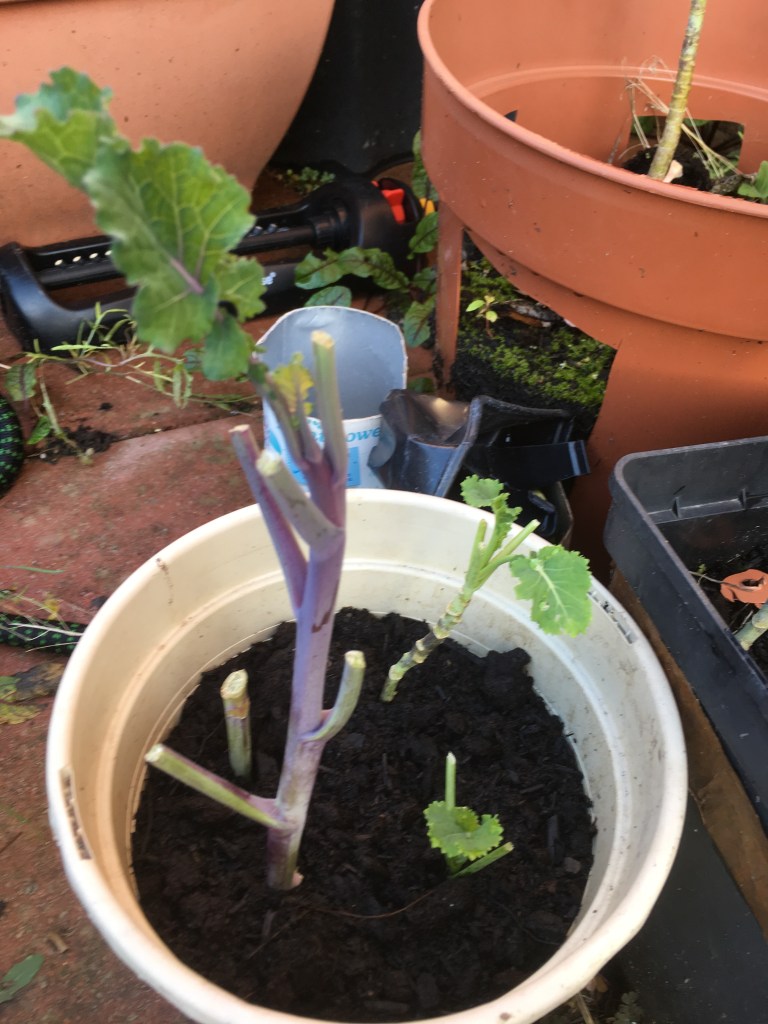
I’ve been taking cuttings since it was around 8 months old. A healthy side shoot with around 6 leaves is a good candidate. Cut the stem with a clean knife. Remove all the leaves except maybe the top one or two small ones. Stick into a pot of compost. You can dip the cut tip in rooting hormone if you like but it hasn’t seemed necessary. Place away from the sun and don’t let it dry out. It will take a couple of months for a good root system to grow.

Eating it

The young smaller leaves can be blanched and stir fried with a little garlic and salt (or we use a pinch of chicken stock). Or it can be used in anything you would use kale in. It is sweet and slightly nutty and tastes… well … like kale.

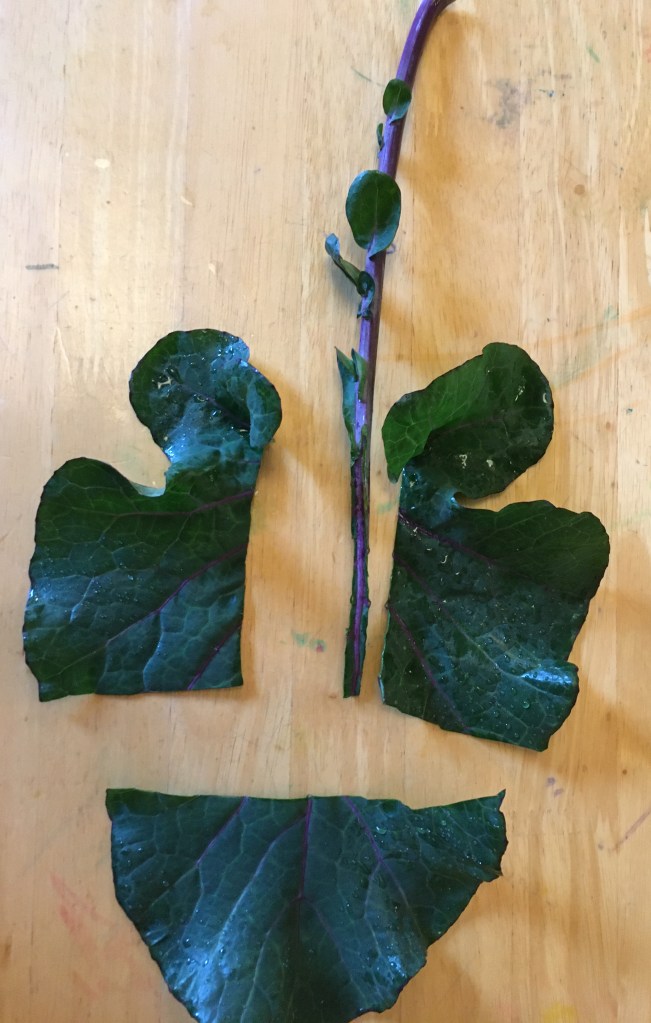
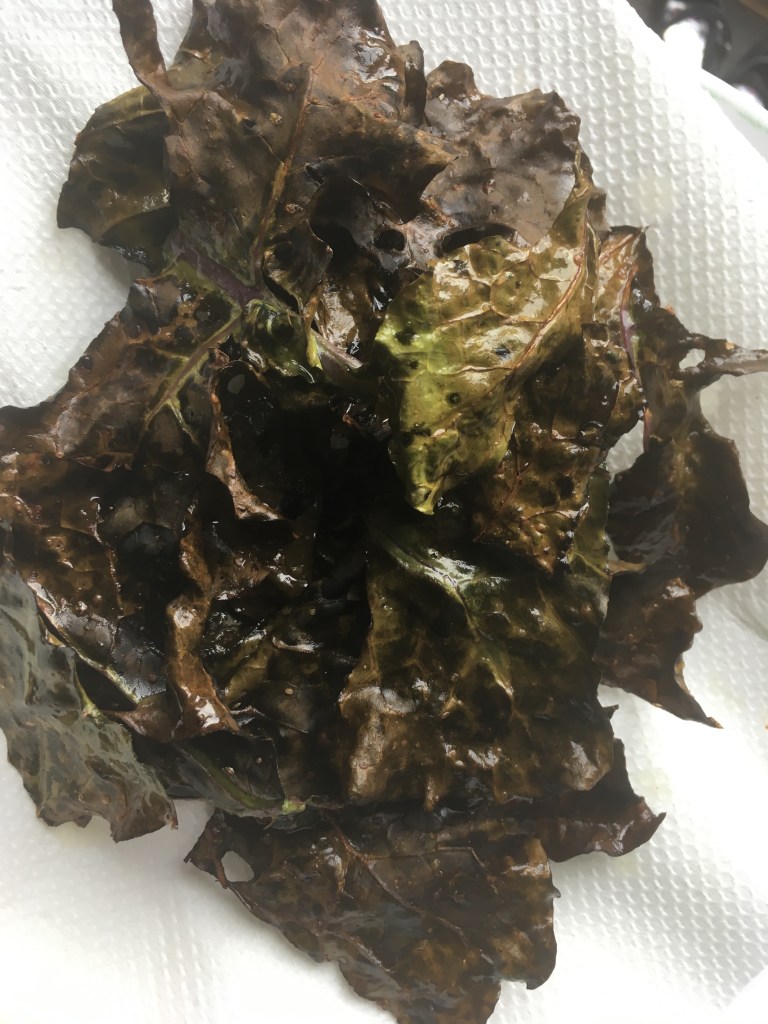
The older leaves, and this includes the huge leaves, make great kale chips. Remove the stem and the central vein of the leaf (otherwise you get slightly soggy crisps)and chop into pieces. Toss in a mixture of a teaspoon of sunflower oil, a dash of sesame oil, a pinch of sugar and a pinch of salt (or again… chicken stock) before laying on a grill tray in a single layer. Roast at 1800C for about 7 mins or until crispy and slightly brown at the edges.

I was quite surprised when my purple tree collard flowered in February. I was worried that the plant would die if it managed to set seed. I picked the 2 flowering stalks that grew and ate them. They were like purple sprouting broccoli in taste and texture. Since then it hasn’t sent up any more flower shoots.

I look forward to seeing what happens next year. Apparently it can live for up to 10 years. As insurance I’ll keep taking cuttings to propagate. If keep and grow even one cutting a year and older ones really do last 10 years, then I really will have that purple tree collard forest by then.