
Short version:
This evergreen, hardy to -100C, bush that can grow to around 1.5m tall by 1m wide in almost any soil conditions will produce fragrant flowers and sweet aromatic berries that are unavailable in the shops.
The ugni molinae, also called strawberry myrtle, is one of my favourite plants. I’ve never ever seen these yummy little berries sold in the supermarkets. This means that the only way to get them is to grow your own. I’ve read that they used to be grown in Cornwall when they were a favourite of Queen Victoria. I’m not sure where this resurgence of this plant has come from but I’m grateful.
How to grow
As far as I know this can only be bought as a plant. I haven’t seen any seeds and I don’t know how successful seeds would be. I bought mine online from Suttons in the James Wong collection. It was called ‘ka-pow’ (that made me cringe a little). This isn’t an easy one to make cuttings from in my experience, then again this may be because I’m lacking in experience. I’ve only had about 10% success rate with cuttings.
This is a perennial evergreen bush that prefers sun but will handle some light shade. I wasn’t quite sure how it would handle the winter, especially as a young plant so I kept it in a pot for the first 2 years and brought it indoor for 2 winters. It is supposed to be hardy down to around -100C. It can grow to around 1.5m tall and a 1m wide within 10 years so I didn’t think it would be happy in a little pot for long. Besides my little one loves the fruit so much I thought it deserved a spot in the raised beds. It was absolutely fine in the garden, in a spot with a bit of light shade, over last winter and kept its leaves throughout. A couple of the leaves went bright red which added a splash of colour in the dullness of January.
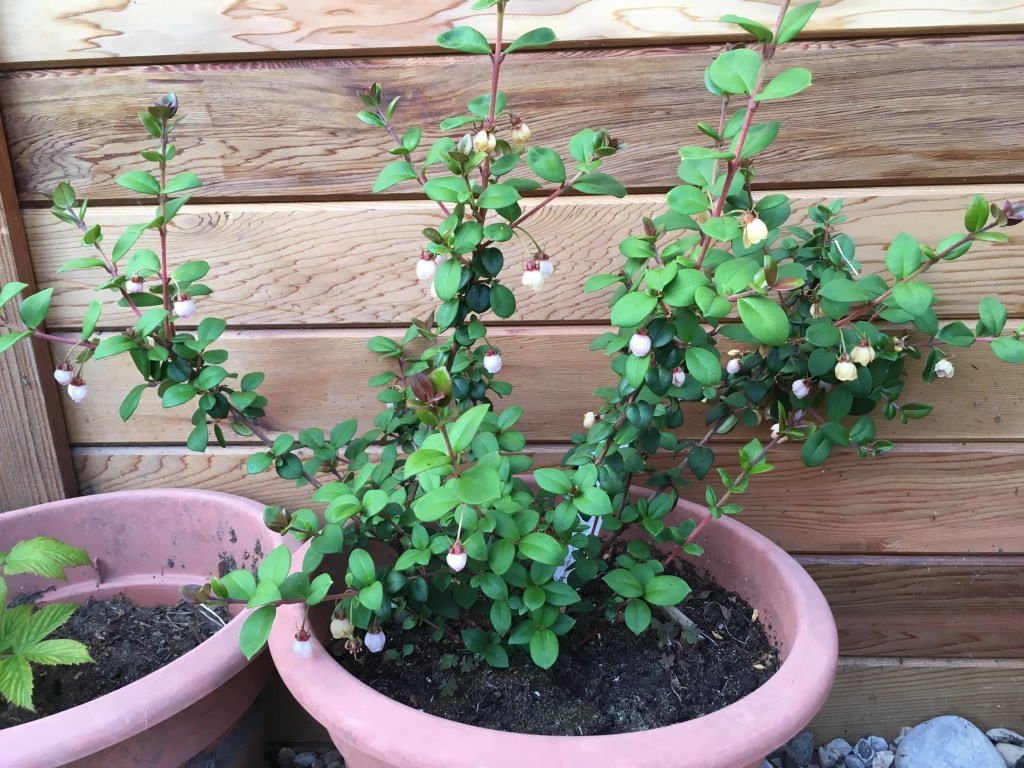
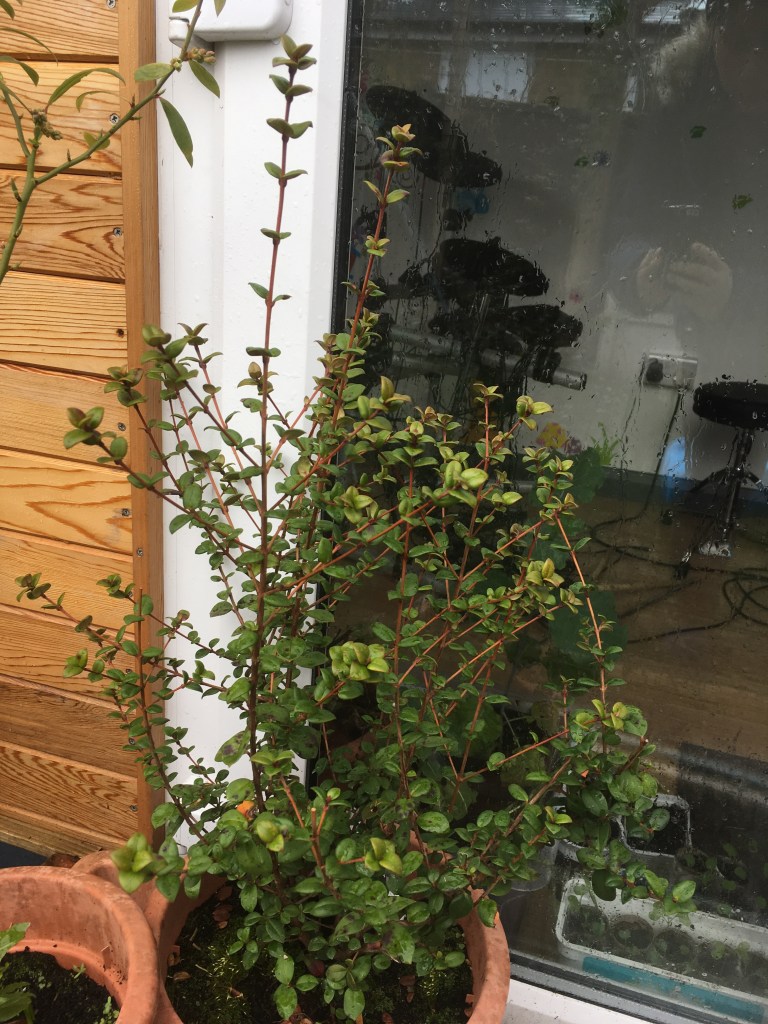
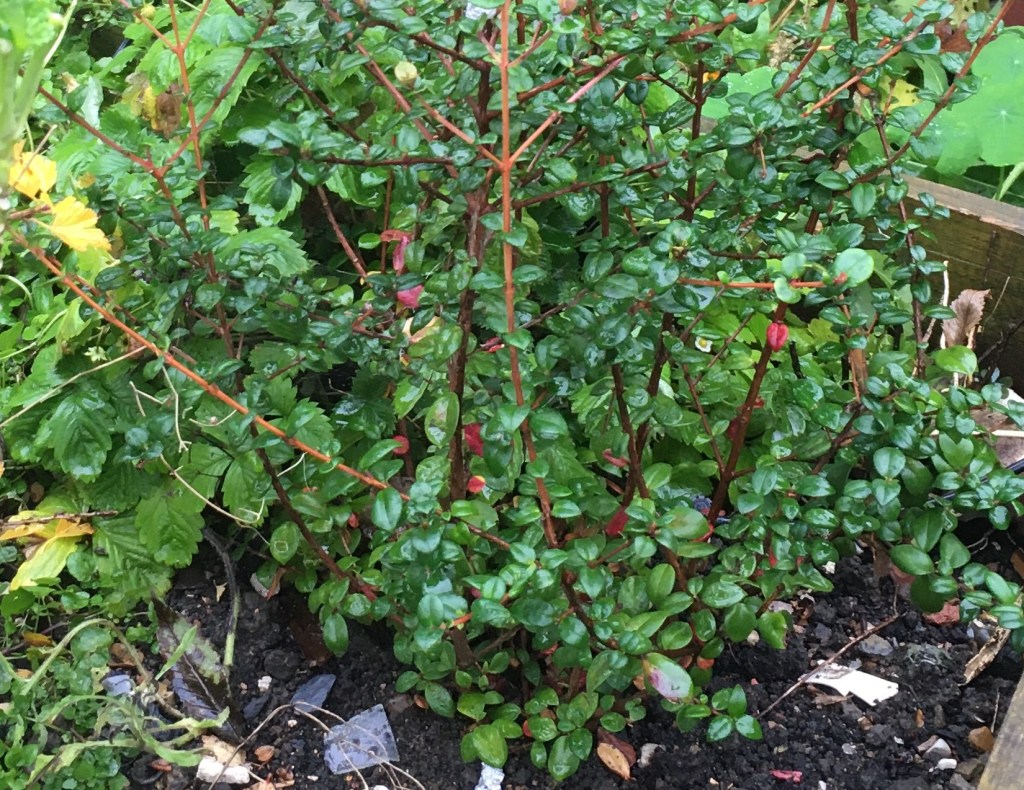

Advice seems to be that any soil, at any pH, is fine as long as it is moist but well drained.
When it arrived in the summer it was a little thing (sold as 9cm) and it wasn’t until it had been with us a year that it grew around 20 lovely smelling flowers. Unfortunately, it didn’t set any fruit. In the second summer with us it had plenty of flowers and some lovely fruit.
Now it has been with us for almost 3 years it is around 1m tall and about 50cm wide. It has masses of flowers just opening so we’re hoping for a good year.
How to harvest
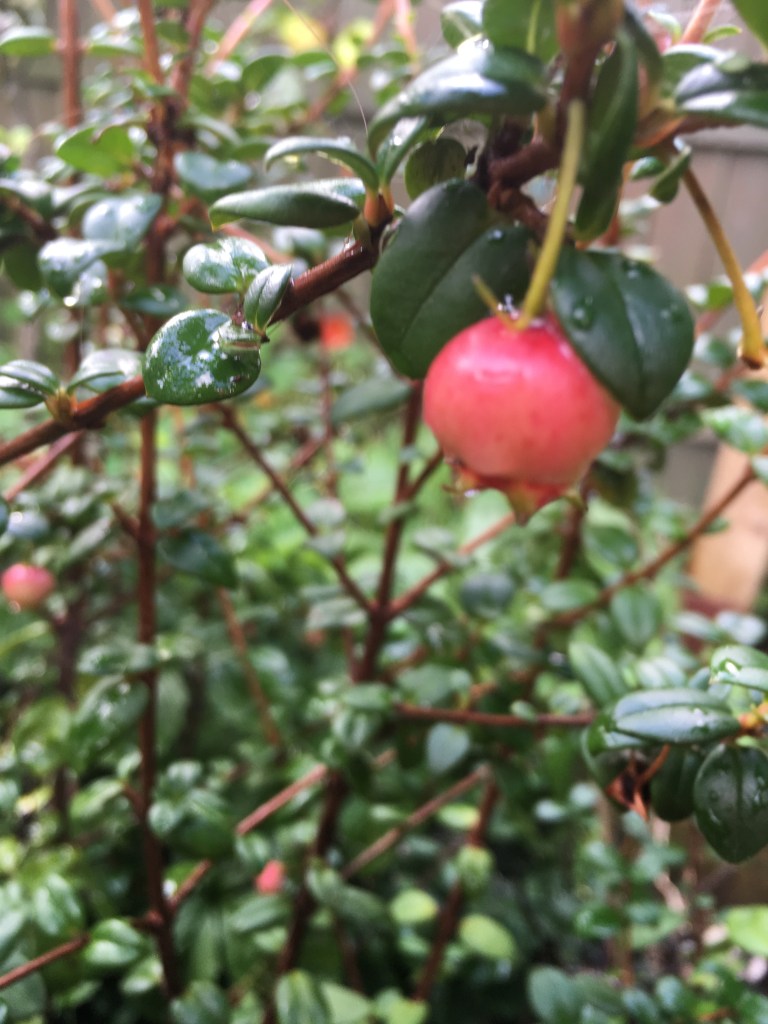
You have to wait as long as your patience holds up. The’ berries go a lovely appealing pink and they smell delicious, but you must wait till they turn a deep red. They’ll be slightly soft to the touch. So far, we’ve only had about 20 berries ripen over the course of a few weeks in October (not bad for a 2 year old plant). The Sutton’s website says August to September, but upon further internet research, it seems that October may be around right. I’ll wait to see when they ripen this year before I pass verdict. It’s hard to get a photo of clusters of ripe berries because they’re a bit too yummy. Once they’re ripe someone (mostly the little monkey) tends to go for it. For us, they’re like little 1cm diameter sweets that we just pick and eat straight off the bush.

How they taste
I find this one really hard to describe. The flowers smell like floral candy floss. The berries taste how they smell. They’re like an alpine strawberry mixed with candy floss and with something aromatic that is hard to place. I think the closest I can think of is possibly clove. The first time you try, the berry tastes stronger than you expect. That’s why we treat them a bit like sweets and eat them one at a time. With the strong taste and unplaceable aromatic I thought the little one wouldn’t be a fan. Boy was I wrong. She absolutely adores them, which is why I shall continue trying to propagate.

 Not a Horticulturist
Thank you for your wonderful blog. So much more informative than most. I shall try to grow one myself now. I love fruits, especially those you can’t get in the super market!
LikeLiked by 1 person
That’s very kind of you to say. Hope you love it as much as we do. I’ve added an extra 2 plants for the kids. The original one is in full sun and appears to be suffering. The plant itself seems to be drought tolerant but when flowering and fruiting I suspect it needs a good supply of water to keep the fruit going.
LikeLike
I was finding it hard to propagate, until I bought a few plastic boxes and turned them upside down 🙂 dip in rooting powder, keep the soil wet, don’t get the leaves wet, 5 weeks under the box, and hello 90% success rate. Xxx
LikeLike
Thank you Richard. I shall definitely give this a go. Love comments like these. Gardening enthusiasts are like a giant community.
LikeLike
In relation to Chilean guava can you tell me how deep the roots go. I am planning on growing it in a point so im wondering what sort of depth of pot i should get
LikeLike
Hi Paul D
I dug one out of an open bottomed raised bed last year. It was 6 years old and about 5ft tall. The roots only went down about a foot and a half and spread about same width. I don’t know if that was because the soil under the bed was rubbish or maybe it has quite shallow roots because it is quite a drought tolerant plant when established. It wasn’t fruiting well where it was though so I transplanted into a pot so I could move it around and see what would work.
LikeLike
I’ve had great success with this plant in Tasmania. I found it propagates easily by laying. Bury part of a lower branch in a bit of soil, pin it down with some wire or a tent peg, and wait for the roots to grow!
LikeLike
Thanks Rosie,
I’ve tried cuttings again this year with no sign of roots so far. Though the cuttings haven’t died yet so they make still take. I have pinned a few low stems down and am excited to see how they go.
LikeLike